“4 Bucks County Middle School Students Sickened After Ingesting THC Gummies”
This incident occurred close to our pediatric offices and involved four students, just 12 and 13 years old. As pediatricians—and as members of this community—we feel it’s important to talk about what happened and why it matters.
THC is the active compound in marijuana. In edible forms like gummies, the concentration can be quite high. For a child, consuming even a small amount of these products can lead to serious, and sometimes life-threatening, effects.
At this time, it is unclear whether the students in our nearby middle school knew the gummies contained THC, or where they obtained them—whether from a store, a friend, a sibling, or an adult. What we do know is that these products are easy for middle schoolers to access and very easy to mistake for regular candy.
Why are more children at risk for marijuana poisoning now?
A little over a decade ago, when marijuana was legalized in states like Colorado, the market for THC-infused foods expanded rapidly. Since then, pediatric poisonings related to THC have increased and continue to rise. In states where THC is legal, more widespread adult use has unintentionally increased children’s exposure, as these products are often stored at home.
While many parents are careful to lock away medications, THC edibles are often overlooked. Their packaging is designed to be appealing and can closely resemble popular candy brands. It’s important to recognize that, just like an overdose of prescription medication, ingesting too much THC can be dangerous—and in some cases, fatal.
Even in states where recreational THC use is illegal, THC-related products are still widely available. These products may be unregulated, inconsistently labeled, and easy for children to obtain.
Symptoms of THC intoxication in children can include:
- Altered mental state or confusion
- Extreme sleepiness or lethargy
- Difficulty walking or poor coordination
- Slurred or slowed speech
- Excessive vomiting
- Trouble breathing
- Loss of consciousness or coma
These symptoms can mimic serious medical conditions such as a stroke or brain injury. Some children require intensive care and life support.
If you suspect your child may have ingested THC, you can call Poison Control at 800-222-1222 for immediate guidance. If your child has trouble breathing, becomes unresponsive, or shows significant changes in mental state, call 911 right away.
How can parents help protect their children from accidental ingestion of THC edibles?
Click to learn more about THC-related compounds, how these products are marketed, and current regulations in Pennsylvania. It’s also important to understand how cannabis can affect the developing brain.
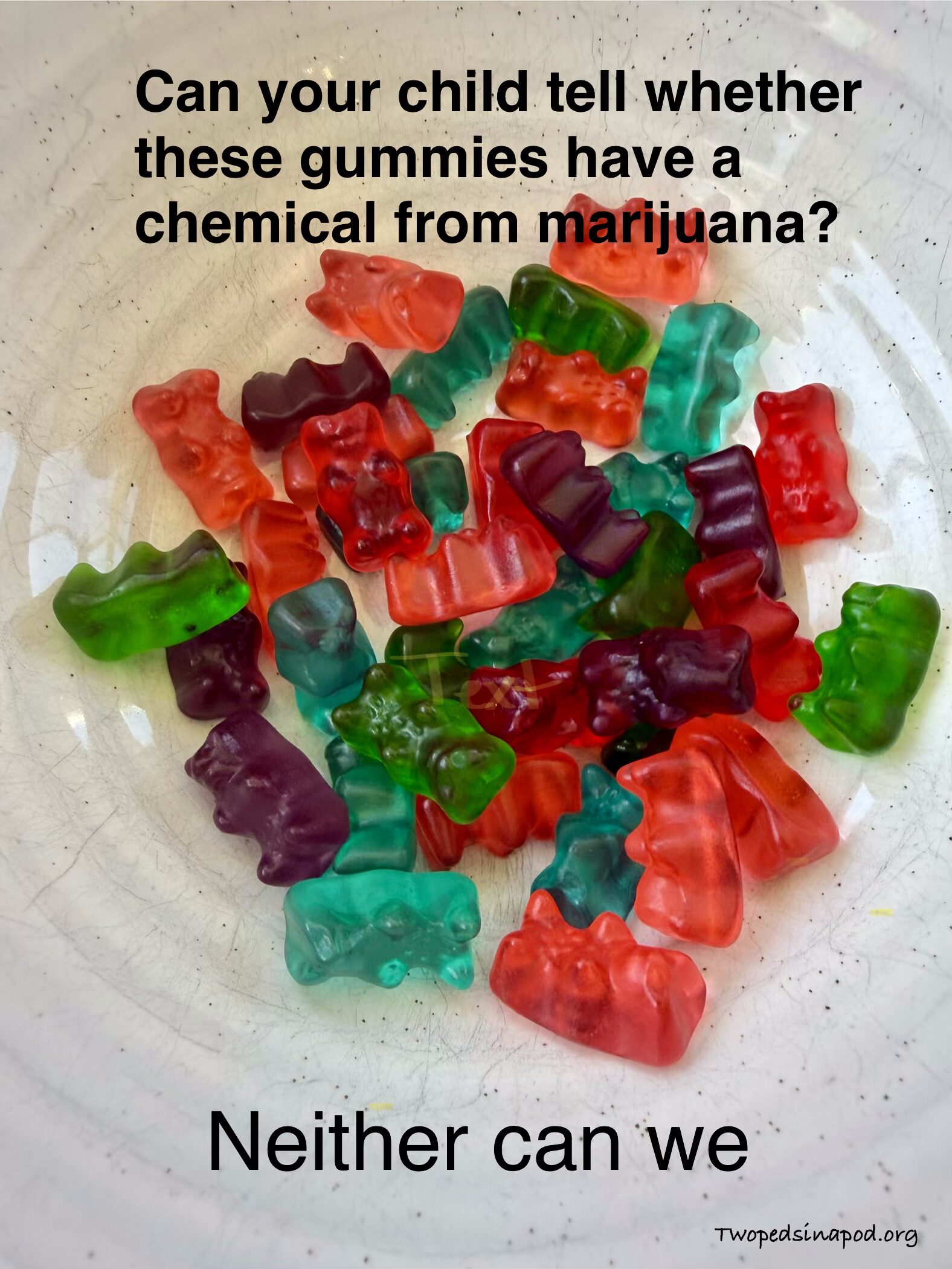
In the photo above, the gummies shown do not contain THC. However, even the most cautious adult would have difficulty telling the difference between candies and THC containing edibles. That’s exactly the concern—and why awareness, prevention, and safe storage are so critical.
Julie Kardos, MD and Naline Lai, MD
©2026 Two Peds in a Pod®



