Prevent your children from ingesting THC edibles

gummy bears on a dish that look just like edibles

“4 Bucks County Middle School Students Sickened After Ingesting THC Gummies

This incident occurred close to our pediatric offices and involved four students, just 12 and 13 years old. As pediatricians—and as members of this community—we feel it’s important to talk about what happened and why it matters.

THC is the active compound in marijuana. In edible forms like gummies, the concentration can be quite high. For a child, consuming even a small amount of these products can lead to serious, and sometimes life-threatening, effects.

At this time, it is unclear whether the students in our nearby middle school knew the gummies contained THC, or where they obtained them—whether from a store, a friend, a sibling, or an adult. What we do know is that these products are easy for middle schoolers to access and very easy to mistake for regular candy.


Why are more children at risk for marijuana poisoning now?

A little over a  decade ago, when marijuana was legalized in states like Colorado, the market for THC-infused foods expanded rapidly. Since then, pediatric poisonings related to THC have increased and continue to rise. In states where THC is legal, more widespread adult use has unintentionally increased children’s exposure, as these products are often stored at home.

While many parents are careful to lock away medications, THC edibles are often overlooked. Their packaging is designed to be appealing and can closely resemble popular candy brands. It’s important to recognize that, just like an overdose of prescription medication, ingesting too much THC can be dangerous—and in some cases, fatal.

Even in states where recreational THC use is illegal, THC-related products are still widely available. These products may be unregulated, inconsistently labeled, and easy for children to obtain.

Symptoms of THC intoxication in children can include:

  • Altered mental state or confusion
  • Extreme sleepiness or lethargy
  • Difficulty walking or poor coordination
  • Slurred or slowed speech
  • Excessive vomiting
  • Trouble breathing
  • Loss of consciousness or coma

These symptoms can mimic serious medical conditions such as a stroke or brain injury. Some children require intensive care and life support.

If you suspect your child may have ingested THC, you can call Poison Control at 800-222-1222 for immediate guidance. If your child has trouble breathing, becomes unresponsive, or shows significant changes in mental state, call 911 right away.

How can parents help protect their children from accidental ingestion of THC edibles?

Click to learn more about THC-related compounds, how these products are marketed, and current regulations in Pennsylvania. It’s also important to understand how cannabis can affect the developing brain.

In the photo above, the gummies shown do not contain THC. However, even the most cautious adult would have difficulty telling the difference between candies and THC containing edibles. That’s exactly the concern—and why awareness, prevention, and safe storage are so critical.

Julie Kardos, MD and Naline Lai, MD

©2026 Two Peds in a Pod®


Is it ADHD or something else?

children ADHD
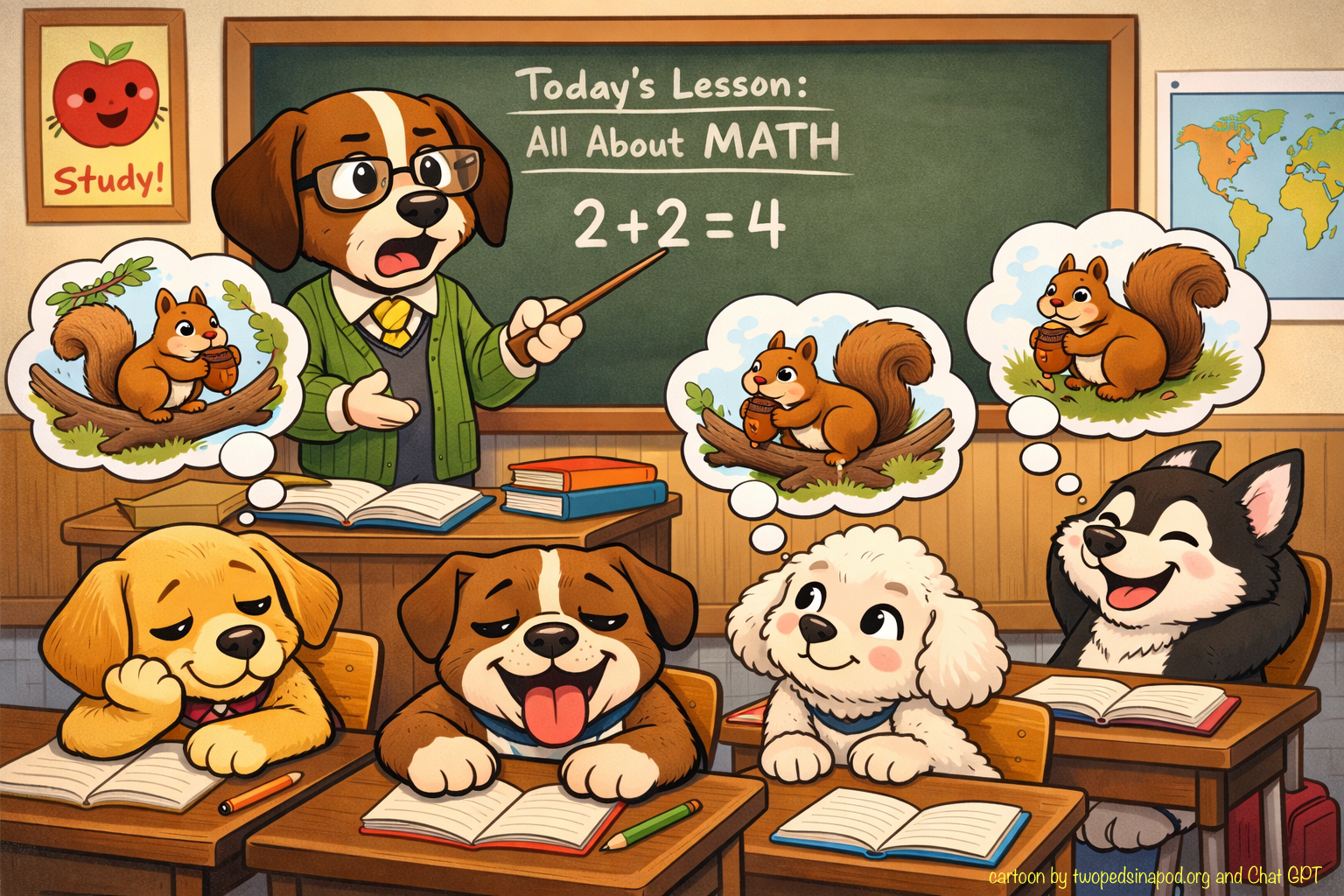
Mr. Rover suddenly came to the realization that every student he had ever taught had ADHD.

Does this sound familiar?

On Monday, your son Robby leaves late for the school bus because he couldn’t find his shoes, then he stopped to fiddle with a Lego model on the way out the door.

On Tuesday, his homework that took you hours to get him to complete the night before never makes it off the kitchen table. 

On Wednesday, he jumps off a five-foot wall at recess “just because” and lands in the nurse’s office.

On Thursday, he comes home tantruming because other kids didn’t want to play with him during recess.

By Friday, you’re sitting at a parent-teacher conference hearing words like impulsive, distracted, underperforming, can’t sit still, and needs constant redirection. A teacher suggests testing for Attention Deficit Hyperactivity Disorder which is better known as ADHD.

If this feels familiar, please know you are not alone. As pediatricians, we’ve sat with many families at this exact moment. It’s natural to feel relief that someone else sees the struggle, and at the same time, worry: What if it’s something else?

That’s such an important question.

What else could it be?

ADHD is common and very real. But several other conditions can look like ADHD—or make attention problems worse. Kids with ADHD are not even necessarily hyperactive. When pediatricians evaluate a child for possible ADHD, we think broadly before landing on a diagnosis.


Sleep is the first place we look. A tired brain can’t focus. Kids who go to bed too late, wake too early, snore loudly, cough at night, or itch from eczema may not be getting enough restorative sleep. Many parents do not realize their kids are up in bed on their tablets or phones, thus cutting into their sleep time. Even mild sleep deprivation can lead to impulsivity and inattention during the day. A rule of thumb is that children who are difficult to wake for school are not getting enough sleep.

Then there are other basics: Can your child see clearly? Can they hear instructions well? Vision and hearing problems are surprisingly common and easily missed.

Learning differences are another piece of the puzzle. Children with dyslexia or other learning disabilities may appear distracted when they’re actually frustrated or overwhelmed. If school feels too hard, it’s easy to “check out.”

Sometimes conditions that impair communication, such as autism, also play a role since difficulty with focus and social interactions can arise in both conditions.

Emotional stress matters, too. Changes at home, family conflict, or bullying can show up as trouble concentrating. Children don’t always tell us they’re worried—but their behavior often does.

Sometimes the “something else” is another medical problem

What looks like “spacing out” could be absence seizures—brief staring spells that interrupt attention. A simple test called an EEG can help rule this out.

We also consider medication side effects. Common antihistamines for allergies, for example, can cause fogginess in some children. And the caffeine in some kids drink at lunch, like soda and iced tea, causes bed time insomnia, which then interferes with falling sleep, which leads to sleep deprivation.

Occasionally, based on other symptoms, we obtain a simple blood test that uncovers something contributing to attention problems, such as anemia (low iron) or thyroid imbalance. In some communities, we also screen for lead exposure, which can affect focus.

And finally, we think about maturity. Younger children in a grade are more likely to be labeled with ADHD than their older classmates. Sometimes what we’re seeing is developmental readiness, not a disorder.

Of course, many children truly do have ADHD. And sometimes they have ADHD plus something else—like needing glasses. We’ve seen children blossom once we address all the pieces of their puzzle.

So if you’re sitting in that conference chair, take a deep breath. An evaluation isn’t a label—it’s information. Our goal isn’t just to name the problem; it’s to understand your child fully so they can more easily learn. 

With careful assessment, the right support, and partnership between parents, teachers, and pediatricians, children like Robby will thrive.

Julie Kardos, MD and Naline Lai, MD

©2026 Two Peds in a Pod®


Help your Child Handle Bullying

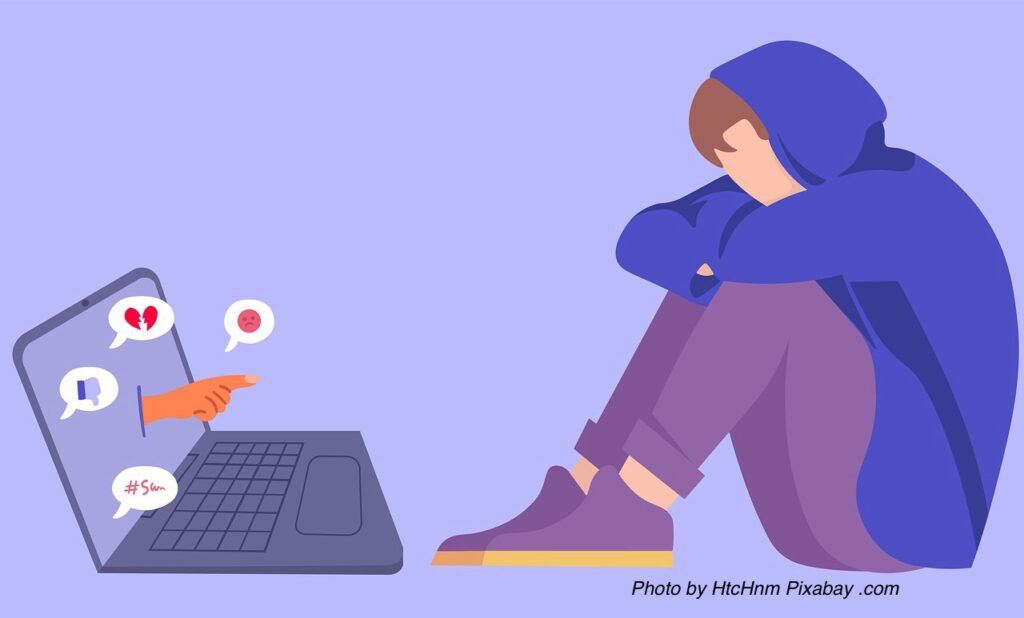
As a parent, there are few things more heartbreaking than seeing your child upset because they’ve been bullied. Whether your second grader is crying after being teased on the school bus or your teen is avoiding the school bathroom to escape cruel remarks, the feeling of powerlessness can be overwhelming. You may be tempted to go after the bully yourself. But there are more effective, long-term ways to help your child handle bullying. 

Bullies are always in a position of power over their victims; either they are physically larger, older, or more “popular.” While you or your child may want to “get back” at the bully, retaliation only fuels anger and can land your child in trouble. Remind your child that most bullies act out because they feel insecure themselves. Teach your child empathy for the bully.

What can you do?


Teach your child how to stop a bully, walk away from dangerous situations, and talk to someone when they need help.

Stop the bully. Have your child give strong verbal responses. Teach your child to stand up for themselves with a clear, confident message. A firm “STOP talking to me like that!” or “Don’t do that!” will not only assert their boundaries but also could attract the attention of nearby peers or adults who can step in. Another helpful tactic, especially if no one else is around to help, is de-escalation. Encourage your child to take deep breaths, and to ignore provocations by pretending they do not care what the bully says to them.

Walk away from conflict. If a bully is getting physical or continuing to harass your child, teach them to walk away and seek safety. They can move toward a teacher, a classroom, or any safe space where an adult can intervene.

Advise your child to tell as many trusted adults as possible if they’re feeling unsafe. If one adult isn’t sure how to help, another will. Tell them to keep asking.

Cyberbullying

Stop the cyberbully by responding with silence. Explain to your child that bullies thrive on any and all responses to their bullying. Not only that, but your child’s on-line response can be permanent. Teach them to withhold a response and let adults take charge. 

In general, establish rules about your child’s online behavior and limit access to devices and sites. For example, encourage your child never to post anything hurtful or negative.  Even something as small as a “dislike” can escalate a situation or can be misinterpreted.

If the bully threatens your child online, avoid responding to the bully AND take your child’s device with the evidence to the school and possibly to the police. Here is contact information for social media apps, gaming networks, and related platforms where you can report cyberbullying.

Information gathering

Make it clear to your child that it’s always okay to talk to you if something’s bothering them. Ask open-ended questions like:

“How’s school going?”

“How are things with your friends?”

“Have you seen anyone getting bullied?”

“Are you feeling okay at school?”

If your child says they’re having trouble with a friend or classmate, avoid brushing it off. Ask questions like, “What happened?” or “Did something happen between you?”

Keep an eye out for signs that your child might be struggling emotionally. They may show increased reluctance to go to school or act sad, angry, or anxious.

Be aware that sometimes kids who are bullied turn around and become bullies.

 Partner with your child’s school for support

Once you’re aware that your child is being bullied at school, it’s important to for you to talk to adults at the school. Let the teacher, counselor, or principal know exactly what’s going on. Be clear that you want additional supervision, particularly at recess and lunchtime. Schools often have a zero-tolerance policy for bullying, but they can’t address an issue that they don’t know about.

Building your child’s self-confidence

Bullies often target kids who seem smaller, weaker, or less confident. It’s important to help your child feel good about themselves so they’re less likely to become a target. Make it known by your words and actions that you love your children unconditionally. This builds self esteem. As Dr. Lai says,”Helping a kid’s confidence grow is harder than helping their body grow.” If a child is physically smaller than the bully, remind them that “You don’t have to be a big person to do big things.”

Consider enrolling your child in activities that boost self-esteem, like karate, team sports, or music lessons. Encourage friendships with supportive peers. Be the fun parent and invite kids over for a playdate, or host a family activity like a kickball game or movie night.

We leave you with a classic anti-bullying retort: “I’m rubber, you’re glue; whatever you say bounces off of me and sticks to you.”

Additional Resources:

Naline Lai, MD and Julie Kardos, MD

©2024 Two Peds in a Pod®


Lice: Don’t Scratch Your Head Over It!

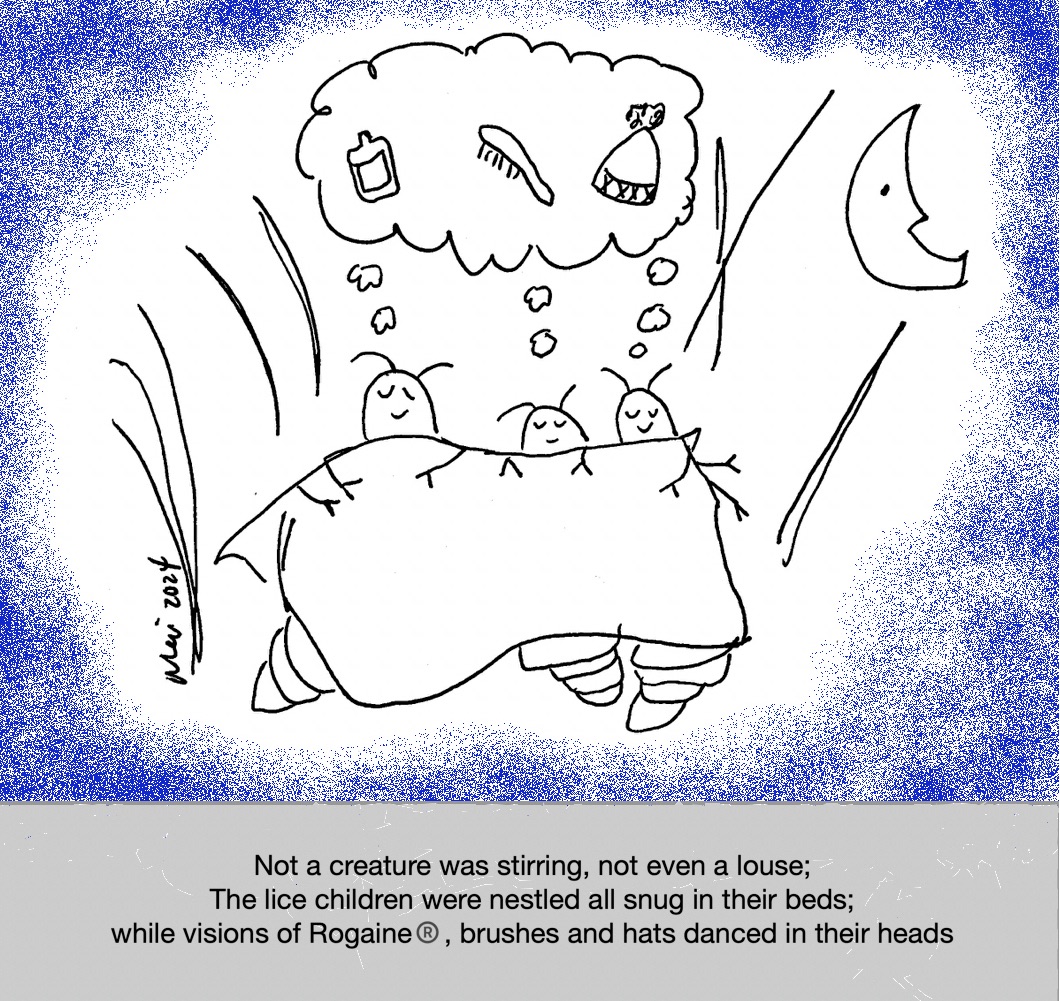
lice dreams

Now that school is back in full swing, you might notice your child scratching their head… and maybe you’re starting to scratch your head too. Let’s dive into the topic of lice and clear up some of the confusion.

What Are Lice, Really?

Lice are small, harmless insects that cause itching but don’t spread disease. The itching comes from a reaction to their saliva—similar to how poison ivy causes a reaction on the skin. It sounds gross, we know, but the good news is that lice are more of an annoyance than a health risk.

By the time you spot a live louse on your child, they’ve likely had lice for at least a month. So, while it might seem alarming to spot a louse crawling on their head, it’s not an emergency. Schools shouldn’t send kids home early for lice; after all, they’ve likely been in class with lice for weeks. That said, treating lice promptly can relieve the itching and stop them from spreading. Children can return to school the day after their first lice treatment.


How Do Lice Spread?

Lice can’t jump or fly; they only crawl. For lice to spread, kids’ heads need to be close together. Lice can also spread through shared hats or hair brushes, so remind your kids not to share these items, whether they’re playing dress-up or getting ready for a school dance.

Spotting Lice and Nits (Lice Eggs)

It’s easy to mistake other things—like sand or dandruff—for lice eggs. Here’s a tip: lice eggs (otherwise known as nits) are glued tightly to the hair shaft near the scalp and are difficult to remove with your fingers. Dandruff and sand slide easily along the hair shaft between your fingers. 

Lice Treatment Options

  • Topical Permethrin 1% (e.g. Nix): This over-the-counter treatment works well for many families. Follow the directions on the label, and repeat the treatment in 7-9 days. Nix has a comprehensive  website that explains lice and how  to treat them. Permethrin targets both lice and their eggs.
  • Topical Ivermectin: Previously branded as Sklice, this treatment is now available over-the-counter. The generic version is as effective as the name brand. Follow the directions, and repeat after 7-9 days.

If neither of these treatments work, doctors can prescribe additional medications. Most cases of lice succumb to permethrin or ivermectin, so you likely won’t need a prescription. Safety tip: avoid using more than one product at a time. This prevents too much medication on your child’s head at the same time.

According to the American Academy of Dermatology, simply combing your child’s hair to remove lice and nits can be effective. Though time-consuming, thorough combing works when done properly. Here’s a helpful 3-minute video from a dermatologist on using medication and combing to treat lice.

All lice shampoos and lotions should be applied to dry hair, left on for the recommended time, and then rinsed off. Make sure to read and follow the directions carefully for whichever product you choose.

Treating Your Home

Once your child is treated, it’s important to treat their environment too. Wash any recently-used sheets, towels, blankets, and hats in hot water (at least 130°F), and dry them on high heat for 20 minutes. Seal non-washable items, like stuffed animals, in plastic bags for two weeks to let any lice and nits to die off.

Got More Questions?

This should cover most of what you need to know about lice, but if you’re still itching for more info, we contributed to this post in The Children’s Hospital of Philadelphia’s “Health Tip of the Week.”

Stay tuned for more tips on what might be “heading” your way!

Julie Kardos, MD and Naline Lai, MD

©2024 Two Peds in a Pod®


Managing anxiety in children

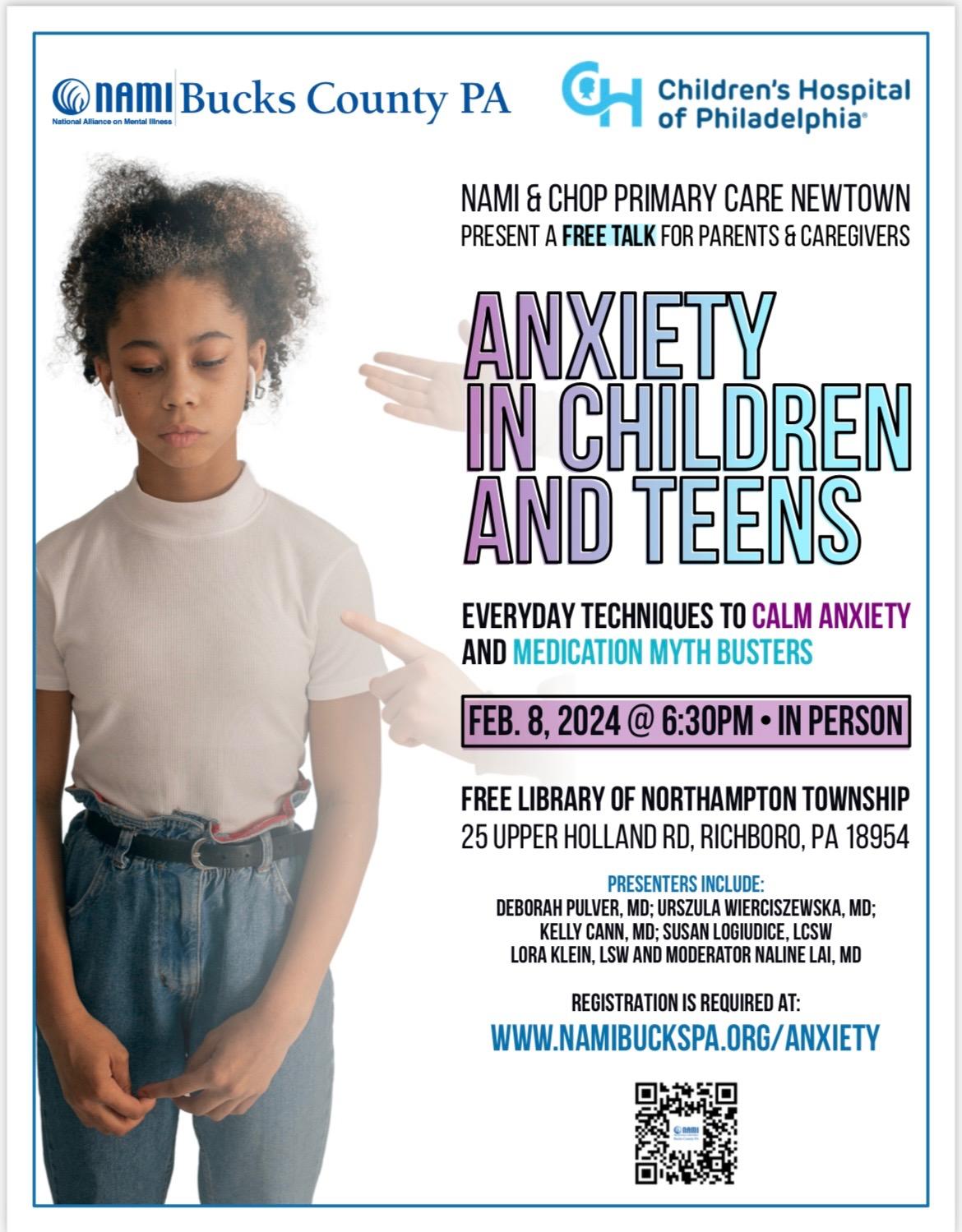
Parents local to Northampton Township, PA: We welcome you to come hear local pedatricians from The Children’s Hospital of Philadelphia and mental health experts talk about basic ways you can help manage anxiety and some information about medications for children and teens on February 8, 2024 at 6:30pm in the Northampton Library.

The talk is free and there will be time for questions. Please register so we set up enough chairs!

Special note: your Two Peds will be in attendance. Hope to see you there!

Naline Lai, MD and Julie Kardos, MD

©2024 Two Peds in a Pod®


How to Talk to Kids About Hard Topics: a panel discussion

a young woman using a laptop beside her mother
Photo by cottonbro studio on Pexels.com

Death, politics, mental illness, and sex- all difficult topics for parents to talk about with their kids. Your Two Peds joined a social worker, school guidance counselor, and former teacher in a lively panel discussion at the Haverford Township Library in Haverford PA on how to normalize conversations on difficult topics between parents and their children. Watch as we talk about on ways parents can give kids give information while limiting their anxiety .

Past posts about ways to share difficult information with your children include the topics of suicide, stillbirth/miscarriage, death of a person, and death of a pet.

Warmly,

Julie Kardos, MD and Naline Lai, MD

©2023 Two Peds in a Pod®


Quick exercises for kids and teens

couch potato

Physical therapist Dr. Deborah Stack brings us quick exercises for kids and teens – Dr. Lai and Kardos

After six months of COVID; yes, it really has been that long already, your family has probably found some favorite outdoor hiking spots or bike routes.  But what can you do when it’s too cold or wet outside?  How can you combat literally HOURS of kids sitting at computers especially if they only have 30-45 minutes until their next class? Here are quick exercises for kids and teens and a table of caloric expenditure for common activities.

Schedule active movement breaks into their day.  Take advantage of that lunch and recess “break” and be an example yourself. 

Here are some short burst ideas:

  • Have a 15-minute dance party
  • Use your body to make all the letters of the alphabet
  • Shadow box to some music
  • Dust off the treadmill or stationary bike in the basement
  • Play ping-pong
  • Do a few chores (carrying laundry baskets up and down is great exercise)
  • Jump rope
  • Jog in place
  • Do jumping jacks
  • Pull out some “little kid games” such as hopscotch or hulahoop
  • Let each child in your house choose an activity for everyone to try
  • Do a family yoga video
  • Walk or “run” stairs…kids can try to beat their prior score for a minute of stairs
  • Take walking/wheeling/even wheelbarrow laps around the house
  • Stretch out calves, quadriceps, arms and back…see ergonomics post for counteracting all the sitting


Don’t forget the teenagers;  they still need activity too especially if their teams are not practicing or competing.  Staff from the Mayo Clinic recommend kids ages 6-17 should have one hour of moderate exercise each day.  Exercise can help improve mood (through the release of endorphins), improve sleep and therefore attention (critical with all the online learning), and improve cardiovascular endurance.  Here are some numbers to get the kids moving:

All activities are based on 20 minutes and a teen who weighs 110 pounds.  The number of calories burned depends on weight.  If your child weighs more, he will burn a few more calories, if he weighs less, he’ll burn a few less.  Below the table are links to some free and quick calorie calculators on the web so your kids can check it out for themselves.  For those attached to their phones, there are web apps too.

ACTIVITY CALORIES USED
Shooting Basketballs 75
Pickup Basketball game/practice 100
Biking on stationary bike 116
Dancing 75
Hopscotch 67
Ice Skating 116
Jogging in place 133
Juggling 67
Jumping Rope 166
Ping Pong 67
Rock Climbing 183
Running at 5 mph 133
Sledding 116
Treadmill at 4 mph 67
Vacuuming 58
caloriesperhour

Try these activity calculators:

http://www.caloriecontrol.org/healthy-weight-tool-kit/lighten-up-and-get-moving

https://www.webmd.com/fitness-exercise/healthtool-exercise-calculator

Keep ’em moving- you’ll have more fit, better rested, and happier kids!  

Deborah Stack, PT DPT PCS
©2020 Two Peds in a Pod®

Dr. Stack is a board certified specialist in pediatric physical therapy and the owner of the Pediatric Therapy Center of Bucks County, LLC in Doylestown, PA. In addition to treating children ages 0-21 for conditions such as torticollis, coordination,  neurologic and orthopedic disorders, she also instructs physical therapists across the country in pediatric development and postural control and is a Certified Theratogs fitter.


Going back to school online? Here’s what pediatricians want you to know

Online school tips

Chances are, because of COVID 19, this school year will look different for your children. Here are your Two Peds’ tips for helping your children if they are learning online this fall.

Start with basics such as setting a sleep schedule. Think about how many hours your child slept during the spring quarantine and over the summer. If they woke up refreshed, that is the optimal amount of sleep they need to be alert during class. Incorporate this into your school year expectations.  Falling asleep too late and sleeping too late? Check here on how to get your child’s late schedule under control. 

Set up an eating routine. Healthy eating habits have not changed from when you were a child. Stick to the school year schedule of breakfast, lunch, dinner and a morning and afternoon snack – just like at school. Don’t allow the  kids to graze. Without structure, children tend to throw off their weight- in fact, kids tend to gain weight more quickly  in the summer than during the school year

Rehearse mask wearing. Even though they attend school at home, your kids will go to the grocery store, see a good friend or get a haircut. Teach them to wear a mask properly so you don’t need to spend time readjusting their masks outside of the house.  

Keep up the hand hygiene at home: Washing hands always limits germ spread. WHEN–before and after eating, after using the bathroom, after playing outside, and before and after school, the HOW–soap and water preferred for the duration of time it takes to sing the Happy Birthday song twice, or hand sanitizer if a sink is not available, and the WHY–avoid germ spread. See our post on handwashing.

Prevent neck and back strain from continual computer use: Read these posts on ergonomics and proper computer positioning to prevent your children from feeling like pretzels  at the end of the day. Likewise, prevent eye strain.

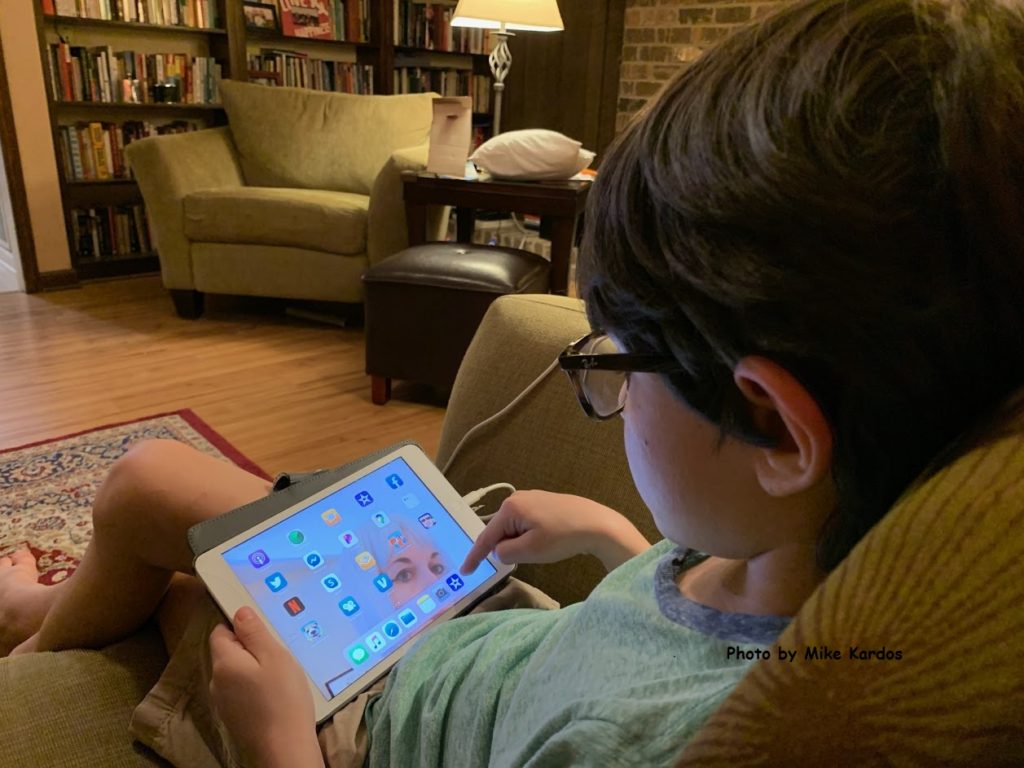
If you are worried about the amount of additional time your children will spend in front of the computer for entertainment in addition to schoolwork, use the American Academy of Pediatrics’ Family Media Plan tool to create a customized screen time contract.

Create a home learning space that your child can call their own. This will be where your child will complete schoolwork and homework. This is especially important if you child usually spends time doing homework on their bed. You want your child to associate their bed with relaxation and sleep rather than activities that rev up their mind. 

Get your child the flu vaccine this fall. Even if you never immunized in the past, this is the year you should. Please see our post on the benefits of the flu vaccine

Help your child to “roll with the punches.” Change, even happy change, can be stressful for adults. After all, we all know how adults often run around frantically during the winter holidays. If you feel frustrated, angry, or fearful about the pandemic, try to keep the brunt of your own negativity from your children. Kids are often more adaptable than you might give them credit for, but they tend to mimic their parents and look to parents about how to respond to new situations. Seek adult help to prevent your own negative feelings from flowing over and smothering your children.

You can do this. Who taught your children their first words? How to walk? The color of an apple? How to organize their homework? You will still have teachers who will teach the content of a class. Your role, as it always has been, is to provide the best possible  learning environment.

No matter how it looks, we wish your family a great start to the school year!

Naline Lai, MD and Julie Kardos, MD

©2020 Two Peds in a Pod®


Kids on computers: are special blue light-blocking filters worth the expense?


are glasses with special blue light-blocking filters worth the expense?

Kids are spending much more time on computers and other screens learning, staying in touch with friends and family virtually, and playing games. Are glasses with special blue light-blocking filters worth the expense? Our guest blogger, pediatric ophthalmologist Dr. Sheryl Menacker, addresses this question.
-Drs. Kardos and Lai 

There is much buzz about glasses that filter out blue light from computer, phone, and other screen devices.  But are the problems real and are these glasses worth the expense?    

The American Academy of Ophthalmology says no, and here is the explanation from their website.

Are eyeglasses with special blue light-blocking filters worth the expense? 

By absorbing the excess blue light from our devices, the eyeglasses claim to:

  • improve sleep
  • reduce digital eye strain
  • prevent eye disease

We all want to do these things, but it’s not necessary to spend money on special eye wear for computer use. Here’s why:

  • Blue light from computers will not lead to eye disease. It is true that overexposure to blue light and UV light rays from the sun can raise the risk of eye disease, but the small amount of blue light coming from computer screens has never been shown to cause any harm to our eyes.
  • Sleep can be improved without special eyeglasses. You don’t need to spend extra money on blue light glasses to improve sleep— simply decrease evening screen time and set devices to night mode.
  • Digital eye strain is not caused by blue light. The symptoms of digital eye strain are linked to how we use our digital devices, not the blue light coming out of them.

Computer/digital eye strain

While using devices will not damage your eyes permanently, staring at them for a long time can cause temporary discomfort. People experience eye strain in different ways, but symptoms can include:

The reason we get digital eye strain is that we blink less when we stare at our devices.

Normally, humans blink around 15 times per minute—but this “blink rate” can be cut in half when staring at screens or doing other near work activities (like reading). To reduce eye strain:

  • Take frequent breaks by using the “20-20-20” rule. Every 20 minutes look away from your screen and look at an object 20 feet away for at least 20 seconds. This gives your eyes a chance to reset and replenish themselves.
  • Use artificial tears to lubricate your eyes when they feel dry.
  • Keep your distance. Sit about 25 inches or at arm’s length from your screen and adjust its height so you’re looking slightly downward at it.
  • Reduce glare and brightness. Devices with glass screens can cause glare. To reduce glare, consider a matte screen filter for your device. Adjusting the brightness and contrast of your screen and dimming the lighting near your screen can also help reduce eye strain.
  • Wear eyeglasses. If you wear contact lenses, you already know they can increase dryness and irritation. To reduce these symptoms, try wearing eyeglasses instead when working on a computer for longer periods.

Sheryl Menacker, MD
©2020 Two Peds in a Pod®

Dr. Sheryl Menacker, of Tri-County Eye Physicians, is a certified Diplomate of the American Board of Ophthalmology, a Fellow of the American Academy of Ophthalmology, member of the American Association for Pediatric Ophthalmology and Strabismus, and examiner for the American Board of Ophthalmology. In addition to general pediatric ophthalmology, Dr. Menacker has a specialty interest in treating individuals with disabilities. She holds a clinical appointment at the University of Pennsylvania School of Medicine and Emory University, where she is an active teacher and lecturer. 


How to sit at the computer: Ergonomics for kids doing schoolwork at home

ergonomics for kids doing schoolwork at home

#homeschooling #computer ergonomics #COVID #admireteachers


Oh my aching back…

Right now, with schools closed, kids of all ages are doing schoolwork at home.  Technology has allowed continuation of learning and even face-to-face check in with teachers.  But it also poses some challenges. School classrooms are designed for children; our kitchen tables are not.  How to sit at the computer? Just as we require ergonomic workstations for our jobs; we need to consider proper fit and alignment for our children as they learn virtually. The following are basic ergonomics for kids doing schoolwork from home that can prevent muscle aches and fatigue.

Where to place the computer screen:

Place the computer screen directly in front of your child with the eyes level with a spot about 2-3” below the top of the screen.  In addition, place the keyboard so that the upper arms and shoulders are relaxed. The forearms should be parallel to the floor and the elbow bent less than 90 degrees.  The chair should have back support and allow the thighs to be supported parallel with the floor. Knees should also be bent to 90 degrees or a bit less with feet supported. This can be a challenge for our elementary school kids who are trying to work at home.  The Canadian Safety Council suggests: “choose a chair that places the child at the proper height in relation to the equipment. If that means a higher chair, provide a footrest to support the feet and a pillow to support the back.”

How can you adjust the chair?

Chairs with adjustable seat and footrest heights are great for this.  If you don’t have an adjustable chair, you may need to create a footrest out of a box, block or storage crate.  Also, since many children are using laptops, it is difficult to position both the screen and keyboard appropriately; it may be best to attach a separate monitor at the right height once the keyboard is set for proper arm and body position.

Avoid back and neck pain:

If children are using an iPad or reading a textbook, an angled book holder may help with proper positioning to avoid back and neck pain.  We have cookbook holders for a reason!

If your child is doing lots of writing or drawing:

An angled writing surface will help with fatigue and proper support.  There are quite a few child sized desks available with a surface that raises to an angle. If you child is a wiggler; consider a ball chair with an appropriate height table that allows for that 90-90-90 ankle, knee, hip alignment, or consider using a standing desk. In each case, the keyboard, mouse and screen still need to be adjusted for alignment as above.

The most important thing you can do is make sure your kids take a break and MOVE every 30 minutes according to both the Cornell University Ergonomics Web and Canada Safety Council.  Active breaks are necessary not just for the body, but for the eyes as well.  The best ergonomics for kids doing schoolwork at home cannot substitute for these breaks. 

Here are some ideas for quick movement breaks to keep the aches and pains away:

  1. Stand and stretch arms up overhead.  Grasp hands interlocking fingers, flip palms up to the ceiling and stretch.
  2. Bring arms behind your back at hip height, grasp hands or hand to wrist and try to pull shoulder blades down and together.
  3. Stand with hands against a wall, place one leg back with knee straight and foot flat on the floor.  Keeping your body straight like a board, lean into the wall and stretch the back of the calf.
  4. If you have a yoga ball, lie back over the ball with feet flat on the floor,  raise your arms out to the sides like a “T” and take some deep breaths.
  5. Go outside in the yard and play!
  6. No yard? Raining?  Have a dance party or play “Simon Says.”

Stay home.  Stay safe… and keep moving.

Deborah Stack, PT DPT PCS
©2020 Two Peds in a Pod®

We thank Dr. Stack for contributing to twopedsinapod.org— Drs. Lai and Kardos

Dr. Stack is a board certified specialist in pediatric physical therapy and the owner of the Pediatric Therapy Center of Bucks County, LLC in Doylestown, PA. In addition to treating children ages 0-21 for conditions such as torticollis, coordination,  neurologic and orthopedic disorders, she also instructs physical therapists across the country in pediatric development and postural control and is a Certified Theratogs fitter.