
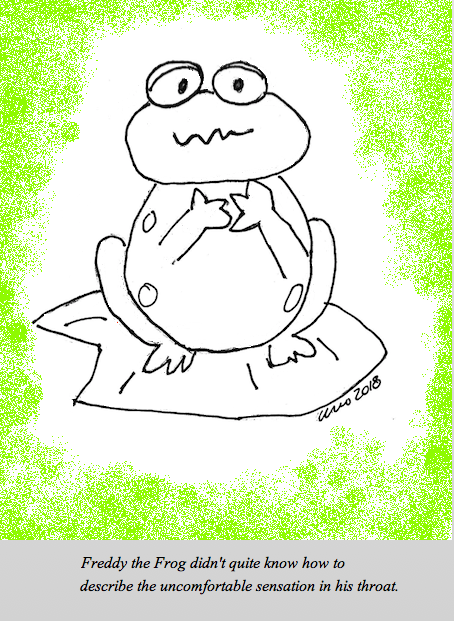
 Now that school has been in session for over a month, it’s not too early for you to learn all about strep throat. It might even save you a trip to the doctor’s office!
Julie Kardos, MD and Naline Lai, MD
©2019 Two Peds in a Pod®

Now that school has been in session for over a month, it’s not too early for you to learn all about strep throat. It might even save you a trip to the doctor’s office!
Julie Kardos, MD and Naline Lai, MD
©2019 Two Peds in a Pod®
The school nurse calls to say, “I have your child here with me and she has a sore throat. I think you should take her to the doctor to see if it’s strep throat.”
Strep throat is a throat infection caused by Group A streptococcus (Strep pyogenes) bacteria. Symptoms can include sore throat, Continue reading “Does my child have strep throat?”

Many times parents bring their children with a sore throat to our office to “check if it’s strep.” Some are disappointed to find out that their child does NOT have strep. Moms and Dads lament, “But what can I do for him if he can’t have an antibiotic? At least strep is treatable.”
Take heart. Strep or no strep, there are many ways to soothe your child’s sore throat:
Strep throat typically does not cause a bad cough, profuse runny nose, ulcers in the throat, or laryngitis. If your child has these other symptoms in addition to her sore throat, you can be fairly sure that she does NOT have strep. For a better understanding of strep throat, see our updated post on this topic.
The following are each a very important sign that a child with a sore throat needs to see a doctor for further evaluation:
1-can’t swallow (kids might even spit out their own saliva)
2-can’t open his mouth fully
3- hurts so much that the pain is not alleviated with the above measures in this post
4- presence of fever 101F or higher for more than 3-4 days
5-is accompanied by a new rash
Please also see our prior post on how to tell if you need to call your child’s doctor for illness.
Julie Kardos, MD and Naline Lai, MD
©2016, 2015, 2012 Two Peds in a Pod®t
 Many times parents bring their children with sore throats to our office to “check if it’s strep.” Some are disappointed to find out that their child does NOT have strep. Moms and Dads lament, “But what can I do for him if he can’t have an antibiotic? At least strep is treatable.”
Take heart. Strep or no strep, there are many ways to soothe your child’s sore throat:
Strep throat does not cause cough, runny nose, ulcers in the throat, or laryngitis. If your child has these other symptoms in addition to her sore throat, you can be fairly sure that she does NOT have strep. For a better understanding of strep throat see our posts: “Strep throat Part 1: what is it, who gets it and why do we care about it” and “Strep throat Part 2: diagnosis, treatment, and when to worry.”
Any sore throat that prevents swallowing or prevents your child from opening his mouth fully, pain that is not alleviated with the above measures, fever of 101F or higher for more than 3-4 days, or a new rash all merit a prompt visit to your child’s doctor for further evaluation. Please see our prior post on how to tell if you need to call your child’s doctor for illness.
Julie Kardos, MD and Naline Lai, MD
©2012 Two Peds in a Pod®
How can I tell if my child has strep throat?
The definitive way to diagnose strep throat is for a health care provider to get a sample of the sore throat germs from your child by using a long cotton swab to gently swipe the sore throat and send the germs to a laboratory for culture. The laboratory lets the germs grow to determine if the Strep Throat bacteria grows from your child’s throat.
Thus, strep throat cannot be diagnosed over the telephone. Nor can health care providers rely solely on physical exam findings, because while there is a “classic” look to strep throat, some kids have normal appearing throats yet the test reveals strep, while others have yucky looking throats but in fact have some other viral infection causing their sore throat and thus do not need antibiotic treatment since antibiotics do not cure viruses. Health care providers ask questions about your child’s symptoms and perform a thorough physical exam and then do a “strep test” if they are suspicious that your child may have strep throat.
Many pediatric offices use rapid strep tests to help make a quick decision about treatment because the strep culture takes about 48 hours or so to finalize. These tests are fairly reliable, but sometimes the quick test is negative (shows NO strep) even if strep is present, so most offices will send a culture back-up if the rapid test is negative (no strep germs found). The other problem with the quick test is that once your child has strep, the quick test stays positive for about a month, even if your child no longer has strep disease. So if a child is treated for strep throat and then develops another sore throat within a month of treatment, that child needs a strep culture back up if the office quick test is positive.
To further complicate matters, some kids “carry” the strep germ in their throats but never develop the disease (no sore throat or illness symptoms). These kids will test positive for strep but do not require treatment. This is why we do not routinely check kids for strep throat unless they have symptoms of strep throat.
My child was treated for strep throat. We used all of the antibiotic. Three days later his sore throat is back. Why did this happen?
The most common reason for getting two episodes of strep throat close together is that your child contracted the germ again, usually from a classmate in school. If your child gets strep throat again, it is usually not because the antibiotic didn’t work but rather it is from bad luck. Most doctors treat a second episode of strep with the same medicine used the first time around.
Luckily, strep throat has not shown much, if any, resistance to standard antibiotic therapy. The reason that children (and adults) are treated for a full course of antibiotic is that this duration is known to prevent some of the complications of strep throat. You should give your child the complete course of antibiotic her health care provider prescribes, even if she “feels better” part way through the treatment. In addition to treating with antibiotic, be sure to provide pain medicine such as acetaminophen (brand name Tylenol) or ibuprofen (Motrin or Advil) to treat sore throat pain as needed.
Reasons to contact your child’s health care provider during treatment would be increasing pain, inability to swallow, or looking worse instead of better during the course of treatment.
Julie Kardos, MD
© 2010 Two Peds in a Pod
You just got the call from the school nurse, who tells you: “I have your child here with me and she has a sore throat. I think you need to take her to the doctor to see if it’s strep throat.”
What exactly IS Strep Throat?
Strep throat is a throat infection caused by Group A streptococcus bacteria. Symptoms can include sore throat, fever, pain with swallowing, enlarged lymph nodes (glands) in the neck, headache, belly pain, vomiting, and rash. Not all symptoms are present in all kids with strep throat.
Symptoms do NOT include cough, profuse runny nose, or diarrhea. Only about 15 percent of all kids coming to our offices with a main concern of “sore throat” are going to actually have strep throat. That means that MOST kids with sore throats will turn out to have something other than strep throat, usually some form of virus causing pain or post-nasal drip.
Who gets Strep Throat?
The most common age for kids to get strep throat is between ages 5 to 12 years old. For some reason, kids younger than 3 years are not as prone to strep throat. Also strep throat is seen less often in adults than school aged kids. Some children appear really ill with strep throat and other kids just have a bad sore throat, but with pain medicine can look quite well.
So why do we care about strep throat?
Most children’s immune systems are really good at fighting the strep germ off and in fact most kids will get better from strep throat even if they are not treated. However, some kids’ immune systems get a little haywire when fighting the strep germ, and in addition to making antibodies (germ-fighting cells) to fight the strep, they make antibodies against their own heart valves (immune system gets confused) which causes rheumatic fever. It has been shown that treating strep throat with antibiotics shortens the duration of strep throat only by about one day, but more importantly prevents the body from making the wrong kind of immune cells, or antibodies, against the heart valves thus lowering the risk of rheumatic heart disease.
Strep throat can also lead to other complications such as scarlet fever (strep throat plus sandpaper-feeling rash on the skin), peritonsilar abscesses (pus pocket in the tonsils) and kidney inflammation (first symptom can be cola-colored urine).
Stay tuned for Part 2 about Strep Throat: how it is diagnosed and treated.
Julie Kardos, MD
© 2010 Two Peds in a Pod

