Why do tummy time?

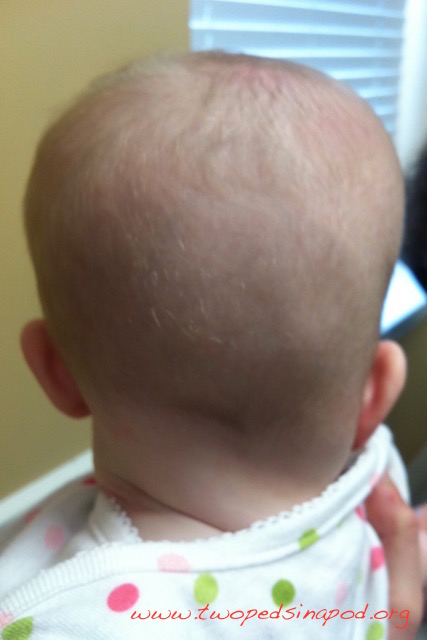
Tummy time can prevent flat head syndrome, or plagiocephaly

Your insta feed is probably flooded with ideas on how to encourage tummy time with your baby. 

We see one pediatrician has garnered nearly a million views. So why bother with tummy time in the first place?

In the late 1990s, pediatricians noted that while the safe sleep recommendation of “back to sleep” prevented sudden infant death syndrome, back sleeping caused the back of heads to flatten. Tummy time gives babies time off of the back of their heads. 

Rest assured, it is not important for your baby to have a perfect basketball-shaped head. Instead, you are helping to prevent obvious flattening. Once your baby learns to sit, around 6 to 7 months, they will spend much less time lying down and have more time for their heads to round out as they continue to grow. 

Flattening from pressure on the skull is called “positional plagiocephaly,” which is different from the more serious condition of  craniosynostosis. Routine pediatrician visits help your baby’s doctor to determine if your baby’s head is growing correctly.

Continue reading “Why do tummy time?”


Share

Why do babies cry?

why do babies cry? Crying emoji and baffled mom

Why do babies cry? In short, infants cry to communicate. Remember, babies cannot talk. They can’t even smile back at you until around six weeks of age.

Dr. Kardos recently welcomed her first grandbaby into the world, so we revisit our baby posts with a fresh eye. Here is the first of many!

The long and short of it is that babies cry when they…

  • Are tired.
  • Are hungry.
  • Feel too cold.
  • Feel too hot.
  • Need to be changed –Dr. Kardos never really believed this reason before she had her twins. Her firstborn couldn’t have cared less if he was wet and could nap right through a really poopy diaper. Then she had her twins. She was amazed that their crying stopped if she changed the tiniest bit of poop or a wet diaper. Go figure. As Dr. Lai says, “different kids are different.”
  • Are bored. Try swapping out the white noise and cue up some hip-hop or K-pop instead. Maybe they want a car ride. Another option: try moving them to another room in the house for a simple change of scenery.
  • Feel pain. Look for a piece of hair wrapped around a finger or toe. Make sure they are not out-growing the elastic wrist or ankle band on their clothing. Dr. Lai’s second born is a young adult but there is still a faint mark on her ankle from tight elastic that only a mom would notice.
  • If the crying is worse in a well-lit room, their eye appears red and irritated, or there are scratch marks next to their eye, your baby may have scratched their eye (corneal abrasion). Call your pediatrician if you suspect this.
  • Need to be swaddled. Remember a fetus spends the last trimester squished inside of their mom. Discovering their own randomly flailing arms and legs can be disconcerting to a newborn.
  • Need to be UN-swaddled. Hey, some like the freedom to flail.
  • Need to be rocked/moved. Dr. Lai’s firstborn spent hours tightly wrapped. Her dad held her in a nearly upside down position nicknamed “upside-down-hotdog.” Every evening he paced with her all around the living room.
  • Need to burp. Lay your crying baby down for a minute. Bring them up again to see if you can elicit a burp.
  • Are gassy. Bicycle their legs while on their back. Position them over your shoulder so that their belly presses against you. You’d be gassy too if you couldn’t move very well. The gassy baby is a topic for this entire post– talk to your doctor for other ideas.
  • Are sick. Watch for fever, inability to feed normally, labored breathing, diarrhea or vomiting. Check and see if anything is swollen or not moving. Listen to the cry. Is it weak and whimper-like (sick) or is it loud and strong (not so sick)? Do not hesitate to check with your pediatrician. Fever in a baby younger than eight weeks old is considered 100.4 degrees F or higher measured rectally. A feverish newborn needs immediate medical attention.
Continue reading “Why do babies cry?”
Share

Gift Ideas for Newborns: Recommendations from Pediatricians

Baby in a bath under a water shower to highlight gift ideas for newborns

Looking for gift ideas for baby showers or baby namings beyond cute baby outfits and big items? Dr. Kardos welcomes a little one into her family soon so we thought we’d give you some pediatrician-inspired ideas. These gifts support the essentials of what little (and big) people need to do: eat, sleep, pee, poop, love, and learn.

EAT

Pick up breast pump accessories, bottles and nipples, post-partum doula help, and lactation consultant sessions for the new mom.

Vitamin D supplementation is recommended for all babies, whether breast or formula fed. The dose is 400 IU = 10mcg per day. Ask the pharmacist for help finding these over-the-counter baby vitamins.

Continue reading “Gift Ideas for Newborns: Recommendations from Pediatricians”
Share

A developmental guide to reading to your young child

how to read to your young child
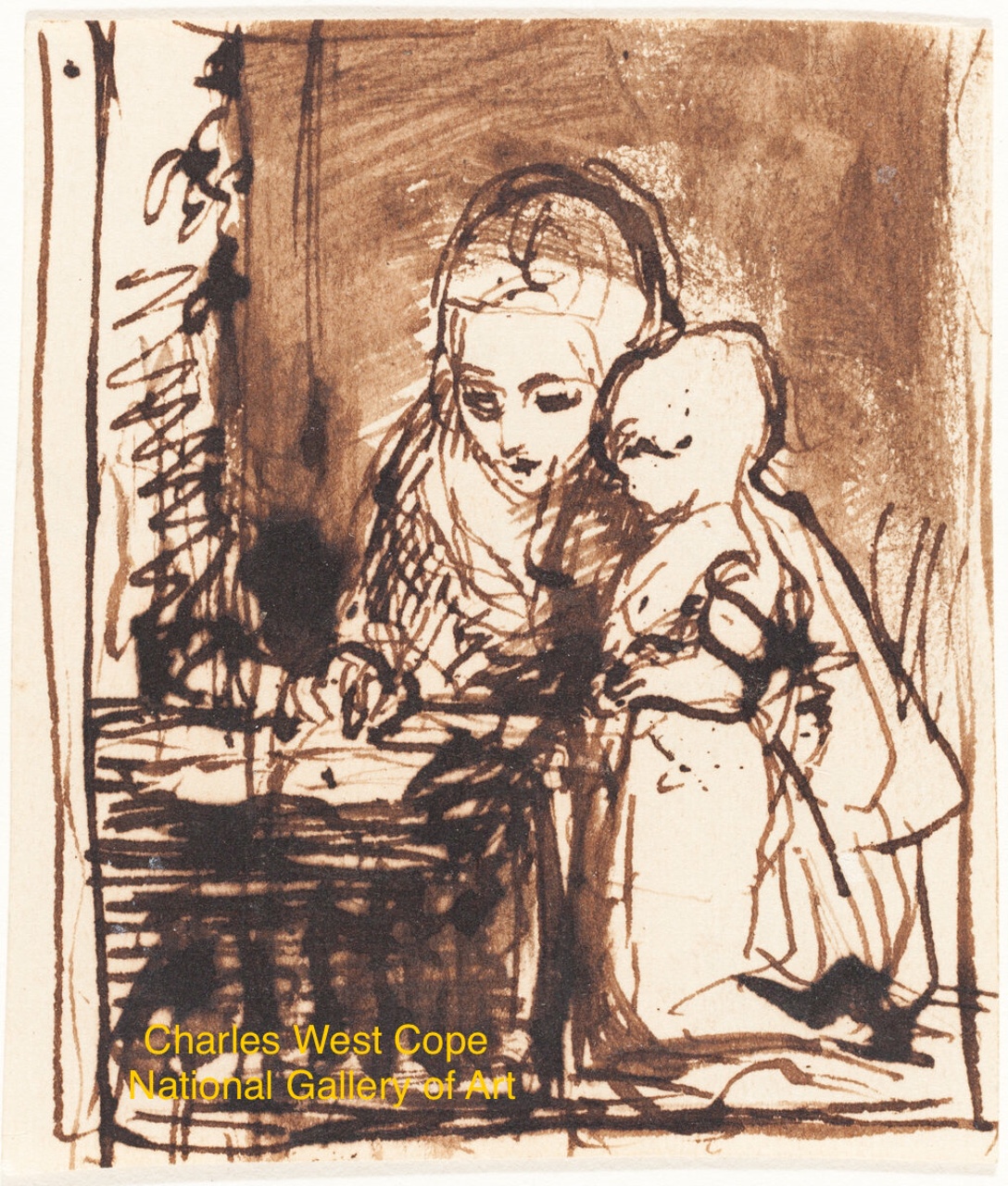
Charles West Cope (British, 1811 – 1890 ), Woman Reading to a Child, Gift of William B. O’Neal 1995.52.28

We know parents who started reading to their children before they were born, but don’t fret if you didn’t start when baby was in the womb. It’s never too late to start. Today we give you a developmental guide to reading with your young child.

Three months of age

By three months of age, most babies are sleeping more hours overnight and fewer hours during the day (and, hence, so are their parents). Now you have time to incorporate reading into your baby’s daily schedule. At this age babies can visually scan pictures on both pages of a book. Babies see better close-up, so you can either prop your baby on your lap with a book in front of both of you, or you can lie down next to your baby on the rug and hold the book up in front of both of you. The classic Goodnight, Moon by Margaret Wise Brown or any basic picture book is a great choice at this age.

Six months of age

By six months of age many babies sit alone or propped and it is easier to have a baby and book in your lap more comfortably. Board books work well at this age because 6-month-olds explore their environment by touching, looking, and MOUTHING. Sandra Boynton’s Moo, Baa, La La La was a favorite of Dr. Kardos’s twins at this age, both to read and to chew on.

Nine months of age

Continue reading “A developmental guide to reading to your young child”
Share

Tips on how to start your baby on food

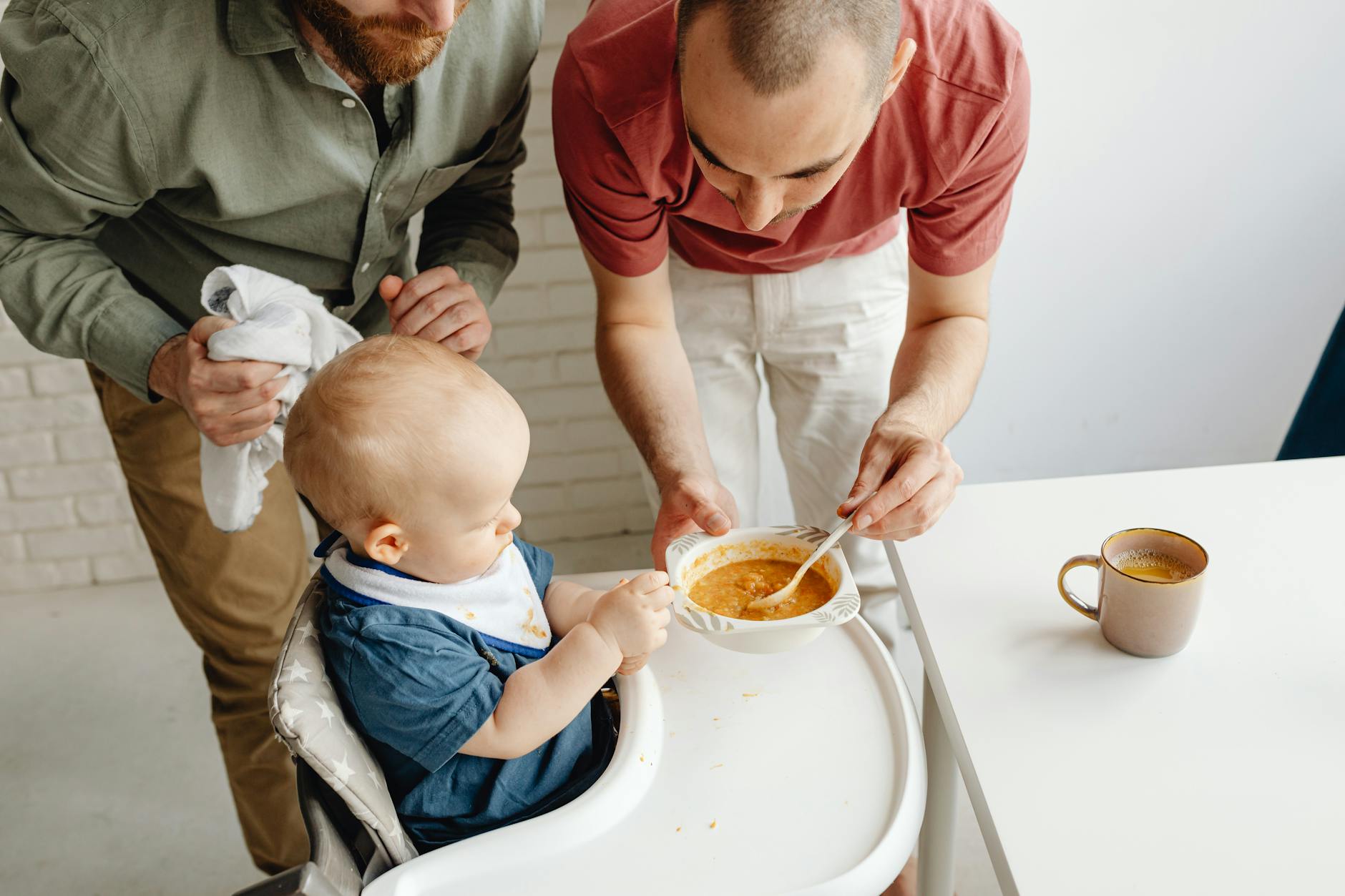
parents feeding baby at breakfast
Photo by Photo By: Kaboompics.com on Pexels.com

Your baby stares at you as you eat, and their eyes follow everything you put into your mouth. Are they ready to join your family at the dinner table?  Has your pediatrician given you the go-ahead to start feeding your baby solid foods? Here are tips on how to start your baby on food.

Before you get started

Eating a meal with family is social as well as nutritious. Keep eating a pleasant and relaxed experience. Avoid force-feeding or tricking your child into eating. Feed your baby at the family table. Your baby learns to eat by watching others eat. Family meals foster family connections.  

The first taste: Babies expect a breast or a bottle when hungry. So make sure your baby is happy and awake but NOT starving the first time you feed her solid food because at this point she is learning a skill, not eating for nutrition. Keep a camera nearby because babies make great faces when eating food for the first time. Many parents like to start new foods in the morning so that they have the entire day to make sure it agrees with their baby. 

Continue reading “Tips on how to start your baby on food”
Share

RSV Prevention Updates for 2024-2025

RSV

Hello, parents! As we gear up for another winter season, we want to share some important RSV prevention updates. RSV, or Respiratory Syncytial Virus, can cause nasty colds, but it’s particularly concerning for babies under 8 months old, as it leads to more hospitalizations than any other illness in this age group.

Good News About Beyfortus!
Last winter, we saw some fantastic results from nirsevimab, better known as the brand name Beyfortus. Beyfortus is RSV antibody designed to protect our littlest ones. It was shown to be 90% effective in reducing hospitalizations due to RSV. That’s a big win for babies and their families.

How Can You Protect Your Baby?
There are two key ways to help keep your young infant safe from severe RSV:

Continue reading “RSV Prevention Updates for 2024-2025”
Share

Protection against severe RSV-we finally have it!

protection for babies against severe RSV

mother carrying baby
Photo by Laura Garcia on Pexels.com

Finally!

Pediatrician and parents have waited patiently for effective protection for babies against severe RSV (respiratory syncytial virus) infections, and we finally have it.

Welcome, nirsevimab – otherwise known as brand name Beyfortus.

Nirsevimab protects against RSV, which is a nasty cold virus that attacks young lungs fiercely. While many babies with RSV end up with “just a cold,“ 20% to 30% with a first time infection end up with lung infections. Year after year hospitals fill with babies battling RSV. An additional problem with RSV: babies sick with RSV have a greater risk of developing asthma than babies who were never infected with RSV.

This viral season every newborn and any baby younger than eight months of age is eligible for a one time shot of nirsevimab. The shot gives protection in the form of antibodies to RSV. 

Not a new type of medicine

A similar medication called palivizumab (brand name Synagis) has been around for years. However, only certain high risk babies, such as those who were born very prematurely, received it. Palivizumab consisted of monthly injections during RSV season (typically October through March).

Conveniently, one dose of nirsevimab gives protection against severe RSV for five months.  All babies under eight months of age during RSV season will be eligible to receive this new protection.

Be sure to discuss nirsevimab with  your pediatrician this fall.

For a more detailed account of nirsevimab recommendations read here.

The arrival of nirsevimab will make every pediatrician and lots of babies breathe a little easier this fall and winter.

Julie Kardos, MD and Naline Lai, MD

©2023 Two Peds in a Pod®

Share

Does your baby have a white tongue? Think Thrush

thrush
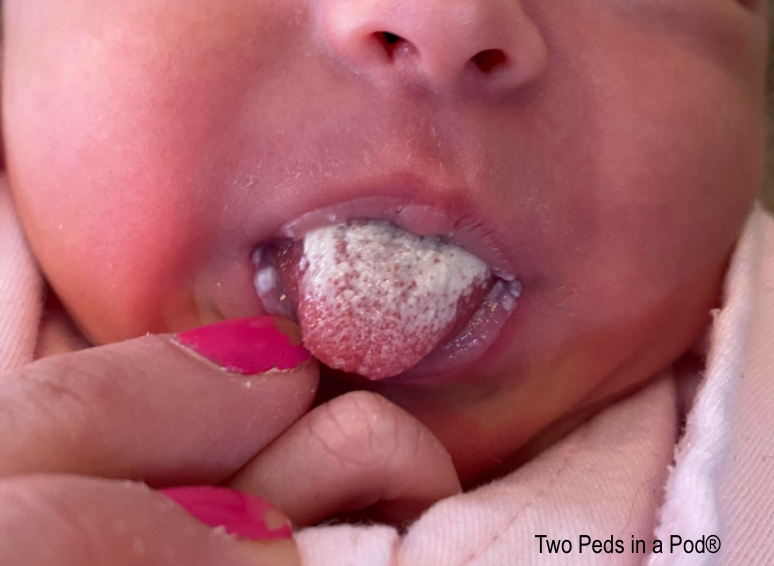
White curds that don’t wipe off can be indicative of thrush.

You find cottage cheese like curds coating the inside of your baby’s tongue and inner cheeks and try to wipe them off to no avail. It’s not breast milk, not formula. It’s thrush.

Thrush, fancy medical name Oral Candidiasis, is caused by an overgrowth of yeast, called Candida. Although not painful, it may cause discomfort akin to having a film of cotton coating the inside the mouth. 

We ALL have yeast, which is a type of fungus, on our bodies. Usually we have enough bacteria on our bodies to suppress the growth of yeast, but in cases when there is less than usual bacteria present such as in young babies or in kids who are on antibiotics, Candida can emerge. For older kids using inhaled steroids for asthma, failure  to rinse out the mouth after medication use also promotes an environment conducive to thrush. 

Continue reading “Does your baby have a white tongue? Think Thrush”
Share

What do Rock ‘n Play and socks have in common? They’ve both been recalled this year. Predicting what’s up next:

child product recall

Whenever we look at the child product recall lists from The Consumer Protection Safety Commission (CPSC), it never fails to amaze us that even big brand names crop up in product recalls for children. Ironically, most are not new-fangled products. Bouncer seats, high chairs, rattles, and bicycle helmets are often amongst the recalls. We figure after decades of baby product manufacturing, designers and production managers would understand what constitutes a potential hazard for kids.

We urge you to scrutinize the kid merchandise in your house and identify the potential hazards before your child ends up as the reason a product is on the CPSC list. In fact, you might have already missed a recall on your older products. According to kidsindanger.org, child product recalls occur a couple of times a week, but when a baby product is recalled, only 10-30 percent are ever retrieved. Because recalls occur AFTER injury or death occurs, it is better if parents assess the safety of child products before a recall.

Here are some common reasons for recalls:

Products fail to adhere to the American Academy of Pediatrics safe sleep guidelines. We know parents of crying young infants are often desperate to get some sleep themselves, but many sleep products are not studied. If it seems too good to be true, it probably isn’t. Infants are not ready developmentally to sleep through the night, so any product that promises to help your infant sleep through the night is, by definition, problematic. An example is the Rock ‘n Play sleeper which was recently recalled. The soft squishy inclined cradles clearly did not adhere to the safe sleep guidelines, but often we heard a parent say, ”But that’s the only place they will sleep.” Unfortunately, this recall does not undo the deaths of the 32 reported babies who died in the sleeper. In the wake of the recall, other companies who make similar sleepers are also recalling their products.

We cringe every time a family tells us they are using a new fangled piece of wrap-around-baby sleep gear or sleeping contraption, because
most involve soft surfaces (not advised), inclined surfaces (not advised) or things-in-the-crib-other-than-your-baby (also not advised). Continue reading “What do Rock ‘n Play and socks have in common? They’ve both been recalled this year. Predicting what’s up next:”

Share
image_pdfimage_print