Food Allergies- Epinephrine hints and a free coloring book

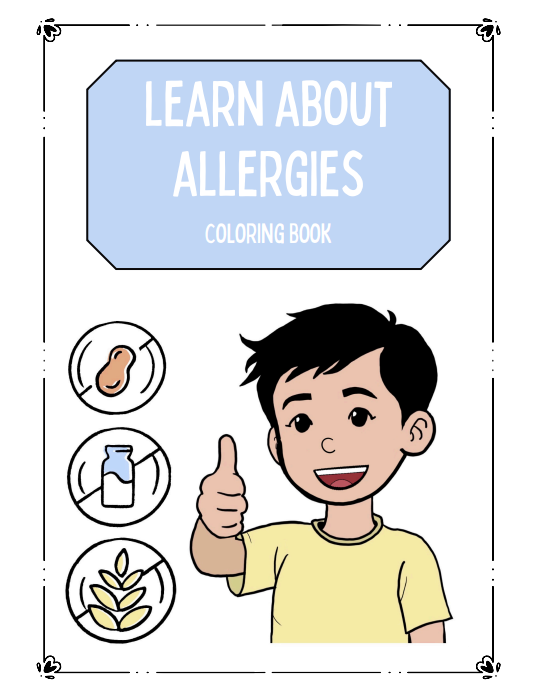
Allergy Coloring Book
For a free electronic copy of a food allergy coloring book, write us at twopedsinapod@gmail.com

As kids head back to school, it’s a good time to review how to administer your food-allergic kid’s emergency epinephrine. Dr. Lai, who has two young adults who grew up with food allergies, and Dr. Kardos offer these hints:

-Double check to make sure the medication has not expired. Also, make sure you are giving the school medication that does not expire in the middle of the school year.Double check to make sure the medication has not expired. Also, make sure you are giving the school medication that does not expire in the middle of the school year.

-What about antihistamine or asthma medications? Yes, go ahead and send them in with your child, but remember, only  epinephrine can  reverse the life-threatening symptoms of an anaphylaxis. Other medicines like antihistamines cannot stop the reaction.

Continue reading “Food Allergies- Epinephrine hints and a free coloring book”

Share

Prevent your children from ingesting THC edibles

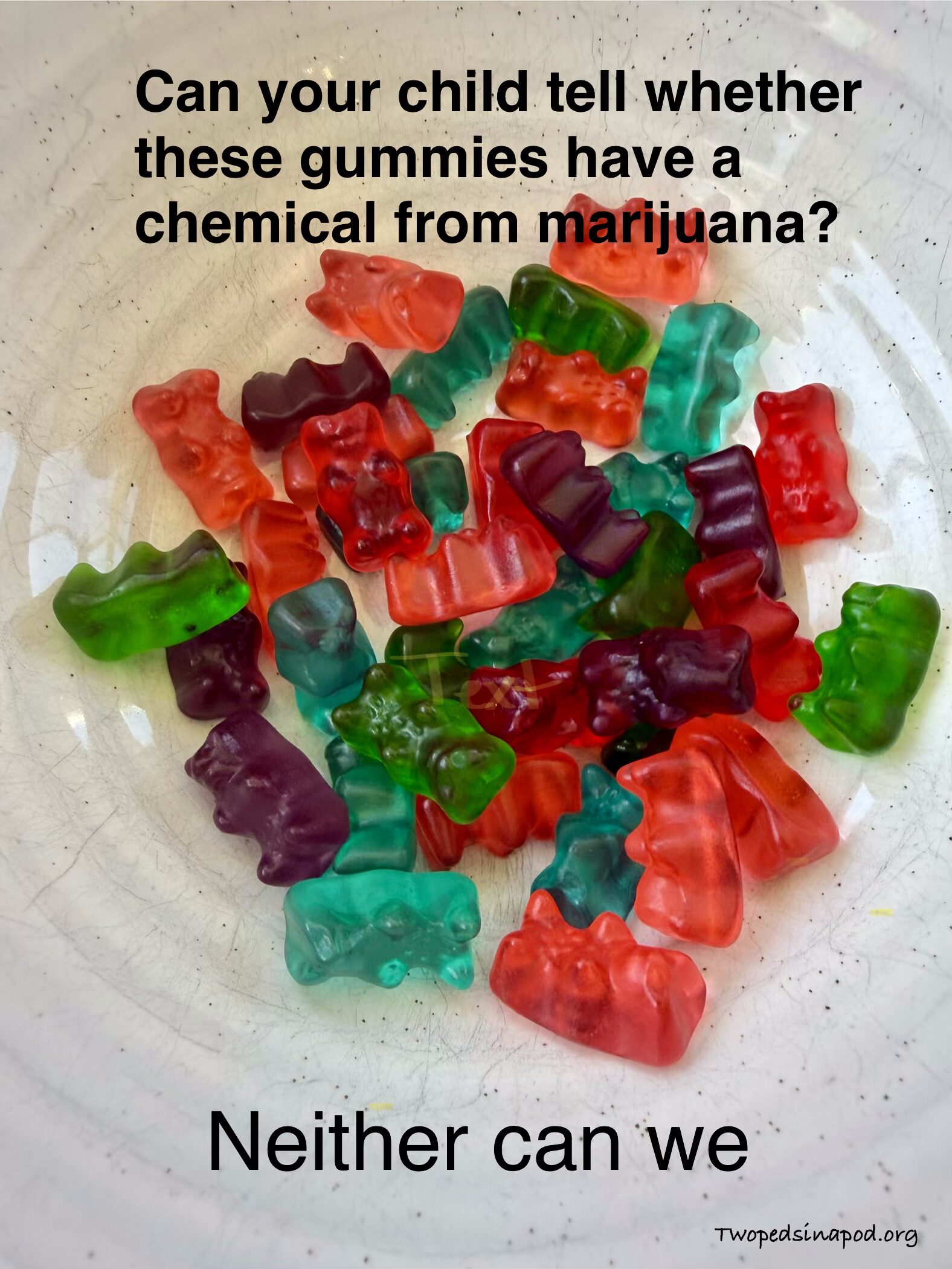
gummy bears on a dish that look just like edibles

“4 Bucks County Middle School Students Sickened After Ingesting THC Gummies

This incident occurred close to our pediatric offices and involved four students, just 12 and 13 years old. As pediatricians—and as members of this community—we feel it’s important to talk about what happened and why it matters.

THC is the active compound in marijuana. In edible forms like gummies, the concentration can be quite high. For a child, consuming even a small amount of these products can lead to serious, and sometimes life-threatening, effects.

At this time, it is unclear whether the students in our nearby middle school knew the gummies contained THC, or where they obtained them—whether from a store, a friend, a sibling, or an adult. What we do know is that these products are easy for middle schoolers to access and very easy to mistake for regular candy.

Continue reading “Prevent your children from ingesting THC edibles”
Share

A developmental guide to reading to your young child

how to read to your young child
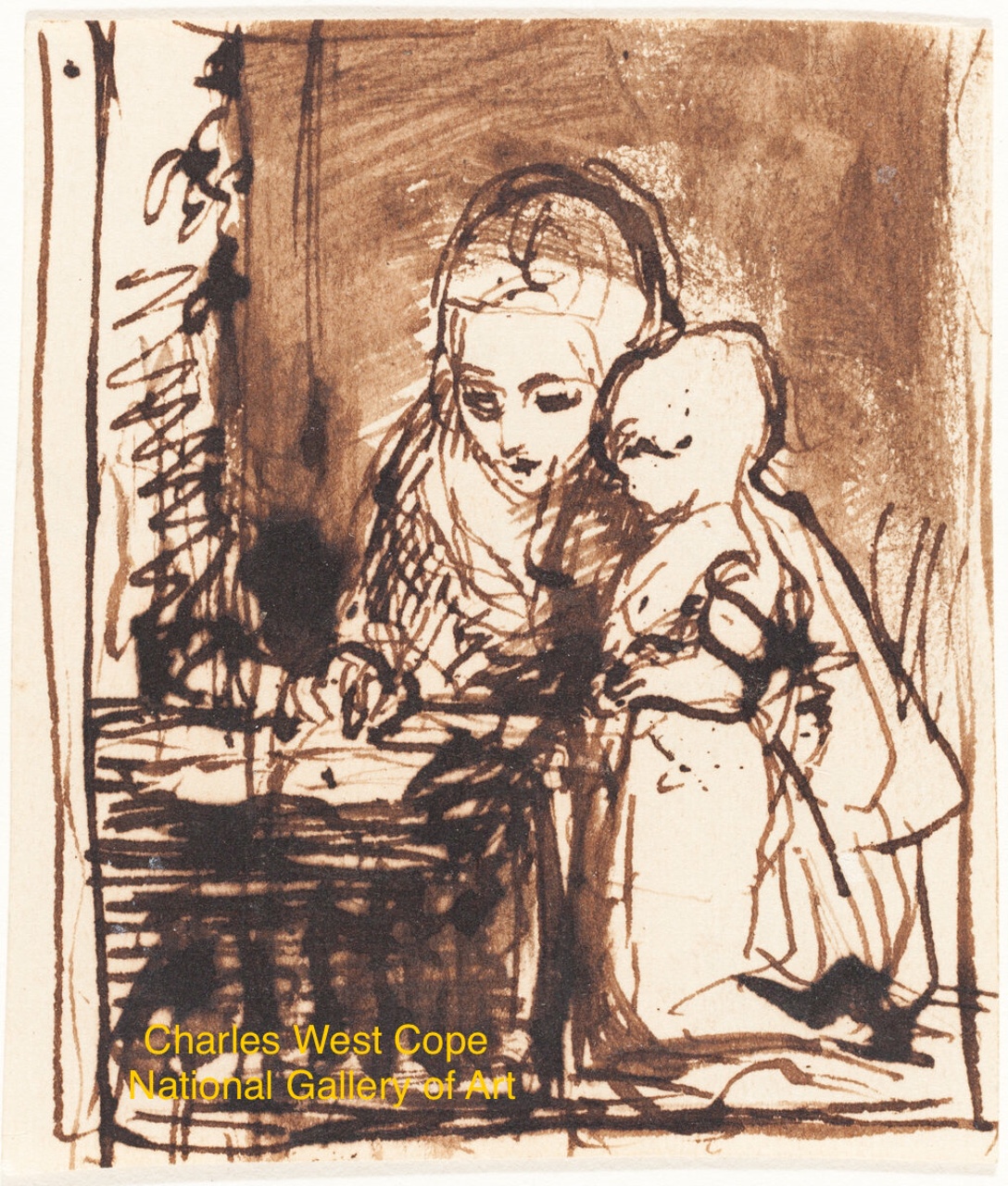
Charles West Cope (British, 1811 – 1890 ), Woman Reading to a Child, Gift of William B. O’Neal 1995.52.28

We know parents who started reading to their children before they were born, but don’t fret if you didn’t start when baby was in the womb. It’s never too late to start. Today we give you a developmental guide to reading with your young child.

Three months of age

By three months of age, most babies are sleeping more hours overnight and fewer hours during the day (and, hence, so are their parents). Now you have time to incorporate reading into your baby’s daily schedule. At this age babies can visually scan pictures on both pages of a book. Babies see better close-up, so you can either prop your baby on your lap with a book in front of both of you, or you can lie down next to your baby on the rug and hold the book up in front of both of you. The classic Goodnight, Moon by Margaret Wise Brown or any basic picture book is a great choice at this age.

Six months of age

By six months of age many babies sit alone or propped and it is easier to have a baby and book in your lap more comfortably. Board books work well at this age because 6-month-olds explore their environment by touching, looking, and MOUTHING. Sandra Boynton’s Moo, Baa, La La La was a favorite of Dr. Kardos’s twins at this age, both to read and to chew on.

Nine months of age

Continue reading “A developmental guide to reading to your young child”
Share

More tips on feeding your baby: finger foods, cups, and more

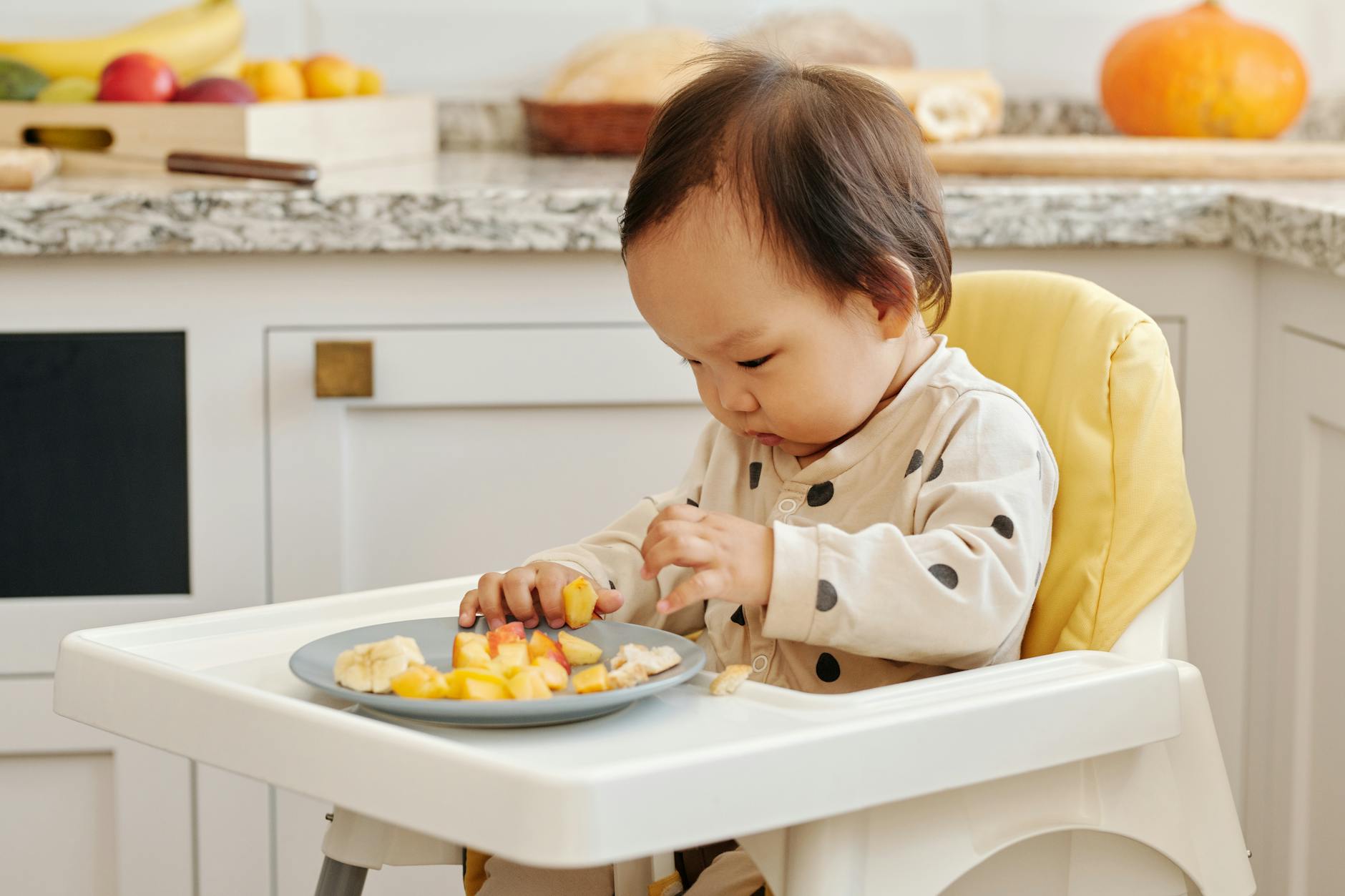
a toddler eating fruits sitting on the high chair
Photo by Vanessa Loring on Pexels.com

Dr. Kardos recalls what a game-changer it was when her twin babies could feed themselves. Although messy, it was much easier than spoon feeding simultaneously two hungry babies. Now that you started your baby on solids using ideas from our last post, let’s move on to tips on cups, finger foods and more. Mealtime will be less chaotic.

Cups and finger foods

Starting at six months your child moves towards three solid food meals a day. Babies continue to drink breast milk or formula in between, but you can start teaching them how to use a cup. Offer a few sips of water, formula or breast milk when they sit down to eat. Use any type of cup, including an open cup. Avoid juice since it contains a lot of sugar and very little nutrition.

Continue reading “More tips on feeding your baby: finger foods, cups, and more”
Share

Tips on how to start your baby on food

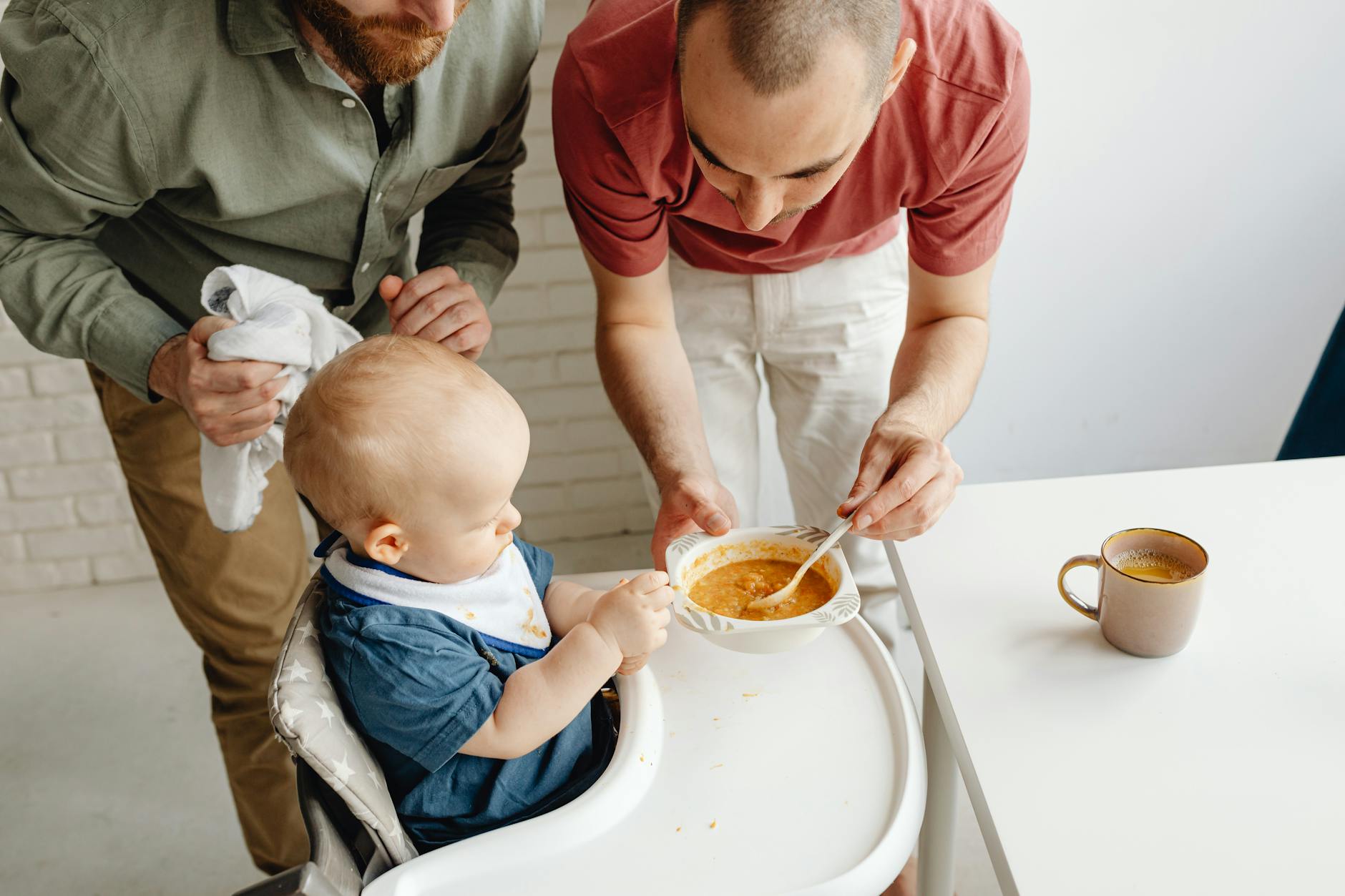
parents feeding baby at breakfast
Photo by Photo By: Kaboompics.com on Pexels.com

Your baby stares at you as you eat, and their eyes follow everything you put into your mouth. Are they ready to join your family at the dinner table?  Has your pediatrician given you the go-ahead to start feeding your baby solid foods? Here are tips on how to start your baby on food.

Before you get started

Eating a meal with family is social as well as nutritious. Keep eating a pleasant and relaxed experience. Avoid force-feeding or tricking your child into eating. Feed your baby at the family table. Your baby learns to eat by watching others eat. Family meals foster family connections.  

The first taste: Babies expect a breast or a bottle when hungry. So make sure your baby is happy and awake but NOT starving the first time you feed her solid food because at this point she is learning a skill, not eating for nutrition. Keep a camera nearby because babies make great faces when eating food for the first time. Many parents like to start new foods in the morning so that they have the entire day to make sure it agrees with their baby. 

Continue reading “Tips on how to start your baby on food”
Share

Baby food pouches are not a developmental milestone

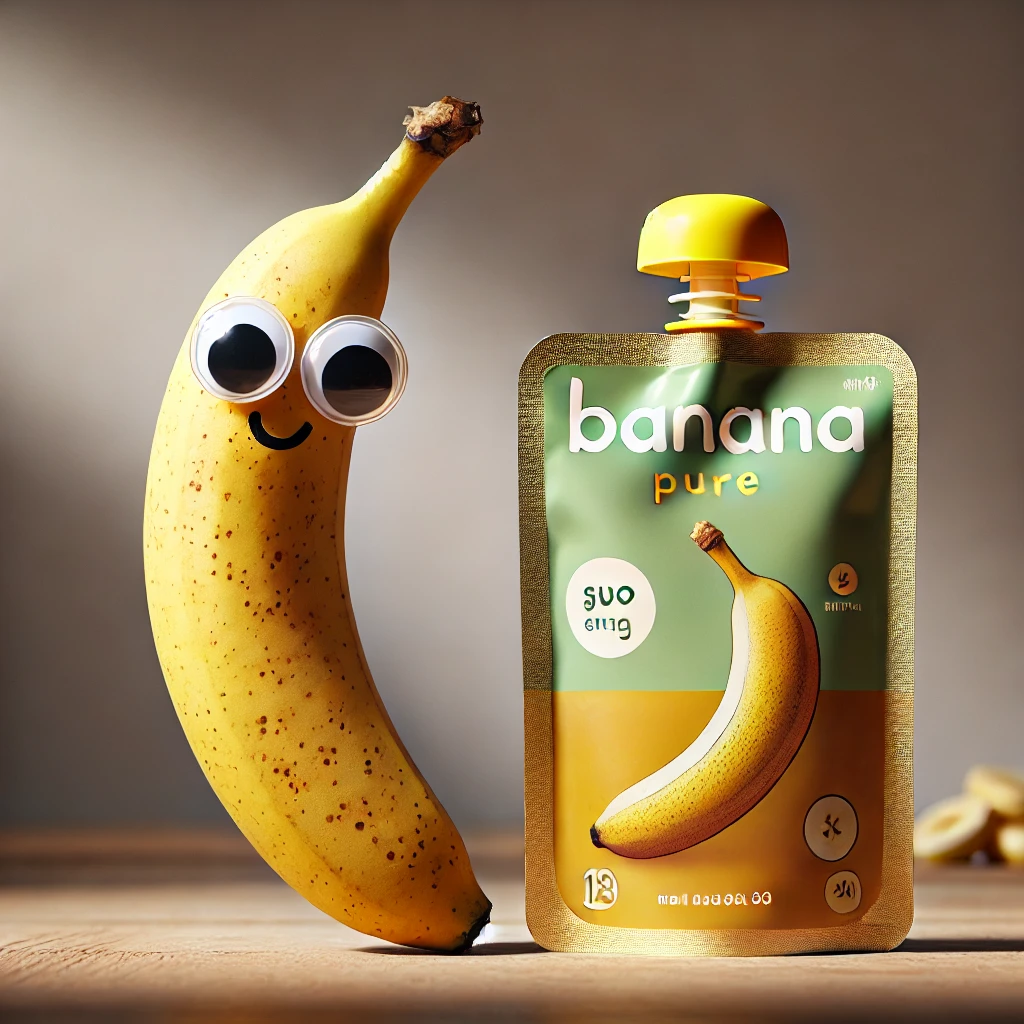
baby food pouches can be 12 times as expensive as actual food

A google search of baby food pouches yields overwhelming options. When I see babies sucking on these pouches I think: are we in a spaceship? We are raising children, not astronauts. Most of us do not suck our meals; we bite and chew them. Please consider the following problematic aspects of baby food pouches before you buy more of them.

The texture in every food pouch is the same

Continue reading “Baby food pouches are not a developmental milestone”
Share

Parent guide to traveling with young children for the holidays

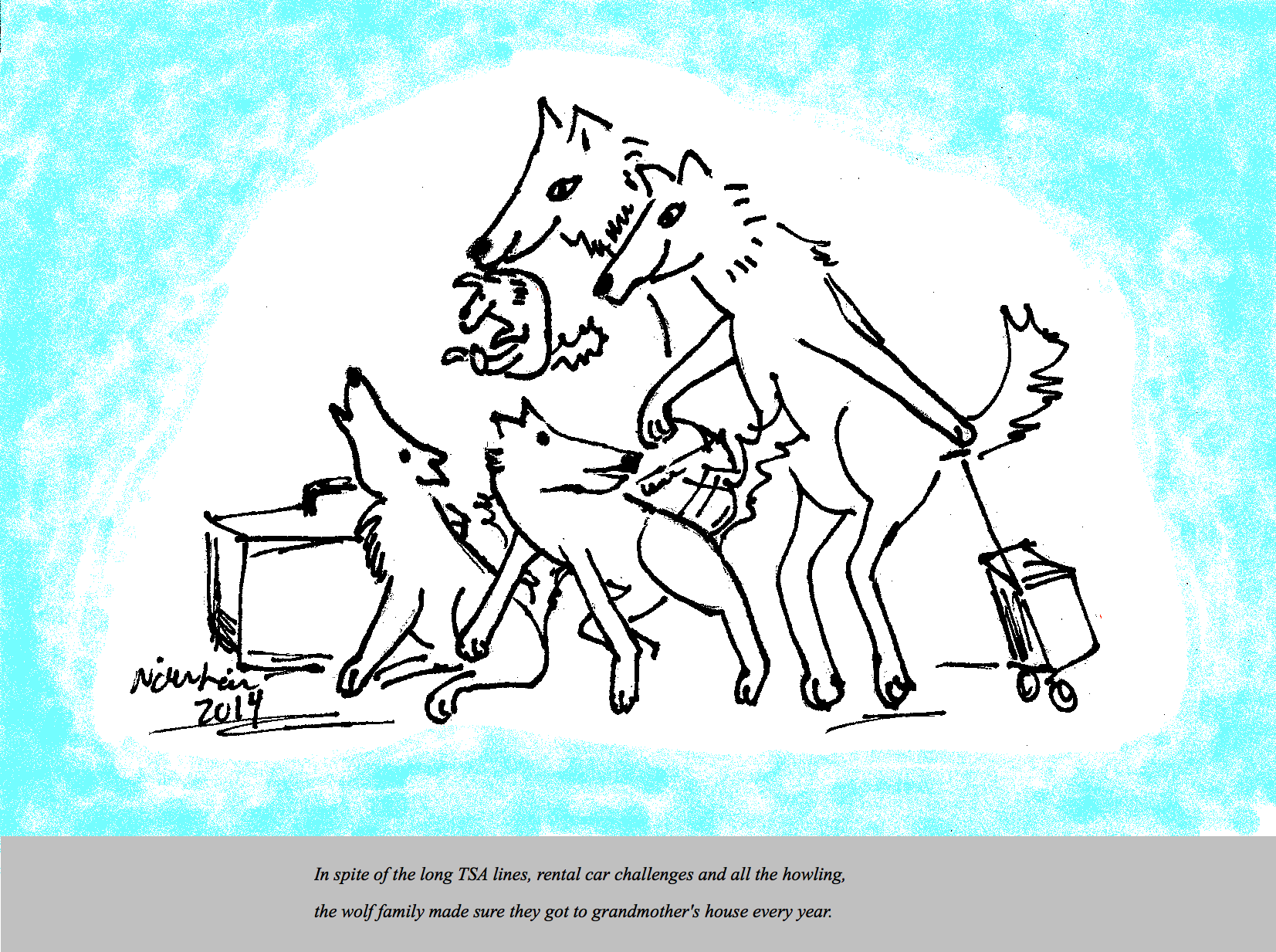
Cartoon of wolf family traveling with young children

Do you plan to travel with young children this holiday season? You won’t appreciate how much your baby has grown until you attempt a diaper change on a plane. For families, any holiday can become stressful when traveling with young children is involved. Often families travel great distances to be together and attend parties that run later than their children’s usual bedtimes. Fancy food and fancy dress are common. Well-meaning relatives who see your children once a year can be too quick to hug and kiss, sending even not-so-shy kids running. Here are some tips for safer and smoother holiday travel.

Continue reading “Parent guide to traveling with young children for the holidays”
Share

Lice: Don’t Scratch Your Head Over It!

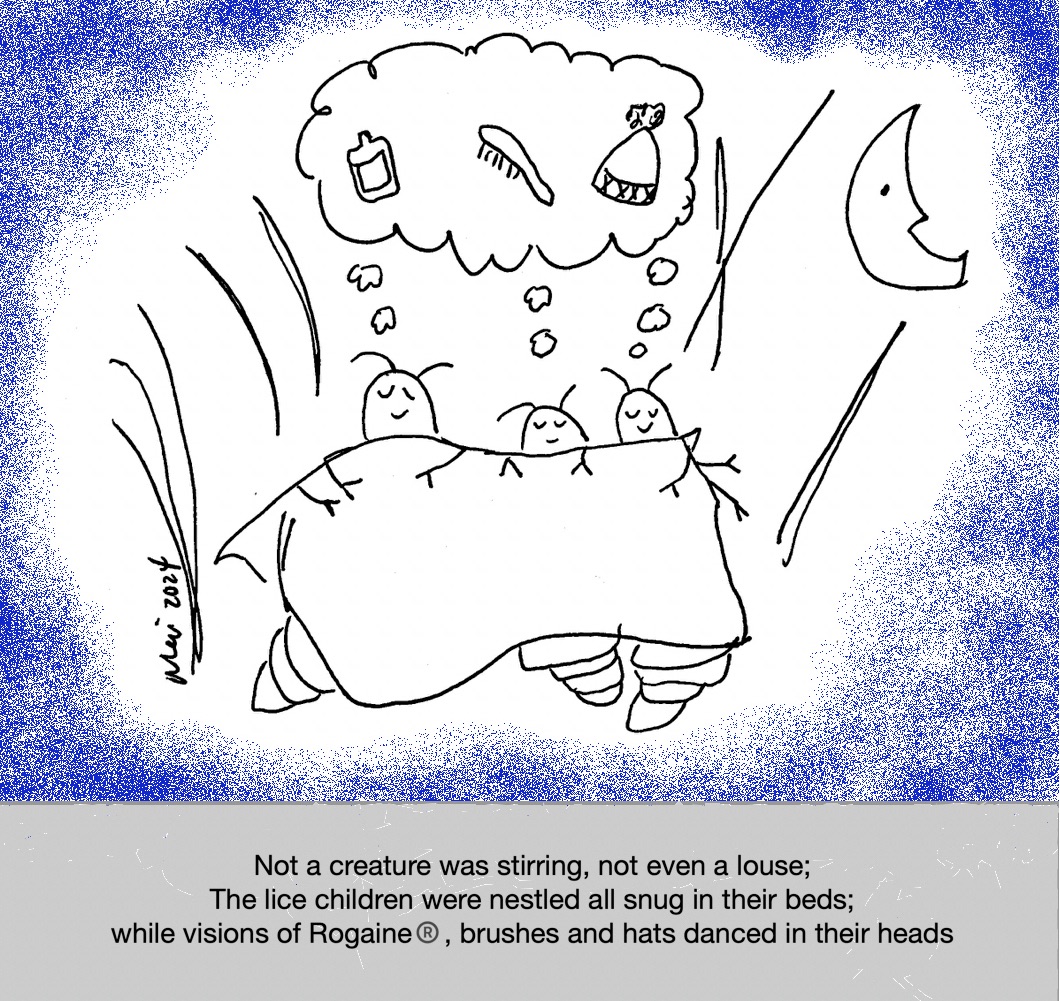
lice dreams

Now that school is back in full swing, you might notice your child scratching their head… and maybe you’re starting to scratch your head too. Let’s dive into the topic of lice and clear up some of the confusion.

What Are Lice, Really?

Lice are small, harmless insects that cause itching but don’t spread disease. The itching comes from a reaction to their saliva—similar to how poison ivy causes a reaction on the skin. It sounds gross, we know, but the good news is that lice are more of an annoyance than a health risk.

By the time you spot a live louse on your child, they’ve likely had lice for at least a month. So, while it might seem alarming to spot a louse crawling on their head, it’s not an emergency. Schools shouldn’t send kids home early for lice; after all, they’ve likely been in class with lice for weeks. That said, treating lice promptly can relieve the itching and stop them from spreading. Children can return to school the day after their first lice treatment.

Continue reading “Lice: Don’t Scratch Your Head Over It!”
Share
image_pdfimage_print