Get your kids off the couch: ideas for indoor exercise

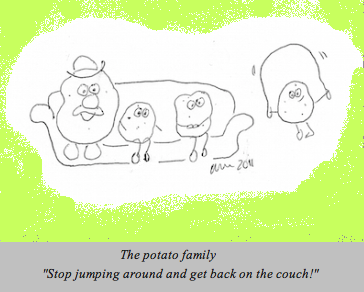
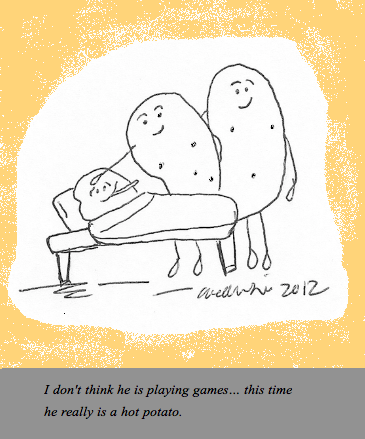
couch potato family

Let’s face it, it’s hard to move when it’s cold , and it’s freezing at my home.  I believe today’s high is 20 degrees Fahrenheit.  Now while this may not deter younger children from bundling up and going sledding, teen couch potatoes are busy whining that it’s “too cold.”  So there they sit.

What’s the secret to keeping them active in the winter months?  Have them schedule an activity, and be an example yourself.

Ideas for teens (and you) to do when it’s cold outside:

  • Have a 15-minute dance party
  • Have a Wii contest
  • Try swimming (indoors please!)
  • Dust off the treadmill or stationary bike in the basement and GET ON IT
  • Play ping-pong
  • Do a few chores
  • Jump rope
  • Jog during T.V. commercials
  • Pull out some “little kid games” such as hopscotch, hula-hoop or Twister
  • Let each child in your house choose an activity for everyone to try


Teens, like everyone else, need exercise to stay healthy.  Staff from the Mayo Clinic recommend kids ages 6-17 years should have one hour of moderate exercise each day.  Exercise can help improve mood (through the release of endorphins), improve sleep and therefore attention (critical with finals coming up), and improve cardiovascular endurance. Those spring sports really ARE just around the corner.


Here are some numbers to get the kids moving:  All activities are based on 20 minutes and a teen who weighs 110 pounds.  The number of calories burned depends on weight.  If your teen weighs more, he will burn a few more calories, if he weighs less, he’ll burn a few less.  Below the table are links to some free and quick calorie calculators on the web so your teen can check it out for him self.  For those attached to their phones, there are web apps too.


ACTIVITY

CALORIES USED

Shooting Basketballs

75

Pickup Basketball game/practice

100

Biking on stationary bike

116

Dancing

75

Hopscotch

67

Ice Skating

116

Jogging in place

133

Juggling

67

Jumping Rope

166

Ping Pong

67

Rock Climbing

183

Running at 5 mph

133

Sledding

116

Treadmill at 4 mph

67

Vacuuming

58


What’s the worst that can happen?  You’ll have a more fit, better rested, and happier teen!  Or at least you’ll have a cleaner home!


Try these activity calculators:


http://primusweb.com/fitnesspartner/calculat.htm

www.caloriesperhour.com/index_burn.php

http://www.caloriecontrol.org/healthy-weight-tool-kit/lighten-up-and-get-moving


Deborah Stack, PT, DPT, PCS

With nearly 20 years of experience as a physical therapist, guest blogger Dr. Stack heads The Pediatric Therapy Center of Bucks County in Pennsylvania www.buckscountypeds.com. She holds both masters and doctoral degrees in physical therapy from Thomas Jefferson University.

© 2011, 2013, updated 2015 Two Peds in a Pod®

Share

Measles outbreak: Would you recognize measles in your child?

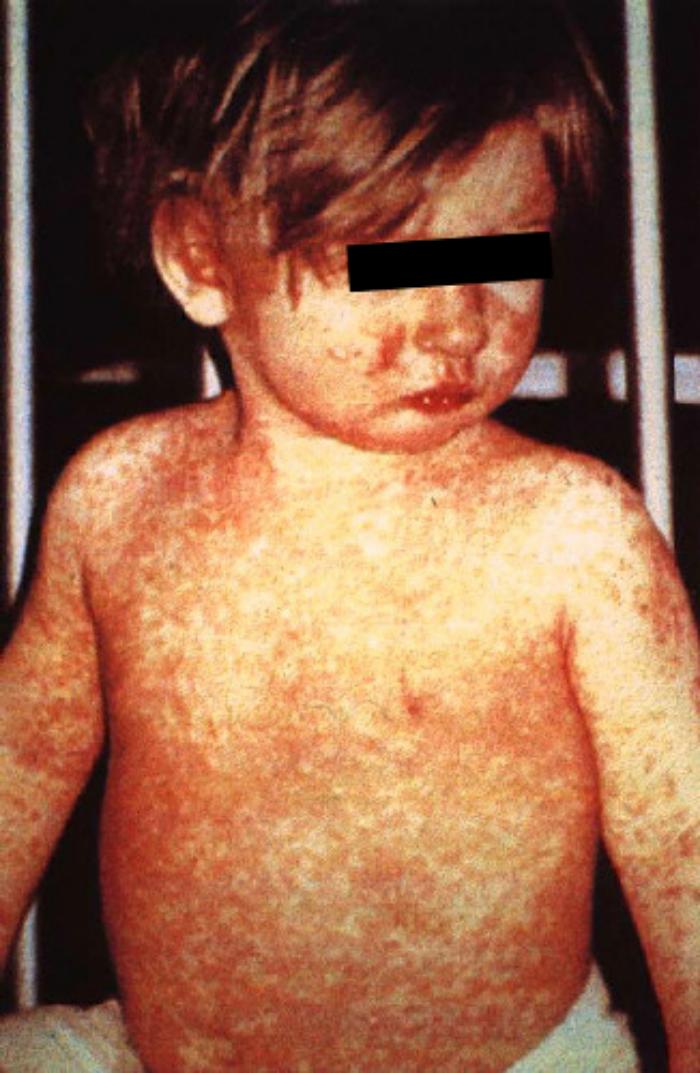
A typical measles rash, courtesy of the public health library, Centers for Disease Control and Prevention

Who knew when we first published this post in June 2014 that another measles outbreak would occur in the US. In light of the numerous measles cases that emerged out of the California Disneyland exposure, we re-publish signs of measles in children. Parents who have children who are not completely immunized against measles should be especially vigilant.

Measles typically starts out looking like almost every other respiratory virus— kids develop cough, runny nose, runny bloodshot eyes, fever, fatigue, and muscle aches.

Around the fourth day of illness, the fever spikes to 104 F or more and a red rash starts at the hairline and face and works its way down the body and out to arms and legs, as shown here at the Immunization Coalition site. Many kids also develop Koplik spots on the inside of the mouth: small, slightly raised, bluish-white spots on a red base 1-2 days before rash. Call your child’s doctor if you suspect that your child has measles. Parents should be most suspicious if their children have not received MMR vaccine or if their immunized child was exposed to a definite case of measles or visited an area with known measles.

In the US, one in 10 kids with measles will develop an ear infection and one in 20 will develop pneumonia. Roughly one in 1000 kids develop permanent brain damage, and up to two in 1000 who get measles die from measles complications. Kids under age 5 years are the most vulnerable to complications. These statistics are found here. For global stats on measles, please see this World Health Organization page.

There is no cure for measles and there no way to predict if your child will have a mild or severe case. Fortunately, one dose of the MMR (Measles, Mumps, Rubella) vaccine is 92-95% effective at preventing measles, and two doses are 97-99% effective at preventing measles. That’s the best we can do, and this protection rate works great when everyone is vaccinated. The American Academy of Pediatrics recommends giving the first dose of MMR vaccine at 12-15 months and the second dose at school entry, between 4-6 years of age.

If parents refuse the MMR vaccination for their children, then more people are left susceptible to measles. This leads to more people who can spread  the disease when it hits a community. Measles is one of the most contagious diseases known: 9 out of 10 unvaccinated people exposed to measles will become sick, and infected people are contagious even before symptoms appear. One of the reasons behind the increase in measles cases is the increase in unvaccinated children. One patient of Dr. Kardos’s was a four-year-old boy who was behind on his vaccines and hospitalized for measles pneumonia. Before he was diagnosed he exposed an entire Emergency Department to measles.

In our global world, another reason for the spike in measles cases is the increase in travel between countries. In fact,  young children traveling internationally should now get the MMR vaccine outside of the routine schedule. If you plan on traveling,  check here to see if you need to give your child the MMR vaccine on an early schedule.

With increased vigilance and vaccination, hopefully measles will once again become a disease few doctors have ever encountered. After all, vaccines did eradicate small pox. The last case of smallpox in the United States was in 1949, and the last case in the world was in 1977. In the meantime, you’ll know how to “spot” a case of measles too.

Julie Kardos, MD and Naline Lai, MD
©2014 Two Peds in a Pod®, updated February 2015

Share

Dry, chapped hands: home remedies

dried chapped hands
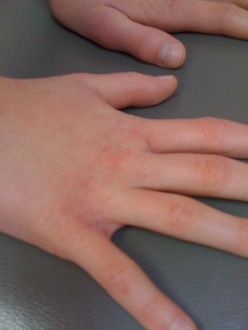
Raw hands- recognize your kid?

I wash my hands about sixty times a day, maybe more. This frequent washing, in combination with cold Pennsylvania air, leads to chapped hands. Here are the hands of a patient. Do your children’s hands look like these?

To prevent dry hands:

• Don’t stop washing your hands, but do use a moisturizer afterwards.

• Whenever possible, use water and soap rather than hand sanitizers. Hand sanitizers are at minimum 60% alcohol- very drying. Be sure to fully dry hands after washing.

• Wear gloves or mittens as much as possible outside even if the temperature is above freezing. Remember chemistry class- cold air holds less moisture than warm air and therefore is unkind to skin. Gloves will prevent some moisture loss.

• Before exposure to any possible irritants such as the chlorine in a swimming pool, protect the hands by layering heavy lotion (Eucerin cream) or petroleum based product (i.e. Vaseline or Aquaphor) over the skin.

To rescue dry hands:

• Prior to bedtime, smother hands in 1% hydrocortisone ointment. Avoid the cream formulation. Creams tend to sting if there are any open cracks. Take old socks, cut out thumb holes and have your child sleep at night with the sock on his hands. Repeat nightly for up to a week. Alternatively, for mildly chapped hands, use a petroleum oil based product such as Vaseline or Aquaphor in place of the hydrocortisone.

• If your child has underlying eczema, prevent your child from scratching his hands. An antihistamine such as diphenhydramine (Benadryl) or cetirizine (Zyrtec) will take the edge off the itch. Keep his nails trimmed to avoid further damage from scratching.

• For extremely raw hands, your child’s doctor may prescribe a stronger cream and if there are signs of a bacterial skin infection, your child’s doctor may prescribe an antibiotic.

Happy moisturizing. Remember how much fun it was to smear glue on your hands and then peel off the dried glue? It’s not so fun when your skin really is peeling.

Naline Lai, MD and Julie Kardos, MD
© 2009, 2015 Two Peds in a Pod®


Share

Should I vaccinate my child?

measles outbreak
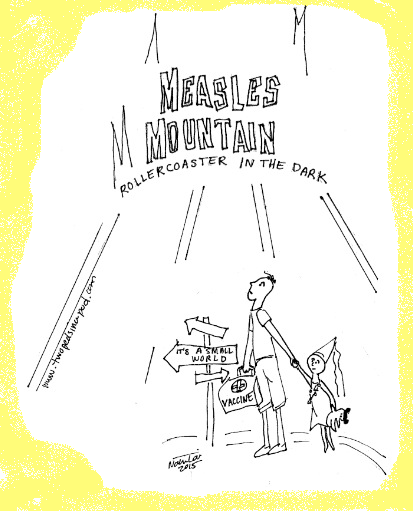
“Let’s skip this ride.”

Should I vaccinate my child? Yes, yes, yes!

The recent measles outbreak originating in Disneyland among mostly-unvaccinated children and adults highlights how important it is to continue to immunize children against preventable infectious diseases, even if we think they are rare.

There are many deadly diseases we can’t prevent, but we do have the power to prevent a few. We now have the ability to prevent your children from getting some types of bacterial meningitis, pneumonia, and overwhelming blood infections. With vaccines we can prevent cases of mental retardation, paralysis, blindness, deafness, and brain infections. Immunizations are a safe way of boosting children’s natural immune systems. Yet some of our parents continue to doubt the benefits of vaccines and to fear harm from them.

Let’s look at another kind of prevention.  You would never drive your car without putting a seatbelt on your child. Even if you don’t know anyone who was in a fatal car accident, you still buckle you and your child up. You may know a kid who emerged from a car accident with only a scrape, yet you still buckle you and your child up.

You may never know a child who is paralyzed by polio or who died of whooping cough, but it does happen and can be prevented. Just like with car accidents, it’s better to prevent the injury than to play catch-up later. Dr. Kardos’s grandfather routinely rode in the front seat of his car without his seatbelt because he “had a feeling” the seatbelt might trap him in the car during an accident. Never mind that epidemiologists and emergency room doctors have shown people are much more likely to die in a car accident if they are not wearing a seat belts, he just “had a feeling.”

We know no one likes a needle jab, but for most vaccines, no one has invented any better way of administration.

When it comes to your children, parental instinct is a powerful force. We routinely invite our patients’ parents to call us about their children if their instincts tell them something might be wrong, and we always welcome and at times rely on parents’ impressions of their children’s illnesses to help us make a diagnosis and formulate a treatment plan.

However, in the face of overwhelming evidence of safety and benefits of vaccines,  we pediatricians despair when we see parents playing Russian roulette with their babies by not vaccinating or by delaying vaccinations. We hope fervently that these unprotected children do not contract a preventable debilitating or fatal disease that we all could have prevented through immunizations.

There is no conspiracy here. We both vaccinate our own children. We would never recommend any intervention where the potential for harm outweighs the potential for good. We have valid scientific data that every year vaccines save thousands of lives. One of them could be your child’s life.

Should you vaccinate your child?

YES!

Julie Kardos, MD and Naline Lai, MD

©2015 Two Peds in a Pod®

Updated from our earlier 2011 post

Visit these posts for more infomation about vaccines:
How Vaccines Work, Evaluating Vaccine Sites on the Internet, Do Vaccines cause autism? and Closure: there is no link between the MMR vaccine and autism

Also, please visit  the recent Institute of Medicine’s analysis of vaccine side effects.

Share

How sick is sick? When to call your child’s doctor about illness

fever in children, when to call your child's doctor“You just can’t understand worry until you have a child of your own.”

Welcome to cold and flu season. Now that flu and many other illnesses are circulating, we want to help you answer these questions: How will I know if my child is too sick? When do I need to worry? When should I call the pediatrician?”

Here is how to approach your own ill child.

First and foremost, trust your parental instincts that something is wrong.

Think about these THREE MAIN SYSTEMS: breathing, thinking, and drinking/peeing.

Breathing:

Normally, breathing is easy to do. It is so easy, in fact, that if you take off your child’s shirt and watch her breathe, it can be hard to see that she is breathing. You should try this while your child is healthy. Normal breathing does not involve effort. It does not involve the chest muscles.

If your child has pneumonia, bad asthma, bronchitis, or any other condition that causes respiratory distress, breathing becomes hard. It becomes faster. It involves chest muscles moving so it looks like ribs are sticking out with every breath:  click on the photo in this article to see this. The chest itself moves a lot. Kids’ bellies may also move in and out. Nostrils flare in attempt to get more oxygen. Sometimes kids make a grunting sound at the end of each breath because they are having difficulty pushing the air out of their lungs before taking another breath in. Also, instead of a normal pink color, your child’s lips can have a blue or pale color. Pink is good, blue or pale is bad. Children old enough to talk may actually have difficulty talking because they are short of breath. Any of the above signs tell you that your child needs medical attention.

Thinking:

This refers to mental or emotional state. Normally, children recognize their parents and are comforted by their presence. They are easy to console by being held, rocked, massaged, etc. They know where they are, and they make sense when they talk.

Change in mental state, whether it comes from lack of oxygen/shortness of breath, pain, or severe infection, results in a child who is inconsolable. She may not recognize her parents or know where she is. Instead of calming, she may scream louder when rocked. She may seem disoriented or just too lethargic/difficult to arouse. Being very combative can also be a sign of not getting enough oxygen. In a baby, extreme pain can cause all these signs as well.

Drinking/peeing:

While this varies somewhat depending on the age of the child, most kids urinate every 3-6 hours or so. Young babies may urinate more frequently than this and some older kids urinate perhaps 3 times daily. You should know your child’s baseline. Normal urine reflects a normal state of hydration. If you don’t drink enough, you will urinate less.

If your child has fever, coughing, vomiting, or diarrhea, she will use up fluid in her body faster than her baseline. In order to compensate, she needs to drink more than her baseline amount of liquid to urinate normally. A child will refuse to drink because of severe pain, shortness of breath, or change in mental state, and may go for hours without urinating. This is a problem that needs medical attention. Occasionally a child will urinate much more than usual and this can also be a problem (this can be a sign of new diabetes as well as other problems). Basically any change from baseline urine output is a problem.

A note about fever:

Any infant 8 weeks of age or younger with fever of 100.4 F or higher, measured rectally, requires immediate medical attention, even if all other systems are good. Babies this young can have fever before any other signs of serious illness such as meningitis, pneumonia, blood infections, etc. and they can fool us by initially appearing well.

In older babies and children, we take note of fevers of 101F or higher. Some kids can look quite well even at 104F and others can look quite ill at 101F. Fever is a sign that your body’s immune system is working to fight off illness. In addition to fever, it is important to look at breathing, thinking, and hydration because this will help you determine how quickly your child needs medical attention. A child with a mild runny nose and fever of 103 who can play still play a game with you while drinking her apple juice is less ill than a child with a 101 fever who doesn’t recognize her parents. Read more about fever here.

To summarize, any deviation from normal breathing, thinking, or drinking/urinating (peeing) is a problem that needs medical attention, even if no fever is present. In addition, any illness that gets worse instead of getting better is a problem that needs medical attention. Also, remember to let your child’s doctor know if your child is missing any vaccines.

Finally, all parents have PARENTAL INSTINCT. Trust yourself. Ultimately, if you are wondering if you should seek medical advice, just do it. If parents could worry every problem away, no one would ever be sick.

Julie Kardos, MD and Naline Lai, MD
© 2015 Two Peds in a Pod®
updated from original posting on 11/12/2009, revised 2018

Share

How to tell the difference between the Flu and the Common Cold

flu symptoms
“Now what kind of soup did the doctor recommend? Was that tomato soup? Mushroom barley?”

Now that we are in the middle of the 2015 flu season, we have parents asking us every day how they can tell if their child has the flu or just a common cold. Here’s how:

Colds, even really yucky ones, start out gradually. Think back to your last cold: first your throat felt scratchy or sore, then the next day your nose got stuffy or then started running profusely, then you developed a cough. Sometimes during a cold you get a fever for a few days. Sometimes you get hoarse and lose your voice. Kids are the same way. In addition, they often feel tired because of interrupted sleep from coughing or nasal congestion. This tiredness leads to some extra crankiness.

Usually kids still feel well enough to play and attend school with colds, as long as their temperatures stay below 101°F and they are well hydrated and breathing without any difficulty. The average length of a cold is 7-10 days although sometimes it takes two weeks or more for all coughing and nasal congestion to resolve.

Important news flash about mucus: the mucus from a cold can be thick, thin, clear, yellow, green, or white, and can change from one to the other, all in the same cold. The color of mucus does NOT tell you if your child needs an antibiotic and will not help you differentiate between a cold and the flu.

The flu, caused by influenza virus, comes on suddenly and makes you feel as if you’ve been hit by a truck. Flu always causes fever of 101°F or higher and some respiratory symptoms such as runny nose, cough, or sore throat (many times, all three). Children, more often than adults, sometimes will vomit and have diarrhea along with their respiratory symptoms. Usually the flu causes body aches, headaches, and often the sensation of your eyes burning. The fever usually lasts 5-7 days. All symptoms come on at once; there is nothing gradual about coming down with the flu.

So, if your child has a runny nose and cough, but is drinking well, playing well, sleeping well and does not have a fever and the symptoms have been around for a few days, the illness is unlikely to “turn into the flu.”

Remember: colds = gradual and annoying. Flu = sudden and miserable.

Fortunately, a vaccine against the flu can prevent the misery of the flu. In addition, vaccines against influenza save lives by preventing flu-related complications that can be fatal such as pneumonia, encephalitis (brain infection), and severe dehydration.  Even in a year, like this one, when the flu vaccine is not well matched to the currently circulating strains, its still worth getting the vaccine. 

Be sure to read our guest article on ways to prevent colds and flu and our thoughts on over the counter cold medicines.  Now excuse us while we go out to buy yummy-smelling hand soap to entice our kids to wash germs off their hands. After that you’ll find us cooking up a pot of good old-fashioned chicken soup, just in case…

Julie Kardos, MD and Naline Lai, MD
revised from our Sept 2009 post

©2015 Two Peds in a Pod®

Share

The best cold medications for children?

cold remedies
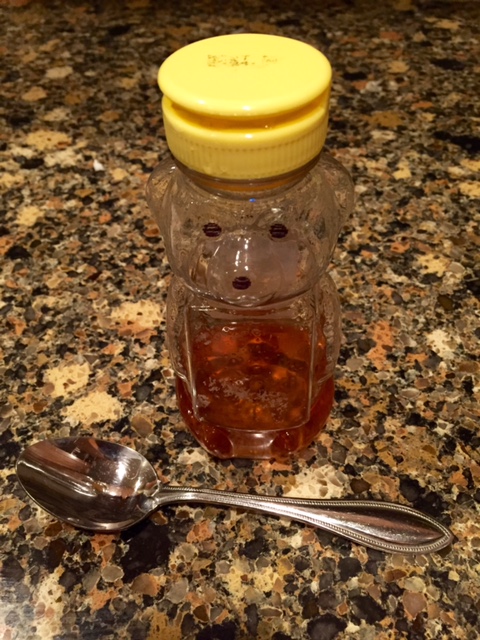
For kids over one year of age, the Honey Bear offers grrr-eat relief

So many children (and their parents) have colds now. Are you staring at the medicine display in the pharmacy, wondering which of the many cold medicines on the shelf will best help your ill child? How we wish we had a terrific medication recommendation for  treatment of a kid’s cold. Unfortunately, we do not.

The safety and effectiveness of cough and cold medicine has never been fully demonstrated in children.  In fact, in 2007 an advisory panel including American Academy of Pediatrics physicians, Poison Control representatives, and Baltimore Department of Public Health representatives recommended to the U.S. Food and Drug Administration (FDA) to stop use of cold and cough medications under six years of age.

Thousands of  children under twelve years of age go to emergency rooms each year after over dosing on cough and cold medicines according to a 2008 study in Pediatrics . Having these medicines around the house increases the chances of accidental overdosing. Cold medications do not kill germs and will not help your child get better faster. Between 1985 and 2007, six studies showed cold medications didn’t have significant effect over placebo.  

nasal bulb suction
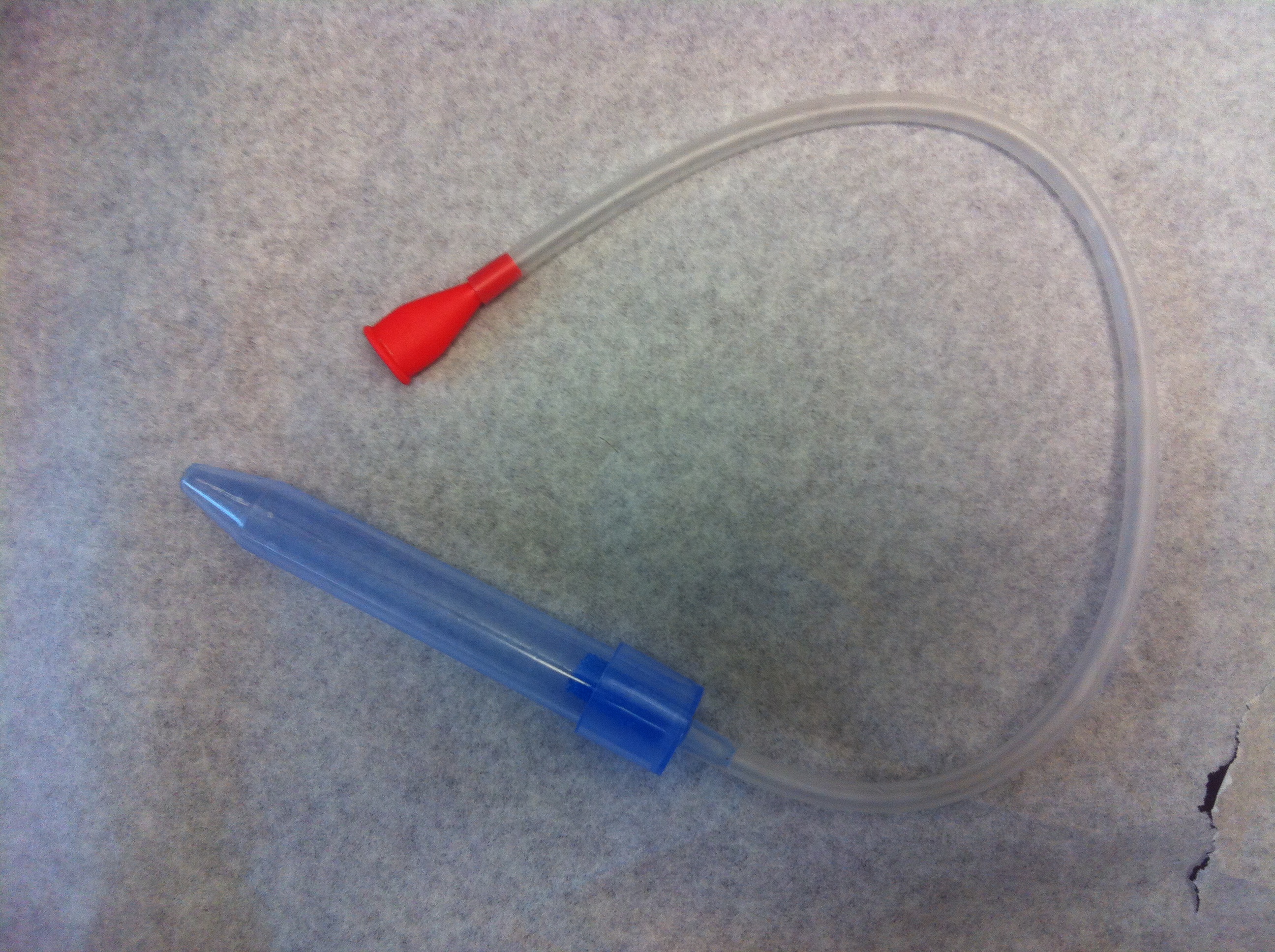
The self billed “snot sucker” Nose Frida

So why are children’s cough and cold medicines still around? A year after the advisory panel published their recommendations, FDA advised  against using these medications in children younger than two years but data about these medications in older children is still rolling in.   FDA continues to advise caution with these medications. The producers of cold medicines said at that point they would launch new studies on the safety of medication for those two to twelve years of age. In the meantime pharmaceutical companies stopped manufacturing cold medicine products for those under two years of age and changed the labels to read “for four years old and above.”

Yes, watching your child suffer from a cold is tough. But why give something that doesn’t help her get better and has potential side effects? Don’t despair, even if you can’t kill a cold virus, there are plenty of things you can do to make your child feel better. If she has a sore throat, sore nose, headache, or body aches, consider giving acetaminophen or ibuprofen to treat the discomfort. Give honey for her cough  if she is over one year of age. Run a cool mist humidifier in her bedroom, use saline nose spray or washes, have her take a soothing, steamy shower, and teach her how to blow her nose. Break up that mucus by hydrating her well — give her a bit more than she normally drinks. For infants, help them blow their noses by using a bulb suction. However, be careful, over-zealous suctioning can lead to a torn-up nose and an overlying bacterial infection. Use a bulb suction only a few times a day.

Best of all, when your kids have a cold, unlike you, they can take as many naps as they want.

Naline Lai, MD and Julie Kardos, MD

©2015 Two Peds in a Pod®

updated from our  2011 post

Share

Asthma meds made simple

asthma cartoonA mom wrinkles her brow and  hands me a bulging bag of inhalers. “Which medicine is the ‘quick fix’ inhaler? And which medicine is the ‘controller’ inhaler?” she asks.

Perfecting a treatment regimen for a child with asthma initially can be tricky and confusing for parents. But don’t panic. There are simple medication schedules and environmental changes which not only thwart asthma flare ups, but also keep lungs calm between episodes. The goal is to abolish all symptoms of asthma such as cough, wheeze, and chest tightness.

For asthma flares
Albuterol (brand  names Proair, Proventil, Ventolin) or levalbuterol (brand name Xopenex): These are the “quick fix” medications. When inhaled, this medicine works directly on the lungs by opening up the millions of tiny airways constricted during an attack. Albuterol is given via nebulizer or inhaler. A nebulizer machine areosolizes albuterol  and pipes a mist of medicine into a child’s lungs through a mask or mouth piece.

For kids who use inhalers, we provide a spacer, a clear plastic tube about the size of a toilet paper tube, which suspends the medication and gives the child time to breathe in the medication slowly. Without a spacer, the administration technique can be tricky and even adults use inhalers incorrectly.

Prednisone/prednisolone (brand names include Prelone, Orapred): Given orally in the form of pills or liquid, this steroid medicine acts to decrease inflammation inside the lungs. This kind of steroid  is not the same kind used illegally in athletics. While steroids in the short term can cause side effects such as belly pain and behavior changes, the advantages of improving breathing greatly outweigh these temporary and reversible side effects. However, if your child has received a couple rounds of steroids in the past year, talk to your pediatrician about preventative measures to avoid the long term side effects of continual steroid use.

Quick environmental changes One winter a few years ago, a new live Christmas tree triggered an asthma attack in my patient. The only way he felt comfortable breathing in his own home was for the family to get rid of the dusty tree. Smoke and perfume can also spasm lungs. If you know Aunt Mildred smells like a flower factory, run away from her suffocating hug. Kids should avoid smoking and avoid being around others who smoke.

For asthma prevention

Taking preventative, or controller medicines for asthma is like taking a vitamin. They are not “quick fixes” but they can calm lungs and prevent asthma symptoms when used over time.

Inhaled steroids (For example, Flovent, Pulmicort, Qvar) work directly on lungs and do not cause the side effects of oral steroids because they are not absorbed into the rest of the body. These medicines work over time to stop mucus buildup inside the lungs so that the lungs are not as sensitive to triggers such as cold viruses.

Monteleukoclast (brand name Singulair),  also used to treat nasal allergies, limits the number and severity of asthma attacks as well by decreasing inflammation. It comes as a tiny pill kids chew or swallow daily.

Avoid allergy triggers  and respiratory irritants such as smoke. Even if you smoke a cigarette outside, smoke clings to clothing and your child can be affected. Treating allergy symptoms with appropriate medication will help avoid asthma attacks as well.

Treat acid reflux appropriately. Sometimes asthma is triggered by reflux, or heartburn. If stomach acid refluxes back up into the food pipe (esophagus), that acid could tickle your child’s airways which lie next to the esophagus.

Avoid respiratory viruses and the flu. Teach your child good hand washing techniques and get yearly flu shots. Parents should schedule their children’s flu vaccines as soon as the vaccines are available.

Some parents are familiar with asthma because they grew up with the condition themselves, but these parents should know that health care providers treat asthma in kids differently than in adults. For example, asthma is one of the few examples where medicine such as albuterol can be dosed higher in young children than in adults. Also some treatment guidelines have been improved upon recently and may differ from how parents  managed their own asthma as children.  For example, a doctor friend now in his 50’s said his parent used to give him a substance to induce vomiting during his asthma attacks. After vomiting, the adrenaline rush would open up his airways.

Don’t do that. We can do better. Hopefully now that flu season has descended upon us, this information helps you to keep your child’s asthma under good control and helps you know which medicine to reach for when it flares up.

Julie Kardos, MD and Naline Lai, MD

© 2010, 2014 Two Peds in a Pod®


Share

How to help your teenager through a breakup

how to help your teen through a breakupBrace yourself. When your child experiences heartbreak, you will too. Psychologist John Gannon gives advice on what you can do to help your teen through a breakup.

It happens to almost every adolescent. At some point or another, we all experienced our first love. In the early stages, it was the greatest feeling we had ever felt. When it ended, it was the largest and most powerful feeling of hurt that we had ever experienced. Each moment felt like 10 years. Days went by and life went on for everyone else. Yet, for us, life stopped and we felt lost and paralyzed.

Your child will not be the exception either. They will feel their feelings the same way we felt ours. Your response to their heart break might offer them comfort. It may also infuriate them. They might claim that you just don’t understand. They might sob inconsolably. In practicality, your life will also suffer! Nothing can take their pain away except the passage of time. I always speak about the scar that occurs from first love. I believe it is a necessary scar, so that we do not become lost without emotional boundaries. The price of the scar though, is the loss of emotional love with another person.

There are things you may want to consider when this occurs for your child. For instance, some teenagers have more than just a traditional break up syndrome. They enter a state of significant sadness or anxiety. It can be difficult to distinguish what is a break up and what is something else. Sometimes, they will try to self medicate with drugs or alcohol. They may be more likely to have poorer judgment than they typically would have. It’s good to try and be as emotionally available as they will let you. Don’t take it personally if they shut you away.

Fortunately, time does heal most of these feelings. One day, you will see they look brighter. They may start to smile. Luckily, first love happens only once in a lifetime for most of us. (Some people live life with every relationship as a first love.) Keep in touch with your kids during this time. Even if it appears they are being overly dramatic, they are inexperienced when it comes to affairs of the heart. The pain is real for them. First love can teach how to balance love. Sometimes, they may need to have several breakups to figure this out. Most of the time, we ultimately learn how love is kept in perspective and by doing so we do not lose our emotional well-being.

Finally, this is a passage of your child’s becoming an adult. Enjoy the ride!

John Gannon, MS, FPPR

Mr. Gannon is a licensed psychologist with nearly 30 years experience as a marriage and family therapist in the Philadelphia area. His post originally appeared in 2010.

©2014 Two Peds in a Pod®

Share
image_pdfimage_print