Tough to swallow: hints on giving your child medicine

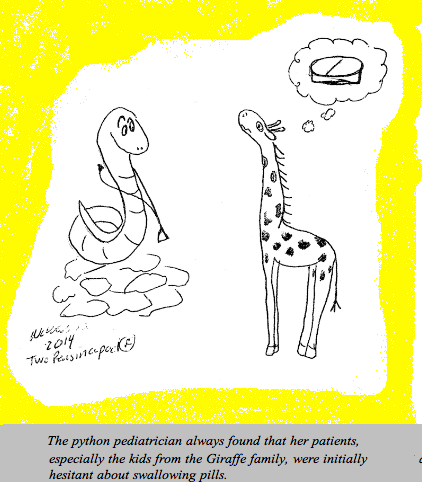
cartoon swallowing pillsDoes your kid spit out all medicine? Clamp her jaws shut at the sight of the antibiotic bottle? Refuse to take pain medicine when she clearly has a bad headache or sore throat?

Sometimes medicine is optional but sometimes it’s not. Here are some ways to help the medicine go down:

Don’t make a fuss. We mean PARENTS: don’t make a fuss. Stay calm. Explain that you are giving your child medicine for … fill in the blank… reason, calmly give her the pill to swallow or the medicine cup or syringe filled and have her suck it down, then offer water to drink. If you make a BIG DEAL or warn about the taste or try to hurry your child along, she may become suspicious,  stubborn or flustered herself. Calmness begets calm.

What if she hates the taste?

  • Most medication can be given with a little chocolate syrup or applesauce (yes, Mary Poppins had the right idea). Check with your child’s pharmacist if your child’s particular prescription can be given this way.
  • Often, your pharmacist can add flavor to your child’s prescription.
  • Check if your child’s medicine comes in pill form so she doesn’t have to taste it at all.
  • Try “chasing” the medicine down with chocolate milk instead of water to wash away a bad taste quicker.
  • Use a syringe (no needle of course) to slowly put tiny bits of liquid medicine in the pocket between her outer teeth and her cheek. Sooner or later she will swallow. After all, she swallows her own saliva. ( A factoid: an adult swallows up to 1.5 liters of saliva a day.)

DON’T MIX the medication in a full bottle of liquid if you are administering medication to a baby. There is a good chance that the baby will not finish the bottle and therefore the baby will not finish the medication. Also, some medications will no longer work if they are dissolved in a liquid.

WHAT IF SHE THROWS UP THE MEDICATION? Call your child’s doctor, if the medication was not in the stomach for more than 15 minutes, we will often not count it as a dose and may instruct you give another dose.

WHAT IF SHE CAN’T SWALLOW PILLS?  If your child can swallow food, she can swallow a pill.  Dense liquids such as milk carry pills down the food pipe more smoothly than water. Start with swallowing a grain of rice or a tic-tac. For many kids, it is hard to shake the sequence of biting then swallowing. Face it. You spent a lot of time when she was toddler hovering over her as she stuffed Cheerios in her mouth, muttering “bite-chew-chew-swallow.” Now that you want her to swallow in one gulp, she is balking. Luckily, most medication in pills, although bitter tasting, will still work if you tell your child to take one quick bite and then swallow. The exception is a capsule. The gnashing of little teeth will deactivate the  microbeads in a capsule release system. If you are not sure, ask your pharmacist.  For more ideas, read our prior post on How to swallow pills.

WHAT IF ALL ATTEMPTS AT ORAL MEDICINE FAIL? Talk to your child’s doctor. Some liquid antibiotics come in shot form and your pediatrician can inject the medicine (such as penicillin), and some come in suppository form; Tylenol (generic name acetaminophen) is an example. You can buy rectal Tylenol if sore throat pain or mouth sores prevent swallowing or if your child simply is stubborn. Sometimes you just have to have one adult hold the child and another to pry open her mouth, insert medicine, then close her mouth again.
HAVE AN EAR DROP HATER? First walk around with the bottle in your pocket to warm the drops up. Cold drops in an ear are very annoying. (In fact, if cold liquid is poured into the ear a reflex occurs that causes the eyes beat rapidly back and forth). Use distraction. Turn on a movie or age-appropriate TV show, have your child lie down on the couch on her side with the affected ear facing up. Pull the outside of her ear up and outward to make the ear opening more accessible, then insert the drops and let her stay lying down watching her show for about 10 minutes. If you need to treat both ears, have her flip to the other side of the couch, affected ear up, and repeat. Another option: treat your child while she sleeps.

AFRAID OF EYE DROPS? If your child is like Dr. Kardos who is STILL eye-drop phobic as a grown-up, try one of two ways to instill eye drops. Have your child lie down, have one person distract and cause your child to look to one side, insert the drop into the side of the eye that your child is looking AWAY from. She will blink and distribute the medicine throughout the eye.
ALTERNATIVELY, have your child close her eyes and turn her head slightly TOWARD the eye you need to treat. Instill 2 drops, rather than one, into the corner of her eye nearest her nose. Then have her open her eyes and turn her head slowly back to midline: the drops should drop right into her eye. Repeat for the second eye if needed.

HATE CREAM? Some kids need medicated cream applied to various skin conditions. And some kids hate the feeling of goop on their skin. These are often the same kids who hate sunscreen. Again, distraction can help. Take a hairbrush and “brush” the opposite arm or some other area of the body far away from the area that needs the cream. Alternatively, apply the cream during sleep. Another option- let your child apply his own cream- this gives back a feeling of control which can lead to better compliance with medicine. It also will help him to feel better faster. IF your child is complaining about stinging, try an ointment instead. Ointments tend to sting less than creams.

Of course, as last resort, you can always explain to your child in a logical, systematic fashion the mechanism of action of the medication and the future implications on your child’s health outcome.

If you choose this last method, you should probably have some Hershey’s syrup nearby. Just in case.

Julie Kardos, MD and Naline Lai, MD
©2014 Two Peds in a Pod®

Share

Flu update 2014-2015- We may be in for a rough winter

runny nose
Ben’s runny nose, as depicted by Ben

Because we couldn’t have said it better ourselves, we have reprinted (with permission) our pediatrician colleague Dr. Roy Benaroch’s recent flu update from his blog The Pediatric Insider.

Some bad news about flu this year
We could be in for a rough influenza winter.

First, data just released from the CDC shows that a lot of the flu circulating in the USA isn’t a good match for the strains in this year’s flu vaccines. About 82% of flu since autumn is a type A H3N2, one that historically has been associated with more-severe illness. Of those, only about half are closely related to the A/Texas/50/2012 strain that was chosen in February to be included in the vaccine. Unfortunately, current methods of vaccine production take a long time, and manufacturers have to commit early—months ahead of time—to what will be included in the vaccines. In February, when the World Health Organization made their recommendations for the Northern Hemisphere 2014-2015 flu vaccine, they chose the H3N2 that was then in circulation. Since then, it’s “drifted”, or changed, to a related but non-identical type.

What this means is that the current vaccine is well-matched to only about 40% of circulating flu. The vaccine will probably offer some protection against the other 60%– illness will be milder and shorter—but a lot of people who got their flu vaccines are still going to get the flu, and spread the flu. Now, some protection is still better than none, so I’d still go and get that flu vaccine now if you haven’t gotten it already. An imperfect (or, honestly, far-less-than-perfect) flu vaccine is better than none. But it isn’t looking good this year.

And it gets worse. It’s becoming increasingly clear that Tamiflu, the anti-viral medication we rely on to help treat influenza, doesn’t work very well. As summarized by the Cochrane Collaboration earlier this year, studies show that Tamiflu is only modestly effective in reducing the length of influenza illness, and may be only slightly effective at reducing complications. If it does work for treatment of flu, it works best when started very early in the course of the illness. The FDA labeling calls for it to be started within 48 hours, but honestly it seems to barely work if started that late. Better to get it started within 24, or even better, 12 or 6 or 2 hours.

In practice, Tamiflu really doesn’t seem to do much of anything for most of the flu patients seen in hospitals and doctor’s offices, because we usually see patients too late. It does have a role in helping family members at risk for flu. They can start it immediately, at the first symptoms, and will probably get more benefit.

Tamiflu can also be used as a prophylactic, or preventive, agent in people exposed to flu with no symptoms, though again, the benefits are modest at best. Crunching the numbers, we probably have to treat about 33 people on average for just one person to benefit from prophylaxis. That’s not very good, especially considering that all 33 people will have to pay for it and risk the side effects.
And Tamiflu does have some significant side effects. Nausea and vomiting are quite common, but the scarier reactions are depression, hallucinations, and psychosis. Neuropsychiatric side effects are most common in people of Japanese ancestry.

So: the flu vaccine, this year, will probably offer only modest benefits. And Tamiflu really has very limited usefulness. It looks like we’d better prepare for a rough winter, and keep in mind some of the old-fashioned ways to keep from getting the flu:
• Stay away from sick people.
• If you’re sick, stay home.
• Keep your mucus to yourself—sneeze into your elbow, or better yet into a tissue. And then wash your hands.
Don’t touch your own face. Flu virus on your hands doesn’t make you sick until you help it get into your body by touching your eyes, nose, or mouth.
• Wash or sanitize your hands frequently, and especially before touching your face or eating.

© 2014 Roy Benaroch, MD

In practice near Atlanta, Georgia, Dr. Roy Benaroch is an assistant clinical professor of pediatrics at Emory University, a father of three, and the author of  The Guide to Getting the Best Health Care for your Child and  Solving Health and Behavioral Problems from Birth through Preschool. Most recently he is the Narrator of the Great Courses Series: Medical School for Everyone. We are fans of his blog The Pediatric Insider

Share

For you medical photo geeks- 3rd edition of Visual Diagnosis and Treatment in Pediatrics

3rd Edition Visual Diagnosis and Treatment in Pediatrics

For all you medical photo geeks, Two Peds in a Pod is excited to announce that Dr. Lai is an associate editor of the newly published 3rd edition of Visual Diagnosis and Treatment in Pediatrics – for pediatric health care professionals or anyone who has enjoyed pinning our medical photos to Pinterest (we know you are out there).

Julie Kardos, MD and Naline Lai, MD

©2014 Two Peds in a Pod®

Share

Tips for holiday travel with young children

In spite of long TSA lines, rental car challenges and all the howling, the wolf family went to grandmother’s house every year for the holidays.

You don’t appreciate how much your baby has grown until you attempt a diaper change on a plane. For families with young children, Thanksgiving or any holiday can become stressful when travel is involved. Often families travel great distances to be together and attend parties that run later than children’s usual bedtime. Fancy food and fancy dress are common. Well-meaning relatives who see your children once a year can be too quick to hug and kiss, sending even not-so-shy kids running. Here are some tips for safer and smoother holiday travel:
If you are flying:

  • Do not offer Benadryl (diphenhydramine) as a way of “insuring” sleep during a flight. Kids can have paradoxical reactions and become hyper instead of sleepy, and even if they do become sleepy, the added stimulation of flying can combine to produce an ornery, sleepy, tantrum-prone kid. Usually the drone of the plane is enough to sooth kids into a slumber.
  • Not all kids develop ear pain on planes as they descend- some sleep right through landing. However, if needed you can offer pacifiers, bottles, drinks, or healthy snacks during take-off and landing because swallowing may help prevent pressure buildup and thus discomfort in the ears. And yes, it is okay to fly with an ear infection.

General tips for visiting:

  • Traveling 400 miles away from home to spend a few days with close family and/or friends is not the time to solve your child’s chronic problems. Let’s say you have a child who is a poor sleeper and tries to climb into your bed every night at home. Knowing that even the best of sleepers often have difficulty sleeping in a new environment, just take your “bad sleeper” into your bed at bedtime and avoid your usual home routine of waking up every hour to walk her back into her room. Similarly, if you have a picky eater, pack her favorite portable meal as a backup for fancy dinners. But when you return home, please refer to our podcast and blog posts on helping your child to establish good sleep habits and on feeding picky eaters! One exception is when you are trying to say bye-bye to the binkie or pacifier.
  • Supervise your child’s eating and do not allow your child to overeat while you catch up with a distant relative or friend. Ginger-bread house vomit is DISGUSTING, as Dr. Kardos found out first-hand when one of her children ate too much of the beautiful and very generously-sized ginger bread house for dessert.
  • Speaking of food, a good idea is to give your children a wholesome, healthy meal at home, or at your “home base,” before going to a holiday party that will be filled with food that will be foreign to your children. Hunger fuels tantrums so make sure his appetite needs are met. Then, you also won’t feel guilty letting him eat sweets at a party because he already ate healthy foods earlier in the day.
  • If you have a young baby, be careful not to put yourself in a situation where you lose control of your ability to protect the baby from germs. Well-meaning family members love passing infants from person to person, smothering them with kisses along the way. Unfortunately, nose-to-nose kisses may spread cold and flu viruses along with holiday cheer.
  • On the flip side, there are some family events, such as having your 95-year-old great-grandfather meet your baby for the first time, that are once-in-a-lifetime. So while you should be cautious on behalf of your child, ultimately, heed your heart. At six weeks old, Dr. Lai’s baby traveled several hours to see her grandfather in a hospital after he had a heart attack. She likes to think it made her father in law’s recovery go more smoothly.
  • If you have a shy child, try to arrive early to the family gathering. This avoids the situation of walking into house full of unfamiliar relatives or friends who can overwhelm him with their enthusiasm. Together, you and your shy child can explore the house, locate the toys, find the bathrooms, and become familiar with the party hosts. Then your child can become a greeter, or can simply play alone first before you introduce him to guests as they arrive. If possible, spend time in the days before the gathering sharing family photos and stories to familiarize your child with relatives or friends he may not see often.
  • Sometimes you have to remember that once you have children, their needs come before yours. Although you eagerly anticipated a holiday reunion, your child may be too young to appreciate it for more than a couple of hours . An ill, overtired child makes everyone miserable. If your child has an illness, is tired, won’t use the unfamiliar bathroom, has eaten too many cookies and has a belly ache, or is in general crying, clingy, and miserable, despite your best efforts, just leave the party. You can console yourself that when your child is older his actions at that gathering will be the impetus for family legends, or at least will make for a funny story.
  • Enjoy your CHILD’s perspective of Thanksgiving and other winter holidays: enjoy his pride in learning new customs, his enthusiasm for opening gifts, his joy in playing with cousins he seldom sees, his excitement in reading holiday books, and his happiness as he spends extra time with you, his parents.

We wish you all the best this Thanksgiving!

Julie Kardos, MD and Naline Lai, MD

©2014 Two Peds in a Pod®
Updated from our 2009 articles on these topics

Share

Using melatonin in children

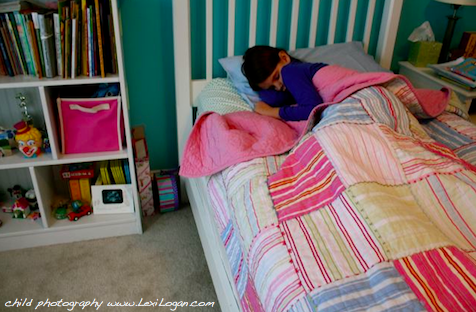
sleepingOur guest blogger, Dr. Kristann Heinz, a doctor who practices with a holistic and integrative approach, shares her knowledge about melatonin use in children. — Drs. Kardos and Lai

When we got back from Hawaii my three year old daughter, Ruby, was a hot mess! The eight-hour time difference made it hard for her to adjust her internal clock. At first, I just attributed it to routine jet lag but after a week of the same sleep-wake cycle, I knew something was going on. She was wandering around the house in her pink spotted pajamas WIDE AWAKE until 1am, 2am, and 3am. And then in the morning, she was dead asleep and I could barely get her up. So at this point, I took her to our doctor to make sure everything was all right. The doctor told us my daughter’s jet lag was leading to a sleep disturbance and suggested I try melatonin. I gave melatonin to Ruby that night. She was asleep by 11pm and slept soundly until morning. Over the next few days, she adjusted beautifully and we were back to a normal sleep routine in 3 days. After that, we stopped the melatonin.

What is Melatonin?
Melatonin is a hormone that occurs naturally in our bodies. A hormone is a signal containing a message from one part of the body to another. Melatonin is naturally secreted by the pineal gland, a gland located in the brain that is very sensitive to light. As night falls, the pineal gland secretes melatonin to tell the brain that it is time to sleep. This process is sometimes described as the “opening of the sleep gate.”

Why would my doctor prescribe melatonin to my child?
People often use melatonin to help adjust their sleep-wake cycles. For adults melatonin is used to treat a variety of medical disorders including cancer, headaches, and autoimmune disorders as well as insomnia. In children however, the primary reason melatonin is prescribed is for sleep disturbance. Some children with certain medical conditions are thought to have lower levels of naturally produced melatonin, which contributes to sleep-wake disturbances. For these children supplementing with melatonin can be beneficial and enhance sleep. Melatonin has been studied and shown to be helpful to children with developmental delays, ADHD, cerebral palsy, autism, and jet lag.

What dose should I use?
The dose of melatonin should be discussed with your doctor. Doses can range from 0.03mg – 6mg, generally given at bedtime. To establish the appropriate therapeutic dose, your doctor will take into account your child’s weight and the health condition you are trying to treat.

Are there different kinds of melatonin?
Melatonin is synthetically produced but there are also products that contain biological glandular material, a source of natural melatonin. Synthetically produced melatonin is recommended by most doctors because it provides a more consistent dose and is less likely to be contaminated.

Melatonin comes in three different forms: immediate release, sustained released and sublingual. The most convenient form of melatonin for children is the sublingual form because their bodies begin to absorb it as soon as it is placed in the mouth. The sublingual form is easier than swallowing a pill, which can be difficult or uncomfortable for some children. There are many different liquid brands available as well, which have the same benefit. Another good way to administer melatonin to a child is to dissolve an immediate release melatonin tablet in juice or mix it with applesauce before offering it to your child. Taking melatonin with food does not change the effectiveness of the supplement.

How long does it take to work?
Melatonin should work the first night it is given to a child and it does not require multiple doses to be effective. It can take up to 30 minutes after taking the medication to experience its full effect. Often your child will begin to feel drowsy and tired soon after taking the supplement.

Let’s use jet lag as an example of how to use melatonin. You may give the melatonin to your child just before bedtime in the new time zone. The supplement will facilitate sleep within 30 minutes of taking it. But, remember, our internal clocks usually adjust one hour a day when we travel to different time zones, and melatonin can only help to a point. The greater the time difference the more difficult it is for our bodies to resume a normal sleep pattern in the new time zone. If, for instance, there is a twelve-hour time difference, it will still take time for our biologic rhythms to change, even with the help of melatonin. However, the transition is often faster and smoother with the aid of melatonin. Melatonin is not a sleeping pill. It is used to enhance the onset of sleep naturally.

Are There Side Effects or Contraindications?
Melatonin is very safe. The most common side effect for children is excessive sleepiness, which can be moderated by decreasing the dose. In high doses, which are used mostly in treating adults (10mg-60mg melatonin), side effects include headaches, nausea, dizziness and fatigue. For children, taking melatonin is not associated with any short or long-term side effects in relation to growth, development or puberty. Drug interactions can take place between melatonin and sedatives, antidepressants and hormones, so if your child is taking medications of this kind, be sure to discuss whether it is safe to give your child Melatonin with your child’s doctor before doing so.

Kristann Heinz, MD, a graduate of University of Pennsylvania School of Medicine, is board-certified in Family Medicine and Integrative-Holistic Medicine, as well as certified in Medical Acupuncture. She is also a Registered Dietician and Licensed Nutritionist. A mom living in Bucks County, PA, she practices medicine at Stockton Family Practice in Stockton, NJ.

©2014 Two Peds in a Pod®

 

Share

Enterovirus D-68 put into perspective

enterovirus D-68 No doubt, there has been an uptick in respiratory illness in our area, but the news media is causing panic specifically over one of them: enterovirus D-68.
The name “enterovirus” does not imply “deadly.” Many of you are well familiar with hand-foot-mouth disease, aka “Coxsackie virus.” Guess what? This extremely common, benign but annoying virus is also an enterovirus!

Let’s put into perspective how this “new” respiratory virus compares with an “old” well-known respiratory virus, influenza (The Flu). Remember that both flu and enterovirus D-68 are tracked by REPORTED cases. Most of the time doctors do not test children with mild disease so most reported cases are hospitalized patients.

Enterovirus D-68, the numbers: From mid-August through the first week in October (peak enterovirus season)- 664 people are known to have been infected in the USA, most of whom are children. You can track these numbers on this Centers for Disease Control website.
Influenza, the numbers: Each year in the US, approximately 200,000 people (children and adults) are hospitalized from complications of the flu. This year’s flu season in the northern hemisphere is just starting. Generally peak flu season is in the winter months. Large numbers of people contract the flu but they are not sick enough to be hospitalized- they suffer a week of fever, cough, sore throat and body aches at home but recover uneventfully. Up to 20% of the population are infected with flu each season.

Death from enterovirus D-68: 1 child. Four other children died who tested positive for this virus but it is unknown if the virus caused their deaths.
Death from influenza during the 2013-2014 flu season: 108 children

Symptoms of enterovirus D-68: range from mild cold symptoms to high fever and severe respiratory symptoms
Symptoms of flu: usually abrupt at the onset: fever, body aches, cough, and runny nose. Please see our prior post for more information.

Prevent enterovirus D-68: same as for all “cold” viruses- wash hands, sneeze/cough into elbow, not hands.
Prevent flu: Same as for enterovirus D-68, AND we have an Influenza vaccine for all children aged 6 months and above, with a few exceptions-see our article for more information. Last year the flu vaccine was about 60% effective: it’s not perfect, but it is certainly better than not vaccinating.

Overall, remember that enterovirus D-68 is one of many cold viruses that circulate the country. We are all familiar with back-to-school viruses. My teen-aged son told me, amid his sniffles and nose-blowing last week, that “more than half my school has a cold now.”
Certainly some of those colds could be enterovirus-D-68. But please don’t panic. All respiratory illnesses, including colds, have the potential to travel into your child’s lungs. It is more important to practice good illness prevention techniques and to recognize the signs of difficulty breathing. As we have said before, if we parents could worry all illnesses away, no one would ever be sick.

Julie Kardos, MD and Naline Lai, MD
©2014 Two Peds in a Pod®

Share

The birth of Happy Healthy Kids

happyhealthykidsbannerWe’re thrilled to join the advisory board of Happy Healthy Kids as it kicks off its inaugural season. The new website, pioneered by Editor Kelley King Heyworth, is dedicated to all of us parents who say, “I just want my child to be healthy. And happy.” A frequent contributor to Parents Magazine, CNN and Sports Illustrated, King Heyworth brings  journalistic expertise to her website to create a kids’ health site chock full of nonjudgemental, reassuring posts.

We’re currently on her home page with a pediatrician’s wish list— check out 5 things we’d love for you to know.

Julie Kardos, MD and Naline Lai, MD
©2014 Two Peds in a Pod®

Share

When a peer dies: How to help your grieving teen

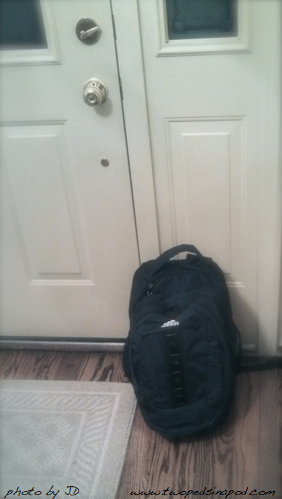
lonely backpackThree of my son’s high school classmates died in a tragic car accident just before school started this year. As parents, many of us may have lost someone close to us, and we know from our experience that over time, the acute pain of loss decreases as we ultimately derive strength and joy from our memories of our loved one instead of experiencing only sadness and pain over their loss. Our hearts ache watching our kids experience death first hand, often for the first time. But teens need time to experience this transition for themselves. Telling them “it will get better” will not help them.

If you are parents of a grieving teen who has lost a friend or classmate, following are some things that you can do to help:

Offer to be available, to listen, or to find someone outside your family for your teen to talk to if he wants. Do not insist that your teen talks about his feelings.
Refrain from lecturing– it does not help your teen at this time to hear things like “THAT’S why we won’t let you drive with young drivers.” She’s already figuring this out for herself.
Allow her to talk or gather with friends during the daytime.
Go back to basics: make sure your teen eats, drinks and sleeps. Enforce bedtime. Turn off phones and computers by a bedtime that allows your teen to get at least 8-9 hours of sleep. Do not allow your teen to text late into the night or to continue talking to friends late into the night, even if this means insisting that YOU take his phone for the evening. Be cautious of sleepovers, which only cause sleep deprivation, leading to exhaustion and more difficulty handling strong emotions.
Offer to go for a walk with your teen. Exercise is helpful and encourages dialogue.
Allow your teen to grieve by attend viewings and funerals. However, do not mandate that she goes. Giving her an idea of what to expect (e.g., there may be an open casket, here are some things you can say to the family) may help ease any discomfort. Offer to go with your teen, but again, don’t insist on going.
Help your teen to do something constructive to help other survivors. Send a condolence card to the deceased friend’s parents that includes an anecdote of how their teen helped your teen, or of how his deceased friend encouraged, made him laugh, or inspired him. Suggest that your teen cook a meal for the grieving family, mow their lawn, run some errand, or to babysit a younger sibling of the deceased.
Utilize community resources. School guidance counselors provide a wealth of information and support.

Your teen may experience intermittent, intense sadness even months or years after a tragedy, but as time goes by more time should pass between feelings of sadness. Kids who lose close friends learn, over time, to live with their grief. Continue to acknowledge your teen’s feelings of loss and continue to be available for your teen. Initial depression usually fades into sadness in a month’s time.

It is normal for the death of a classmate to trigger, for the first time, your teen’s contemplation of his own mortality. It is normal for him to express fears of his own death.

Normal grief behaviors include:
• Crying
• Talking about their loss
• Wanting to talk to other friends
• Spending more time with friends
• Some might want to be alone with their grief.
• Some kids might want to busy themselves with sports, reading, etc, in order to distract themselves from their grief.
• Temporary altered appetite and difficulty sleeping.
• Temporary difficulty with concentrating on schoolwork.

Abnormal grief behaviors:
• Inability to eat or sleep
• Gaining or losing more than a couple of pounds
• Inability to stop crying
• Refusing to attend school
• Failing classes
• Using alcohol or other drugs to cope with sadness
• Withdrawal from things your teen used to take pleasure in such as sports, hobbies, music, friends, or family.
• Preoccupation with death
• Suicidal thoughts, wishes, or plans

If you see any of these abnormal signs, or you are concerned about how your teen is coping, consult with your pediatrician or a psychologist. For more signs of clinical depression in children, please see our post on child and teenage depression. Also know that the National Suicide Prevention Lifeline is 800-273-8255.

Julie Kardos, MD and Naline Lai, MD
©2014 Two Peds in a Pod®

Share

Enterovirus D68, RSV, The flu! How do I know my kid’s having trouble breathing?

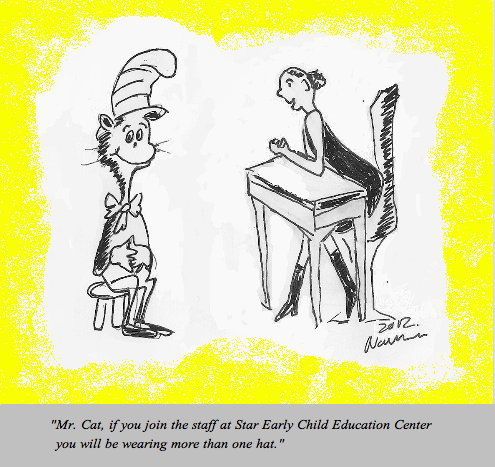
teachers Mid-west respiratory virus, RSV, The Flu! Lots of  respiratory-distress-causing- germs. Although Enterovirus D68 is in the news these days, a slew of infections can hit the lungs hard. So even if you think your child has a simple cold, it’s important  to recognize when your child is having difficulty breathing. Share this information with all of your child’s caretakers, including teachers. As this cartoon illustrates, many people wear medical hats. Too often we get a child in our office with labored breathing which started during school hours but was not recognized until parent pick up time. 
Signs of difficulty breathing:

  • Your child is breathing faster than normal.
  • Your child’s nostrils flare with each breath in an effort to extract more oxygen from the air.
  • Your child’s chest or her belly move dramatically while breathing—lift up her shirt to appreciate this.
  • Your child’s ribs stick out with every breath she takes because she is using extra muscles to help her breathe—again, lift up her shirt to appreciate this. We call these movements “retractions.”
  • You hear a grunting sound (a slight pause followed by a forced grunt/whimper) or a wheeze sound at the end of each exhalation.
  • A baby may refuse to breast feed or bottle feed because the effort required to breathe inhibits her ability to eat.
  • An older child might experience difficulty talking.
  • Your child may appear anxious as she becomes “air hungry” or alternatively she might seem very tired, exhausted from the effort to breathe.
  • Your child is pale or blue at the lips.

In this video, the child uses extra chest muscles in order to breath. He tries so hard to pull air into his lungs that his ribs stick out with each inhalation.  


For those with sensitive asthma lungs,  review our earlier asthma posts.  Understanding Asthma Part I explains asthma and lists common symptoms of asthma and  Understanding Asthma Part II tells how to treat asthma, summarizes commonly used asthma medicine, and offers environmental changes to help control asthma symptoms.

Julie Kardos, MD and Naline Lai, MD
©2014 Two Peds in a Pod®

updated from our previous 2012 post

Share

On letting go and coming back

Friends make birthdays better

I have been musing ever since our hosting site told us they were switching blog platforms. In a blink of an eye, our blog was slated to disappear. The dynamic Two Peds in a Pod community would be plunged into silence. At first, disbelief gave away to intrigue. Was this a sign to change personal paths? As I started to think of all the things I could do with the time that I would have spent writing the blog, my to-do list grew and grew. I could hear my son’s closet, overflowing with outgrown clothing, crying out to be re-organized.

When I told friends of the opportunity to dissolve the blog, I heard time and time again “I think you should save it.” Even friends without children were aghast. When I told my own children that the blog was on the verge of imploding they looked at me blankly and said, “Why would you stop writing for Two Peds?”

Then I remembered the mom who read our article on croup seven times in one night. I remembered Dr. Kardos’s patient whose dad said our strep throat article  helped him decide not to cut his family’s vacation short. I thought of the many times parents thanked me  for posts which allayed their fears of fever.

The blog did eventually stop when the old hosting site went down. But as my friends and family reminded me, the goal of the blog is to positively impact children globally by guiding their caretakers; and by the time the blog went down, we had reached nearly three million views. Two Peds in a Pod is “Practical pediatrics for parents on the go.” After more thought, I decided it would be difficult to accomplish this goal from the back of one of my kid’s closets.

So today, I am happy to post that the stop was just a temporary suspension. I credit my friends and family for reminding me of the original goal of the blog. In particular, thanks to Dr. Kardos. While I was mulling, Dr. Kardos was busy staying up past midnight valiantly importing posts from the rapidly fading old site.

We’re back, albeit a little rough around the edges as we construct the new site. And it’s just in time for our 5th birthday!

Thanks, my friend, Dr. Kardos. I wouldn’t be able to blow those candles out without you.

Happy 5th Birthday Two Peds in a Pod- may there be many more.

Dr. Lai

Naline Lai, MD and Julie Kardos, MD
©2014 Two Peds in a Pod®


Share
image_pdfimage_print