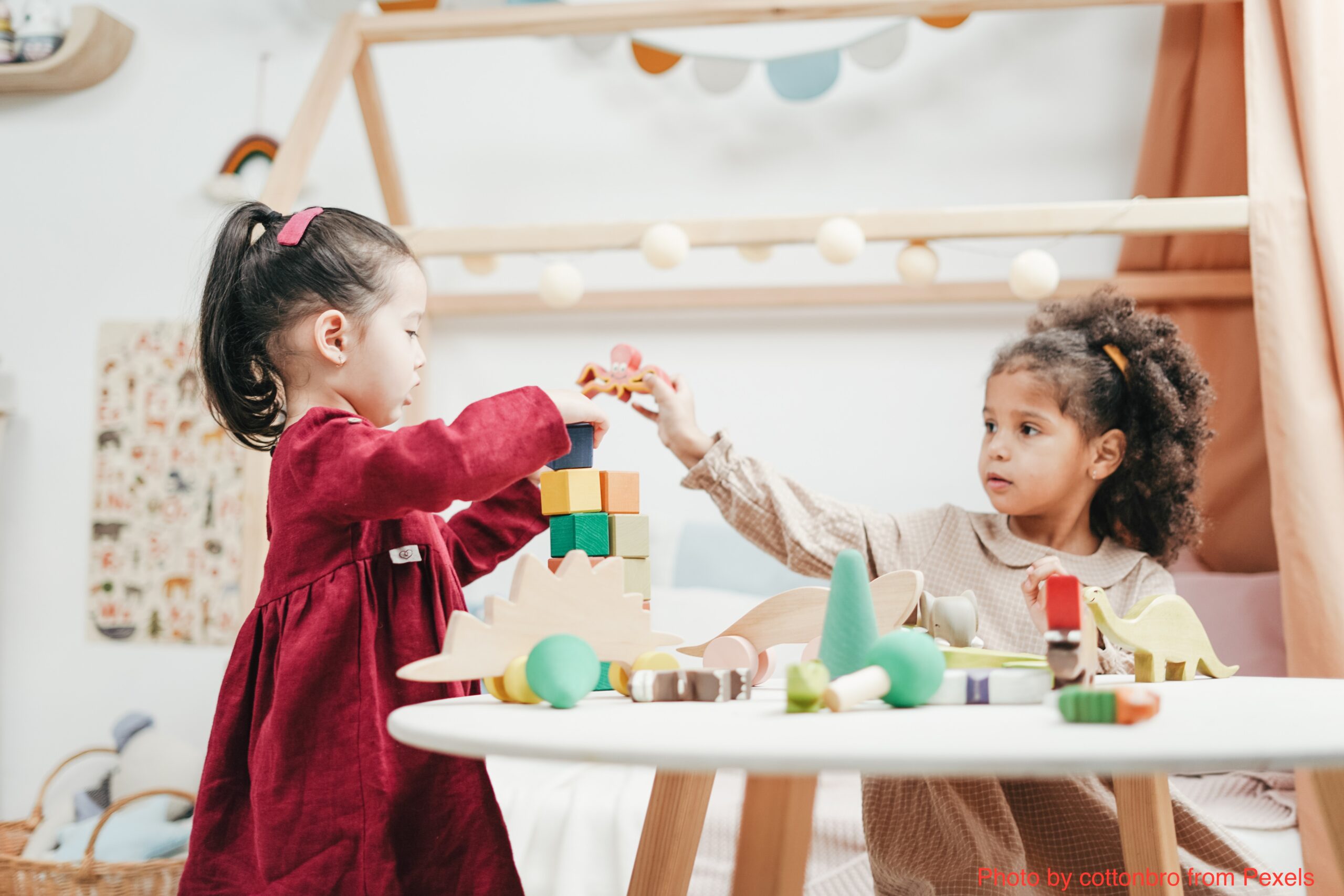
Emma’s parents were hopeful that Emma could start preschool this winter, but with the slow COVID-19 vaccine roll out, Emma’s parents chose to keep her home just a little longer. Grandparents come over every day, but three-year-old Emma does not have interaction with other children. Her parents are confident that they can teach Emma shapes and numbers, but are concerned about her social and emotional development. For those in the same shoes as Emma’s parents, we share ways to socialize your preschooler without preschool.
Preschool has not changed much since you were three or four years old. There is still circle time, show-and-tell, and cubbies to hang little coats in. And games, lots of fun and games. But as early childhood educators will tell you, there is a method to their madness. In particular, the fun and games encourage social and emotional growth.
Fun and games
Unlike a two year old, three and four-year-old children are capable of turn-taking and rule-following. These skills help preschoolers form friendships and learn to get along with others. At home, parents can teach their preschoolers simple games that involve turn-taking. Don’t be tempted to bend the rules to allow your child to win every game of Candy Land®. Whether you lose or win, you will model “good winning” and “good losing.” For instance, if you win, say “Good game!” If you lose, say “Oh, I lost, but I had fun playing!” Fast forward a few years and you can avoid having the kid who is a poor sport and can’t move on from a loss.
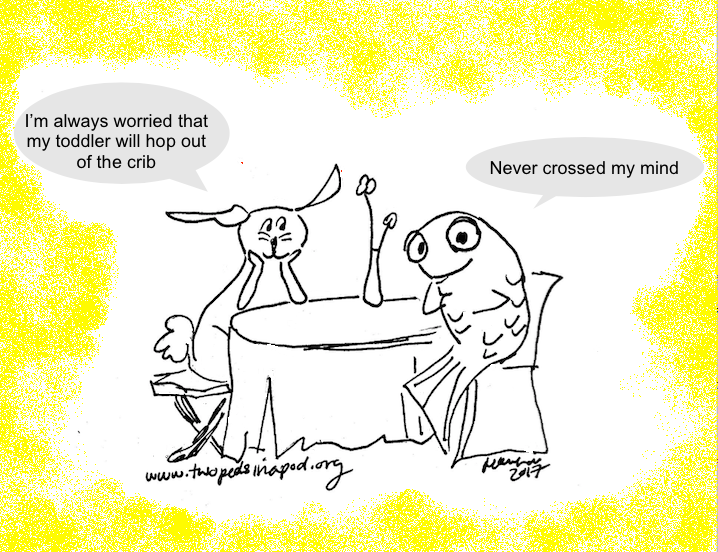
A family asked, “My toddler figured out how to climb out of the crib! How do I transition him into a bed?”
Some kids never climb out of their cribs, but sometimes families need the crib for a new sibling. If this is the case, consider if you really need the crib right away. Using a bassinet for the new baby allows the big brother/sister to get used to having a baby around. Many older siblings regress after the birth of a sibling and it can be useful to keep the older one in a crib for just a little bit longer, then use the new bed as a reward for “helping” or as a token of increased status.
The scariest part of putting your child into a bed is that your child now has access to his entire bedroom.
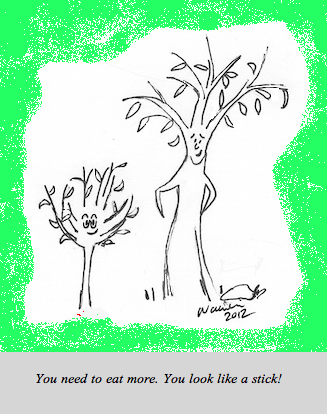
Your child’s pediatrician charts your child’s height and weight in order to determine whether he is growing appropriately. Some kids are underweight. These kids use more calories than they take in.
Here are ways to increase calories. Remember, it’s not as simple as demanding that your child eat more of her noodles. Instead of trying to stuff more food into your child, increase the caloric umph behind each meal.
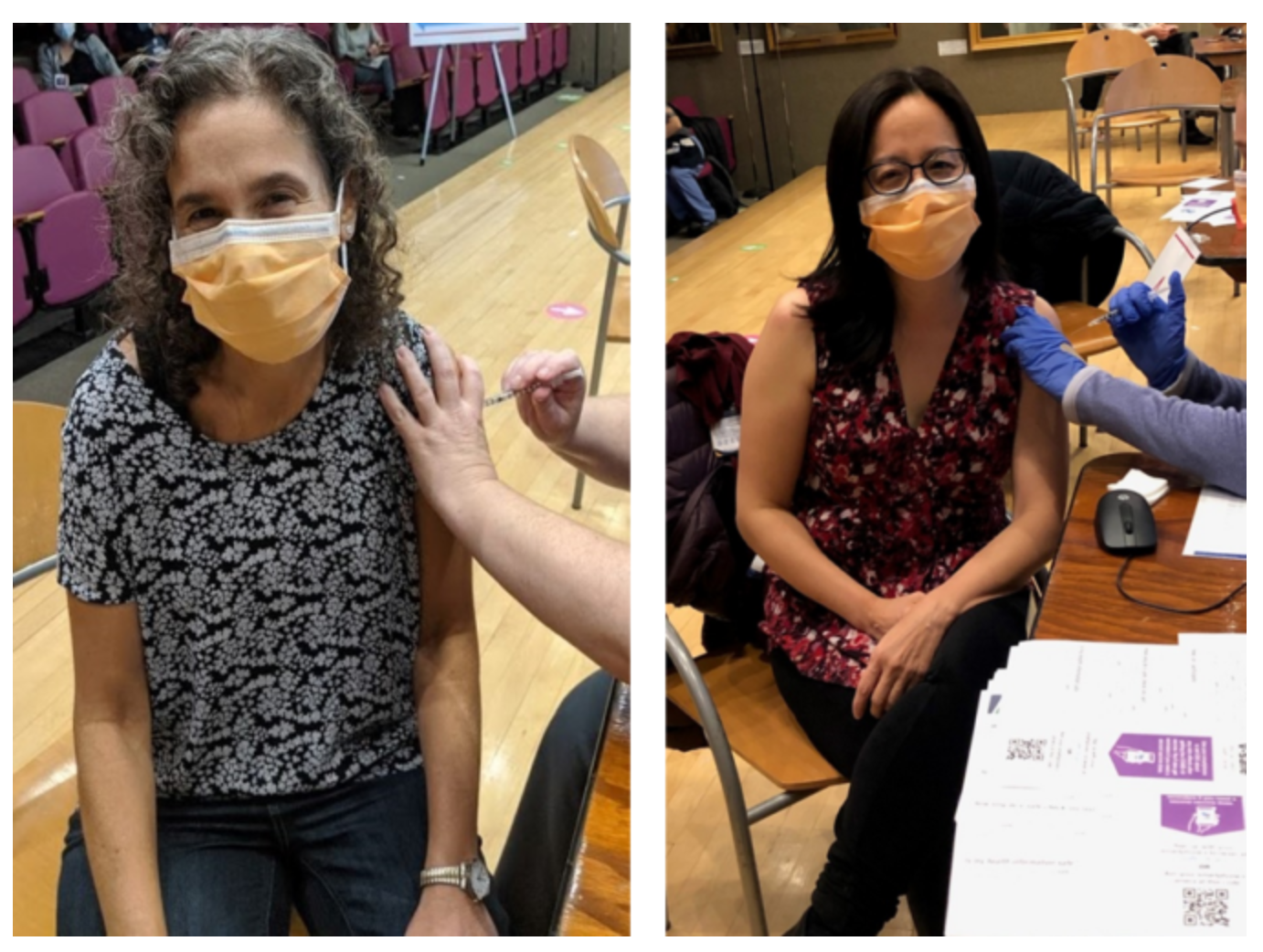
As the year 2020 comes to a close, we are grateful, as pediatricians caring for your children, that we received our first doses of COVID-19 vaccine.
There is hope! COVID-19 vaccines have arrived and more than two million adults have safely received a vaccine. Now that vaccinations are reaching adults, many families wonder when COVID-19 vaccines will be available for their children.
In addition to pocket-sized hand sanitizer, I recently got my kids pocket-sized moisturizer to help their dry, cracked hands.
Between diligent handwashing and falling temperatures in Pennsylvania, we are experiencing annoying, itchy skin changes. We’ve blogged about this before-Dr. Lai and I are used to washing our hands twice for every patient we see in the office-once before examining them and once again afterward. I have a jar of moisturizer on my desk that I frequently dip into between patients. Now I remind my kids to do the same between hand washings.
Here are some remedies to help treat dry, cracked hands:
Petroleum jelly, such as Vasoline or Aquaphor, works great to moisturize and heal cracks in the skin. Apply at bedtime. Ointments are greasy, so during the day your kids might prefer using a fragrance-free moisturizing cream such as CeraVe or Aveeno.
If itchy, add hydrocortisone 1% ointment to your kids’ daily or twice daily hand-care regime. Sometimes, for kids with underlying eczema, pediatricians prescribe a stronger type of hydrocortisone to help with more severe skin cracking and itching from dryness. Ointment tends to sting less than cream.
Mix equal parts of moisturizing ointment and hydrocortisone ointment, smear, and put socks over hands to lock in moisture. This works best as a bedtime routine to help decrease the subconscious scratching and picking that occurs during sleep.
Holidays 2020 style: Oops. I must have been wearing my mask when I told your grandmother that you wanted a “new fur cat.” I think she heard “new fur hat.”
We’re bringing back our popular holiday gift guide based on ages and developmental stages. As always, we will concentrate on non electronic options, as well as pandemic-friendly ideas.
Kindergarten:
What’s happening: Kids at this age can hop up and down on one foot and they start having a better sense of time. They tell simple stories, can tell real from make-believe and can swing and climb.
Ideas: Clocks, calendars, and games that require some balance like Twister® are all hits. Games with simple rules such as checkers and puzzles with large pieces are developmentally within reach. They may enjoy reading books with very simple sentences on their own. Foster creativity with colored papers, crayons, markers, stickers, and water-color paints.
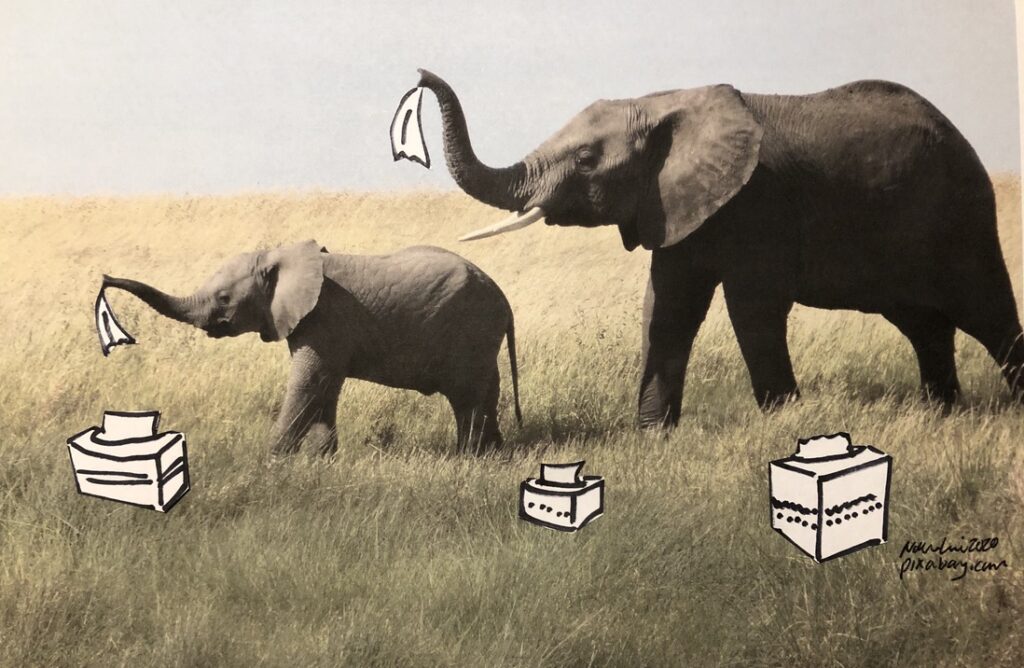
Viral lamentations: imagine an elephant’s woes when a cold ends up in their nose
In the age of the COVID-19 pandemic, we can no longer say easily that your child with cold symptoms has a simple cold. Pre-pandemic, it was so easy to say, “Of course they can go to school with a cold. Most kids can participate and be perfectly happy despite their stuffy nose or mild cough.” We pediatricians often spent time reassuring parents about colds.
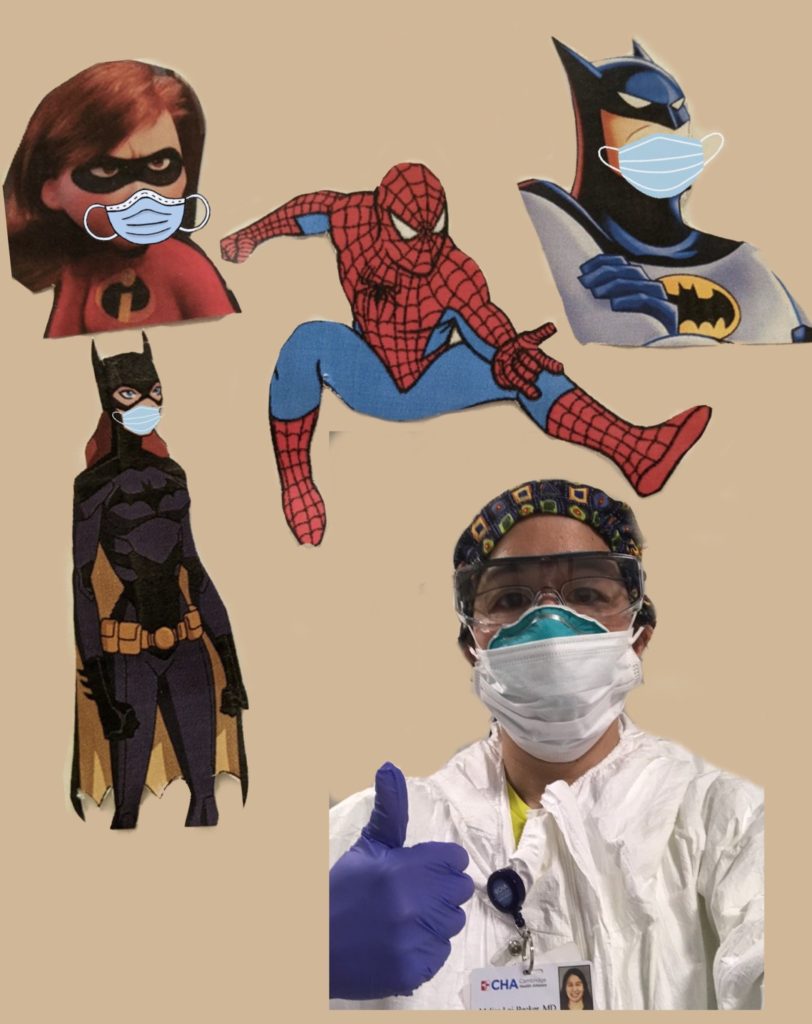
Superheroes don’t wear masks just over their eyes when they fight germs.
Every child, long before COVID, was taught to prevent germs from entering their bodies by washing their hands and making sure their nose did not get too close to other kids’ noses. As we’ve always said, “You don’t want someone’s boogers to jump into your nose.” Besides distancing, wearing a mask is just another way to prevent those boogers from jumping in or out of noses. But most people are unfamiliar with wearing masks and are not sure how to teach their kids to wear them.
Enter superheroes. As we know, superheroes wear masks. Above is a photo of one of Dr. Lai’s favorite superheroes, along side other mask-wearing superheroes. Her superhero sister is an ER doctor. She wears layers to keep herself from bringing home COVID to her own kids. She works in this garb for hours and hours. We borrow from her hints for helping your kids do the same with their masks:
Cover both your child’s nose and mouth with the mask. The path for a germ to enter and exit the lungs is through BOTH the mouth and nose…it’s all connected. If the mask has a wire at the top part of the mask, pinch it over your child’s nose and press gently over the tops of their cheeks. This helps prevent glasses from fogging and also limits germs from coming and going through leaky areas of the mask.
Have your child talk, sing, and jump up and down in their mask before leaving the house. We have seen many a mask wiggle down a kid’s (or parent’s) face as they start to talk. It’s like watching a game of chutes and ladder…the mask goes up a little, and down and little, and sometimes it slides right off.
If the mask seems too big, try tying the loop with a small knot. The secret is to fold the mask in half (lengthwise) with the outsides facing each other and tie a knot close to where the strings meet the paper/fabric. Then pop it back open and tuck the corners in. This works best with a paper mask. Note, masks are not recommended by the American Academy of Pediatrics for those under two years old. Check out other kids who should not wear masks here.
Some kids will complain about the mask. It can be a comfort issue, a fashion issue, or a habit issue. They are just not accustomed to wearing a mask and over time they will get used to it. If comfort were the only goal of kid fashion, gel light-up princess shoes would not exist! Practice having all of your family members wear a mask around the house before venturing out. Also, try your child’s mask on yourself. Maybe the material really is “stinky” or “pinchy” and it’s time for a different mask.
Once a mask is on, teach kids to pull up a mask from the sides or near their cheeks, not near their nose. Again, you want them to avoid touching their boogers.
Taking off a mask correctly is as important as putting one on. When taking off a mask have them wash their hands with soap and water and then gently take their mask off at the ears. If their hands are not washed and they touch their mask around their nose, there is the potential for germy droplets on their hands to jump into their nose.
If you find that ear loops are chafing your child behind the ears or over the cheeks, moisturize an hour before wearing. If you moisturize right before putting on the mask, there is the risk that the mask will slide around. There are all sorts of methods to hook the loops to places other than behind the ears. You can sew buttons on a headband and secure the loops to the buttons or secure the loops to glasses. There are also mask extenders available. Use non-comedogenic (non-acne-producing) lotions such as Cervave®, Cetaphil®, or moisturizers meant for faces only.
If cloth, wash the mask in soap and water when they get home. There is no need to torch the mask with high heat or douse in a special chemical. A good wash with soap and air drying for a day will kill off germs- COVID and other germs as well.
Paper masks need to breathe. Most are technically one time use, but let’s get real, we know that you will use them more than once. Store them in paper lunch bags-fold the masks so the outside (germy side) is touching together.
One final tip: COMPLIMENT your child’s proper mask wearing! Dr. Kardos is often overheard exclaiming to her patients: “I LOVE your mask! It is so COOL! Do you like MINE? See how I wear it LIKE A SUPERHERO?” It is fun to watch the kids immediately put on their masks if they were initially off, and to pull it up over their noses correctly to mirror Dr. Kardos if they had been wearing the mask improperly.
What better barrier against nose spew than wearing a mask? Have your kids wear them in superhero style. Until this pandemic is under control, mask wearing will play a huge role in keeping your children safer from disease spread.
Does the adult looking through the camera at these children see what a child sees? — photo courtesy of Pixabay
No matter your skin coloration, you will have the first opportunity to teach your kids about racism in the United States. To help you approach the topic, therapist Dina Ricciardi culled through the internet to pick out resources to start a dialogue. — Drs. Lai and Kardos
Lately, conversations and news coverage about racism surround us. Images of unrest and violence have covered our news screens, affecting our country, our communities, and sometimes our own homes. On top of the global pandemic of COVID-19, navigating the topic of race and race relations with your family can feel downright overwhelming. Adults may be experiencing a whole range of feelings. Emotions may range from anger to sadness to fear and beyond. While us parents want to teach our kids, we also want to protect them. We wonder, do we talk with them about what they see on television and social media? Or do we shield them from serious problems?
Our understanding and beliefs about race, whether our own race or others’, is deeply personal and rooted in our own unique experiences. As parents, we may feel unprepared and not know how to address our children’s questions and concerns. Therefore, we may avoid conversations about race.
Fortunately, there are many available resources. Many educators, mental health experts, and medical professionals are sharing information to equip us with knowledge and confidence. Below is a handful of the offerings.
These are just a few of the resources available to help you wade into challenging conversations about race. As stated by Dr. Howard Stevenson from the Penn Graduate School of Education, “The more you listen for what your child already knows, what they are concerned about, what they are afraid of, the more you’ll be able to help them speak and feel confident…and keep listening, because your child will need you to keep that conversation going.”
Dina Ricciardi, LCSW, ACSW
Ricciardi is a licensed clinical social worker and psychotherapist in private practice treating children, adolescents, and adults in Doylestown, PA. She can be reached at dina@nourishcounseling.com.