Marijuana: In 2010, one out of five high school seniors and eight percent of eight graders reported using marjuana. Unlike popular belief, marijuana is addictive. Use starting in adolescence is associated with an almost 20 percent risk of dependence. It’s strong stuff. As little as five uses of pot can lead to addiction and withdrawal symptoms are similar to withdrawal symptoms from heroin. The good news is that a teen can withdraw safely at home. If your kid tells you he is not addicted and can quit at any time, challenge him to stop smoking for two weeks. If he can’t, then he is in deeper than he realizes. Pot clouds up the brain and makes it more difficult to remember recent events. Although kids say they can drive after smoking weed, their reaction time is impaired, just as it is with alcohol use. In the past researchers thought brains did not develop much in adolescence. However, brain development does continue to the early twenties, and pot can affect that development by altering mood and executive function (planning) centers in the brain. In short, marijuana causes brain damage. Steroids: It’s just as likely to be the kid who wants to look “buff,” and not just the athlete who wants to play better, who uses anabolic steroids. Addiction does occur… and in a lot of users. One-third of all users end up addicted. Not only do steroids affect muscles, but also they affect the brain. Adolescents are already known for emotional volatility and steroids heighten aggressiveness. Additionally, sex organs pay a price for steroid. In males, testicles can atrophy and breast development can occur. For females, non-reversible facial hair growth and deepening of voice are side effects. Prescription medications: Throw away those unused prescription pain killers and lock up controlled substances still in use. Prescription medications seem unintimidating to kids because they are prescribed legally and they see their parents taking them. Over the last few years, reported use of Vicodin in the past year by 12th graders ranged from about eight to ten percent. Deaths occur from overdose or from accidents from impaired driving. Data show teens listen to advice they hear from their parents and their pediatricians, even if they sometimes take time to digest and act on that advice. We pledge to do our part when we talk to your kids about the harmful effects of drug use. We urge you to continue communicating with your children, even if they are away at college. One helpful website to assist you in talking to your kids about drugs is The National Institute on Drug Abuse: http://www.nida.nih.gov/nidahome.html. Naline Lai, MD and Julie Kardos, MD ©2011 Two Peds in a Pod®
We’re back from the national American Academy of Pediatrics conference in Boston and we’re galvanized to make a positive impact on youth. Just in time for Red Ribbon Week, the national campaign for halting substance abuse Oct 23-31 (www.redribboncoalition.com), we bring you facts for you to use as you talk about three drugs kids generally consider “harmless”: marijuana, anabolic steroids, and prescription medications.
Culled from talks given at the American Academy of Pediatrics National Convention and Exibition, 2011, by Patricia Kokotailo, MD, MPH and Greg Landry, MD, FAAP University of Wisconsin School of Medicine and Public Health, Madison, WI, John Kulig MD, MPH,FAAP, Tufts University School of Medicine, Boston. If you live in the Central Bucks area of Pennsylvania contact CBCares for more information on local Red Ribbon Week events.

Category: Elementary school kids
Should I vaccinate my child?

Yes, yes, yes.
There are many deadly diseases we can’t prevent, but we do have the power to prevent a few. We now have the ability to prevent your children from getting some types of bacterial meningitis, pneumonia, and overwhelming blood infections. With vaccines we can prevent cases of mental retardation, paralysis, blindness, deafness, and brain infections. Immunizations are a safe way of boosting children’s natural immune systems. Yet some of our parents continue to doubt the benefits of vaccines and to fear harm from them.
Let’s look at another kind of prevention. You would never drive your car without putting a seat belt on your child. Even if you don’t know anyone who was in a fatal car accident, you still buckle you and your child up. You may know a kid who emerged from a car accident with only a scrape, yet you still buckle you and your child up.
You may never know a child who is paralyzed by polio or who died of whooping cough, but it does happen and can be prevented. Just like with car accidents, it’s better to prevent the injury than to play catch-up later. Dr. Kardos’s grandfather routinely rode in the front seat of his car without his seat belt because he “had a feeling” the seat belt might trap him in the car during an accident. Never mind that epidemiologists and emergency room doctors have shown people are much more likely to die in a car accident if they are not wearing a seat belts, he just “had a feeling.”
When it comes to your children, parental instinct is a powerful force. We routinely invite our patients’ parents to call us about their children if their instincts tell them something might be wrong, and we always welcome and at times rely on parents’ impressions of their children’s illnesses to help us make a diagnosis and formulate a treatment plan.
However, in the face of overwhelming evidence of safety and benefits of vaccines, we pediatricians despair when we see parents playing Russian roulette with their babies by not vaccinating or by delaying vaccinations. We hope fervently that these unprotected children do not contract a preventable debilitating or fatal disease that we all could have prevented through immunizations.
There is no conspiracy here. We both vaccinate our own children. We would never recommend any intervention where the potential for harm outweighs the potential for good. We have valid scientific data that every year vaccines save thousands of lives. One of them could be your child’s life.
Should you vaccinate your child?
YES!
Julie Kardos, MD and Naline Lai, MD
©2011 Two Peds in a Pod®
Visit these posts for more information about vaccines: How Vaccines Work, Evaluating Vaccine Sites on the Internet, and Closure: there is no link between the MMR vaccine and autism
Also, please visit the recent Institute of Medicine’s analysis of vaccine side effects.
“Because I said so?” – getting your kids to listen
While many good books have been written on the subject of how to get your kids to listen to you, today we boil this topic down to a few key sticky points. The goal is to make sure your child hears, “Please clean your room,” as well as,“Let’s go get ice cream.” Here are ways to make requests which yield results: A special note about bribes and threats: By three years old, most kids understand bribes and threats. Sounds terrible, doesn’t it? However, both can be useful when used sparingly. For example, you could offer to take your child out for ice cream, or a bike ride, or a special event, in exchange for cleaning his particularly horrendously messy room. But bribes used too often create a kid who expects to get “paid” for performing reasonable and customary personal and household tasks. Likewise, threatening a negative consequence must also be used sparingly or else you will end up with a resentful child who will have even more motivation to not listen to you. Remember to take away “extras” rather than essentials. For example, failing to listen may result in losing a finite amount of TV/videogame time. Do NOT threaten to take away eating dinner, reading with your child before bedtime or going to her best friend’s birthday party. Remember to follow through on the consequence immediately. Giving empty threats or putting off threats put you into the “nag” category. Most importantly, during any ice cream outing, bike ride, or special trip to the park, regardless if it was a planned event or a bribe, flip the table and take the time to listen to what your child has to say. Julie Kardos, MD and Naline Lai, MD Special thanks for input from Kim Ross. A first grade teacher for the past 19 years, Mrs. Ross holds a Bachlor’s degree in Early Childhood Elementary education and a Masters degree in Educational Psychology, both from Temple University. Mom of two, she also is a Certified Parenting Educator. ©2011 Two Peds in a Pod®

Hear ye, hear ye: how can I tell if my child hears?
As I watched the movie, I was reminded about how children depend on their senses to learn about the world. Starting today, Two Peds in a Pod will bring you periodic posts about the early development of senses. We start with hearing. Unlike eyesight, which is limited at birth, babies are usually born with normal hearing. Before leaving the hospital after birth, or by two weeks of age, your newborn should receive a hearing test. Then, at every well child check, your child’s health care provider will ask you questions to confirm your child’s hearing remains the same. Even though they are unable to localize where sound is coming from, newborns will startle to new or sudden sounds and their eyes will open wider in response to the sound of your voice. All babies babble, even deaf ones, but language progression will stop in children who cannot hear. By six months, kids usually babble one syllable at a time. By nine months, children will produce syllables that sound like whichever language they hear the most. At this point they should also respond to their name. Babies who fail to meet these milestones may do so because they cannot hear. For older kids, hearing screening may be conducted in schools or the pediatrician’s office. The American Academy of Pediatrics recommends formal hearing screens starting at four years old. These screening tests can detect subtle hearing loss that parents did not notice. Kids who fail the screen should have a more comprehensive hearing evaluation by an audiologist. Many kinds of hearing loss are either reversible or manageable. The earlier the diagnosis the better. Sometimes speech, behavior, or attention problems are secondary to hearing difficulties. School aged children may mispronounce words because they cannot hear sounds clearly. These children commonly do not distinguish well between the “s,” “ch,” and “sh” sounds (please click here to review language development). Symptoms attributed to Attention Deficit Hyperactivity Disorder such as difficulty focusing or inattentiveness may actually result from hearing loss. Some kids who “just don’t listen” to adults simply can’t hear well enough to follow directions. As your child’s hearing loss progresses, you may notice your child’s language regresses, or that your child turns the volume up on the TV. Your child may accuse you of mumbling or ask you to often repeat questions. Although a common myth, a child who talks loudly is not necessarily deaf. After all, a child does not need to raise his own voice in order to understand himself. Finally, I should mention signs of “selective hearing loss.” Many parents describe this form of “hearing loss” to me in the office. In these cases, a child does not hear her mom say “Clean your room,” yet hears her mom whisper “Let’s go out for ice cream.” Julie Kardos, MD with Naline Lai, MD
I just watched “The Miracle Worker” with my oldest son. This classic 1962 movie depicts Helen Keller, who was deaf and blind, struggling to understand language, with the help and supreme patience of her determined teacher Annie Sullivan.
We address the topic of listening, as opposed to hearing, in our next post.
©2011 Two Peds in a Pod®
A message to our children: Don’t be afraid to reach for the sky
©2011 Two Peds in a Pod®
If you were around the New York area ten years ago on September 11, you know it was a beautiful crystal-clear day. It was the kind of day which made you gaze admiringly at the sky as you stepped out the door. No one knew that soon the sky over New York, Pennsylvania, and Washington, DC would be marred by the dark clouds of terrorist attacks. Many of your children were too young to remember much about the day, or perhaps they were not even born yet.
As the ten year anniversary of that tragic day approaches, we remind you of previous posts which may help your children digest the images they see in the media and the raw emotions of adults around them. Above all, don’t be afraid to discuss the day and assure your children that it’s still ok to reach for the sky:
Explaining Tragedy to Children
Books for helping children through bereavement
How to explain death to a young school aged child
This link from Common Sense Media may also help: Talking to your child about 9/11: What do you need to know?
Naline Lai, MD and Julie Kardos, MD
That bites: recognizing spider bites
Wondering what crawled into your child’s room and bit her in the middle of the night? If you see two little pinpricks side by side, it’s probably a spider. Spider fangs make two little bite marks. Unfortunately, by the time you examine it in the morning, the bite may be so puffy and red that the two marks are no longer visible. With the exception of the Black widow spider and the Brown recluse spider, most spider bites are harmless and cause only a little bit of irritation. Over-the-counter hydrocortisone 1% ointment, ice, and an analgesic such as acetaminophen or ibuprofen can take the edge off of the itch and/or pain.
Naline Lai, MD and Julie Kardos, MD
©2011 Two Peds in a Pod®
Some advice for Back-to-School 2011
Happy Start of School Year 2011! In case you missed these school related posts earlier, here are guides to packing a healthy school lunch, backpack weight guidelines, and deciding when to keep your children home for medical reasons. We wish your children a rewarding, educational, and healthy year. Julie Kardos, MD and Naline Lai, MD

©2011 Two Peds in a Pod®
When it’s not comfort food
The preschool class was going on a field trip to a park. It was a breezy spring day and the four-year-old boy with the closely cropped hair was thrilled. Even though he didn’t usually attend school on Fridays, his mom brought him to meet up with his classmates at the park. The four-year-old’s eyes lit up as the yellow school buses rolled into the park just in time for lunch. Out tumbled the children, loud with excitement. In a flash, teachers spread brightly colored floral bed sheets on picnic tables, transforming the park into a little cafeteria. Twenty kids squashed together at the tables and forty sets of hands plunged into brown paper lunch bags. Holding onto his mother with one hand and holding his lunch bag in the other, the four-year-old boy shyly approached the crowd.
Upon spotting the boy, a little girl with a Scooby Doo shirt ran up and jumped up and down in delight.
“You’re here, you’re here!” she squealed.
The boy went happily with his mother to find a seat. But something was wrong. The boy and his mom went from table to table in a futile attempt to find a spot. But each table was the same: every child had a field-trip-friendly peanut butter sandwich in his hand. Peanut butter was everywhere. Some had it on white doughy bread, some had it on crackers. Another had a bag of peanuts mixed in with chocolate chips. The mom recoiled with horror and tightened her grip on the boy’s hand. Allergic to peanuts, the boy stood hesitantly at the edge of the crowd. As a baby, the boy had broken out in hives after his sister touched him with her hands sticky from her own peanut butter and jelly sandwich.
Imagine having to scrutinize the ingredients of all your food. Imagine being wary of a basic necessity that brings not only nutrition, but also feelings of warmth and comfort. Most children with food allergies have a reaction only when they ingest the offending substance, but the allergenic ingredients can pop up in unlikely dishes. The hyper vigilance of families with food allergies can be wearing. Studies on the psychological impact of food allergies show that families with children with food allergies have an overall lower quality of life than families without food allergies. In fact, although not obvious, families with food allergies rate their own lifestyle quality similar to families who have a child with diabetes or even a child who is respirator dependent.
For a moment a sense of isolation overwhelmed the mom. But just as quickly as it came, the feeling dissipated. In the future, the danger would become just a routine part of life, something to add to the long list of items to teach the boy to watch for. Just as the mom would teach the boy to watch out for cars as he crossed the street, she would teach him to watch for nuts in his food. Perhaps his quality of life would be compromised, but as she watched him laugh with his friends, it didn’t matter, he did not perceive it that way. Well loved, his quality of life index was still sky high.
Finally, the mom found a child who had finished eating his sandwich and had cleaned his hands. Half in jest, she fondly called her son “ostracized one” and placed her allergic boy next to the one who was done. There he perched, surrounded by messy children, with their messy peanut butter covered hands. Thankfully, the boy was happy and too busy chatting with his friends to worry. To him, waiting for a lunch spot was a mere nuisance. The potential danger next to him was just an accepted part of his everyday life.This scenario actually occurred. The little boy was my son. And the mom was me.
Naline Lai, MD
As the beginning of school approaches, Drs. Lai and Kardos remind parents of children with food allergies to check the dates on their Epi-Pens or Twin Jets to make sure they have not expired. Practice discharging expired pens into a grapefruit. Now is the time to update your “allergy action plan” from your child’s health care provider for your child’s teachers and school nurses.
Dr. Lai serves as an advisor for the FAST (Food Allergy Support Team) of Doylestown, PA, a local support group of the national Food Allergy Anaphylaxis Network.
©2011 Two Peds in a Pod®
Bye-bye food pyramid, hello myplate
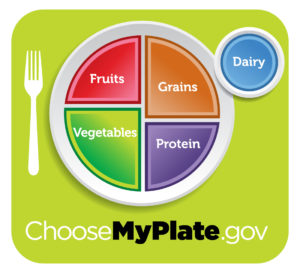
We love it! With MyPlate, the United States Department of Agriculture’s new depiction of “a good diet” is easier to understand than the food pyramid. Mentally cut your kid’s plate in half. On one side are fruits and veggies, on the other side are grains and protein. The dairy is represented by a cup. Check out choosemyplate.gov for all sorts of hints including a personal plan which calculates the amount of each food group kids (and adults) above two years old need daily.
We’re wondering when people will start hearing about the “new pyramid”. We think the food pyramid gained prominence partially because of it’s visibility on cereal boxes. After all, we all stare groggily at the back of cereal boxes while eating breakfast. In the food pyramid days, grains were a large part of the pyramid base. Will the cereal companies have as much incentive to post MyPlate if grains have been relegated to a quarter of the plate?
We’ll find out.
Naline Lai, MD and Julie Kardos, MD
©2011 Two Peds in a Pod®
French without the fry
I love French fries, I mean really, who doesn’t? They’re probably one of the most delicious treats on the planet, but unfortunately they’re also one of the worst treats when it comes to our health. You’ll likely want to opt for baked “fries.”
It’s about overall diet. Ideally we should enjoy a diet that includes lots of fresh fruits and vegetables, fish, grains, and legumes, and one that is devoid of processed foods and sugary sodas. Even diet sodas may be harmful as they are laden with sweeteners made from chemicals.
Also very important, according to doctors, is maintaining a healthy weight. If you’ve had the pleasure of eating baked “fries,” you know what a tasty option they are; if not, please give the baked variety a chance.
You can cut some russet potatoes a bit thick and coat them and coat them with a little extra-virgin olive oil, some rosemary, a little salt and pepper and bake them until golden at 350 degrees, usually between 30-35 minutes. You can do the same with sweet potatoes, but use a little cracked black pepper instead of the rosemary. I normally boil my sweet potatoes first for about 15 minutes. They are a lot easier to peel that way. The recipe is in my book, My Italian Kitchen on amazon.com.
There is no reason to give up the foods you love, just find healthier ways to make them. This way of thinking has become my mantra. It could well become yours too, if it isn’t already.
Buona Salute! To Your Health~
Janet
Returning guest blogger Janet Zappala is a certified nutritional consultant and author of My Italian Kitchen — Home-Style Recipes Made Lighter & Healthier. She is also a six-time emmy award winning television journalist and the host of Wealth of Health at www.janetzappala.tv. Janet is a busy mom as well and is always creating ways to offer up delicious, nutritious foods that are quick and easy to make.
©2011 Two Peds in a Pod®


