Common cold versus flu: how to tell the difference


how to tell the difference between flu and coldParents often ask how they can tell if their child has the flu or just a common cold. Here’s how:

Colds, even really yucky ones, start out gradually. Think back to your last cold: first your throat felt scratchy or sore, then the next day your nose got stuffy or then started running profusely, then you developed a cough. Sometimes during a cold you get a fever for a day or two. Sometimes you get hoarse and lose your voice. Kids are the same way. They often feel tired because of interrupted sleep from coughing or nasal congestion.

Usually kids still feel well enough to play and attend school with colds, as long as their temperatures stay below 101°F and they are well hydrated and breathing without any difficulty. The average length of a cold is 7-10 days although sometimes it takes two weeks or more for all coughing and nasal congestion to peter out.

Important news flash: the mucus from a cold can be thick, thin, clear, yellow, green, or white, and can change from one to the other, all in the same cold. The color of mucus does NOT tell you if your child needs an antibiotic and will not help you differentiate between a cold and the flu.

The flu, caused by influenza virus, comes on suddenly and makes you feel as if you’ve been hit by a truck. Flu always causes fever of 101°F or higher and some respiratory symptoms such as runny nose, cough, or sore throat (many times, all three at once). Children, more often than adults, sometimes will vomit and have diarrhea along with their respiratory symptoms. Usually the flu causes body aches, headaches, and often the sensation of your eyes burning. The fever usually lasts 5-7 days. All symptoms come on at once; there is nothing gradual about coming down with the flu.

So, if your child has a runny nose and cough, but is drinking well, playing well, sleeping well and does not have a fever and the symptoms have been around for a few days, the illness is unlikely to “turn into the flu.”

Remember: colds = gradual and annoying. Flu = sudden and miserable.

Fortunately, a vaccine against the flu can prevent the misery of the flu. In addition, vaccines against influenza save lives by preventing flu-related complications that can be fatal such as pneumonia, encephalitis (brain infection), and severe dehydration.  

Be sure to read our article on ways to prevent colds and flu and our thoughts on over the counter cold medicines.  Now excuse us while we go out to buy really yummy smelling hand soap to entice our kids to wash germs off their hands. After that you’ll find us cooking up a pot of good old-fashioned chicken soup, just in case…

Julie Kardos, MD and Naline Lai, MD
revised from a Sept 2009 post

©2014 Two Peds in a Pod®


image_pdfimage_print
Share

A vaccine parable by Dr. Benaroch


Does it make sense to change your car’s tires one at a time? (A vaccine parable)

vaccine injuryRon was puzzled. He had been a mechanic for many years, and had known Ms. McCarthy through two previous vehicles. But what could he say to a request like this?

“I don’t see why you wouldn’t want to do it this way. What’s the harm?” The mother of two seemed sincere and earnest. Ron knew she wanted to take good care of her car, and the kids who rode with her every day.

“It’s just not done this way. You need four new tires, let’s just replace them all at once.” Ron stuck his finger into a well-worn tread, showing his customer how shallow the grooves had become.

“But isn’t that too hard on the car? I mean, that seems like a lot to do, all at once. Let’s space them out, one tire every two weeks. I’ll just come back.”

Ron scratched his head. Cars: that’s what he knew. Light trucks, electrical systems, AC systems too. He had even studied and learned how to fix and maintain foreign cars, and hybrids, and the newer electric cars—more computer than car, really. If it rolled on wheels, Ron knew how to fix it. It was his job.

“No, you see, it’s a safety thing. A tire could blow—see how bare these are? And you won’t get good steering on these, which is also unsafe.” Safety, thought Ron, that will convince her. He took safety very seriously, and imagined that this nice lady with the kids would put safety first. “Besides, cars are designed to have their tires replaced. Tires wear out, so the car was designed to safely go up on this lift so we can replace the tires. No problem!”

“But how do I know it’s safe? I read on the internet that replacing all of the tires at once can stress out the suspension, and lead to premature angulation of the mesmerglobber, and on Oprah I saw this actress and she said three months after she had all four tires replaced, her transmission broke!” Ms. McCarthy started to sob.

“OK, look, it’s ok, look, um…” Ron looked for one of his less-greasy rags to offer as a handkerchief.

“Waiting a few weeks between each tire won’t really hurt, will it?”

“Probably it’ll be OK, I guess. But tires are an important part of your safety system, like good brakes and seat belts and air bags.”

“Oh, I make sure we never wear seat belts! I heard that once a guy was wearing his seat belt, and he went into a lake, and he couldn’t get it off, and he drowned! I’m not wearing anything that isn’t 100% safe!”

Ron felt lost. “Look, nothing’s 100% safe! A seat belt might occasionally make an accident worse, but 99 times out of 100 it’s much better to wear your belt.”

“I can’t risk that 1 out of 100 chance!”

The mechanic tried another avenue. “But it’s the law, you have to wear your seat belt, and your kids need to be in the right kind of car safety seats too.”

Ms. McCarthy’s eyes grew dark. “Yeah, the law. That’s just it—the government is forcing these seat belts and new tires on us, because the government is controlled by the car manufacturers and the insurance industry! If seat belts really saved lives would there have to be a law about it? That’s why I disconnected my front brakes.”

“What?”

“The front brakes are just a booster anyway. If the brakes work as well as they’re supposed to, why do we need a booster? It’s just more money, it’s all about the money!”

Ron had been fixing cars for years, and he owned his own shop. He made pretty good money, but selling new tires and simple brake maintenance jobs weren’t really profitable. He did those things to keep cars running well, and to prevent bigger problems later. In fact, if he let more rotors go bad and transmissions fail, he’s probably make even more money from the expensive jobs needed to fix them.

“Tell you what—I’ll fix up your brakes for free, just my cost for parts, OK? Really, it’s not safe for you and the other drivers if you don’t have good brakes and tires.”

“What do you mean, the other drivers? They have their own brakes! That’s exactly what this web site I found was explaining, that you’d come up with all of these dumb reasons to take more of my money and hurt my car! You’re not really interested in keeping my car healthy, are you?”

Are you?


Roy Benaroch, MD
©2014 The Pediatric Insider 

In practice near Atlanta, Georgia, Dr. Roy Benaroch is an assistant clinical professor of pediatrics at Emory University, a father of three, and the author of  The Guide to Getting the Best Health Care for your Child and Solving Health and Behavioral Problems from Birth through Preschool. We enjoy his blog The Pediatric Insider and also enjoy his posts on Web MD.


image_pdfimage_print
Share

How to help your baby/toddler/school-aged child/teen sleep

baby child sleepWhen I was a child, a special treat was to have a sleepover at my grandparents’ house. My grandfather was an early riser and to this day I can still hear him roaring “When Pop-Pop’s up, EVERYBODY’S UP!” as I awoke to the aroma of my grandmother’s hot breakfast.

As all parents know, when BABY’s up, EVERYBODY’s up. What‘s the secret to good sleep? It’s all in the bedtime routine.

Parents should establish a good bedtime routine when their children are babies and should continue to enforce the routine until their children grow up and leave home. Just as prevention of heart disease begins with establishing healthy eating and exercise habits when your children are young, prevention of adult insomnia starts with establishing a healthy bedtime routine.

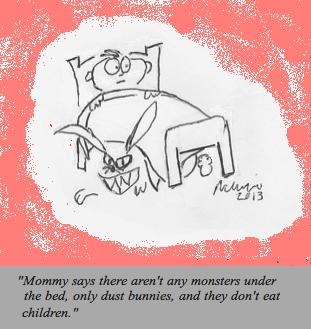
Here are ways to help your kids sleep from infancy through young adulthood: Start with our most commented upon podcast: how to help your baby to sleep through the night. Parents of preschool-aged kids will appreciate“sleep invaders”: nightmares, night terrors, and other monsters under the bed.  Even if you don’t have a teen, read our post on the Tired Teen.

Now that winter break is a memory, it’s time to buckle down and rid your child of the jet lag that persists from the “vacation sleep schedule.” For more ways to do this, refer to “Get your child back on a school sleep schedule.”

May you have a good night this and every night!

Julie Kardos, MD and Naline Lai, MD
©2014 Two Peds in a Pod®

image_pdfimage_print
Share

Late talker or language delay?

is my baby a late talker?


We welcome our guest blogger, Virginia Li, who addresses questions surrounding language delay.
Naline Lai, MD and Julie Kardos, MD


My 18-month old isn’t talking yet. Should I be worried? When is the right time to seek help?


This situation troubles both new and seasoned parents. Children generally speak their first words around their first birthdays, and string words together by the time they turn two. But what should you do if your child isn’t quite reaching these milestones? While well-intentioned friends and family might tell you not to worry, it’s never too early to voice your concerns and seek a professional evaluation.


Take note of your child’s progress in other areas of language development by asking yourself these questions:


  • Does your child appear to understand what you’re saying?
  • Can he or she follow simple commands?
  • Is your child using body language to communicate needs and wants?


Children who are behind in any of these areas are at risk for persistent language delays. On the other hand, if you’re answering yes to all of these questions, there is a good chance that your child is a “late talker” who is delayed in spoken language but otherwise developing normally.


While 70 to 80 percent of late talkers will soon catch up to their peers[1], the ones who don’t are at risk for future setbacks in school and will face further frustrations from being unable to express their needs and wants. It is hard to predict which children will outgrow their delay, and the “wait and see” method only postpones treatment for those children with true language disorders.


In any case, if your child is not reaching speech and language milestones, trust your instincts, talk to a health care provider, and schedule a screening with a licensed speech-language pathologist. Children in the United States under 3 are eligible for a free evaluation through their local Early Intervention program. The earlier a language issue is identified and treated, the better chance your child has of improving with speech therapy. And if it turns out therapy won’t be necessary, you can relax sooner rather than later.


Meanwhile, there’s plenty you can do to support those budding language skills at home. Talk to your child throughout the day, pairing words with familiar activities and objects. Point out and describe pictures while you read together, and always encourage your child’s use of sounds and gestures. Giving your child lots of opportunities to communicate with you each day will have benefits that last a lifetime.

Virginia Li

 ©2013 Two Peds in a Pod®

Virginia Li is a communications associate at Pathways.org, a national not-for-profit organization dedicated to providing free resources and information for families and health professionals on children’s motor, sensory, and communication development. The Pathways.org Baby Growth and Development Chart has been recognized and endorsed by the American Academy of Pediatrics and the National Association of Pediatric Nurse Practitioners, and additional educational materials are available online to download, copy, and share freely. For more information, please visit Pathways.org, email friends@pathways.org, or call our toll-free parent-answered hotline at 1-800-955-CHILD (2445).

image_pdfimage_print
Share

Top parenting ideas for 2014


parenting hintsResolve to raise self-esteem, foster a sense of security, and encourage independence in your children in the new year. Here are our top parenting ideas for this year:

1-Read aloud to your children, even if they already know how to read to themselves.

2-Get rid of the smart phones at the dinner/lunch/breakfast table and turn off the TV. Focus on food and family instead.

3-Compliment your child’s effort – from using the potty, to dressing himself, to not fighting with a sibling. Praise the effort, not the outcome.

4-Teach a new skill  such as how to fold socks, how to cook eggs, how to put a book back neatly in a bookshelf, how to do his algebra correctly.

5-Have your child do something he’s never done to encourage independence. For example, have your 6 year old order for himself at a restaurant, have your 9 year old call and arrange his own get-together with a friend before you get on the phone with the parent, or have your tween call (on the phone, not “googling”) a store to find out what time it opens.

6-Tell a personal anecdote in order to teach a lesson. For a young child, tell them how: “I remember when I forgot to wear my gloves and my hands were SOOO cold…”

7-Listen to your child when he talks to you. Put down the phone, put down the newspaper, turn off the TV, put aside the mail, and really pay attention.

8-Make your child laugh daily. Tell a corny joke, make a funny face, read a funny book, play a funny game, whatever it takes.

9-Tuck your child into bed or at least visit your teen’s room before he goes to sleep. Bedtime brings out stories from your children you might not hear about during the day. And it shows you care about them.

10-Hug them. Even if they are now bigger than you are. Remind your child that you will always be there for him.

Wishing you all a happy and healthy 2014,

Julie Kardos, MD and Naline Lai, MD
©2014 Two Peds in a Pod®


image_pdfimage_print
Share

Avoid TV Heads: how to place limits on your kids’ screen time

screen time for kidsWondering how to place limits on your kids’ screen time? We know that winter break often finds kids spending more time in front of screens: watching TV, playing video games, or surfing the internet. Today we post our suggestions to help limit screen time in your home.
Drs. Kardos and Lai

“Mom, can we do screen?”

My kids ask me this question when they are bored. Never mind the basement full of toys and games, the outdoor sports equipment, or the numerous books on our shelves. They’d watch any screen whether television, hand-held video game, or computer for hours if I let them. But I notice that on days I give in, my children bicker more and engage in less creative play than on days that I don’t allow some screen time.

Babies who watch television develop language slower than their screen-free counterparts (despite what the makers of “educational videos” claim) and children who log in more screen time are prone to obesity, insomnia, and behavior difficulties. The American Academy of Pediatrics recommends no more than two hours of television watching a day for kids over the age of two years, and NO television for those younger than two.

Over the years, parents have given me tips on how they limit screen time in their homes. Here are some ideas for cutting back:

    • Have children who play a musical instrument earn screen time by practicing music. Have children who play a sport earn screen time by practicing their sport.
    • Set a predetermined time limit on screen time, such as 30 minutes or one hour per day. If your child chooses, she can skip a day to accumulate and “save” for a longer movie or longer video game.
    • Take the TV, personal computer, and video games out of your children’s bedrooms. Be a good role model by taking them out of your own bedroom as well.
    • Turn off the TV as background noise. Turn on music instead.
    • Have books available to read in relaxing places in the house (near couches, beds, etc.). When kids flop on the couch they will pick up a book to relax instead of reaching for the remote control.
    • Give kids a weekly “TV/screen allowance” with parameters such as no screen before homework is done, no screen right before bed, etc. Let the kids decide how to “spend” their allowance.

Not that I am averse to “family movie night,” and I understand the value of plunking an ill child in front of a video in order to take his mind off his ailment. In fact, Dr. Lai lives in a house with three iPod Touches, two iPhones, a Nintendo DS and three computers. But I do find it frightening to watch my otherwise very animated children lose all facial expression as they tune in to a video.

For more information about how screen time affects children, see the American Academy of Pediatrics web site (www.aap.org) and put in “television” in the search box.

Let us know how you dissuade your children from the allure of the screen.

Julie Kardos, MD and Naline Lai, MD
© 2010 Two Peds in a Pod®

image_pdfimage_print
Share

When a pet dies

Photo by Lexi Logan

Today we welcome Bereavement Counselor Amy Keiper-Shaw who shares with us how to discuss the death of a pet with your child.

–Drs. Lai and Kardos

When I first graduated from college I worked as a nanny. One day the mom shared with me that their family goldfish recently died. As this was her daughter’s first experience with death, we schemed for nearly 20 minutes to find the best way to talk to her child. The mom and I thought it could be an excellent teaching moment.

We pulled the girl away from her playing to explain that the fish had died. We told the girl we’d help her have a funeral if she wanted, and we would find a box (casket) to bury the fish so she could say her goodbyes. We explained what a casket was and what a funeral was in minute detail. After our monologue we stopped, we asked if she had any questions.

After a slight pause she asked, “Can’t we just flush it?”

The lesson I learned from that experience, and still use to this day, is to keep things simple, and know my audience. Sometimes as parents we overcompensate for our own fears and make situations more challenging than they need to be.

Here are some tips on how to talk to your children about pet loss:

Tell your child about the death, and then pause. Ask her what she thinks death means before moving on with further explanations. This will help you know if she has questions or if she has enough information for the moment. Children often need a small amount of information initially and will later come back to you several times later to ask more questions after they process the information.Remember to express your own grief, and reassure your child that many different feelings are ok. Be sure to allow children to express their feelings. If your child is too young to express herself verbally, give her crayons and paper or modeling clay too help express grief.

Avoid using clichés such as: Fluffy “went to sleep.” Children may develop fears of going to bed and waking up. The phrase “God has taken” the pet could create conflicts in a child and she may become angry at a higher power for making the pet sick, die, or for “taking” the pet from them.

Be honest. Hiding a death from a child can cause increased anxiety. Children are intuitive and can sense is something is wrong. When the death isn’t explained they make up their own explanation of the truth, and this is often much worse than the reality of what occurred.

Children are capable of understanding that life must end for all living things. Support their grief by acknowledging their pain. The death of a pet can be an opportunity for a child to learn that adult caretakers can be relied upon to extend comfort and reassurance through honest communication.

Developmental Understanding of Death

Two and three-year-olds
Often consider death as sleeping, therefore tell them the pet has died and will not return.

Reassure children that the pet’s failure to return is unrelated to anything the child may have said or done (magical thinking).

A child at this age will readily accept another pet in the place of a loved one that died.

Four, five, and six-year-olds

These children have some understanding of death but also a hope for continued living (a pet may continue to eat, play & breathe although deceased).

They can feel that any anger that they had towards the pet may make them responsible for the pet’s death (“I hated feeding him everyday”).

Some children may fear that death is contagious and could begin to fear their own death or worry about the safety of their parents.

Parents may see temporary changes in their child’s bladder/bowels, eating and sleeping.

Several brief discussions about the death are more productive than one or two prolonged discussions.

Seven, eight, and nine-year-olds

These children have an understanding that death is real and irreversible.

Although, to a lesser degree than a four, five or six-year-old, these children may still possibly fear their own death or the death of their parents.

May ask about death and its implications (Will we be able to get another pet?).

Expressions of grief may include: somatic concerns, learning challenges, aggression, and antisocial behavior. Expression may take place weeks or months after the loss.

Adolescents

Reactions are similar to an adult’s reaction.

May experience denial which can take the form of lack of emotional display so they could be experiencing the grief without outwards manifestations.

Resources:
Petloss.com– a gentle and compassionate website for pet lovers who are grieving the death or an illness of a pet- they have a Pet Loss Candle Ceremony every week

Your local veterinarian- often your veterinarian has or knows of a local pet loss group

Handsholdinghearts.org– our group of counselors offer grief support to children, teens, and their families centered in Bucks County Pennsylvania.

Books on pet loss for children:

Badger’s Parting Gifts (children) by Susan Varley

Lifetimes by Brian Mellonie & Robert Ingpen

The Tenth Good Thing About Barney (children) by Judith Viorst

Amy Keiper-Shaw, LCSW, QCSW, GC-C

©2013 Two Peds in a Pod®

Amy Keiper-Shaw is a licensed grief counselor who holds a Masters Degree in clinical social work from the University of Pennsylvania. For over a decade she has served as a bereavement counselor to a hospice program and facilitates a bereavement camp for children. She directs Handsholdinghearts, a resource for children who have experienced a significant death in their lives.

image_pdfimage_print
Share

Prevent colds and flu!

how to prevent cold and flu

We have seen many patients with nasty colds lately, and we know that a few cases of flu recently popped up in our area of the United States.  Take a look at  “Top Ten Ways to Prevent Colds and Flu,” a post we wrote recently for Mom365, to get your kids through cold and flu season. 
 

To keep yourself updated on the status of the flu, check the  
Centers for Disease Control flu tracker.

The bad news: thus far three pediatric deaths from flu were reported for this 2013-2014 flu season. The good news: the latest allergy guidelines say that even egg-allergic kids, unless they have a history of anaphylaxis (difficulty breathing) to egg, can safely receive the flu vaccine. Talk to your child’s doctor if your egg-allergic child has never received flu vaccine.

Stay healthy and WASH YOUR HANDS,

Julie Kardos, MD and Naline Lai, MD

©2013 Two Peds in a Pod®

image_pdfimage_print
Share

Alleviating indoor allergies

allergy cartoon‘Tis the season for indoor allergies. We’re all inside a lot, and the heat is blowing through dry, dusty vents. With our energy-saving windows and doors, we’ve created houses where the allergens that tickle our noses can circulate again and again. But there’s no reason to break out the Kleenex® every year. Here are keys to cutting down on indoor allergens:

If your kids have sensitive noses, consider opting for an artificial Christmas tree instead of a live one. Mold spores love evergreens and storage outside before your purchase can make live trees rather dusty. If you do opt for the live tree, one remedy is to hose off mold and dirt from your tree in your driveway before bringing it indoors.

To keep dust down in general in your home, do your best to mop rather than vacuum. Vacuums can spew dust into the air. When you vacuum, use one with a HEPA filter. Or you could replace dust-trapping carpets with wood floors.

Kids spend nearly half of their days sleeping, so it’s imperative to keep their bedrooms allergen free. Mattress and pillow covers will trap dust mites and their droppings, which trigger allergic reactions, away from your allergic kids’ noses. Unfortunately, these microscopic creatures are ubiquitous. 

Also, get the stuffed animals and real animals out of the bedrooms. However, if your child needs to snuggle with his stuffed bunny at night to sleep well, don’t take it away, but at least try to clean it. A good wash and then high heat in the dryer at 130 degrees F for 20 minutes kills dust mites. Alternatively, extreme cold of -17 degrees C to -20 degrees C will also kill mites. While we’ve never heard of anyone putting their child’s “Bun-Bun” into the freezer, we suppose it is an option.

Avoiding allergy triggers is more effective than employing air filtration systems. In fact, many experts argue that filtration makes little difference in air quality in a well-ventilated house. However, we know that some parents will still consider buying a filter. While there are no national standards, the EPA does have guidelines. Since ozone is a known lung irritant, avoid products that specifically claim to generate ozone in order to clean the air.

What to do about the vents in your home? The jury is out. Some experts argue that cleaning vents stirs up decades of dust. On the other hand, less dirt in a ventilation system is less dirt that can spew into the house.

One last word on allergy medication: antihistamines. Some are marketed for indoor allergies. But indoor and outdoor antihistamines all work alike. They all block the action of histamine, which is the substance your body releases when it encounters a substance that you are allergic to. Histamines cause those allergy symptoms of general itching, watery eyes, runny nose, sneezing, wheezing, coughing, etc. So the best antihistamine is simply the one that works for your kids.

Above all, don’t despair. Before you know it, the winter will swirl by, the flowers will bloom … and it will be time for spring allergies!

Naline Lai, MD and Julie Kardos, MD

©2013 Two Peds in a Pod®

image_pdfimage_print
Share

Happy Thanksgiving 2013 from your Two Peds


thanksgiving paper turkeyWe love being pediatricians because it’s an honor to be a part of your family, it’s intellectually challenging, and it gives us a chance to teach. But mostly, we love to make people feel better.
We love not only when our patients feel better, but also when their parents feel better.

Parents feel better when we say:

Not strep throat. It’s a viral sore throat.
Not pneumonia. It’s a viral cough.
Not a broken foot. It’s an ankle sprain.
Not appendicitis. It’s constipation.
Not an ear infection. It’s fluid behind her ear drum.
Not cancer. It’s a lymph node infection.

In other words, our favorite diagnosis is “Not what you are worried about.”

Parents, including us, fear the worst when their children are ill. Some parents apologize to us when we give the diagnosis of “Not what you are worried about.” They feel they have wasted our time or their time. But this diagnosis is never a waste of time for anyone. It is a stress relieving, sometimes guilt relieving, diagnosis that we are happy to give. Too often we wish with all our hearts that we could give this diagnosis, but instead, we must confirm a parent’s fears.

 So this Thanksgiving, we take time to be grateful for the diagnosis “Not what you are worried about.”

May you find lots of Happy in your Thanksgiving.

With gratitude,

 Drs. Kardos and Lai
©2013 Two Peds in a Pod®

image_pdfimage_print
Share