
Listen here as Dr. Kardos talks about the latest in pediatrics on “Your Radio Doctor” with Dr. Maryanne Ritchie.
Julie Kardos, MD and Naline Lai, MD
©2024 Two Peds in a Pod®

Listen here as Dr. Kardos talks about the latest in pediatrics on “Your Radio Doctor” with Dr. Maryanne Ritchie.
Julie Kardos, MD and Naline Lai, MD
©2024 Two Peds in a Pod®
It’s 6 a.m., you are running late for work and your kid is “kinda” sick. Can you send him to daycare?
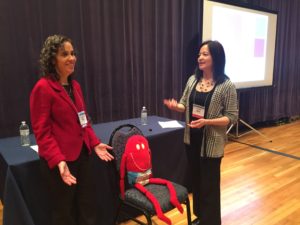
Yesterday we reviewed with an audience of early childhood education teachers the latest medical guidelines* for excluding children from early childhood education centers. Here are some of the updates we shared with the teachers attending the annual DVAEYC conference held at University of Pennsylvania:
When should a child go home from daycare? Remember the overriding goals for exclusion:
To prevent undue burden on teachers
To protect other children and teachers from disease
Following are the guidelines that most surprised our audience, as well as other highlights from our talk.
Pink eye (conjunctivitis)– most kids can remain in school
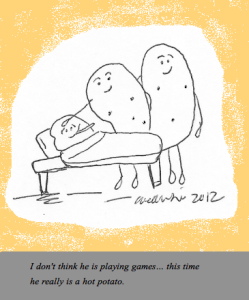 Fever – by itself, is not an automatic exclusion
Head lice, while icky and make our heads itch just to think about them, carry no actual disease.
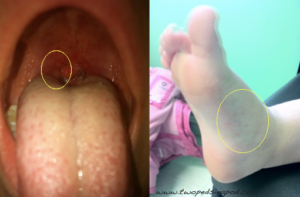
Hand-foot-mouth disease- not an automatic exclusion
Poison ivy rash is not contagious to other people. The rash of poison ivy is an allergic reaction/irritation from wherever the oil of a poison plant touched the skin. The ONLY way to “catch” poison ivy is from the poison ivy plant itself. But if the itch from poison ivy makes a child too miserable to participate in class activities, she may need to go home. Read more about poison ivy here.
Vomiting more than twice, associated with other symptoms (such as fever, hives, dehydration or pain), or with vomit which is green-yellow or bloody are all reasons a child should leave school. Recent history of head injury warrants exclusion and immediate attention since vomiting can be a sign of bleeding in the head. See our post about vomiting.
Diarrhea, meaning an increase in stool frequency, or very loose consistency of stools, is a reason to go home if the diarrhea
Molluscum contagiosum is a benign “only skin deep” illness similar to warts—direct vigorous contact or sharing of towels or bath water can spread the virus among kids but the rash itself is harmless and not a reason to stay home from school. Read our prior post for More on this little rash with the big name.
MRSA is a skin infection that looks red and pus filled and is typically painful for the child. Treatment involves draining the infection and/or taking oral antibiotics. If the infected area is small and can be covered completely, a child may stay in school.
Measles This illness causes high fever, cough, runny nose, runny eyes, and cough and a total body rash. Your local Department of Public Health will provide recommendations about how long to exclude a child with measles as well other precautions a school should take. So they are safe, unvaccinated children will have to be excluded for period of time as well.
Also note, at times, the department of public health will exclude even children who are acting well from school for outbreak management of a variety of infectious diseases.
Surprised? As you can see, there are few medical reasons to keep your child home from daycare for an extended period of time. As Dr. Lai often says to the big kids, “If there is nothing wrong with your brain, you can go to school and learn.” Bottom line- no matter the reason, if you realize at six in the morning that your child will not be able to learn and function at baseline, keep him home and seek the advice of your child’s pediatrician.
Julie Kardos, MD and Naline Lai, MD
©2017 Two Peds in a Pod®
*A straight-forward, comprehensive guide to the guidelines can be found in Managing Infectious Diseases in Child Care and Schools, 4th edition, Editors: Susan S. Aronson, MD, FAAP and Timothy R. Shope, MD, MPH, FAAP, published by the American Academy of Pediatrics.

