
Enterovirus D-68 put into perspective

enterovirus D-68 No doubt, there has been an uptick in respiratory illness in our area, but the news media is causing panic specifically over one of them: enterovirus D-68.
The name “enterovirus” does not imply “deadly.” Many of you are well familiar with hand-foot-mouth disease, aka “Coxsackie virus.” Guess what? This extremely common, benign but annoying virus is also an enterovirus!

Let’s put into perspective how this “new” respiratory virus compares with an “old” well-known respiratory virus, influenza (The Flu). Remember that both flu and enterovirus D-68 are tracked by REPORTED cases. Most of the time doctors do not test children with mild disease so most reported cases are hospitalized patients.

Enterovirus D-68, the numbers: From mid-August through the first week in October (peak enterovirus season)- 664 people are known to have been infected in the USA, most of whom are children. You can track these numbers on this Centers for Disease Control website.
Influenza, the numbers: Each year in the US, approximately 200,000 people (children and adults) are hospitalized from complications of the flu. This year’s flu season in the northern hemisphere is just starting. Generally peak flu season is in the winter months. Large numbers of people contract the flu but they are not sick enough to be hospitalized- they suffer a week of fever, cough, sore throat and body aches at home but recover uneventfully. Up to 20% of the population are infected with flu each season.

Death from enterovirus D-68: 1 child. Four other children died who tested positive for this virus but it is unknown if the virus caused their deaths.
Death from influenza during the 2013-2014 flu season: 108 children

Symptoms of enterovirus D-68: range from mild cold symptoms to high fever and severe respiratory symptoms
Symptoms of flu: usually abrupt at the onset: fever, body aches, cough, and runny nose. Please see our prior post for more information.

Prevent enterovirus D-68: same as for all “cold” viruses- wash hands, sneeze/cough into elbow, not hands.
Prevent flu: Same as for enterovirus D-68, AND we have an Influenza vaccine for all children aged 6 months and above, with a few exceptions-see our article for more information. Last year the flu vaccine was about 60% effective: it’s not perfect, but it is certainly better than not vaccinating.

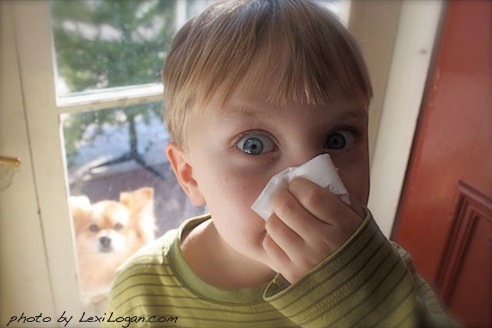
Overall, remember that enterovirus D-68 is one of many cold viruses that circulate the country. We are all familiar with back-to-school viruses. My teen-aged son told me, amid his sniffles and nose-blowing last week, that “more than half my school has a cold now.”
Certainly some of those colds could be enterovirus-D-68. But please don’t panic. All respiratory illnesses, including colds, have the potential to travel into your child’s lungs. It is more important to practice good illness prevention techniques and to recognize the signs of difficulty breathing. As we have said before, if we parents could worry all illnesses away, no one would ever be sick.

Julie Kardos, MD and Naline Lai, MD
©2014 Two Peds in a Pod®

Share

When a peer dies: How to help your grieving teen

lonely backpackThree of my son’s high school classmates died in a tragic car accident just before school started this year. As parents, many of us may have lost someone close to us, and we know from our experience that over time, the acute pain of loss decreases as we ultimately derive strength and joy from our memories of our loved one instead of experiencing only sadness and pain over their loss. Our hearts ache watching our kids experience death first hand, often for the first time. But teens need time to experience this transition for themselves. Telling them “it will get better” will not help them.

If you are parents of a grieving teen who has lost a friend or classmate, following are some things that you can do to help:

• Offer to be available, to listen, or to find someone outside your family for your teen to talk to if he wants. Do not insist that your teen talks about his feelings.
• Refrain from lecturing– it does not help your teen at this time to hear things like “THAT’S why we won’t let you drive with young drivers.” She’s already figuring this out for herself.
• Allow her to talk or gather with friends during the daytime.
• Go back to basics: make sure your teen eats, drinks and sleeps. Enforce bedtime. Turn off phones and computers by a bedtime that allows your teen to get at least 8-9 hours of sleep. Do not allow your teen to text late into the night or to continue talking to friends late into the night, even if this means insisting that YOU take his phone for the evening. Be cautious of sleepovers, which only cause sleep deprivation, leading to exhaustion and more difficulty handling strong emotions.
• Offer to go for a walk with your teen. Exercise is helpful and encourages dialogue.
• Allow your teen to grieve by attend viewings and funerals. However, do not mandate that she goes. Giving her an idea of what to expect (e.g., there may be an open casket, here are some things you can say to the family) may help ease any discomfort. Offer to go with your teen, but again, don’t insist on going.
• Help your teen to do something constructive to help other survivors. Send a condolence card to the deceased friend’s parents that includes an anecdote of how their teen helped your teen, or of how his deceased friend encouraged, made him laugh, or inspired him. Suggest that your teen cook a meal for the grieving family, mow their lawn, run some errand, or to babysit a younger sibling of the deceased.
• Utilize community resources. School guidance counselors provide a wealth of information and support.

Your teen may experience intermittent, intense sadness even months or years after a tragedy, but as time goes by more time should pass between feelings of sadness. Kids who lose close friends learn, over time, to live with their grief. Continue to acknowledge your teen’s feelings of loss and continue to be available for your teen. Initial depression usually fades into sadness in a month’s time.

It is normal for the death of a classmate to trigger, for the first time, your teen’s contemplation of his own mortality. It is normal for him to express fears of his own death.

Normal grief behaviors include:
• Crying
• Talking about their loss
• Wanting to talk to other friends
• Spending more time with friends
• Some might want to be alone with their grief.
• Some kids might want to busy themselves with sports, reading, etc, in order to distract themselves from their grief.
• Temporary altered appetite and difficulty sleeping.
• Temporary difficulty with concentrating on schoolwork.

Abnormal grief behaviors:
• Inability to eat or sleep
• Gaining or losing more than a couple of pounds
• Inability to stop crying
• Refusing to attend school
• Failing classes
• Using alcohol or other drugs to cope with sadness
• Withdrawal from things your teen used to take pleasure in such as sports, hobbies, music, friends, or family.
• Preoccupation with death
• Suicidal thoughts, wishes, or plans

If you see any of these abnormal signs, or you are concerned about how your teen is coping, consult with your pediatrician or a psychologist. For more signs of clinical depression in children, please see our post on child and teenage depression. Also know that the National Suicide Prevention Lifeline is 800-273-8255.

Julie Kardos, MD and Naline Lai, MD
©2014 Two Peds in a Pod®
Share

Flu vaccines: what you need to know for the 2014-2015 flu season

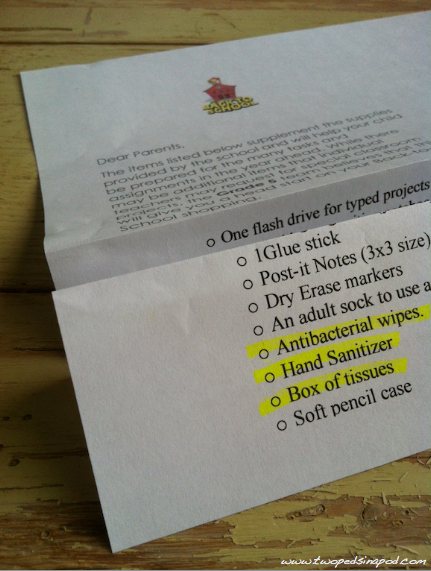
school supply listWe gave our kids their back-to-school haircuts, donated their pants that fit like floods, and bought them new folders and notebooks. As shown on our back-to-school supply list photo, back-to-school also means the start of hand sanitizer and tissue season. Yes, it’s time for your child’s yearly flu vaccine. Even if you gave your child a flu vaccine last year, she’ll need another one this season. Not only does the flu or influenza virus (not to be confused with “the stomach bug/stomach flu”) usually come back every season in a slightly different form, but your child’s immunity has waned over the past year. With every flu season, the Centers for Disease Control comes out with new recommendations. Here is a snap shot:

Who needs the flu vaccine?
All children aged 6 months or older, with a few exceptions discussed below, should receive a flu vaccine every year.

How many doses of flu vaccine does my child need this year?

If your child is nine years or older, your child only needs one dose this season.

If your child is younger than nine, your child only needs one dose this season UNLESS:

  • This year will be the first time your child receives the flu vaccine. Then, she will need a second (booster) dose at least 4 weeks later.
  • Your child skipped last year’s flu vaccine. Then, she may need a booster dose this year. Check with your child’s doctor.

Which type of flu vaccine is better, a shot or the mist (squirt in the nose)?

This year, the Centers for Disease Control suggests,  if available, to give children aged 2-8 years the squirt in the nose. However, if the mist is unavailable, do not delay the vaccine. Give your child a flu shot instead. For older kids, the data is not as clear cut as to which vaccine works better to prevent the flu. Give your child either form of the vaccine.

Who cannot receive the mist?
Kids younger than 2 years; kids with certain medical conditions such as ongoing asthma (wheezing in the past year, or 2 through 4 years of age with asthma) and diabetes; kids undergoing  aspirin therapy; kids who have had influenza antiviral therapy in the last 48 hours; kids with immune deficiencies; and kids around immunosupressed people who require a protective environment (e.g. around people hospitalized in a bone marrow transplant unit), should not receive the mist. These kids should receive the injectable form of flu vaccine. Your child’s doctor can provide the complete list of contraindications.

Who should NOT receive any flu vaccine?
Babies younger than 6 months old and children with severe egg allergy (anaphylaxis) should not receive the flu vaccine.

Our office is slotted to receive our annual supply of flu vaccine in the next few weeks. Our own families have learned to expect the annual flu vaccine with the start of each school year. Now we just need to convince them that they needed the haircuts.

Julie Kardos, MD and Naline Lai, MD
©2014 Two Peds in a Pod®
Share

On letting go and coming back

Friends make birthdays better

I have been musing ever since our hosting site told us they were switching blog platforms. In a blink of an eye, our blog was slated to disappear. The dynamic Two Peds in a Pod community would be plunged into silence. At first, disbelief gave away to intrigue. Was this a sign to change personal paths? As I started to think of all the things I could do with the time that I would have spent writing the blog, my to-do list grew and grew. I could hear my son’s closet, overflowing with outgrown clothing, crying out to be re-organized.

When I told friends of the opportunity to dissolve the blog, I heard time and time again “I think you should save it.” Even friends without children were aghast. When I told my own children that the blog was on the verge of imploding they looked at me blankly and said, “Why would you stop writing for Two Peds?”

Then I remembered the mom who read our article on croup seven times in one night. I remembered Dr. Kardos’s patient whose dad said our strep throat article  helped him decide not to cut his family’s vacation short. I thought of the many times parents thanked me  for posts which allayed their fears of fever.

The blog did eventually stop when the old hosting site went down. But as my friends and family reminded me, the goal of the blog is to positively impact children globally by guiding their caretakers; and by the time the blog went down, we had reached nearly three million views. Two Peds in a Pod is “Practical pediatrics for parents on the go.” After more thought, I decided it would be difficult to accomplish this goal from the back of one of my kid’s closets.

So today, I am happy to post that the stop was just a temporary suspension. I credit my friends and family for reminding me of the original goal of the blog. In particular, thanks to Dr. Kardos. While I was mulling, Dr. Kardos was busy staying up past midnight valiantly importing posts from the rapidly fading old site.

We’re back, albeit a little rough around the edges as we construct the new site. And it’s just in time for our 5th birthday!

Thanks, my friend, Dr. Kardos. I wouldn’t be able to blow those candles out without you.

Happy 5th Birthday Two Peds in a Pod- may there be many more.

Dr. Lai

Naline Lai, MD and Julie Kardos, MD
©2014 Two Peds in a Pod®


Share

Father’s Day 2014: real words from real dads

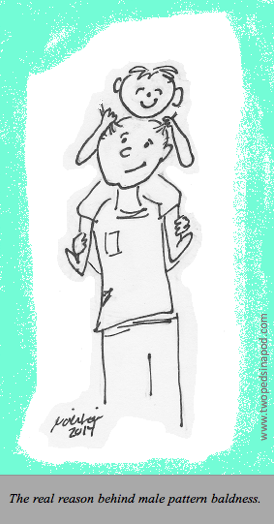
father's day cartoonThis year we asked our dad readers to help us write our Father’s Day post. They completed this thought: “Before I became a dad, I never thought I’d…”

…Learn to curl hair for cheerleading competitions


…BE RESPONSIBLE


…Become a stay at home dad AND love it so much after everything I’ve been through!!


…Learn all of the names of Thomas The Tank Engine’s friends and the many songs associated with them.


…Have a toys r us in my house.


…Go food shopping at midnight.


…Make so many pancakes on Sunday mornings.


…Volunteer in a dunk tank and have pie thrown at me.

One of our readers summed up his thoughts on becoming a dad:

Since I’ve become a father, nearly seven years and two beautiful daughters later, my life has become a series of jobs that I never thought I would have to tackle. These include:

Beautician: I never thought in a million years that I would be learning how to do pony tails, side pony’s, braids (not that I can braid yet), and painting little finger and toe nails.

Disney Princess Aficionado: At one point in my life I thought I was cool because I knew a lot about beer, how it was made, where it was from, where the best IPA’s were being poured. Now I am “cool” because I know where Mulan lived, and because I know the story about Ariel falling in love with Prince Eric.

Doctor: I am well versed here and can cover almost everything from the simple band-aid application and boo-boo kissing, to the complex answering of why daddy is different and why he gets to go to the bathroom standing up.

Cheerleader: Both of my daughters enjoy participating in sports. It’s been such a great experience to cheer them both on from the side line. I enjoy watching them grow with the sport and gain confidence game after game.

Becoming a father was one of the best choices I have made with my life. I love being a dad, and I look forward to the future dad challenges, good and bad, and beingthe best mentor I can be.

Thank you to our readers for contributing to this post.

Happy Father’s Day!

Julie Kardos, MD and Naline Lai, MD

©2014 Two Peds in a Pod®

Share

Pediatric photo puzzler: What caused this skin discoloration?

dark spots on skinEvery child with a lemonade stand hopes for hot sunny days to drive in customers. But if your kids squeeze fresh lemons for their stand, make sure they wash their hands after squeezing the lemons. Otherwise, after a sunny day, your child’s hands may turn out looking like the kid’s feet pictured to the left.The juice of some fruits or plants will cause a dark discoloration of the skin if exposed to sunlight. The reaction, called phytophotodermatitis, usually starts a day after the juice comes into contact with the skin. Redness and mild blistering eventually leads into a discoloration which can that can last for months. Citrus fruits are the most common culprits, but wild parsnip, wild dill, wild parsley and buttercups also cause the photosensitivity. Often the initial redness and blistering is missed. The kid in the photo was walking in bare feet on leaves near an apple tree. Makes you almost want to only use powdered lemonade mix…almost.
Naline Lai, MD and Julie Kardos, MD

©2014 Two Peds in a Pod®

Share

On our minds: Concussions

concussions in kidsDr. Lai will be up at Brown University this weekend giving a primary care pediatrician’s perspective on concussions (traumatic brain injuries) at a parent forum. A lot has changed since you were a kid. As she prepared, we mulled over questions we commonly encounter and thought we’d pass them on to our parents:


What is a concussion? A concussion is an injury to the brain which does not show up on head scans such as CT Scans and MRIs. Think of a concussion like a sprained ankle, but instead of an injury to the ankle, it’s an injury to the brain. Just like an ankle sprain, it may not show up on X-ray, but your child is affected by the injury.


What are the signs of a concussion? Immediately after a head injury, we first look for signs of bleeding in the head. After we know there is not any bleeding, we look for signs of a concussion. Concussions affect kids physically, cognitively, and emotionally.  Common symptoms include persistent head ache, nausea, fatigue, sleep disturbances, light and noise sensitivity, balance problems, difficulty with memory, difficulty with concentration, and emotional lability. Parents often describe their children as moving or thinking slowly- as if they were in a fog.  Teens and young adults tend to belittle any injury, so if your kid tells you that she hit her head when you weren’t around, scrutinize your child very closely. If you “just know” your kid is not 100 percent his baseline, then she probably has a concussion.


How long is recovery?

In the not-so-old days we would clear kids for athletics 2 weeks after a teen had a normal neurological exam and symptoms disappeared. But the prescription for recovery has changed.  Now there is a new emphasis on brain rest and returning a kid to school before returning to sports. Just like you rest a sprained ankle, doctors now recommend resting the brain.  For the brain, that means no thinking or concentrating. Examples of prohibited activities include texting, video games, and homework.  Interestingly TV watching is considered mindless enough to be permitted during the period of brain rest. Once there are no symptoms we allow a little more brain activity in a stepwise fashion until a kid can return to school.  Only then can a kid consider starting a stepwise program to return to playing sports. For most kids, recovery takes about a month.  Kids with baseline neurological issues such as migraines or attention deficit hyperactivity disorder tend to take longer to recover fully.

I’ve heard it’s dangerous to hit your head again before you have fully recovered from a concussion- is that true? YES! The scary stuff you hear about possible brain swelling and death if a concussion occurs on top of a concussion is not just internet mumbo-jumbo.  Called second-impact syndrome, these secondary concussions occur during a window of vulnerability while the brain is healing from an initial concussion.  


How many concussions can you have before there is permanent brain damage? There is still a lot of research that still needs to be done on concussions and this is one area where people are actively seeking answers. So far, studies in youth are unclear on the impact of repetitive concussions and the development of long term neurodegenerative diseases.  


My kid wears a helmet or mouth guard to prevent concussions-right? While helmets and mouth guards help prevent skull fractures and jaw dislocations, current designs do little to prevent concussions.


I’m not going to keep my kid wrapped in bubble wrap, but do some activities pose a greater concussion risk than others?  While there is still a paucity of sports data at the grade school and middle school level, we do know that according to the Centers for Disease Control (CDC), over half of concussions in those under 14 years old are caused by falls. Boys’ football followed by girls’ soccer lead the injury rate amongst high school athletes according to a 2010 paper published in Pediatrics .


I have seen kids receive concussions from standing too close to swing sets, concussions from sudden stops on school busses, and from jumping off beds.  Once, a parent came into my office dazed after hitting her head on her trunk door in my parking lot.  So, concussions can occur in any activity. The most important “take-away” is to take head injuries seriously and learn to recognize and report concussions.

For more information on concussions the pathway to recovery, please visit the CDC website and the Children’s Hospital of Philadelphia webite.

 
S
ee you up at Brown.


Naline Lai, MD with Julie Kardos, MD

©2014 Two Peds in a Pod®


Share

Sunscreens and sunburns: your burning questions answered


sunburnJust in time for Field Day and pool openings, today we provide sunburn protection information. 
 
Hot!


Pictured is a kid with a second degree burn. No, this burn wasn’t caused by hot water or by touching the stove, but by the sun. A sunburn is still a burn, even if it was caused by sunlight.


Treat sunburn the same as you would any burn:


  • Apply a cool compress or soak in cool water.
  • Do NOT break any blister that forms- the skin under the blister is clean and germ free. Once the blister breaks on its own, prevent infection by carefully trimming away the dead skin (this is not painful because dead skin has no working nerves) and clean with mild soap and water 2 times per day.
  • You can apply antibiotic ointment to the raw skin twice daily for a week or two.
  • Signs of infection include increased pain, pus, and increased redness around the burn site.
  • A September 2010 Annals of Emergency Medicine review article found no best method for dressing a burn. In general, try to minimize pain and prevent skin from sticking to dressings by applying generous amounts of antibiotic ointment. Look for non adherent dressings in the store (e.g. Telfa™). The dressings look like big versions of the plastic covered pad in the middle of a Band aid®.

  • At first, the new skin may be lighter or darker than the surrounding skin. You will not know what the scar ultimately will look like for 6-12 months.

  • If the skin peels and becomes itchy after a few days, you can apply moisturizer and/or hydrocortisone cream to soothe the itch.
  • Treat the initial pain with oral pain reliever such as acetaminophen or ibuprofen.

Preventing sunburn is much easier, more effective, and less painful than treating sunburn.


What is SPF? Which one should be applied to children?


  • SPF stands for Sun Protection Factor. SPF gives you an idea of how long it may take you to burn. SPF of 15 means you will take 15 times longer to burn… if you would burn after one minute in the sun, that’s only 15 minutes of protection!


  • The American Academy of Pediatrics recommends applying a minimum of SPF 15 to children, while the American Academy of Dermatology recommends a minimum of SPF 30. Dr. Lai and I both apply sunscreen with SPF 30 to our own kids.


  • Apply all sunscreen liberally and often– at least every two hours. More important than the SPF is how often you reapply the sunscreen. All sunscreen will slide off of a sweaty, wet kid. Even if the label says “waterproof,” reapply after swimming.

Why does the bottle of sunscreen say to ask the doctor about applying sunscreen to babies under 6 months of age?


  • Sunscreens were not safety-tested in babies younger than 6 months of age, so the old advice was not to use sunscreen under this age. The latest American Academy of Pediatrics recommendation is that it is more prudent to avoid sunburn in this young age group than to worry about possible problems from sunscreen. While shade and clothing are the best defenses against sun damage, you can also use sunscreen to exposed body areas.
  • Some clothes are more effective than others in blocking out sunlight. Tighter weaves protect better than loose weaves. Cotton t-shirts are horrible for sun protection. Clothing uses a UPF rating. UPF measures the amount of UV light that reaches your skin. Higher numbers are better. For example, a rating of 100 means that 1/100, or one percent of UV rays reach your skin.
  • Hats help prevent burns as well.
  • Remember that babies burn more easily than older kids because their skin is thinner.

Which brand of sunscreen is best for babies and kids?


  • For babies and kids, no one brand of sun screen is better than another. Dr. Lai and I tell our patients to apply a “test patch” the size of a quarter to an arm or leg of your baby and wait a few hours. If no rash appears, then use the sunscreen on whatever body parts you can’t keep covered by clothing.
Remember when we used to call sun screen lotion “suntan lotion,” and tolerating red, blistering shoulders was considered a small price to pay for a tan? Live and learn.


Julie Kardos, MD with Naline Lai, MD
©2014 Two Peds in a Pod®
Originally posted 6/19/2013

Share

Until I became a mother I never thought…


mother hen cartoonUntil I became a mother I never thought…


I’d care if a birthday party was cancelled


I’d obsess about bowel movements and gas


I’d remember to reapply sunscreen


I’d bake zucchini muffins and count them as a vegetable serving


I’d wipe someone else’s nose


I’d relearn my most dreaded school subject in order to help my child with homework


I’d feel compelled to ask if anyone needs to go to the bathroom before I go anywhere in a car


I’d go on nauseating upside-down amusement park rides because my kid needed to be accompanied by an adult


I’d spend my Friday night driving and picking up kids from parties and then spend my Saturday morning driving and picking up kids from the ice hockey rink starting at 5:00am.


I’d get to play Tooth Fairy


I’d (try to) answer questions such as “What does God look like?” and “Who was the mom of the first man?”


I’d willingly read the same book out loud night after night after night


And finally-

Until I became a mother I never thought… I’d wipe away tears when reading sappy Mother’s Day cards.


Happy Mother’s Day from your two Peds


Naline Lai, MD and Julie Kardos, MD

©2014 Two Peds in a Pod®

Share

Warn your kids: it’s not smart to inhale Smarties

Where do these tween/teen games come from?

Warn your kids about a game that Dr. Kardos learned about from some tweens recently: inhale Smarties ®.  Young teens at a party took intact packages of Smarties® candy and used their cell phones (!) to smash the candies into a fine dust inside their cellophane wrappers. Then they peeled off the end of the roll and sucked the dust into their mouths (imagine a “Smarties®” cigarette), and exhaled, causing  Smarties® smoke to spew from their mouths. They spit out any candy that was left in their mouths. The thrill came from creating Smarties® smoke.

I was glad that the kids who told me about this game saw that this was a not-so-smart game to play (click here for another example of a not-so smart game). No, this does not count as “smoking” and is likely not addictive, but this story begs several teaching points for parents of tweens/teens:

1-      Tweens and teens need supervision at parties.

2-      Teach your kids never to inhale anything except AIR. Anything else can cause coughing, irritation to the lungs, and possible infection. Do not inhale Smarties ®!

3-      Young teens especially are prone to “mob mentality.” Teach them if their friends do something that they have never done before, to think long and hard about possible consequences before following the crowd. Ask them to think, “What’s the worst that can happen if I do this?”

4-      Know your children’s friends. If you know they are thrill seekers, attention grabbers, or prone to engage in questionable behaviors, make sure you have frequent talks with your kid about smart choices. Sign your child up for activities that allow opportunities to become friendly with an alternative crowd.

If you see kids engaged in risky behaviors, even if they are not your own children, stop them. Someone has to care. Hopefully someone else is watching out for your kids, too.

Julie Kardos, MD and Naline Lai, MD
©2014 Two Peds in a Pod®

 

Share
image_pdfimage_print