Update on Lyme disease: Is it bug-check season in your area of the United States?

lyme rash photo
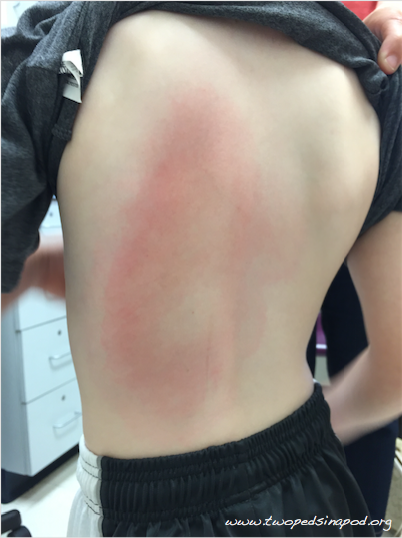
The classic bullseye rash of Lyme

Our infectious disease colleagues warn us that this year, winter in the Northeast United States was not cold enough for long enough to kill off as many ticks as usual. Thus, we folks in Pennsylvania are in for a more burdensome Lyme disease season. We’ve already had children come to our office this spring with concerns of tick bites, so here’s an update on Lyme disease:

Lyme disease is spread to people by blacklegged ticks. Take heart- even in areas where a high percentage of blacklegged ticks carry the bacteria that causes Lyme disease, the risk of getting Lyme from any one infected tick is low. Niney-nine percent of the little critters DON’T carry Lyme disease… but there are an awful lot of ticks out there. Blacklegged ticks are tiny and easy to miss on ourselves and our kids. In the spring, the ticks are in a baby stage (nymph) and can be as small as a poppy seed or sesame seed. In order to spread disease, the tick has to be attached and feeding on human blood for more than 36 hours, and engorged.

In areas in the United States where Lyme disease is prevalent (New England and Mid-Atlantic states, upper Midwest states such as Minnesota and Wisconsin, and California), parents should be vigilant about searching their children’s bodies daily for ticks and for the rash of early Lyme disease. Tick bites, and therefore the rash as well, especially like to show up on the head, in belt lines, groins, and armpits, but can occur anywhere. When my kids were young, I showered them daily in summer time not just to wash off pool water, sunscreen, and dirt, but also for the opportunity to check them for ticks and rashes. Now that they are older I call through the bathroom door periodically when they shower: “Remember to check for ticks!” Read our post on how to remove ticks from your kids.

“I thought that Lyme is spread by deer ticks and deer are all over my yard.” Nope, it’s not just Bambi that the ticks love. Actually, there are two main types of blacklegged ticks, Ioxdes Scapularis and Ioxdes Pacificus, which both carry Lyme and feed not only on deer, but on small animals such as mice. (Fun fact: Ioxdes Scapularis is known as a deer tick or a bear tick.)

Most kids get the classic rash of Lyme disease at the site of a tick bite. The rash most commonly occurs by 1-2 weeks after the tick bite and is round, flat, and red or pink. It can have some central clearing. The rash typically does not itch or hurt. The key is that the rash expands to more than 5 cm, and can become quite large as seen in the above photo. This finding is helpful because if you think you are seeing a rash of Lyme disease on your child, you can safely wait a few days before bringing your child to the pediatrician because the rash will continue to grow. The Lyme disease rash does not come and then fade in the same day, and the small (a few millimeters) red bump that forms at the tick site within a day of removing a tick is not the Lyme disease rash. Knowing that a rash has been enlarging over a few days helps us diagnose the disease. Some kids have fever, headache, or muscle aches at the same time that the rash appears.

If your child has primary Lyme disease (enlarging red round rash), the diagnosis is made by a doctor examining your child. Your child does not need blood work because it takes several weeks for a person’s body to make antibodies to the disease, and blood work tests for antibodies against Lyme disease, not actual disease germs. In other words, the test can be negative (normal) when a child does in fact have early Lyme disease.

The second phase of Lyme disease occurs if it is not treated in the primary phase. It occurs about one month from the time of tick bite. Children develop a rash that looks like the primary rash but appears in multiple body sites all at once, not just at the site of the tick bite. Each circular lesion of rash looks like the primary rash but typically is smaller. Additional symptoms include fever, body aches, headaches, and fatigue without other viral symptoms such as sore throat, runny nose, and cough. Some kids get the fever but no rash. Some kids get one-sided facial weakness. This stage is called Early Disseminated disease and is treated similarly to the way that Early Lyme disease is treated- with a few weeks of antibiotics.

The treatment of early Lyme disease is straightforward. The child takes 2-3 weeks of an antibiotic that is known to treat Lyme disease effectively such as amoxicillin or doxycycline. Your pediatrician needs to see the rash to make the diagnosis. This treatment prevents later complications of the disease. While the disease can progress if no treatment is undertaken, fortunately children do not get “chronic Lyme disease.” Once treatment is started, the rash fades over several days. Sometimes at the beginning of treatment the child experiences chills, aches, or fever for a day or two. This reaction is normal but you should contact your child’s doctor if it persists for longer.

Later stages of Lyme disease may be treated with the same oral antibiotic as for early Lyme but for 3-4 weeks instead of 2-3 weeks. The most common symptom of late stage Lyme disease is arthritis (red, swollen, mildly painful joint) of a large joint such as a knee, hip, or shoulder. Some kids just develop joint swelling without pain and the arthritis can come and go.

For some manifestations, IV antibiotics are used. The longest course of treatment is 4 weeks for any stage. Children do not develop “chronic Lyme” disease. If symptoms persist despite adequate treatment, sometimes one more course of antibiotics is prescribed, but if symptoms continue, the diagnosis should be questioned. No advantage is shown by longer treatments. Some adults have lingering symptoms of fatigue and aches years after treatment for Lyme disease. While the cause of the symptoms is not understood, we do know that prolonged courses of antibiotics do not affect symptoms.

For kids eight years old or older, if a blacklegged tick has been attached for well over 36 hours and is clearly engorged, and if you live in an area of high rates of Lyme disease-carrying ticks, your pediatrician may in some instances choose to prescribe a one time dose of the antibiotic doxycycline to prevent Lyme disease. The study that this strategy was based on and a few other criteria that are considered in this situation are described here.* Your pediatrician can discuss the pros and cons of this treatment.

Bug checks and insect repellent. Protect kids with DEET containing insect repellents. The Centers for Disease Control recommends 10 to 30 percent DEET- higher percent stays on longer. Spray on clothing and exposed areas and do not apply to babies under two months of age. Grab your kids and preform daily bug checks- in particular look in crevices where ticks like to hide such as the groin, armpits, between the toes and check the hair. Be suspicious of random scabs. Dr. Lai once had a elementary school patient who had a blacklegged tick in the middle of his forehead. The mother noticed it at breakfast, tried to brush it off, thought it was a scab and sent the boy to school. Later that day the teacher called saying, “I think your son has a bug on his face.”

Misinformation about this disease abounds, and self proclaimed “Lyme disease experts” play into people’s fears. While pediatricians who practice in Lyme disease endemic areas are usually well versed in Lyme disease, if you feel that you need another opinion about your child’s Lyme disease, the “expert” that you could consult would be a pediatric infectious disease specialist.

For a more detailed discussion of Lyme disease, look to the Center for Disease Control website: www.cdc.gov.

Julie Kardos, MD and Naline Lai, MD

©2016 Two Peds in a Pod®, updated from our original post in 2009

*link corrected 4/18/2016

 

Share

How to take your toddler to a restaurant without an iPad

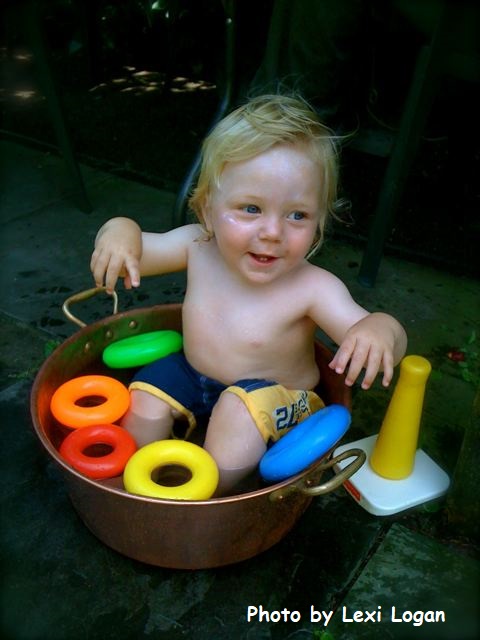
take your toddler to a restaurant and have funHave you wondered if you could take a toddler to a restaurant and have a good time without relying on an iPad for entertainment? This is absolutely possible as long as you have the right expectations, a sense of humor, and a desire to build family memories. In the “old” days when our kids were toddlers, there were no iPads or smart phones so we thought we’d share some ideas to keep your toddler engaged in a restaurant.


Before we go further, understand this: when you go to a restaurant with your toddler(s), you are “going out to eat,” NOT “going dining.” Always have the back-up plan that at any time, if needed, you will convert the entire meal to “take out” status. As long as you accept this backup plan, you are set.

Choose the restaurant wisely. You do not have to eat junk food or “fast” food. Many restaurants with really yummy and nutritious cooking can work for families with toddlers. An important feature to look for: the restaurant offers high chairs or booster seats. If it does, you can infer that the restaurant is “toddler friendly.” Without this attribute, attempt to eat at this restaurant at your own risk and don’t say we didn’t warn you! In addition, find out if the service is fast or slow. Even some “family friendly” restaurants have slow service- this is asking for trouble. Avoid these establishments.

Set the stage. Teach your children how to behave in a restaurant. Play restaurant in your house. Practice “Yes, please” and “No, thank you.” Tell them how they will get to make a choice of what to eat and unlike at home, to try a variety of foods at one meal if you all order something different.

Have reasonable expectations: Research the menu beforehand to make sure you will find something on it that your toddler will eat. Alternatively, just bring your own toddler meal with you and take it out once your own food arrives. Or bring toddler “hors d’oeuvres” that will not spoil his appetite but can be used in emergency if the service is slower than you expected. Examples are thinly sliced apples, portable fruit cup packed in juice, or a stash of low-sugar cereal such as Cheerios® to hand out very slowly.

If the wait staff is young, they probably are not familiar with toddlers and may not understand that waiting is difficult for young children. Ask for your check to come with your food. Consider skipping appetizers so that everyone’s food comes out all at once. Usually toddlers are not happy waiting for food while their parents munch on arugula.

Focus all of your attention on your children. Going to a restaurant with toddlers is not date night, it is family night.

Help your toddler be successful at waiting for the meal to be served or at waiting for everyone to finish eating. Bring along one or two (not the library!) favorite books that either your toddler likes to flip through or likes you to read to her. Bring some paper and crayons – many “family friendly” restaurants supply these but it’s always better to be prepared. My oldest was always entertained with a small matchbox car. We could draw roads for the car on paper or he would just drive the car along the table edge or chair – anything can become a road.

Play games such as “I Spy” with your toddler to pass time while you wait to order or wait for your food. “Where is the man wearing a hat? Where is the picture of the fish?” Talk about the restaurant. Point out where the kitchen is. Point out the food servers: “They write down what we want to eat. They bring us our food!” Point out the bus crew “See, they are cleaning up!” Count the tables. Count how many babies are in the restaurant.

Convert items on the table into make-shift toys. Developmentally toddlers love putting things into other things. Put the pretty pink sugar packet and the white packet into a cup. Dump them out, and do it again. A paper placemat can be scrunched into a ball to roll around. And with a little paper folding, you can make a cootie catcher for pinching little noses. Also, there’s nothing more fun than touching ice sliding around a plate.

We do not recommend walking around the restaurant while waiting to be served because of the potential danger of crashing into a waiter or waitress. Certainly one parent can walk outside with a toddler and the remaining parent can call/text when the food comes. BUT remember, if you are in the habit of all sitting down for at least one meal a day at home, it will be natural for all of you to sit together in a restaurant, and a luxury for the parent who does the most jumping up and down during a home-served meal.

Restaurants are not only for dinner! While my twins did not eat out much as toddlers (hassle factor outweighed the fun factor), we did note that they ate the most food willingly over the longest period of time at breakfast. So we occasionally went to a local deli for Very Early Weekend Breakfast where they could feast slowly on enormous delicious pancakes and my husband and I could enjoy some coffee while it was actually still hot. Bonus: we even could talk to each other because of the concentration my twins paid to picking up every piece of pancake on their own.

Help clean up, and give generous tips. You want to endear yourself to the restaurant staff. It’s great when the wait staff WANTS to serve you when you return (“Oh, it’s that great family with the really cute toddler who loves my Elmo impersonation, says “thank you” when I bring her extra saltines, AND they tip well. That’s MY table!”).

Build your toddler’s self-esteem: Praise your toddler for eating calmly, for sitting without yelling, for his patience: “Good job waiting for your food to come!” As soon as your toddler is done eating and running out of entertaining things to do while sitting at the table, the meal is over! Try to end on a positive note.

Finally, if you end up with a toddler tantrum, just remember the back-up plan. Don’t kill the meal for the rest of the diners in the restaurant. Just pick up your melted-down toddler, convert to take-out, and try again another time. Rome wasn’t built in a day, and sometimes it takes a few tries of eating out with your toddler before you actually all have fun. Fortunately, God/Nature makes toddlers cute even when they are crying and covered in tomato sauce!

Julie Kardos, MD and Naline Lai, MD

©2016 Two Peds in a Pod®

Share

Digging out splinters

splinter

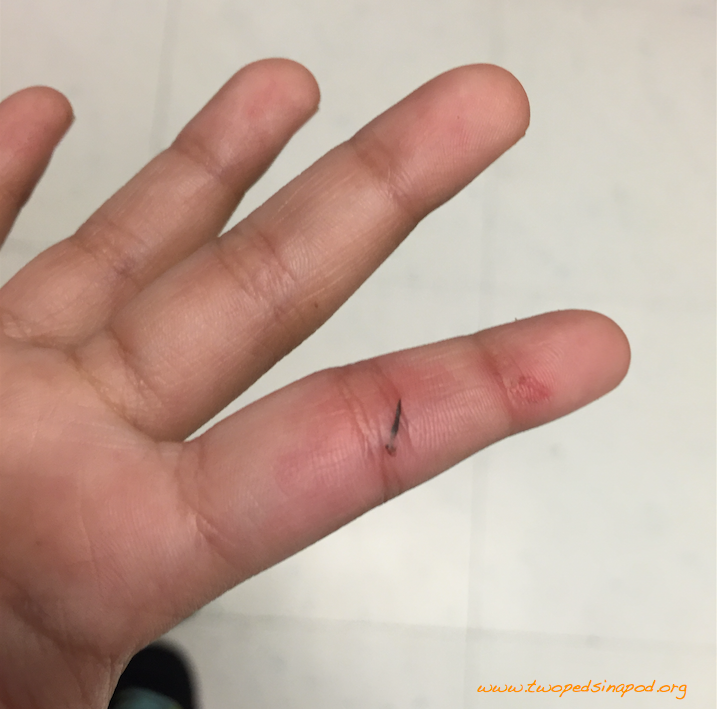
It’s a sure sign of spring. Recently a mom showed me a splinter in her child’s finger (pictured above) from running about outside and falling on wood chips.

If a splinter is very tiny (too small to grab with tweezers,) seems near the skin surface, and does not cause much discomfort, simply soak the splinter in warm soapy water several times a day for a few days. Fifteen minutes, twice a day for four days, works for most splinters. Our bodies in general dislike foreign invaders and try to evict them. Water will help draw out splinters by loosening up the skin holding the splinter. This method works well particularly for multiple hair-like splinters such as the ones obtained from sliding down an obstacle course rope. Oil-based salves such as butter will not help pull out splinters. However, an over-the-counter hydrocortisone cream will help calm irritation and a benzocaine-based cream (for kids over 2 years of age) will help with pain relief.

If the splinter is “grab-able”, gently wash the area with soap and water and pat dry. Don’t soak an area with a “grab-able” wooden splinter for too long because the wood will soften and break apart. Next, wash your own hands and clean a pair of tweezers with rubbing alcohol. Then, grab hold of the splinter and with the tweezers pull smoothly. Take care to avoid breaking the splinter before it comes out.

If the splinter breaks or if you cannot easily grab the end because it does not protrude from the skin, you can sterilize a sewing needle by first boiling it for one minute and then cleaning with rubbing alcohol. With the needle, pick away at the skin area directly above the splinter. Use a magnifying glass if you have to, make sure you have good lighting, and for those middle-age parents like us, grab those reading glasses. Be careful not to go too deep, you will cause bleeding which makes visualization impossible. Continue to separate the skin until you can gently nudge the splinter out with the needle or grab it with your tweezers.

Since any break in the skin is a potential source of infection, after you remove the splinter, wash the wound well with soap and water. Flush the area with running water to remove any dirt that remains in the wound. See our post on wound care for further details on how to prevent infection. If the splinter is particularly dirty or deep, make sure your child’s tetanus shot is up to date. Also, watch for signs of infection over the next few days: redness, pain at the site, or thick discharge from the wound are all reasons to take your child to his doctor for evaluation.

Some splinters are just too difficult for parents to remove. If you are not comfortable removing it yourself of if your child can’t stay still for the extraction procedure, head over to your child’s doctor for removal.

Now you can add “surgeon” to your growing list of parental hats.

Julie Kardos, MD with Naline Lai, MD
©2012 , rev 2016 Two Peds in a Pod®

Share

Before the Zika virus: A look back at Rubella and microcephaly

photo credit: Laikipia Pixabay.com

The Zika virus in the news these days reminds us of another microcephaly-causing virus which scourged our world in the not-so-distant past. In the years right before the Two Peds doctors were born (late 1960s), the virus Rubella routinely swept through the United States and the rest of the world. The airborne germ Rubella, just like the mosquito-spread Zika virus, caused most people just a mild illness that they usually never even knew that they had. After they were sick, they became immune to the virus. But when pregnant women contracted Rubella early in pregnancy, their unborn children sometimes ended up with microcephaly.

Microcephaly is a condition where a small, underdeveloped, or abnormal brain leads to a small head at birth. Many children with microcephaly have significant mental disabilities.

So what happened to Rubella? It’s the R in the MMR vaccine. We give this vaccine to all children, first at 12-15 months, and again at 4-6 years of age. We vaccinate girls to protect their unborn fetuses when they are pregnant, and we also vaccinate boys. Although boys will not become pregnant, they can contract the disease and spread it to others who are pregnant. It is standard practice for obstetricians to test all of their pregnant patients for immunity to Rubella. If a woman is not immune, she is given the MMR vaccine after delivery to prevent coming down with Rubella during future pregnancies.

Because of the success of this safe vaccine, it is extremely rare to have child born with Congenital Rubella Syndrome and its accompanying problems. The syndrome  not only included the mental impairments associated with microcephaly but also was associated with blood disorders, heart defects, deafness, visual impairment, developmental delay, and seizures. In the United States where the vaccine rates are high enough, no cases have been reported since 2004. In the rest of the world, cases still occur in countries with limited access to vaccines against Rubella.  Approximately 100,000 cases of Rubella worldwide per year still occur according to the Centers for Disease Control.

Scientists are working on a vaccine against the Zika virus because, as is often the case, preventing a disease is often easier, less costly, and more successful than attempting to cure it. For a basic explanation of how vaccines work, please see our prior post on this topic. Trials for a vaccine for Zika may begin as early as summer 2017.

But if we look at history, Rubella was once a dreaded virus too. Now, with the widespread use of a vaccine, although still dreaded, the rates of Rubella have dropped dramatically.  Zika hopefully will not be far behind.

Naline Lai,  MD and Julie Kardos, MD

©2016 Two Peds in a Pod®,  updated April 2017

Share

Dressing children for cold weather

Dressing your children for cold weather, even your canine children
Dr. Kardos’s fourth child wears her coat in the snow without fuss.

There is snow on the ground, so every morning I ask my elementary school-aged son if he wears gloves and a hat at recess. Every morning I get back the same blank stare and the question, “Why?”

It’s an age-old battle between parents and kids. Parents insist the kids are underdressed and the kids insist they are overdressed. In fact, I remember in fourth grade many an embarrassing moment when my mother would suddenly appear with mittens at the bus stop. So how can parents decide how warmly to dress their children?

Infants are particularly poor at regulating their own temperatures. In general for cool weather, dress a baby in one more layer of clothing than you are comfortable wearing. Another good way to keep a newborn from losing too much heat is to keep the hat on for a couple of weeks. It’s not an old wives tale; people do lose a fair amount of heat through their heads.

However, beware of over-swaddling. Over-heating has been suggested as a factor in death from SIDS (Sudden Infant Death Syndrome). If your partner insists on keeping the house the temperature of a sauna and you are sweltering all year, then dress your baby in a simple onesie. Just as infants have difficulty regulating body temperature in the cold, they also have difficulty regulating their temperature in heat. In general, if you feel cold, your baby will feel colder. If you are warm, your baby will feel warmer than you do. There is an official indoor temperature recommendation for daycare centers: in cold weather, keep indoor temperatures to 68-75F.

Sleep always seems to bring out red cheeks and sweaty heads in toddlers. Are they too hot or cold? As you peek in on them after tucking them to bed, feel their hands and cheeks. Warm (but not flushed) cheeks mean they will be comfortable even if their hands are a bit cool.

For older kids, simply dress them the same way you dress yourself. Make sure areas prone to frostbite such as toes, ears and fingers stay warm. Quick tidbit: do not re-warm nearly frostbitten areas by massaging. The rubbing action causes more injury. Instead, place the area in warm water.

Sorry, you can’t use the rational, “Dress warmly or you will catch a cold.” Cold temperatures do not cause colds. Germs cause colds. However, there is one study on mice that suggests cooler noses allow the rhinovirus (a common cold germ) to grown more easily. Also, there is a phenomenon called nonallergic rhinitis which manifests itself as a drippy nose which can be set off by cold air. Likewise, inhaling cold air can set off coughing in kids with asthma. For more about the health benefits and hazards of cold weather for both kids and adults, check out this article from Harvard Health Publications.

Why it’s not “cool” to stay warm, I’ll never understand. At least for the older boys, parents don’t need to take into account the weather. The kids will wear hoodies whether it’s seven or seventy degrees outside.

Naline Lai, MD with Julie Kardos, MD
©2016 Two Peds in a Pod® revised 1/2019

(For a laugh: we love this tongue-in-cheek post about how kids dress for cold weather).

Share

Prevent rotten teeth

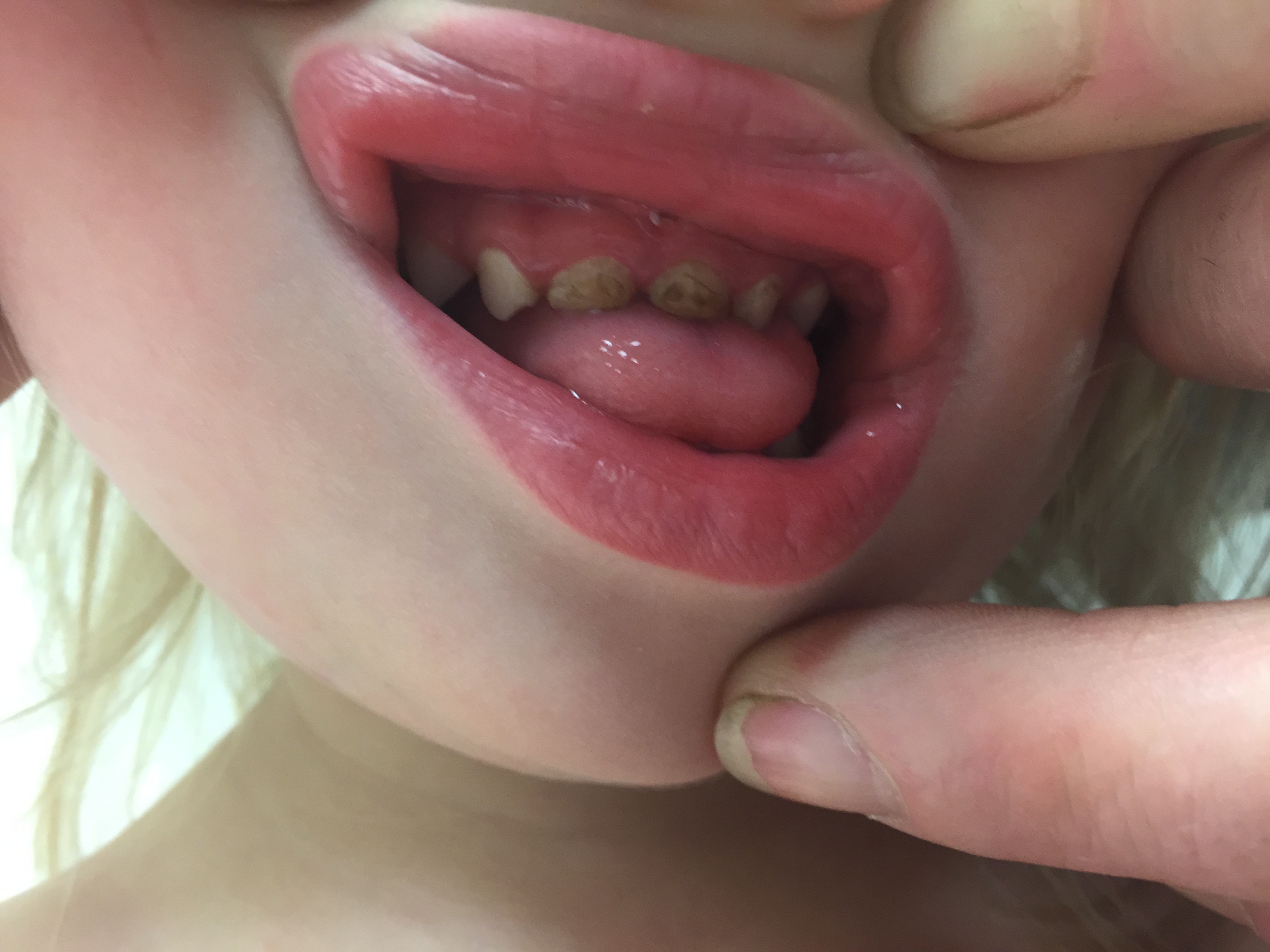
prevent rotten teeth like theseThis drives us crazy: Listed on many pediatric developmental milestone charts, there is the six month milestone, ” can hold their own bottle. ” Unfortunately, this is the last thing we want our patients to do. Babies who feed by holding their own bottle tend to suck for a longer period of time than when they are at the breast or when a parent holds the bottle. Prolonging the time any sweet substance, whether breast milk, cow’s milk, or watered down juice is in the mouth can produce cavities. Even in toothless babies, the sugar can seep through gums and rot the teeth producing cavities called “bottle rot” in the two front teeth. As shown above, sucking on a sippy cup constantly can also produce the characteristic damaging pattern and cause rotten teeth.

Sippy cups are like daytime bottles. In the “old days” if a child wanted a drink, the parent would give him a cup, he would take his drink, and then the cup would be put away so it would not spill. Sippy cups are easier to leave around for kids to grab when they need it. They are easy for kids to carry and graze from while playing. They don’t make a mess in the car. But because kids can nurse a sugar-containing drink all day, it becomes easy for a sweet drink to have constant contact with teeth, thus producing the problem you can see in our photo.

How to prevent rotten teeth:

  • Once they are toddlers, give your kids beverages at meal or snack times only. Let them drink and then put the cup away. Otherwise, forward to the future, and imagine your sippy-cup-toting toddler becoming the perpetually-drinking-coffee office coworker down the hall. We’re sure your coworker’s teeth are not pretty. The only exception to giving a beverage only at meal or snack times is the quick after dinner cup of milk when they are very young (toddlers). If your toddler drinks a cup of milk before bed, make sure he brushes his teeth before going to sleep. Brush-book-bed is a good routine to institute.
  • Limit juice. Whether 100%, or organic, or watered down, juice contains enough sugar to rot teeth over time. Dr. Kardos remembers a friend lamenting, “I bought only 100% juice for his sippy cup and had no idea it could hurt my son’s teeth like that!” Eventually, her friend’s son underwent a tooth repair under anesthesia.
  • Encourage good tooth brushing at least twice a day with fluoride-containing toothpaste, starting when your child gets his first tooth. Before that point, wipe out your baby’s gums with a wet gauze or wash cloth.
  • Schedule regular dental visits for your child starting around or soon after his first birthday. Going to the dentist is a vital part of preventing rotting teeth.
  • Ask your pediatrician or dentist if supplemental fluoride may be helpful.

Some final food for thought: snacks of pouch-pureed fruits and vegetables are increasing in popularity. We don’t think we need to wait for a scientific study to say that prolonged sucking on a packet of “healthy” fruit puree will probably result in the kind of teeth pictured above .

For more tips check out the American Academy of Pediatrics and the American Academy of Pediatric Dentistry.

Julie Kardos, MD and Naline Lai, MD

©2016 Two Peds in a Pod®

Share

Raise a well-behaved child, Part 3: How to Halt the endless tantrum

cooling off after a tantrum
One way to cool off your toddler.

Time-out is over and your 18-month-old is still flailing on the floor in a full blown temper tantrum, pig-tails flying and tears streaming down her face.  Will her tantrum ever stop?

“Time out is over,” you say, trying to console her, but she continues to cry. She cries so long she forgets why she started.

Here are ways to help your heated up, frustrated toddler “cool off” if they seem stuck in a tantrum:

Continue reading “Raise a well-behaved child, Part 3: How to Halt the endless tantrum”

Share

Raise a well-behaved child part 2: discipline without spanking

toddler discipline

Questions: Why does that child run into the road? Why does that child hit other kids?

Answer: Because no one ever taught him not to.

Toddlers need lots of teaching, so where do you start? To help teach your on-the-move, act-first-and-ignore-the-consequences toddler how to become more civilized, first make sure BOTH parents agree on the rules. Teach your toddler that you mean what you say. When you call your toddler and he does not come right away, GO TO HIM AND  LEAD HIM BY THE HAND OR PICK HIM UP no matter what the situation. Also remember that civilizing a toddler is a work in progress, not an afternoon project.

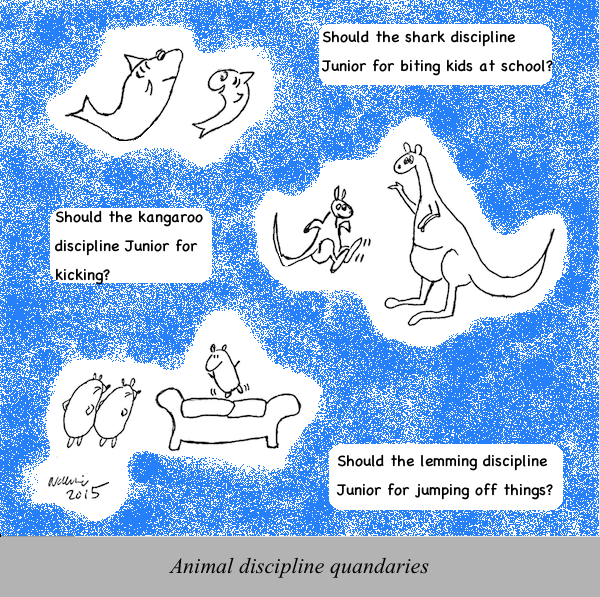
These are negative behaviors we want to train out of our toddlers: hitting, kicking, biting, pinching, and in any way inflicting pain on others. Excitement and anger are normal reactions in toddlers, but these negative responses to excitement or anger are always unacceptable.

Before we go further let’s review normal toddler behavior. These are things that you just can’t punish a toddler for, but rather you can try to capture on camera and to enjoy the memory later:

  • Making a mess.  All toddlers are messy. They can’t help it. They don’t have the fine motor coordination to prevent dropping food or for keeping toys contained to one area. (I am recalling with a smile a home-movie of my twin toddlers double-fisting a spaghetti dinner). Besides, to a toddler (and to many adults for those of you who used to watch Dave Letterman) it’s always fun to watch things splat on the floor. That being said, kids are never too young to teach “clean-up.” Make it fun and light-hearted, not onerous. All kids love to use brooms, so encourage them to help clean up the Cheerios that coat the floor after a meal.
  • Touching everything. They will touch  themselves and others- they are just curious.
  • Speaking their minds. Toddlers are truthful and literal, not malicious or insinuating. My oldest son at age 3 saw a man with one arm and said very loudly, “Look, Mommy, that man has only one arm!”

How to discipline:

Catch ’em being good. This works wonders if you are consistent about it. Be specific about your praise. Tell your toddler, “I like how you are not hitting your brother right now,” or “Good job playing quietly while your baby sister naps,” or “Great job putting the legos away in the box!” instead of “You are being good now.”

Teach consequences: If he throws a toy, say “NO throwing that toy,” and take the toy away for a minute or two to make your point.

Chastise the behavior, not the child. Say to your child “No hitting,” not “You are bad for hitting.”

First make it clear that a behavior is not acceptable. Toddlers are not mind readers. If you never told her, “Don’t rummage through the garbage can,” she will not know better.

Parents need to be on the same page. Discuss in advance, not in front of your child, what the consequences are for misbehavior. If one parent”gives in” to a tantrum and one does not, your toddler will become confused, then anxious, and then learn how to pit parents against each other. He will throw longer, louder, more destructive tantrums because he knows, if he hangs on long enough, ONE person will give him what he wants.

Have immediate consequences. Avoid “Wait until your mom gets home.” Also avoid “When we get home from the store, you are in trouble.” As determined as they can get, toddlers also paradoxicaly have the attention span and memory of a flea. However, in order to give an appropriate, immediate consequence, plan your consequence before you need it or else you may give out one that you regret.

For example, if you and your toddler are having a fine time at the playground with other parents and their toddlers, you may regret this warning: “Stop hitting Billy with your toy car or we will leave the playground.” If your child ignores you, then you are stuck leaving the playground. And leave, you must! If you fail to heed your own warning, your toddler will learn that you do not mean what you say. He will see you as a wimp and will always try to take advantage of you. A better way to stop your kid is to say, “Stop hitting Billy with your toy car or I take that car away from you.” Then take it away if he continues the behavior. Here are the benefits:

1-Teach your child that you mean what you say.

2- Protect others from your toddler’s dangerous behavior.

3- Preserve your own sanity. Why should you have to miss out on talking to other mommies while enjoying the day with your toddler? Sure, your toddler may tantrum in response to his lost car, but after the tantrum your toddler and you can continue to have fun at the park.

Don’t nag. Toddlers are professionals at ignoring parental nagging. Just follow through on your consequence for failure to obey you.

Ignore whining. Whining is very hard to stop once you allow your toddler to get what he wants when he whines. Instead, ignore his whining and nagging (just as your toddler does so easily and naturally when you do it to him). Only grant him your attention when he uses his regular voice. Tell him once: “I can’t understand when you talk that way. I only understand your Joey (insert your child’s name here) voice.” Then ignore him until he uses his “regular” voice.

Catch teachable moments. If you see another toddler misbehaving OR behaving well, point out the behavior to your toddler. You could say, “Oh, she hit her sister. I am so glad you are not hitting now. You know that our rule is No Hitting!” Also use books to point out desirable behavior. Plenty of books that you read to your children have examples of children having fun together or working toward a goal together without hitting, biting, or kicking each other. Point that out!

Time out and its permutations:

Time-out is a consequence. The goal of time-out is to stop the undesirable behavior and to give negative associations to the bad behavior.

The traditional way of giving a Time-out in response to an aggressive or otherwise inappropriate behavior is to place your child in a chair or stool or on the floor in a corner or other quiet, boring place in the house for one minute per age of the child. Try not to use a spot which is associated with relaxation and sleep such as his crib.

Time-out is more of a mental place than a physical place. Years ago when I was out with Dr. Lai and our kids, her then 18-month-old hit her 3-year-old sister. Dr. Lai firmly told her 18 month old, “NO hitting, Mommy is not talking to you for one minute!” and she turned her back and folded her arms, making it a point of not looking at her daughter (Of course I was there to make sure her 18- month-old didn’t run into trouble). Her 18-month-old had a tantrum but she got the message.

My own twins were a handful- often they would bite or hit each other over a toy that they both wanted. Rather than attempting to put two twins in two Time-Out chairs, I put the TOY in time-out on top of the refrigerator, where they could see it but not reach it, for the number of minutes of my twins’ age. Yes, I had to endure a double tantrum but the undesirable behavior, namely the hitting, stopped. Over time they learned to think twice about hurting each other. Read more about twin toddler discipline tips here.

Teaching self-calming is different from disciplining misbehavior/unsafe activities.

Your kids may throw tantrums often in response to your discipline. This is perfectly fair. Toddlers are allowed to feel frustrated and angry (“If you’re happy and you know it clap your hands; if you’re angry and you know it throw a fit!”). Just ignore the tantrum and remove any breakables from the line of fire. The goal is for your child to have a bad feeling about making a bad choice. If she has a tantrum, she may later remember that if she throws a toy at someone, it will be removed from her and She Will Feel Bad about it. We will give you more tips about helping to stop an endless tantrum in our next post. Remember, though, that once time out is over, it is over. Move on and don’t continue to talk about the incident.

We do not recommend hitting your toddler as punishment or as a way to stop them from some undesirable behavior. Toddlers mirror your behavior. They will pretend to swipe a smart phone. They will blow kisses back to you. Toddlers will suddenly will start spewing inappropriate words because they hear their parents using those words.  So, be on your best behavior. If you hit your child,  you will model hitting as a proper response for anger. Try not to hit your child even in jest. You don’t want to be explaining to other parents on the playground that your hitting child “doesn’t know better.”

Be aware it will feel like you are reiterating the same teaching points endlessly You will often feel you are talking to yourself. Even though you told a toddler once not to rummage through a garbage can, you’ll have to repeat the instructions the next time you see a different garbage can. As my brother-in-law says,”You don’t ever stop. Kinda like practicing layups or free throws in basketball.”

Remember to take a deep breath: It is easy to lose control of yourself when you spend a lot of time with a toddler because toddlers, even though they are all adorable, can be infuriating, unreasonable, and irrational. Remember who is two and who is thirty-two. You NEED to be in control. If not, give yourself a timeout.

If you find a day with your toddler particularly tough, just do what melted my heart when my boys were toddlers. When asked,  “Who will you marry?”  they would always say “YOU, Mom.”

Julie Kardos, MD and Naline Lai, MD

©2015 Two Peds in a Pod®

Based on our original 2009 podcast about toddler discipline- you can listen to it here.

Share

Raise a well-behaved child: set the stage while they are toddlers

Riding into toddlerhood

When your baby turns one, you’ll realize he has a much stronger will. My oldest threw his first tantrum the day he turned one. At first, we puzzled: why was he suddenly lying face down on the kitchen floor? The indignant crying that followed clued us to his anger. “Oh, it’s a tantrum,” my husband and I laughed, relieved he wasn’t sick.

Parenting toddlers requires the recognition that your child innately desires to become independent of you. Eat, drink, sleep, pee, poop: eventually your child will learn to control these basics of life by himself. We want our children to feed themselves, go to sleep when they feel tired, and pee and poop on the potty. Of course, there’s more to life such as playing, forming relationships, succeeding in school, etc, but we all need the basics. The challenge comes in recognizing when to allow your child more independence and when to reinforce your authority.

Here’s the mantra: Parents provide unconditional love while they simultaneously make rules, enforce rules, and decide when rules need to be changed. Parents are the safety officers  and provide food, clothing, and a safe place to sleep. Parents are teachers. Children are the sponges and the experimenters. Don’t be afraid of spoiling  your child; be afraid of raising a child that acts spoiled. Here are concrete examples of how to provide loving guidance:

Eating: The rules for parents are to provide healthy food choices, calm mealtimes, and to enforce sitting during meals. The child must sit to eat. Walking while eating poses a choking hazard. Children decide how much, if any, food they will eat. The kids choose if they eat only the chicken or only the peas and strawberries. They decide how much of their water or milk they drink. By age one, they should be feeding themselves part or ideally all of their meal. By 18 months they should be able to use a spoon or fork for part of their meal.

If, however, parents continue to completely spoon feed their children, cajole their children into eating “just one more bite,” insist that their child can’t have strawberries until they eat  their chicken, or bribe their children by dangling a cookie as a reward for eating dinner, then the child gets the message that independence is undesirable. They will learn to ignore their internal sensations of hunger and fullness.

For perspective, remember that newborns eat frequently and enthusiastically because they gain an ounce per day on average, or one pound every 2-3 weeks. A typical one-year-old gains about 5 pounds during his entire second year, or one pound every 2-3 months. Normal, healthy toddlers do not always eat every meal of every day, nor do they finish all meals. Just provide the healthy food, sit back, and enjoy meal time with your toddler and the rest of the family.  

A one-year-old child will throw food off of his high chair tray to see how you react. Do you laugh? Do you shout? Do you do a funny dance to try to get him to eat his food? Then he will continue to refuse to eat and throw the food instead. Instead, you can say blandly,” I see you are full. Here, let’s get you down so you can play,” then he will do one of two things:

1)      He will go play. He was not hungry in the first place.

2)      He will think twice about throwing food in the future because whenever he throws food, you put him down to play. He will learn to eat the food when he feels hungry instead of throwing it.

Sleep: The rule is that parents decide on reasonable bedtimes and naptimes. The toddler decides when he actually falls asleep. Singing to oneself or playing in the crib is fine. Even cries of protest are fine. Check to make sure he hasn’t pooped or knocked his binky out of the crib. After you change the poopy diaper/hand back the binky, LEAVE THE ROOM! Many parents tell me , “He just seems like he wants to play at 2:00am or he seems hungry.” Well, this assessment may be correct, but remember who is boss. Unless your family tradition is to play a game and have a snack every morning at 2:00am, then just say “No, time for sleep now,” and ignore his protests.

Pee/poop: The rule is that parents keep bowel movements soft by offering a healthy diet. The toddler who feels pain when he poops will do his best not to have a bowel movement. Going into potty training a year or two from now with a constipated child can lead to many battles. Also the toddler decides when he is brave enough or feels grown up enough to sit on the potty. Never force a toilet training child to sit on the potty. After all, did you force your toddler to learn how to use a remote control for your television? Of course not- he learned to use it by imitating you and wanting to be like you and by being pleased with the result (Cool! I turned on the TV!). The same principle applies to potty training. He will imitate you when he is ready, and will be pleased with the result when you praise him for his result.

Even if your child does not show interest in potty training for another year or two, talk up the advantages of putting pee and poop in the potty as early as age one. Remember, repetition is how kids learn.

Your toddler will test your resolve. He is now able to think to himself, “Is this STILL the rule?” or “What will happen if I do this?” That’s why he goes repeatedly to forbidden territory such as the TV or a standing lamp or plug outlet, stops when you say “No no!”, smiles, and proceeds to reach for the forbidden object.

When you feel exasperated by the number of times you need to redirect your toddler, remember that if toddlers learned everything the first time around, they wouldn’t need parenting. Permit your growing child to develop her emerging independence whenever safely possible. Encourage her to feed herself even if that is messier and slower. Allow her to fall asleep in her crib and resist rocking and giving a bottle to sleep. Everyone deserves to learn how to fall asleep independently (and to brush their teeth before bed). You don’t want to train a future insomniac adult.

And if you are baffled by your child’s running away from you one minute and clinging to you the next, just think how confused your child must feel: she’s driven towards independence on the one hand and on the other hand she knows she’s wholly dependent upon you for basic needs. Above all else, remember the goal of parenthood is to help your child grow into a confident, independent adult.

Julie Kardos, MD with Naline Lai, MD
©2015, revised from 2012
Two Peds in a Pod®

Share

Traveling with Young Children

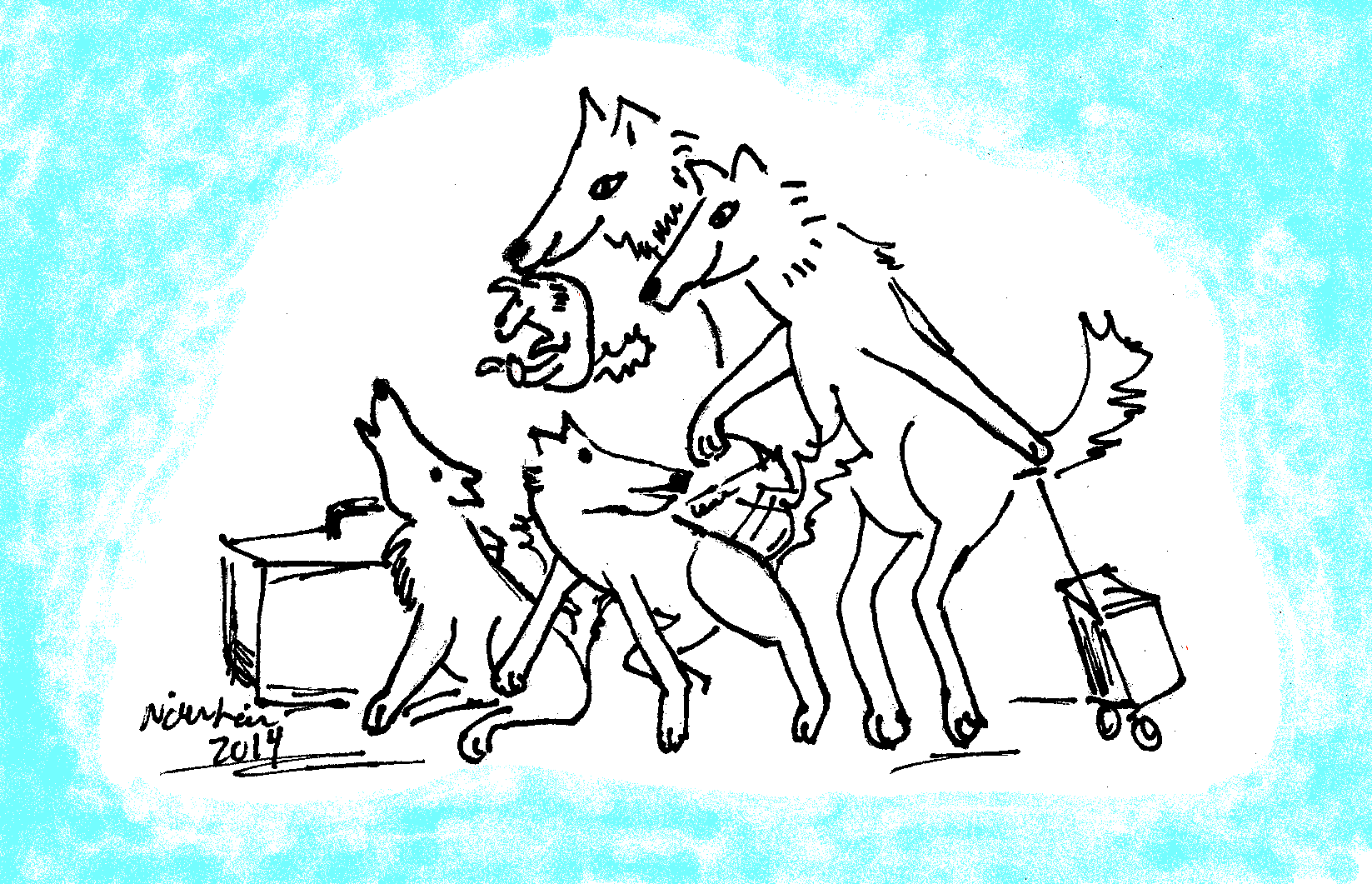
In spite of long TSA lines, rental car challenges and all the howling, the wolf family went to grandmother’s house every year for the holidays.

You don’t appreciate how much your baby has grown until you attempt a diaper change on a plane. For families with young children, any holiday can become stressful when travel is involved. Often families travel great distances to be together and attend parties that run later than children’s usual bedtime. Fancy food and fancy dress are common. Well-meaning relatives who see your children once a year can be too quick to hug and kiss, sending even not-so-shy kids running. Here are some tips for safer and smoother holiday travel:
If you are flying:

  • Do not offer Benadryl (diphenhydramine) as a way of “insuring” sleep during a flight. Kids can have paradoxical reactions and become hyper instead of sleepy, and even if they do become sleepy, the added stimulation of flying can combine to produce an ornery, sleepy, tantrum-prone kid. Usually the drone of the plane is enough to sooth kids into a slumber.
  • Not all kids develop ear pain on planes as they descend- some sleep right through landing. However, if needed you can offer pacifiers, bottles, drinks, or healthy snacks during take-off and landing because swallowing may help prevent pressure buildup and thus discomfort in the ears. And yes, it is okay to fly with an ear infection.

General tips for visiting:

  • Traveling 400 miles away from home to spend a few days with close family and/or friends is not the time to solve your child’s chronic problems. Let’s say you have a child who is a poor sleeper and tries to climb into your bed every night at home. Knowing that even the best of sleepers often have difficulty sleeping in a new environment, just take your “bad sleeper” into your bed at bedtime and avoid your usual home routine of waking up every hour to walk her back into her room. Similarly, if you have a picky eater, pack her favorite portable meal as a backup for fancy dinners.  One exception is when you are trying to say bye-bye to the binkie or pacifier.
  • Supervise your child’s eating and do not allow your child to overeat while you catch up with a distant relative or friend. Ginger-bread house vomit is DISGUSTING, as Dr. Kardos found out first-hand when one of her children ate too much of the beautiful and very generously-sized ginger bread house for dessert.
  • Speaking of food, a good idea is to give your children a wholesome, healthy meal at home, or at your “home base,” before going to a holiday party that will be filled with food that will be foreign to your children. Hunger fuels tantrums so make sure his appetite needs are met. Then, you also won’t feel guilty letting him eat sweets at a party because he already ate healthy foods earlier in the day.
  • If you have a young baby, be careful not to put yourself in a situation where you lose control of your ability to protect the baby from germs. Well-meaning family members love passing infants from person to person, smothering them with kisses along the way. Unfortunately, nose-to-nose kisses may spread cold and flu viruses along with holiday cheer.
  • On the flip side, there are some family events, such as having your 95-year-old great-grandfather meet your baby for the first time, that are once-in-a-lifetime. So while you should be cautious on behalf of your child, ultimately, heed your heart. At six weeks old, Dr. Lai’s baby traveled several hours to see her grandfather in a hospital after he had a heart attack. Dr. Lai likes to think it made her father in law’s recovery go more smoothly.
  • If you have a shy child, try to arrive early to the family gathering. This avoids the situation of walking into a house full of unfamiliar relatives or friends who can overwhelm him with their enthusiasm. Together, you and your shy child can explore the house, locate the toys, find the bathrooms, and become familiar with the party hosts. Then your child can become a greeter, or can simply play alone first before you introduce him to guests as they arrive. If possible, spend time in the days before the gathering sharing family photos and stories to familiarize your child with relatives or friends he may not see often.
  • Sometimes you have to remember that once you have children, their needs come before yours. Although you eagerly anticipated a holiday reunion, your child may be too young to appreciate it for more than a couple of hours . An ill, overtired child makes everyone miserable. If your child has an illness, is tired, won’t use the unfamiliar bathroom, has eaten too many cookies and has a belly ache, or is in general crying, clingy, and miserable, despite your best efforts, just leave the party. You can console yourself that when your child is older his actions at that gathering will be the impetus for family legends, or at least will make for a funny story.
  • Enjoy your CHILD’s perspective of holidays: enjoy his pride in learning new customs, his enthusiasm for opening gifts, his joy in playing with cousins he seldom sees, his excitement in reading holiday books, and his happiness as he spends extra time with you, his parents.

We wish you all the best this new year!

Julie Kardos, MD and Naline Lai, MD

©2014, 2015 Two Peds in a Pod®
Updated from our 2009 articles on these topics

Share
image_pdfimage_print