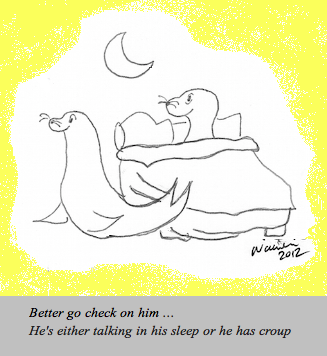
Croup is an often-suprising middle-of-the-night malady that produces a barky seal-like cough in children who seemed just fine at bedtime.
Any virus that causes cold-like symptoms of runny nose, cough, runny eyes, and sometimes fever, can also cause croup. Think parainfluenza, influenza (flu), RSV, adenovirus, rhinovirus, and now Covid-19. Any of these viruses can land in a child’s larynx, or voice box, and cause hoarseness, barky cough, and a weird gutteral sound on breathing inward, called “stridor.” Croup is the name we give the constellation of symptoms, not the name of the virus that causes it.
An adult with the same exact illness would sound hoarse, but would likely not have the strange barky cough or noisy breathing.
We have a great podcast on this subject, but for those who prefer to read medical advice, please read on.
Ways to help your child when they wake up with croup
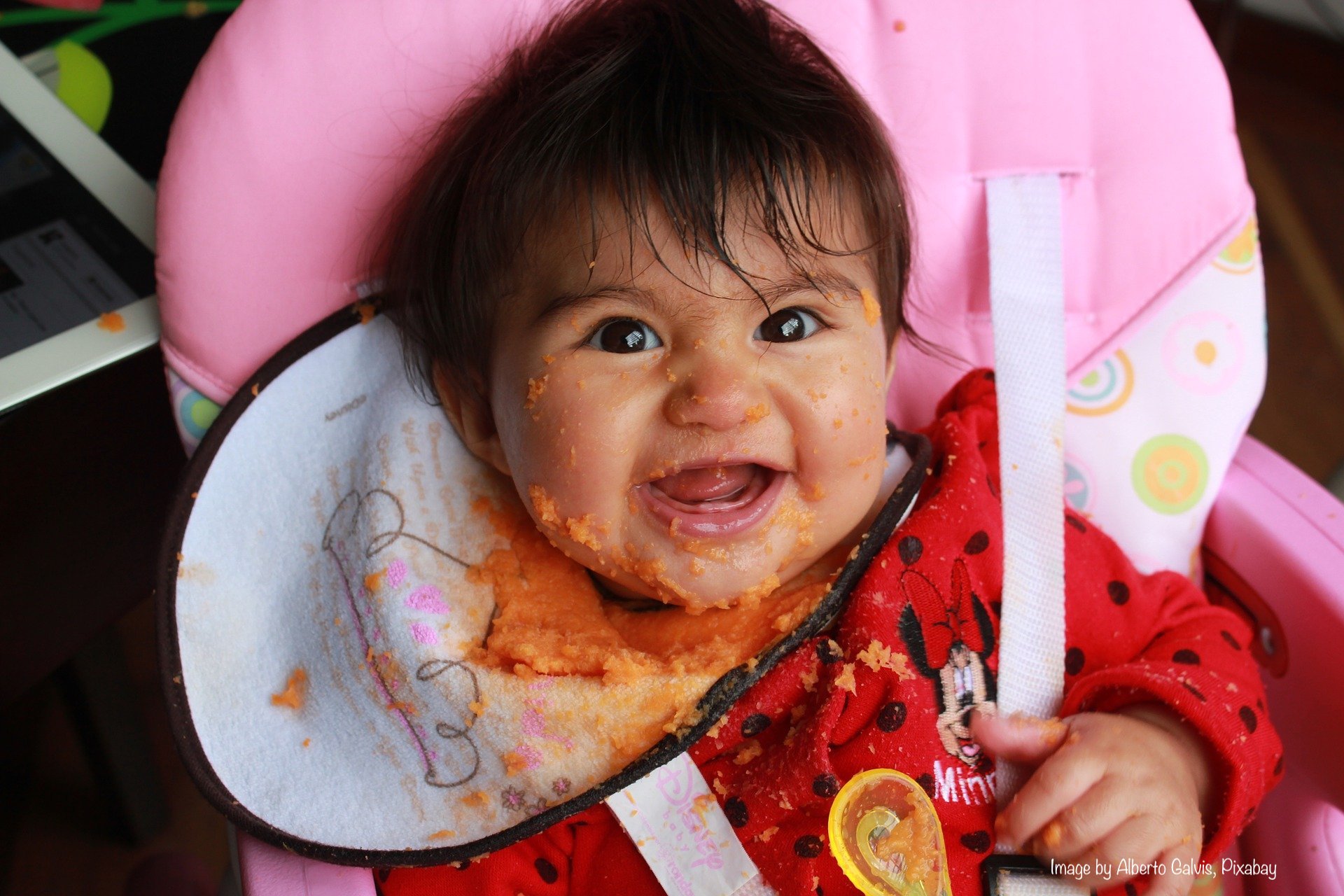
Back by popular demand: how to start baby food! Enjoy our podcast and learn when to feed, how to feed, and what to feed your hungry baby when they join you at the family table.
You can also listen to our podcasts here, as well as on any major streaming service.
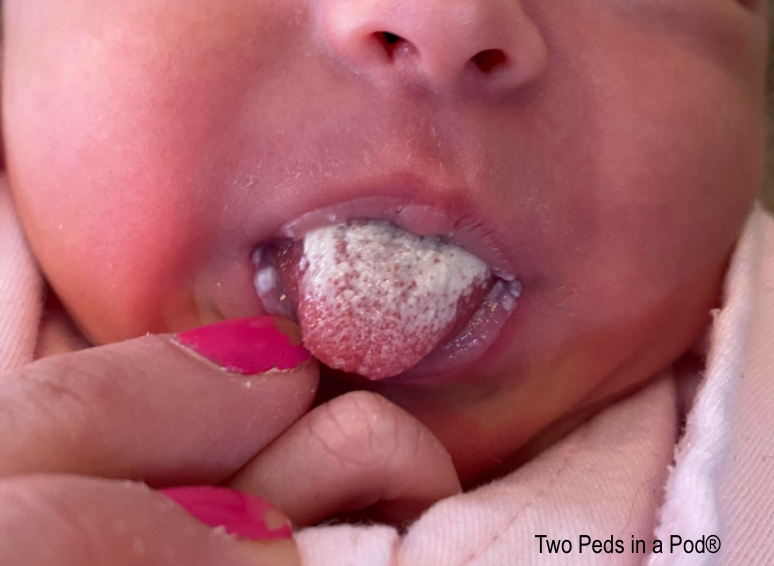
White curds that don’t wipe off can be indicative of thrush.
You find cottage cheese like curds coating the inside of your baby’s tongue and inner cheeks and try to wipe them off to no avail. It’s not breast milk, not formula. It’s thrush.
Thrush, fancy medical name Oral Candidiasis, is caused by an overgrowth of yeast, called Candida. Although not painful, it may cause discomfort akin to having a film of cotton coating the inside the mouth.
We ALL have yeast, which is a type of fungus, on our bodies. Usually we have enough bacteria on our bodies to suppress the growth of yeast, but in cases when there is less than usual bacteria present such as in young babies or in kids who are on antibiotics, Candida can emerge. For older kids using inhaled steroids for asthma, failure to rinse out the mouth after medication use also promotes an environment conducive to thrush.
Your child’s pediatrician charts your child’s height and weight in order to determine whether he is growing appropriately. Some kids are underweight. These kids use more calories than they take in.
Here are ways to increase calories. Remember, it’s not as simple as demanding that your child eat more of her noodles. Instead of trying to stuff more food into your child, increase the caloric umph behind each meal.
Parents are calling us and asking to cancel their well baby visits to the pediatrician. Tempted to cancel? Think again. If families allow their babies to get behind on their vaccines, we will risk other epidemics. It is important to vaccinate your children during the COVID-19 pandemic.
Before vaccines, babies died of polio, bacterial meningitis, pneumonia, blood infections, measles, and whooping cough. All of these infections are contagious. Babies need to stay on track to get immunized against these potentially lethal illnesses.
Vaccine preventable illnesses such as polio are still alive in the memories of those now experiencing the COVID-19 pandemic. Pictured to the right is a photo of members of Dr. Lai’s family. Great-Uncle Holloway, with the broken arm, and his cousin Billy were slated to go swimming soon after the photo was taken. Cousin Billy went, was exposed to polio at the pool, and died shortly after. In a twist of luck, Great-Uncle Holloway was spared because he had broken his arm and thus did not go to the crowded swimming pool that day.
Billy (L) and Holloway (R) in the 1930’s
We understand your fear of leaving home with your baby. We know that some families have difficulty obtaining transportation. But we know also that vaccine preventable illnesses are MUCH more dangerous than COVID-19 for our youngest children.
One day socially distancing will end, and on that day, babies will be more vulnerable to vaccine preventable illness. We cannot possibly catch up every single baby on our first day out of isolation. It is far better to keep your babies up to date on vaccines all along.
Pediatricians across the country, and the world, are adjusting how they see patients in their offices in order to protect their patients, as well as themselves, from acquiring COVID-19 in their offices. Ask what steps your baby’s doctor is taking to provide extra protection for your family.
We cannot stress more how important it is to vaccinate your children during the COVID-19 pandemic. Please share this post with anyone you know that has young children, especially babies, who are due for vaccines.
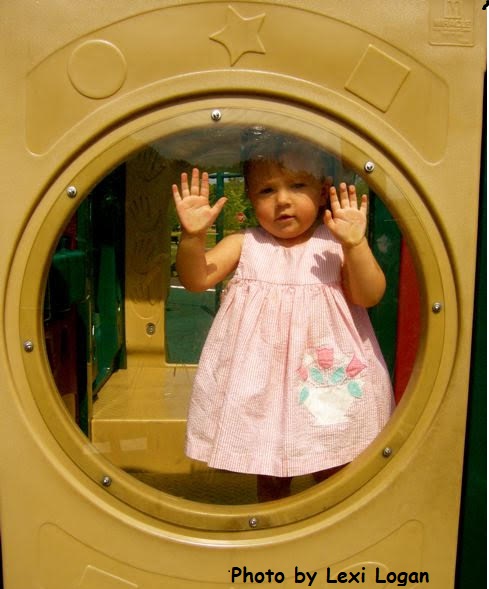
Has your toddler ever pulled off your glasses and thrown them? Slapped another toddler at the playground? Bitten their brother? Run off in a store and ignored you when you called? Are you afraid to set limits for your child because you fear the tantrum that may result?
Yes, toddlers are cute, but left to their own devices, they grow into the school bully, the family bully, or worse yet, they don’t listen to an adult and run into the street in front of a car.
Unbeknownst to you, you probably started to set limits for your child as early as 6 months of age.
It’s pretty annoying to be itchy. Dr. Lai fondly called her itchy oldest child with eczema “itchy, bitty, spider,”or some variant of that, for much of her daughter’s childhood. Fortunately, for your kids with sensitive skin, dermatologist Teresa S. Wright, MD joins us today with tips for how to treat eczema or atopic dermatitis—Drs. Kardos and Lai
Has your child been diagnosed with eczema? Eczema is a general term that refers to a group of skin conditions characterized by itchy red rashes. The term “eczema” often refers to a skin condition known as atopic dermatitis. Atopic dermatitis may occur in association with allergies and/or asthma and the rash tends to come and go. Common triggers include illness, stress, and changes in the weather or temperature. The cause of atopic dermatitis is not well understood. However, most children with atopic dermatitis tend to have very dry, sensitive skin. Atopic dermatitis cannot be cured, but it can be controlled. Most children with atopic dermatitis gradually improve and many will outgrow it over time. In order to control the rash, a proper daily skin care regimen is extremely important.
Skin care regimen to treat eczema
A daily bath or shower is recommended. It is a common myth that daily bathing “dries out” the skin. This is not true. Bathing puts moisture in the skin and removes irritants and germs. However, the bath or shower should be short (less than 10 minutes) and not too hot. Cleanser should be gentle, fragrance-free, and dye-free. Dove™ for Sensitive Skin or Aveeno™ fragrance-free cleanser are good choices. After bathing, pat the skin dry with a soft cotton towel and apply a heavy bland moisturizer to all skin to seal in the moisture. Continue reading “How to treat eczema or atopic dermatitis”
When one of Dr. Lai’s kids was around two years old, she deliberately let go of Dr. Lai’s hand when wading in waist high water. She exclaimed, “Look mommy, I can swim!” But she couldn’t, and as she started to sink, Dr. Lai scooped her up. What if she had taken swim lessons? Would that have been enough to prevent drowning? It may have helped, but that’s not enough. Kids need layers of protection to prevent tragedy in water.
Just in time for summer, we have new evidence about drowning prevention for both young kids and teens. Read on for updated swimming and water safety tips and an offer for free swim competency lessons for older kids.
Who is most at risk for drowning?
Children age 4 years and younger.
Most of these kids drown when parents do not realize kids have access to water. Think bathtubs, buckets, and toilets as well as ponds, puddles, and pools. Drowning is silent. Parents need to always watch their children around any body of water.
Adolescents aged 15-19.
Several factors contribute, including under-estimating risk (strong tides, swimming out too far), overestimation of skills, and substance use. Be sure to discuss rules of swimming with all of your children even if they are strong swimmers, and instruct them never to swim alone or without a lifeguard. Set an example yourself by wearing life jackets while boating and abstain from alcohol consumption. Alcohol contributes to half of all boating accidents in the United States.
Kids with autism.
Like children with other behavioral disabilities, they often wander away from adults without warning.
Children with seizure disorders.
Drowning is the leading cause of accidental death in children with epilepsy. Like ALL children, kids who have seizures should never be left alone for even a second in pools or baths.
Kids with a predisposition to cardiac arrhythmias.
If your family has a history of heart arrhythmias (eg. Long QT, Brugada syndrome, Ventricular tachycardia), unexplained sudden death at a young age, or an unexplained drowning, bring it to your pediatrician’s attention. In your child, let your pediatrician know about any fainting/near fainting episodes, “funny” heart beats, or chest pain.
Whenever we look at the child product recall lists from The Consumer Protection Safety Commission (CPSC), it never fails to amaze us that even big brand names crop up in product recalls for children. Ironically, most are not new-fangled products. Bouncer seats, high chairs, rattles, and bicycle helmets are often amongst the recalls. We figure after decades of baby product manufacturing, designers and production managers would understand what constitutes a potential hazard for kids.
We urge you to scrutinize the kid merchandise in your house and identify the potential hazards before your child ends up as the reason a product is on the CPSC list. In fact, you might have already missed a recall on your older products. According to kidsindanger.org, child product recalls occur a couple of times a week, but when a baby product is recalled, only 10-30 percent are ever retrieved. Because recalls occur AFTER injury or death occurs, it is better if parents assess the safety of child products before a recall.
Here are some common reasons for recalls:
Products fail to adhere to the American Academy of Pediatrics safe sleep guidelines. We know parents of crying young infants are often desperate to get some sleep themselves, but many sleep products are not studied. If it seems too good to be true, it probably isn’t. Infants are not ready developmentally to sleep through the night, so any product that promises to help your infant sleep through the night is, by definition, problematic. An example is the Rock ‘n Play sleeper which was recently recalled. The soft squishy inclined cradles clearly did not adhere to the safe sleep guidelines, but often we heard a parent say, ”But that’s the only place they will sleep.” Unfortunately, this recall does not undo the deaths of the 32 reported babies who died in the sleeper. In the wake of the recall, other companies who make similar sleepers are also recalling their products.




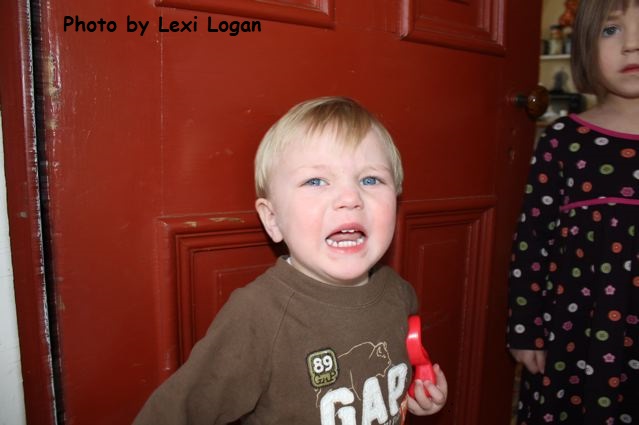 Has your toddler ever pulled off your glasses and thrown them? Slapped another toddler at the playground? Bitten their brother? Run off in a store and ignored you when you called?
  It’s pretty annoying to be itchy. Dr. Lai fondly called her itchy oldest child with eczema “itchy, bitty, spider,”or some variant of that, for much of her daughter’s childhood. Fortunately, for your kids with sensitive skin, dermatologist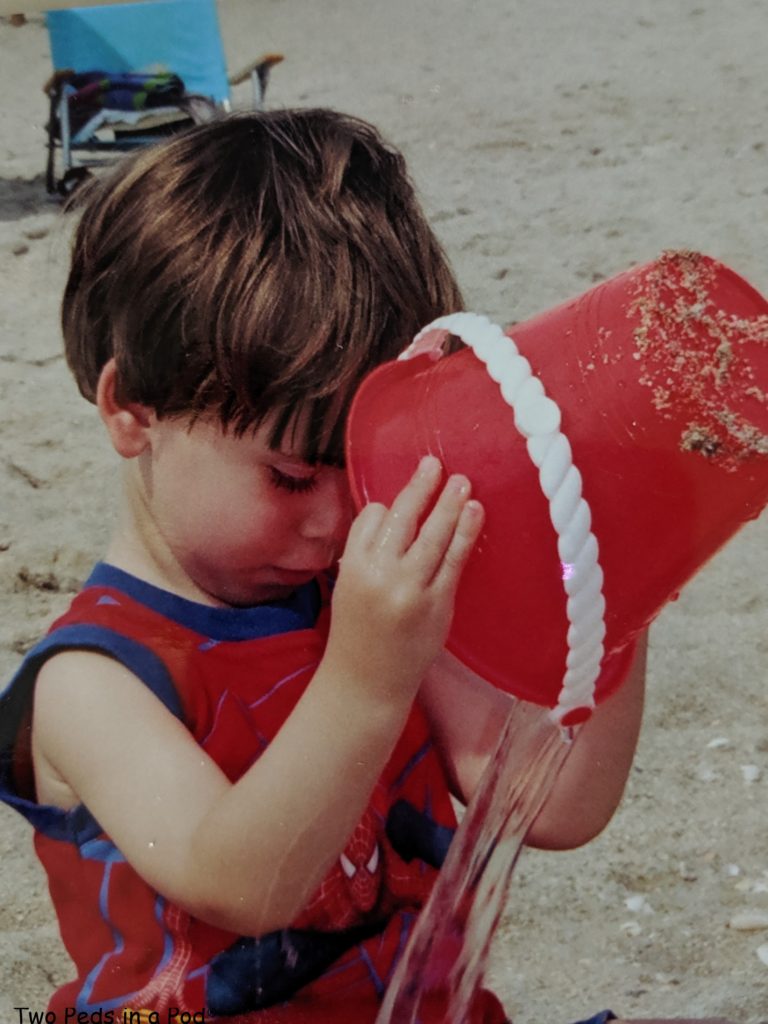

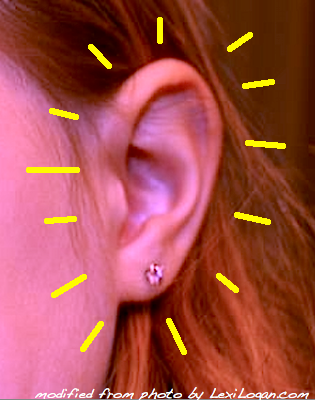 Does your child have an earache?
