Death, politics, mental illness, and sex- all difficult topics for parents to talk about with their kids. Your Two Peds joined a social worker, school guidance counselor, and former teacher in a lively panel discussion at the Haverford Township Library in Haverford PA on how to normalize conversations on difficult topics between parents and their children. Watch as we talk about on ways parents can give kids give information while limiting their anxiety .
Croup is an often-suprising middle-of-the-night malady that produces a barky seal-like cough in children who seemed just fine at bedtime.
Any virus that causes cold-like symptoms of runny nose, cough, runny eyes, and sometimes fever, can also cause croup. Think parainfluenza, influenza (flu), RSV, adenovirus, rhinovirus, and now Covid-19. Any of these viruses can land in a child’s larynx, or voice box, and cause hoarseness, barky cough, and a weird gutteral sound on breathing inward, called “stridor.” Croup is the name we give the constellation of symptoms, not the name of the virus that causes it.
An adult with the same exact illness would sound hoarse, but would likely not have the strange barky cough or noisy breathing.
We have a great podcast on this subject, but for those who prefer to read medical advice, please read on.
Ways to help your child when they wake up with croup
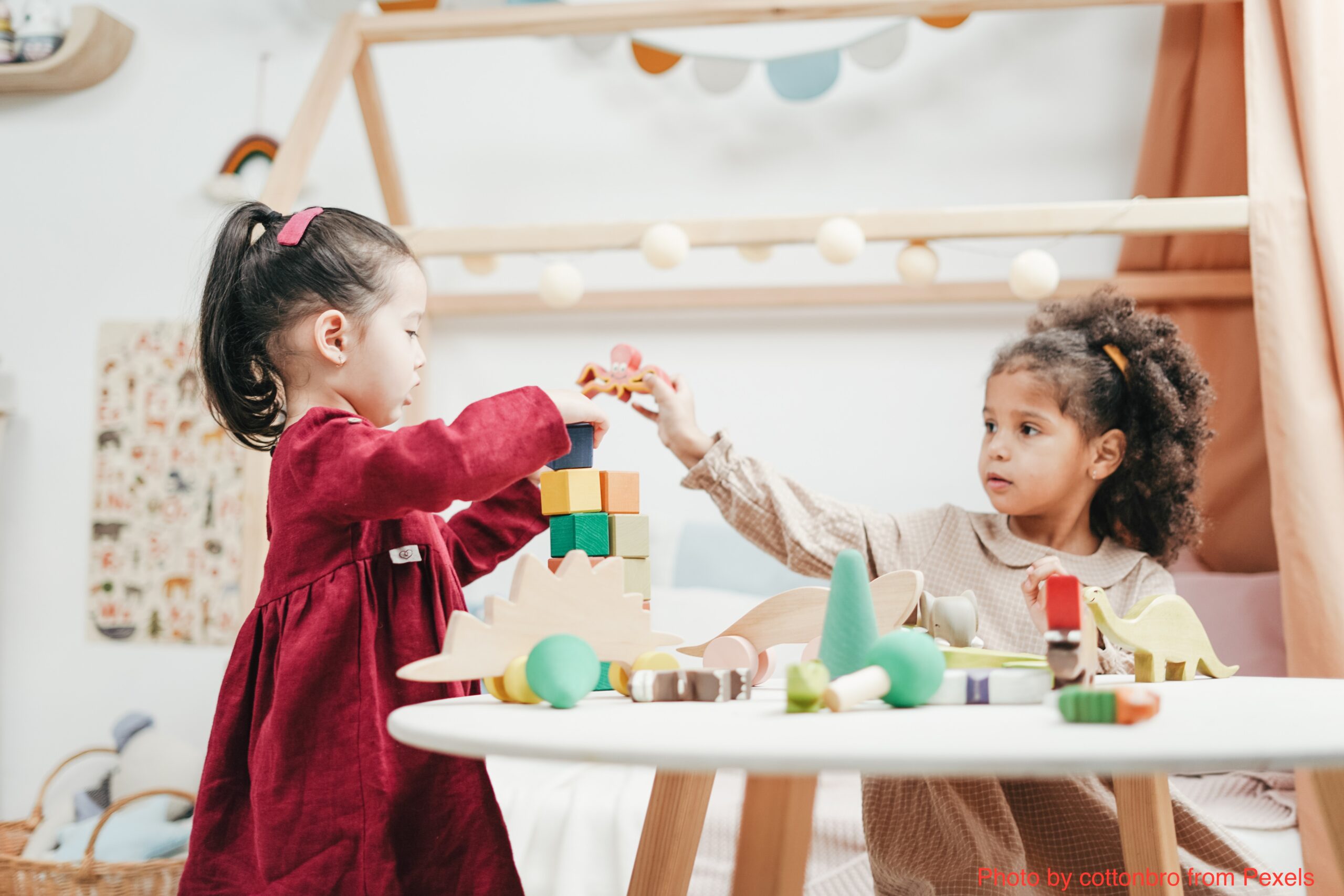
Emma’s parents were hopeful that Emma could start preschool this winter, but with the slow COVID-19 vaccine roll out, Emma’s parents chose to keep her home just a little longer. Grandparents come over every day, but three-year-old Emma does not have interaction with other children. Her parents are confident that they can teach Emma shapes and numbers, but are concerned about her social and emotional development. For those in the same shoes as Emma’s parents, we share ways to socialize your preschooler without preschool.
Preschool has not changed much since you were three or four years old. There is still circle time, show-and-tell, and cubbies to hang little coats in. And games, lots of fun and games. But as early childhood educators will tell you, there is a method to their madness. In particular, the fun and games encourage social and emotional growth.
Fun and games
Unlike a two year old, three and four-year-old children are capable of turn-taking and rule-following. These skills help preschoolers form friendships and learn to get along with others. At home, parents can teach their preschoolers simple games that involve turn-taking. Don’t be tempted to bend the rules to allow your child to win every game of Candy Land®. Whether you lose or win, you will model “good winning” and “good losing.” For instance, if you win, say “Good game!” If you lose, say “Oh, I lost, but I had fun playing!” Fast forward a few years and you can avoid having the kid who is a poor sport and can’t move on from a loss.
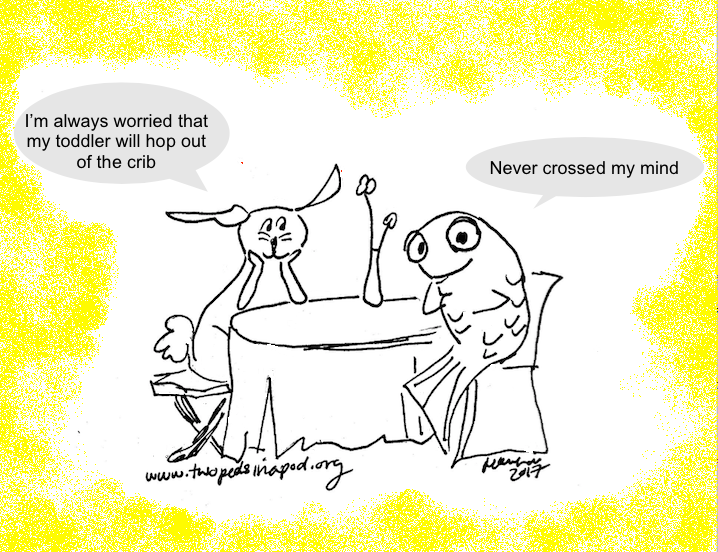
A family asked, “My toddler figured out how to climb out of the crib! How do I transition him into a bed?”
Some kids never climb out of their cribs, but sometimes families need the crib for a new sibling. If this is the case, consider if you really need the crib right away. Using a bassinet for the new baby allows the big brother/sister to get used to having a baby around. Many older siblings regress after the birth of a sibling and it can be useful to keep the older one in a crib for just a little bit longer, then use the new bed as a reward for “helping” or as a token of increased status.
The scariest part of putting your child into a bed is that your child now has access to his entire bedroom.
Your child’s pediatrician charts your child’s height and weight in order to determine whether he is growing appropriately. Some kids are underweight. These kids use more calories than they take in.
Here are ways to increase calories. Remember, it’s not as simple as demanding that your child eat more of her noodles. Instead of trying to stuff more food into your child, increase the caloric umph behind each meal.
Physical therapist Dr. Deborah Stack brings us quick exercises for kids and teens – Dr. Lai and Kardos
After six months of COVID; yes, it really has been that long already, your family has probably found some favorite outdoor hiking spots or bike routes. But what can you do when it’s too cold or wet outside? How can you combat literally HOURS of kids sitting at computers especially if they only have 30-45 minutes until their next class? Here are quick exercises for kids and teens and a table of caloric expenditure for common activities.
Schedule active movement breaks into their day. Take advantage of that lunch and recess “break” and be an example yourself.
Here are some short burst ideas:
Have a 15-minute dance party
Use your body to make all the letters of the alphabet
Shadow box to some music
Dust off the treadmill or stationary bike in the basement
Play ping-pong
Do a few chores (carrying laundry baskets up and down is great exercise)
Jump rope
Jog in place
Do jumping jacks
Pull out some “little kid games” such as hopscotch or hulahoop
Let each child in your house choose an activity for everyone to try
Do a family yoga video
Walk or “run” stairs…kids can try to beat their prior score for a minute of stairs
Take walking/wheeling/even wheelbarrow laps around the house
Stretch out calves, quadriceps, arms and back…see ergonomics post for counteracting all the sitting
Right now, with schools closed, kids of all ages are doing schoolwork at home. Technology has allowed continuation of learning and even face-to-face check in with teachers. But it also poses some challenges. School classrooms are designed for children; our kitchen tables are not. How to sit at the computer? Just as we require ergonomic workstations for our jobs; we need to consider proper fit and alignment for our children as they learn virtually. The following are basic ergonomics for kids doing schoolwork from home that can prevent muscle aches and fatigue.
Where to place the computer screen:
Place the computer screen directly in front of your child with the eyes level with a spot about 2-3” below the top of the screen. In addition, place the keyboard so that the upper arms and shoulders are relaxed. The forearms should be parallel to the floor and the elbow bent less than 90 degrees. The chair should have back support and allow the thighs to be supported parallel with the floor. Knees should also be bent to 90 degrees or a bit less with feet supported. This can be a challenge for our elementary school kids who are trying to work at home. The Canadian Safety Council suggests: “choose a chair that places the child at the proper height in relation to the equipment. If that means a higher chair, provide a footrest to support the feet and a pillow to support the back.”Continue reading “How to sit at the computer: Ergonomics for kids doing schoolwork at home”
Has your toddler ever pulled off your glasses and thrown them? Slapped another toddler at the playground? Bitten their brother? Run off in a store and ignored you when you called? Are you afraid to set limits for your child because you fear the tantrum that may result?
Yes, toddlers are cute, but left to their own devices, they grow into the school bully, the family bully, or worse yet, they don’t listen to an adult and run into the street in front of a car.
Unbeknownst to you, you probably started to set limits for your child as early as 6 months of age.
Now that school has been in session for over a month, it’s not too early for you to learn all about strep throat. It might even save you a trip to the doctor’s office!
It’s pretty annoying to be itchy. Dr. Lai fondly called her itchy oldest child with eczema “itchy, bitty, spider,”or some variant of that, for much of her daughter’s childhood. Fortunately, for your kids with sensitive skin, dermatologist Teresa S. Wright, MD joins us today with tips for how to treat eczema or atopic dermatitis—Drs. Kardos and Lai
Has your child been diagnosed with eczema? Eczema is a general term that refers to a group of skin conditions characterized by itchy red rashes. The term “eczema” often refers to a skin condition known as atopic dermatitis. Atopic dermatitis may occur in association with allergies and/or asthma and the rash tends to come and go. Common triggers include illness, stress, and changes in the weather or temperature. The cause of atopic dermatitis is not well understood. However, most children with atopic dermatitis tend to have very dry, sensitive skin. Atopic dermatitis cannot be cured, but it can be controlled. Most children with atopic dermatitis gradually improve and many will outgrow it over time. In order to control the rash, a proper daily skin care regimen is extremely important.
Skin care regimen to treat eczema
A daily bath or shower is recommended. It is a common myth that daily bathing “dries out” the skin. This is not true. Bathing puts moisture in the skin and removes irritants and germs. However, the bath or shower should be short (less than 10 minutes) and not too hot. Cleanser should be gentle, fragrance-free, and dye-free. Dove™ for Sensitive Skin or Aveeno™ fragrance-free cleanser are good choices. After bathing, pat the skin dry with a soft cotton towel and apply a heavy bland moisturizer to all skin to seal in the moisture. Continue reading “How to treat eczema or atopic dermatitis”





 Has your toddler ever pulled off your glasses and thrown them? Slapped another toddler at the playground? Bitten their brother? Run off in a store and ignored you when you called?
 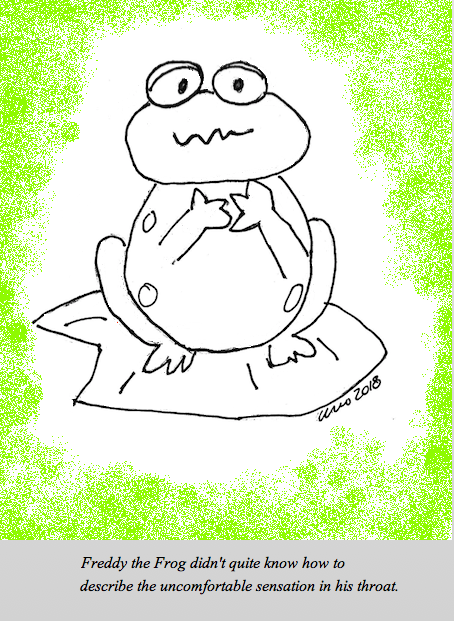 Now that school has been in session for over a month, it’s not too early for you to
  It’s pretty annoying to be itchy. Dr. Lai fondly called her itchy oldest child with eczema “itchy, bitty, spider,”or some variant of that, for much of her daughter’s childhood. Fortunately, for your kids with sensitive skin, dermatologist
