Asthma meds made simple

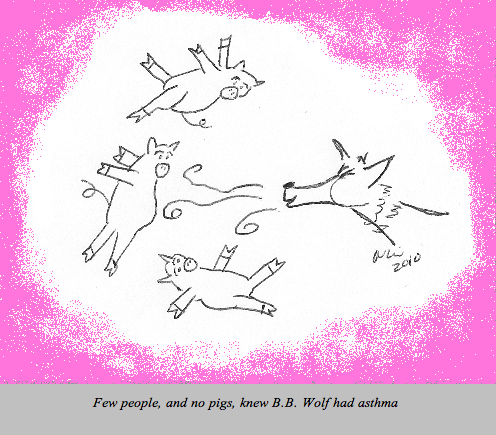
asthma cartoonA mom wrinkles her brow and  hands me a bulging bag of inhalers. “Which medicine is the ‘quick fix’ inhaler? And which medicine is the ‘controller’ inhaler?” she asks.

Perfecting a treatment regimen for a child with asthma initially can be tricky and confusing for parents. But don’t panic. There are simple medication schedules and environmental changes which not only thwart asthma flare ups, but also keep lungs calm between episodes. The goal is to abolish all symptoms of asthma such as cough, wheeze, and chest tightness.

For asthma flares
Albuterol (brand  names Proair, Proventil, Ventolin) or levalbuterol (brand name Xopenex): These are the “quick fix” medications. When inhaled, this medicine works directly on the lungs by opening up the millions of tiny airways constricted during an attack. Albuterol is given via nebulizer or inhaler. A nebulizer machine areosolizes albuterol  and pipes a mist of medicine into a child’s lungs through a mask or mouth piece.

For kids who use inhalers, we provide a spacer, a clear plastic tube about the size of a toilet paper tube, which suspends the medication and gives the child time to breathe in the medication slowly. Without a spacer, the administration technique can be tricky and even adults use inhalers incorrectly.

Prednisone/prednisolone (brand names include Prelone, Orapred): Given orally in the form of pills or liquid, this steroid medicine acts to decrease inflammation inside the lungs. This kind of steroid  is not the same kind used illegally in athletics. While steroids in the short term can cause side effects such as belly pain and behavior changes, the advantages of improving breathing greatly outweigh these temporary and reversible side effects. However, if your child has received a couple rounds of steroids in the past year, talk to your pediatrician about preventative measures to avoid the long term side effects of continual steroid use.

Quick environmental changes One winter a few years ago, a new live Christmas tree triggered an asthma attack in my patient. The only way he felt comfortable breathing in his own home was for the family to get rid of the dusty tree. Smoke and perfume can also spasm lungs. If you know Aunt Mildred smells like a flower factory, run away from her suffocating hug. Kids should avoid smoking and avoid being around others who smoke.

For asthma prevention

Taking preventative, or controller medicines for asthma is like taking a vitamin. They are not “quick fixes” but they can calm lungs and prevent asthma symptoms when used over time.

Inhaled steroids (For example, Flovent, Pulmicort, Qvar) work directly on lungs and do not cause the side effects of oral steroids because they are not absorbed into the rest of the body. These medicines work over time to stop mucus buildup inside the lungs so that the lungs are not as sensitive to triggers such as cold viruses.

Monteleukoclast (brand name Singulair),  also used to treat nasal allergies, limits the number and severity of asthma attacks as well by decreasing inflammation. It comes as a tiny pill kids chew or swallow daily.

Avoid allergy triggers  and respiratory irritants such as smoke. Even if you smoke a cigarette outside, smoke clings to clothing and your child can be affected. Treating allergy symptoms with appropriate medication will help avoid asthma attacks as well.

Treat acid reflux appropriately. Sometimes asthma is triggered by reflux, or heartburn. If stomach acid refluxes back up into the food pipe (esophagus), that acid could tickle your child’s airways which lie next to the esophagus.

Avoid respiratory viruses and the flu. Teach your child good hand washing techniques and get yearly flu shots. Parents should schedule their children’s flu vaccines as soon as the vaccines are available.

Some parents are familiar with asthma because they grew up with the condition themselves, but these parents should know that health care providers treat asthma in kids differently than in adults. For example, asthma is one of the few examples where medicine such as albuterol can be dosed higher in young children than in adults. Also some treatment guidelines have been improved upon recently and may differ from how parents  managed their own asthma as children.  For example, a doctor friend now in his 50’s said his parent used to give him a substance to induce vomiting during his asthma attacks. After vomiting, the adrenaline rush would open up his airways.

Don’t do that. We can do better. Hopefully now that flu season has descended upon us, this information helps you to keep your child’s asthma under good control and helps you know which medicine to reach for when it flares up.

Julie Kardos, MD and Naline Lai, MD

© 2010, 2014 Two Peds in a Pod®

 

Share

How to help your teenager through a breakup

how to help your teen through a breakupBrace yourself. When your child experiences heartbreak, you will too. Psychologist John Gannon gives advice on what you can do to help your teen through a breakup.

It happens to almost every adolescent. At some point or another, we all experienced our first love. In the early stages, it was the greatest feeling we had ever felt. When it ended, it was the largest and most powerful feeling of hurt that we had ever experienced. Each moment felt like 10 years. Days went by and life went on for everyone else. Yet, for us, life stopped and we felt lost and paralyzed.

Your child will not be the exception either. They will feel their feelings the same way we felt ours. Your response to their heart break might offer them comfort. It may also infuriate them. They might claim that you just don’t understand. They might sob inconsolably. In practicality, your life will also suffer! Nothing can take their pain away except the passage of time. I always speak about the scar that occurs from first love. I believe it is a necessary scar, so that we do not become lost without emotional boundaries. The price of the scar though, is the loss of emotional love with another person.

There are things you may want to consider when this occurs for your child. For instance, some teenagers have more than just a traditional break up syndrome. They enter a state of significant sadness or anxiety. It can be difficult to distinguish what is a break up and what is something else. Sometimes, they will try to self medicate with drugs or alcohol. They may be more likely to have poorer judgment than they typically would have. It’s good to try and be as emotionally available as they will let you. Don’t take it personally if they shut you away.

Fortunately, time does heal most of these feelings. One day, you will see they look brighter. They may start to smile. Luckily, first love happens only once in a lifetime for most of us. (Some people live life with every relationship as a first love.) Keep in touch with your kids during this time. Even if it appears they are being overly dramatic, they are inexperienced when it comes to affairs of the heart. The pain is real for them. First love can teach how to balance love. Sometimes, they may need to have several breakups to figure this out. Most of the time, we ultimately learn how love is kept in perspective and by doing so we do not lose our emotional well-being.

Finally, this is a passage of your child’s becoming an adult. Enjoy the ride!

John Gannon, MS, FPPR

Mr. Gannon is a licensed psychologist with nearly 30 years experience as a marriage and family therapist in the Philadelphia area. His post originally appeared in 2010.

©2014 Two Peds in a Pod®

Share

Flu update 2014-2015- We may be in for a rough winter

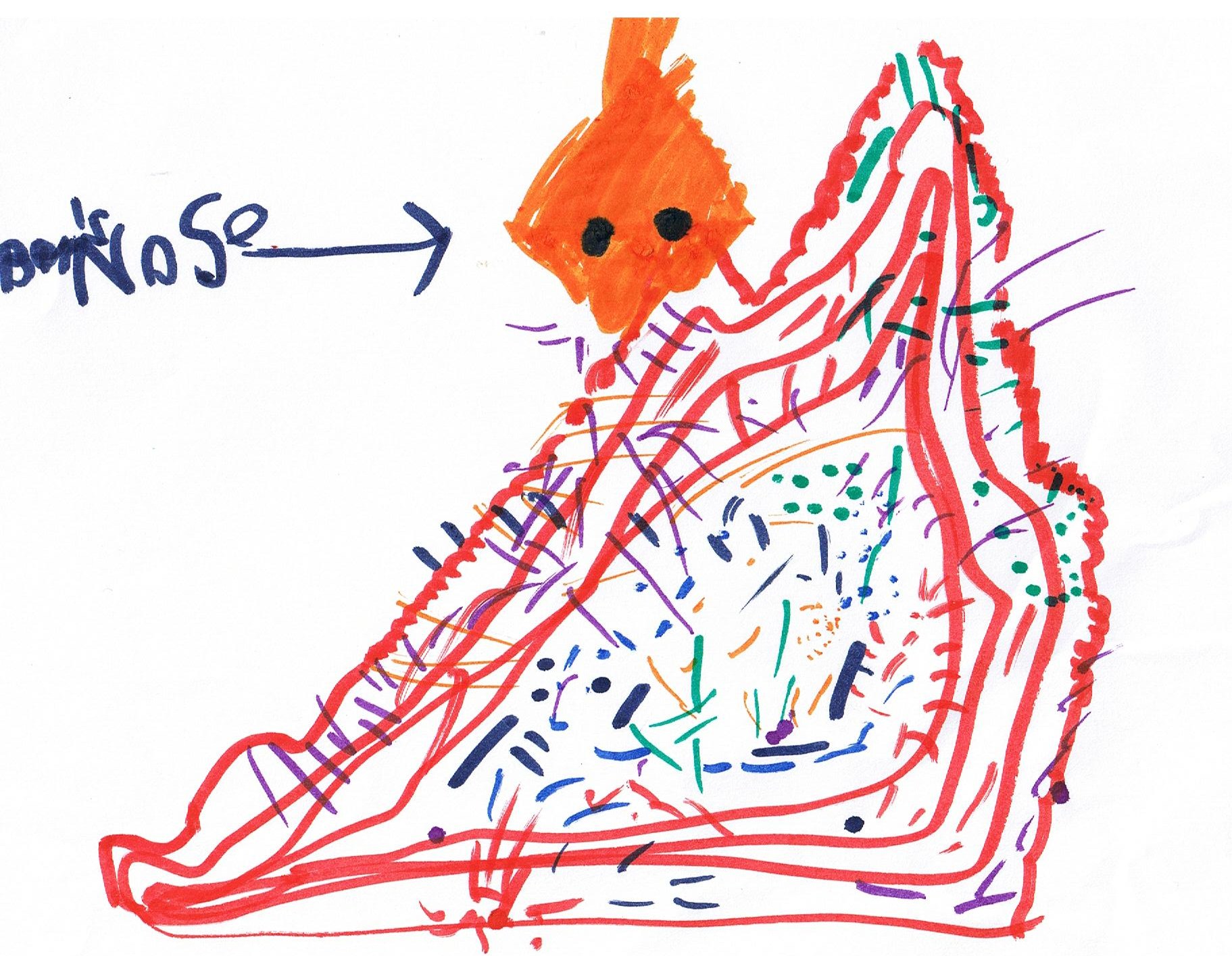
runny nose
Ben’s runny nose, as depicted by Ben

Because we couldn’t have said it better ourselves, we have reprinted (with permission) our pediatrician colleague Dr. Roy Benaroch’s recent flu update from his blog The Pediatric Insider.

Some bad news about flu this year
We could be in for a rough influenza winter.

First, data just released from the CDC shows that a lot of the flu circulating in the USA isn’t a good match for the strains in this year’s flu vaccines. About 82% of flu since autumn is a type A H3N2, one that historically has been associated with more-severe illness. Of those, only about half are closely related to the A/Texas/50/2012 strain that was chosen in February to be included in the vaccine. Unfortunately, current methods of vaccine production take a long time, and manufacturers have to commit early—months ahead of time—to what will be included in the vaccines. In February, when the World Health Organization made their recommendations for the Northern Hemisphere 2014-2015 flu vaccine, they chose the H3N2 that was then in circulation. Since then, it’s “drifted”, or changed, to a related but non-identical type.

What this means is that the current vaccine is well-matched to only about 40% of circulating flu. The vaccine will probably offer some protection against the other 60%– illness will be milder and shorter—but a lot of people who got their flu vaccines are still going to get the flu, and spread the flu. Now, some protection is still better than none, so I’d still go and get that flu vaccine now if you haven’t gotten it already. An imperfect (or, honestly, far-less-than-perfect) flu vaccine is better than none. But it isn’t looking good this year.

And it gets worse. It’s becoming increasingly clear that Tamiflu, the anti-viral medication we rely on to help treat influenza, doesn’t work very well. As summarized by the Cochrane Collaboration earlier this year, studies show that Tamiflu is only modestly effective in reducing the length of influenza illness, and may be only slightly effective at reducing complications. If it does work for treatment of flu, it works best when started very early in the course of the illness. The FDA labeling calls for it to be started within 48 hours, but honestly it seems to barely work if started that late. Better to get it started within 24, or even better, 12 or 6 or 2 hours.

In practice, Tamiflu really doesn’t seem to do much of anything for most of the flu patients seen in hospitals and doctor’s offices, because we usually see patients too late. It does have a role in helping family members at risk for flu. They can start it immediately, at the first symptoms, and will probably get more benefit.

Tamiflu can also be used as a prophylactic, or preventive, agent in people exposed to flu with no symptoms, though again, the benefits are modest at best. Crunching the numbers, we probably have to treat about 33 people on average for just one person to benefit from prophylaxis. That’s not very good, especially considering that all 33 people will have to pay for it and risk the side effects.
And Tamiflu does have some significant side effects. Nausea and vomiting are quite common, but the scarier reactions are depression, hallucinations, and psychosis. Neuropsychiatric side effects are most common in people of Japanese ancestry.

So: the flu vaccine, this year, will probably offer only modest benefits. And Tamiflu really has very limited usefulness. It looks like we’d better prepare for a rough winter, and keep in mind some of the old-fashioned ways to keep from getting the flu:
• Stay away from sick people.
• If you’re sick, stay home.
• Keep your mucus to yourself—sneeze into your elbow, or better yet into a tissue. And then wash your hands.
Don’t touch your own face. Flu virus on your hands doesn’t make you sick until you help it get into your body by touching your eyes, nose, or mouth.
• Wash or sanitize your hands frequently, and especially before touching your face or eating.

© 2014 Roy Benaroch, MD

In practice near Atlanta, Georgia, Dr. Roy Benaroch is an assistant clinical professor of pediatrics at Emory University, a father of three, and the author of  The Guide to Getting the Best Health Care for your Child and  Solving Health and Behavioral Problems from Birth through Preschool. Most recently he is the Narrator of the Great Courses Series: Medical School for Everyone. We are fans of his blog The Pediatric Insider

Share

For you medical photo geeks- 3rd edition of Visual Diagnosis and Treatment in Pediatrics

3rd Edition Visual Diagnosis and Treatment in Pediatrics

For all you medical photo geeks, Two Peds in a Pod is excited to announce that Dr. Lai is an associate editor of the newly published 3rd edition of Visual Diagnosis and Treatment in Pediatrics – for pediatric health care professionals or anyone who has enjoyed pinning our medical photos to Pinterest (we know you are out there).

Julie Kardos, MD and Naline Lai, MD

©2014 Two Peds in a Pod®

Share

Using melatonin in children

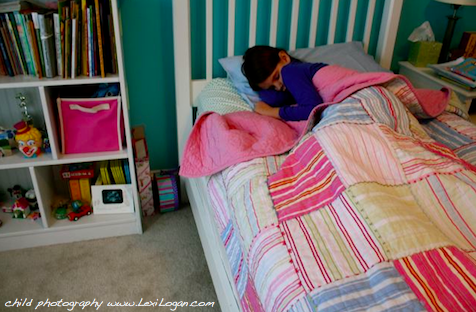
sleepingOur guest blogger, Dr. Kristann Heinz, a doctor who practices with a holistic and integrative approach, shares her knowledge about melatonin use in children. — Drs. Kardos and Lai

When we got back from Hawaii my three year old daughter, Ruby, was a hot mess! The eight-hour time difference made it hard for her to adjust her internal clock. At first, I just attributed it to routine jet lag but after a week of the same sleep-wake cycle, I knew something was going on. She was wandering around the house in her pink spotted pajamas WIDE AWAKE until 1am, 2am, and 3am. And then in the morning, she was dead asleep and I could barely get her up. So at this point, I took her to our doctor to make sure everything was all right. The doctor told us my daughter’s jet lag was leading to a sleep disturbance and suggested I try melatonin. I gave melatonin to Ruby that night. She was asleep by 11pm and slept soundly until morning. Over the next few days, she adjusted beautifully and we were back to a normal sleep routine in 3 days. After that, we stopped the melatonin.

What is Melatonin?
Melatonin is a hormone that occurs naturally in our bodies. A hormone is a signal containing a message from one part of the body to another. Melatonin is naturally secreted by the pineal gland, a gland located in the brain that is very sensitive to light. As night falls, the pineal gland secretes melatonin to tell the brain that it is time to sleep. This process is sometimes described as the “opening of the sleep gate.”

Why would my doctor prescribe melatonin to my child?
People often use melatonin to help adjust their sleep-wake cycles. For adults melatonin is used to treat a variety of medical disorders including cancer, headaches, and autoimmune disorders as well as insomnia. In children however, the primary reason melatonin is prescribed is for sleep disturbance. Some children with certain medical conditions are thought to have lower levels of naturally produced melatonin, which contributes to sleep-wake disturbances. For these children supplementing with melatonin can be beneficial and enhance sleep. Melatonin has been studied and shown to be helpful to children with developmental delays, ADHD, cerebral palsy, autism, and jet lag.

What dose should I use?
The dose of melatonin should be discussed with your doctor. Doses can range from 0.03mg – 6mg, generally given at bedtime. To establish the appropriate therapeutic dose, your doctor will take into account your child’s weight and the health condition you are trying to treat.

Are there different kinds of melatonin?
Melatonin is synthetically produced but there are also products that contain biological glandular material, a source of natural melatonin. Synthetically produced melatonin is recommended by most doctors because it provides a more consistent dose and is less likely to be contaminated.

Melatonin comes in three different forms: immediate release, sustained released and sublingual. The most convenient form of melatonin for children is the sublingual form because their bodies begin to absorb it as soon as it is placed in the mouth. The sublingual form is easier than swallowing a pill, which can be difficult or uncomfortable for some children. There are many different liquid brands available as well, which have the same benefit. Another good way to administer melatonin to a child is to dissolve an immediate release melatonin tablet in juice or mix it with applesauce before offering it to your child. Taking melatonin with food does not change the effectiveness of the supplement.

How long does it take to work?
Melatonin should work the first night it is given to a child and it does not require multiple doses to be effective. It can take up to 30 minutes after taking the medication to experience its full effect. Often your child will begin to feel drowsy and tired soon after taking the supplement.

Let’s use jet lag as an example of how to use melatonin. You may give the melatonin to your child just before bedtime in the new time zone. The supplement will facilitate sleep within 30 minutes of taking it. But, remember, our internal clocks usually adjust one hour a day when we travel to different time zones, and melatonin can only help to a point. The greater the time difference the more difficult it is for our bodies to resume a normal sleep pattern in the new time zone. If, for instance, there is a twelve-hour time difference, it will still take time for our biologic rhythms to change, even with the help of melatonin. However, the transition is often faster and smoother with the aid of melatonin. Melatonin is not a sleeping pill. It is used to enhance the onset of sleep naturally.

Are There Side Effects or Contraindications?
Melatonin is very safe. The most common side effect for children is excessive sleepiness, which can be moderated by decreasing the dose. In high doses, which are used mostly in treating adults (10mg-60mg melatonin), side effects include headaches, nausea, dizziness and fatigue. For children, taking melatonin is not associated with any short or long-term side effects in relation to growth, development or puberty. Drug interactions can take place between melatonin and sedatives, antidepressants and hormones, so if your child is taking medications of this kind, be sure to discuss whether it is safe to give your child Melatonin with your child’s doctor before doing so.

Kristann Heinz, MD, a graduate of University of Pennsylvania School of Medicine, is board-certified in Family Medicine and Integrative-Holistic Medicine, as well as certified in Medical Acupuncture. She is also a Registered Dietician and Licensed Nutritionist. A mom living in Bucks County, PA, she practices medicine at Stockton Family Practice in Stockton, NJ.

©2014 Two Peds in a Pod®


Share

Cold weather is here: time to start an organic produce garden with your kids

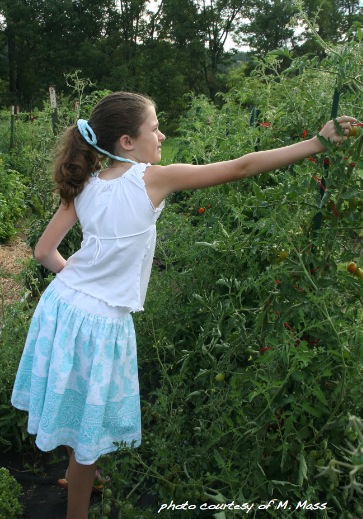
gardening with kidsWe welcome pediatrician Dr. Marion Mass to talk about starting a garden from a piece of suburban lawn. — Drs. Kardos and Lai

A few years back, my family was getting ready for my parents to come for dinner and I was peeling the skins off the roasted beets we had grown for my mother.  One of her favorites…but not mine.  My five-year-old Brian had picked the beets and was eager to try them. As Brian brought a sliver of beet up to his mouth I braced myself for a “ yucky face”. Instead, I was shocked to see him gobble the beets up.  He loved them.  To this day, beets are one of his favorite veggies.

Hands down, the best activity I have ever done with my family is planting and nurturing an organic garden for 11 years.  Along the path to growing delectable vegetables, we have discovered together gardening’s health, intellectual and social benefits.

Actively tied to the process of supplying their own food, gardening kids will naturally want to eat more and more produce. Kids develop a sense of pride (truly, a basketful of beans, lettuce and cucumbers is so attractive) and eventually they develop a positive association with the outdoors and vegetables.  In addition to eating more quantity, what your kids eat will be healthier than store bought veggies.  Produce closer to harvest contains more nutrients and you don’t get closer than your own yard to table.   If you garden organically, you will also avoid potentially harmful chemicals.  Lastly, there is a sense of relaxation upon stepping into a garden.  It is a balm for anxiety, for depression, for anger; in short, one of the best adjuvants to mental health therapy that I know.

If you want to harvest a crop next year, and you live in a cold weather area of the northern hemisphere, NOW is the best time to start.  The most cumbersome task of starting a garden is to dig up the sod (existing lawn), but a few tricks in the fall can prevent this disc-slipping chore.

  • Chose a spot in your yard that gets at least 6 and preferably 8 hours of sunlight a day.
  • If possible, stay away from edges, tree lines and spots where large garden parasites (such as deer, rabbit and groundhogs) lurk.
  • If you live next to a pesticide happy neighbor, you will want to locate your garden away from a spray zone and will want to think about runoff.  A helpful site to determine runoff capabilities of specific pesticides is: http://www.pw.ucr.edu/
  • Remember you may need to water your organic garden bed once in awhile, so keep it close to a water source (or at least someplace to which you don’t mind lugging a hose).
  • Start small:  a 3 x 10 foot plot can grow a good bit if you plan well.  Lay out a 12 layer thick plot of newspaper over the grass where you want your garden to grow and dump 4 inches of composted manure, manure and hummus mix or mushroom soil over top of the newspaper.  You can purchase in bulk from a garden center (I would do 2 cubic yards for a 3 x 10 spot) or in bags (about 15 40 lb bags).

That’s it.  Now go away and leave the garden alone until spring. During the fall and winter, the grass will die and the newspaper will rot.  Both will become a source of composted nutrients for your garden veggies. While you hibernate this winter, start your wheels turning and think about what crops you will grow. Buy a few packs of discounted seeds now; they will still germinate next year.

When the ground is ready in the spring, rent a tiller or get a sturdy pitchfork (trust me, the tiller is SO much easier!!) and turn over the soil mixing the composted manure, rotted newspaper and dead sod into the rocky soil we have around here.  The result will be a much richer garden soil that your vegetables will love.

What are you waiting for??  Get cracking now and start your produce garden.  Hopefully, by next spring your kids will be eating and enjoying organic beets that they grew !!!!


Marion Mass MD, FAAP

©2014 Two Peds in a Pod®

veggies
In practice for 17 years, Marion Mass MD, FAAP graduated from Penn State and Duke University Medical School. She completed  her pediatric residency at Northwestern University’s Children’s Memorial Hospital in Chicago. Currently Dr. Mass works at Jellinek Pediatrics in Doylestown, PA and serves on the Wellness Council of the Central Bucks School District, PA.  Produce from her kids’ garden garnishes the plates of many local families as well as the plates of the restaurant Puck. All garden profits benefit Relay for Life.  When she is not in her home garden, you can find her also tending to her son’s middle school garden. 
 
Share

When a peer dies: How to help your grieving teen

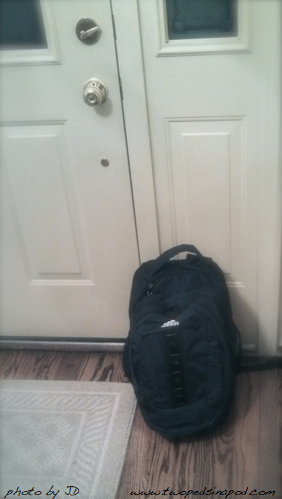
lonely backpackThree of my son’s high school classmates died in a tragic car accident just before school started this year. As parents, many of us may have lost someone close to us, and we know from our experience that over time, the acute pain of loss decreases as we ultimately derive strength and joy from our memories of our loved one instead of experiencing only sadness and pain over their loss. Our hearts ache watching our kids experience death first hand, often for the first time. But teens need time to experience this transition for themselves. Telling them “it will get better” will not help them.

If you are parents of a grieving teen who has lost a friend or classmate, following are some things that you can do to help:

Offer to be available, to listen, or to find someone outside your family for your teen to talk to if he wants. Do not insist that your teen talks about his feelings.
Refrain from lecturing– it does not help your teen at this time to hear things like “THAT’S why we won’t let you drive with young drivers.” She’s already figuring this out for herself.
Allow her to talk or gather with friends during the daytime.
Go back to basics: make sure your teen eats, drinks and sleeps. Enforce bedtime. Turn off phones and computers by a bedtime that allows your teen to get at least 8-9 hours of sleep. Do not allow your teen to text late into the night or to continue talking to friends late into the night, even if this means insisting that YOU take his phone for the evening. Be cautious of sleepovers, which only cause sleep deprivation, leading to exhaustion and more difficulty handling strong emotions.
Offer to go for a walk with your teen. Exercise is helpful and encourages dialogue.
Allow your teen to grieve by attend viewings and funerals. However, do not mandate that she goes. Giving her an idea of what to expect (e.g., there may be an open casket, here are some things you can say to the family) may help ease any discomfort. Offer to go with your teen, but again, don’t insist on going.
Help your teen to do something constructive to help other survivors. Send a condolence card to the deceased friend’s parents that includes an anecdote of how their teen helped your teen, or of how his deceased friend encouraged, made him laugh, or inspired him. Suggest that your teen cook a meal for the grieving family, mow their lawn, run some errand, or to babysit a younger sibling of the deceased.
Utilize community resources. School guidance counselors provide a wealth of information and support.

Your teen may experience intermittent, intense sadness even months or years after a tragedy, but as time goes by more time should pass between feelings of sadness. Kids who lose close friends learn, over time, to live with their grief. Continue to acknowledge your teen’s feelings of loss and continue to be available for your teen. Initial depression usually fades into sadness in a month’s time.

It is normal for the death of a classmate to trigger, for the first time, your teen’s contemplation of his own mortality. It is normal for him to express fears of his own death.

Normal grief behaviors include:
• Crying
• Talking about their loss
• Wanting to talk to other friends
• Spending more time with friends
• Some might want to be alone with their grief.
• Some kids might want to busy themselves with sports, reading, etc, in order to distract themselves from their grief.
• Temporary altered appetite and difficulty sleeping.
• Temporary difficulty with concentrating on schoolwork.

Abnormal grief behaviors:
• Inability to eat or sleep
• Gaining or losing more than a couple of pounds
• Inability to stop crying
• Refusing to attend school
• Failing classes
• Using alcohol or other drugs to cope with sadness
• Withdrawal from things your teen used to take pleasure in such as sports, hobbies, music, friends, or family.
• Preoccupation with death
• Suicidal thoughts, wishes, or plans

If you see any of these abnormal signs, or you are concerned about how your teen is coping, consult with your pediatrician or a psychologist. For more signs of clinical depression in children, please see our post on child and teenage depression. Also know that the National Suicide Prevention Lifeline is 800-273-8255.

Julie Kardos, MD and Naline Lai, MD
©2014 Two Peds in a Pod®

Share

Flu vaccines: what you need to know for the 2014-2015 flu season

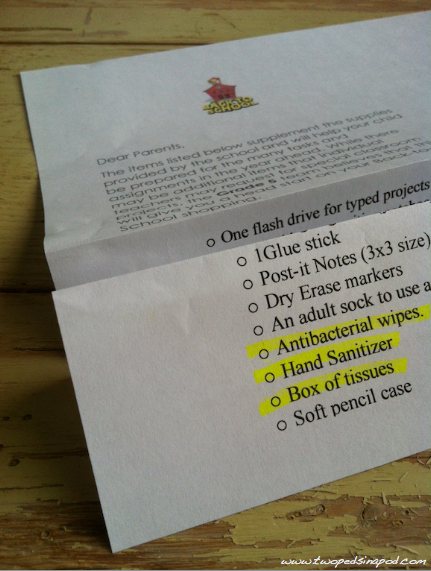
school supply listWe gave our kids their back-to-school haircuts, donated their pants that fit like floods, and bought them new folders and notebooks. As shown on our back-to-school supply list photo, back-to-school also means the start of hand sanitizer and tissue season. Yes, it’s time for your child’s yearly flu vaccine. Even if you gave your child a flu vaccine last year, she’ll need another one this season. Not only does the flu or influenza virus (not to be confused with “the stomach bug/stomach flu”) usually come back every season in a slightly different form, but your child’s immunity has waned over the past year. With every flu season, the Centers for Disease Control comes out with new recommendations. Here is a snap shot:

Who needs the flu vaccine?
All children aged 6 months or older, with a few exceptions discussed below, should receive a flu vaccine every year.

How many doses of flu vaccine does my child need this year?

If your child is nine years or older, your child only needs one dose this season.

If your child is younger than nine, your child only needs one dose this season UNLESS:

  • This year will be the first time your child receives the flu vaccine. Then, she will need a second (booster) dose at least 4 weeks later.
  • Your child skipped last year’s flu vaccine. Then, she may need a booster dose this year. Check with your child’s doctor.

Which type of flu vaccine is better, a shot or the mist (squirt in the nose)?

This year, the Centers for Disease Control suggests,  if available, to give children aged 2-8 years the squirt in the nose. However, if the mist is unavailable, do not delay the vaccine. Give your child a flu shot instead. For older kids, the data is not as clear cut as to which vaccine works better to prevent the flu. Give your child either form of the vaccine.

Who cannot receive the mist?
Kids younger than 2 years; kids with certain medical conditions such as ongoing asthma (wheezing in the past year, or 2 through 4 years of age with asthma) and diabetes; kids undergoing  aspirin therapy; kids who have had influenza antiviral therapy in the last 48 hours; kids with immune deficiencies; and kids around immunosupressed people who require a protective environment (e.g. around people hospitalized in a bone marrow transplant unit), should not receive the mist. These kids should receive the injectable form of flu vaccine. Your child’s doctor can provide the complete list of contraindications.

Who should NOT receive any flu vaccine?
Babies younger than 6 months old and children with severe egg allergy (anaphylaxis) should not receive the flu vaccine.

Our office is slotted to receive our annual supply of flu vaccine in the next few weeks. Our own families have learned to expect the annual flu vaccine with the start of each school year. Now we just need to convince them that they needed the haircuts.

Julie Kardos, MD and Naline Lai, MD
©2014 Two Peds in a Pod®

Share

On letting go and coming back

Friends make birthdays better

I have been musing ever since our hosting site told us they were switching blog platforms. In a blink of an eye, our blog was slated to disappear. The dynamic Two Peds in a Pod community would be plunged into silence. At first, disbelief gave away to intrigue. Was this a sign to change personal paths? As I started to think of all the things I could do with the time that I would have spent writing the blog, my to-do list grew and grew. I could hear my son’s closet, overflowing with outgrown clothing, crying out to be re-organized.

When I told friends of the opportunity to dissolve the blog, I heard time and time again “I think you should save it.” Even friends without children were aghast. When I told my own children that the blog was on the verge of imploding they looked at me blankly and said, “Why would you stop writing for Two Peds?”

Then I remembered the mom who read our article on croup seven times in one night. I remembered Dr. Kardos’s patient whose dad said our strep throat article  helped him decide not to cut his family’s vacation short. I thought of the many times parents thanked me  for posts which allayed their fears of fever.

The blog did eventually stop when the old hosting site went down. But as my friends and family reminded me, the goal of the blog is to positively impact children globally by guiding their caretakers; and by the time the blog went down, we had reached nearly three million views. Two Peds in a Pod is “Practical pediatrics for parents on the go.” After more thought, I decided it would be difficult to accomplish this goal from the back of one of my kid’s closets.

So today, I am happy to post that the stop was just a temporary suspension. I credit my friends and family for reminding me of the original goal of the blog. In particular, thanks to Dr. Kardos. While I was mulling, Dr. Kardos was busy staying up past midnight valiantly importing posts from the rapidly fading old site.

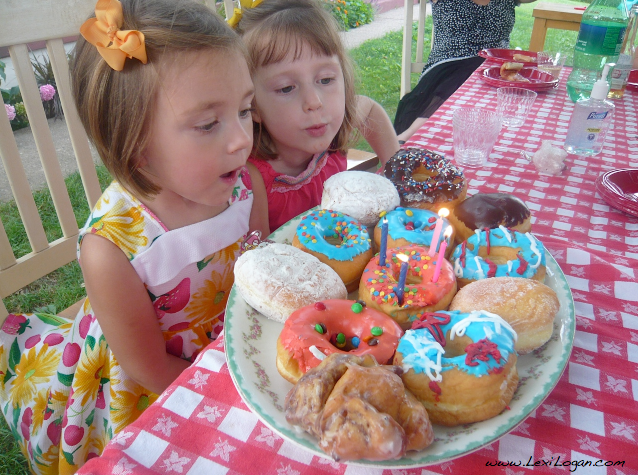
We’re back, albeit a little rough around the edges as we construct the new site. And it’s just in time for our 5th birthday!

Thanks, my friend, Dr. Kardos. I wouldn’t be able to blow those candles out without you.

Happy 5th Birthday Two Peds in a Pod- may there be many more.

Dr. Lai

Naline Lai, MD and Julie Kardos, MD
©2014 Two Peds in a Pod®


Share

Father’s Day 2014: real words from real dads

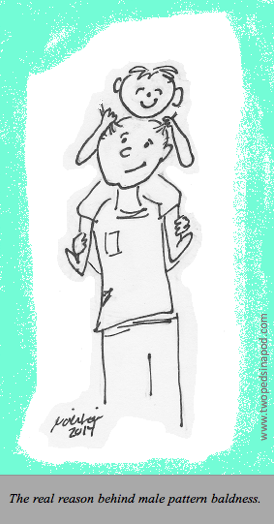
father's day cartoonThis year we asked our dad readers to help us write our Father’s Day post. They completed this thought: “Before I became a dad, I never thought I’d…”

…Learn to curl hair for cheerleading competitions


…BE RESPONSIBLE


…Become a stay at home dad AND love it so much after everything I’ve been through!!


…Learn all of the names of Thomas The Tank Engine’s friends and the many songs associated with them.


…Have a toys r us in my house.


…Go food shopping at midnight.


…Make so many pancakes on Sunday mornings.


…Volunteer in a dunk tank and have pie thrown at me.

One of our readers summed up his thoughts on becoming a dad:

Since I’ve become a father, nearly seven years and two beautiful daughters later, my life has become a series of jobs that I never thought I would have to tackle. These include:

Beautician: I never thought in a million years that I would be learning how to do pony tails, side pony’s, braids (not that I can braid yet), and painting little finger and toe nails.

Disney Princess Aficionado: At one point in my life I thought I was cool because I knew a lot about beer, how it was made, where it was from, where the best IPA’s were being poured. Now I am “cool” because I know where Mulan lived, and because I know the story about Ariel falling in love with Prince Eric.

Doctor: I am well versed here and can cover almost everything from the simple band-aid application and boo-boo kissing, to the complex answering of why daddy is different and why he gets to go to the bathroom standing up.

Cheerleader: Both of my daughters enjoy participating in sports. It’s been such a great experience to cheer them both on from the side line. I enjoy watching them grow with the sport and gain confidence game after game.

Becoming a father was one of the best choices I have made with my life. I love being a dad, and I look forward to the future dad challenges, good and bad, and beingthe best mentor I can be.

Thank you to our readers for contributing to this post.

Happy Father’s Day!

Julie Kardos, MD and Naline Lai, MD

©2014 Two Peds in a Pod®

Share
image_pdfimage_print