Marijuana: Hashing out Fact from Fiction

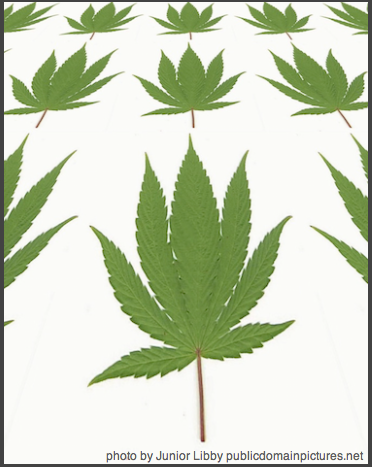
marijuanaWith some states now legalizing pot for recreational use, drug education for kids has never been more critical. The American Academy of Pediatrics released a policy statement this past year opposing legalization because of its potential harm to children, teens, and young adults. We welcome Dr. Shannon Murphy who dispels myths surrounding marijuana. – Drs. Kardos and Lai

Why is pot so different today than 30 years ago? Pot is 5 times stronger than the 1980’s.

THC, the psychoactive ingredient in the plant, previously hovered around 3%. Now the average THC level is closer to 16%. As of this year, some plants have been tested with levels reaching between 20-30% THC. There is a new form of pot known as hash oil that is almost pure THC with levels around 90%

I heard pot was not addictive. Is that true? Pot is addictive.

In fact, the younger you are when you start using pot, the more likely you are to get addicted.10% of adults and 17% of young adults who try pot will become addicted to it. If one chooses to use on a daily or near daily basis, the addiction rate climbs to 25-50%.

How long does pot stay in your body? Pot is different from many other drugs because it can stay in your body for days after use.

In addition, the more you use pot, the longer it stays in your body. For regular users, it can remain in your body for several weeks. As a result, there is a sub acute impairment that persists with many users once the initial “high” has worn off.

When used, pot is distributed throughout one’s body. These areas include the brain and spinal cord, heart, lungs, muscles, and fatty tissues. In fact, it is stored in fatty tissue. If one is pregnant and one uses pot, not only will the mom be affected by pot, but so will her unborn child. It also concentrates in breast milk. People who use marijuana should NOT breastfeed their baby.

Isn’t pot safe to use? I heard it was safer than other drugs. Pot is harmful to the brain, heart, and lungs.

Regular use of marijuana, particularly at a young age, can create biochemical and structural changes to the brain. Some of these changes are not reversible. Moreover, the effects are dose dependent. The more you use, the more likely to affect change.

Marijuana causes cognitive impairment. It harms learning, memory, attention, and critical decision-making. A recent study showed that regular use of marijuana at a young age causes a permanent decrease in IQ of up to 8 points.

Marijuana is linked to the development of mental health issues including anxiety, depression, and psychosis. Research has shown that regular daily to weekend use of pot increased one’s risk of psychosis 3-5 times that of the general population. Sadly, we are seeing this played out in states like Colorado where people have died from psychosis related events.

The American Lung Association has reported that pot has more cancer causing agents than tobacco smoke. Like tobacco, it causes chronic cough, wheeze, phlegm production, and frequent infections.

Marijuana has cardiac effects as well. Temporal links have been found between using pot and arrhythmias, stroke, and other major cardiac events.

What are “edibles”?

In 2014, with the legalization of pot in Colorado, the marijuana industry began selling food products with infused THC. These products, which include candy, cereal, pop tarts, and sodas, are indistinguishable from regular food.

In fact, exposure of kids to marijuana increased by 200% over this last year because of these products. These accidental poisonings were secondary to exposure of kids to edibles typically in their home. Many kids ended up in the ER, some with serious complications like seizures and difficulty breathing.

What does “dabbing” mean?

Dabbing is inhaling vapors from heating a concentrated form of pot. Dabs, which are also known as BHO (butane hash oil), “budder”, “honeycomb”, or “earwax” contain much higher concentrates of THC, usually upwards of 90%. Dabs are much stronger than a single joint and the high is administered all at once.

How does smoking pot affect driving?

Driving high is dangerous to the driver, others in the vehicle, and people sharing the road. In fact, marijuana is the number one illicit drug found in the blood stream of drivers involved in fatal car accidents.

Pot impairs skills needed to drive safely. It negatively impacts alertness, coordination, and reaction time.

Pot and alcohol don’t mix. Using both drugs at the same time has been shown to increase the THC level in one’s blood stream. This makes for a deadly combination on the road.

Is it okay to use pot while pregnant?

It is NOT okay to use pot while pregnant. As mom gets high and feels the effects of the drug, so does the unborn child.

Studies have shown that children exposed to marijuana in utero have lower scores on visual and motor coordination as well as lower scores on visual analysis and problem solving. In utero exposure is also associated with decreased attention span and behavioral problems. Finally, studies have shown that teens are more likely to be marijuana users if their mom used while pregnant.

What if my teen says that since pot isn’t a big deal anymore and many of their friends are using it?

Now more than ever, it is incredibly important to speak clearly regarding the risks of pot use. Many teens see legal as meaning safe, so we are entering a critical time when it comes to our kids and marijuana use. Here are a few suggestions when it comes to talking to your kids about drug use in general.

Talk early and often. This should not be a one-time conversation.

Make sure your child knows your rules on drug use and set clear consequences if these rules are broken. Role-play real life situations so kids can know how to respond when confronted with scenarios that may involve drugs.Base education about pot and other drugs on facts.

Check out the National Institute of Drug Abuse website for up to date information. To learn more visit www.learnaboutsam.org .

Shannon Murphy, MD, FAAP

Dr. Murphy is a board certified general pediatrician who currently serves on the American Academy of Pediatrics Practice Advisory Committee for Adolescent Substance Use. She heads a non-profit coalition, SAM Alabama, whose goal is to educate parents and kids on the public health issues and safety concerns associated with marijuana.

2015 Two Peds in a Pod®

Share

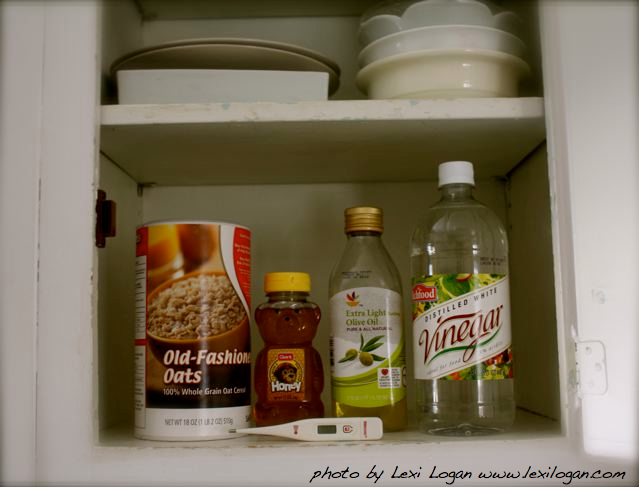
The natural medicine cabinet in your kitchen

home remedies

You may not think of your kitchen as a convenient pharmacy, but parents used common kitchen items successfully to treat various maladies long before CVS and Walgreens were invented. 

Crisco– May not be healthy to eat, but smeared on skin, it’s an old fashioned but effective treatment for eczema or dry skin.

Oatmeal– Crush and put into the end of a hosiery sock. Float the sock in the bathtub for a natural way to moisturize skin.

Olive Oil

  • Put a couple drops into the ear three times a day to loosen ear wax (don’t put in if your child has a hole in their ear drum eg. myringotomy tubes).
  • For cradle cap, rub into your baby’s scalp and use your fingernail or a soft brush to loosen the greasy flakes.
  • Also use to kill lice.  Work the oil through the scalp, tuck hair into a shower cap and wash off in the morning. Although studies are unclear on how well this method works on lice, it certainly is worth a try.

White vinegar-If swimmer’s ear is suspected, mix rubbing alcohol one to one with vinegar and drop a couple drops in the ear to stop the swimmer’s ear from progressing (don’t put in if your child has a hole in their ear drum eg. myringotomy tubes).

Ginger– Boil ginger to make a tea to take the edge off nausea

Honey– Shown to soothe coughs-give a teaspoon of dark (buckwheat, for example) honey three times a day. However, NEVER give honey to a child who is younger than one year of age because it may cause infant botulism

Lemon– An old singer’s trick—combine lemon juice with honey in tea to alleviate hoarseness

Salt– Mixed into lukewarm water, gargling with salt water will help ease sore throat pain

Baking soda:

  • Mix with water to make a paste to help soothe itchy skin, from maladies such as poison ivy .
  • Can also be mixed with water to make toothpaste if you run out of your usual minty whitener.
  • Another use of baking soda: one part baking soda with 4 parts corn starch makes a natural underarm deodorant.

Sugar: Mix sugar into weak tea (or your ginger tea from above) and give small amounts frequently to soothe your older child’s nausea and help rehydrate after vomiting.

Ice: Ice not only decreases swelling when applied to injuries, it can also be used to combat the itch of bug bites and poison ivy.

Kitchen sink: This is an excellent place to wash any cut, scrape, or bleeding wound under running water with soap. Immediately after a burn, rinse the burned skin under cold water for several minutes to limit the extent of the heat injury. Contrary to popular lore, DO NOT put butter on a burn. You may, however, put butter on your toast. In small amounts.


Naline Lai, MD and Julie Kardos, MD

©2015 Two Peds in a Pod®, revised from 2011

Share

The surprising first signs of dehydration

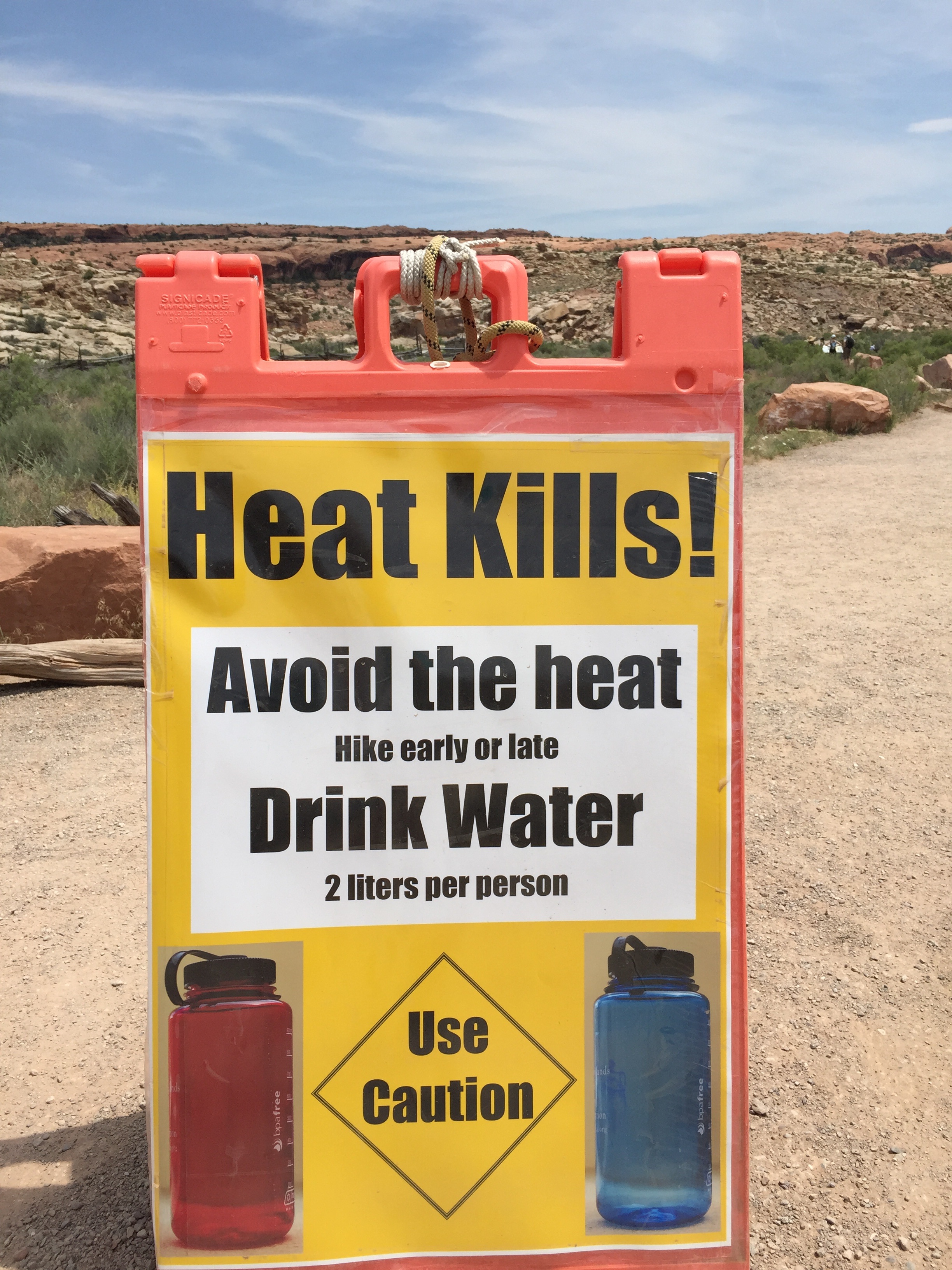
dehydrationIt’s 100 degrees Fahrenheit outside. We’re hiking around the Southern Utah desert and one of my kids vomits once. Nope, it’s not the stomach bug; that was last vacation. This time one of my kids vomited because of dehydration. Strangely, humans don’t always complain of thirst once they start becoming parched, and my kid was no exception.

Right now many kids are at camp running about in high temperatures and soon enough, kids will be called back to school for sport practices. Before they go off, let them know that the first signs of dehydration are usually a vague headache and nausea. Warn them not to depend solely on their sense of thirst to signal them to hydrate. If they “just don’t feel right,” take a break. Other signs of heat exhaustion and stroke are outlined here http://www.cdc.gov/extremeheat/warning.html

For kids who play only for an hour or so, water is a good choice for hydration. For the more competitive players who churn up a sweat or participate in vigorous activity, electrolyte replenishers such as Gatorade® and Powerade® become important, because after 20-30 minutes of sweating, a body can lose salt and sugar as well as water. In fact, my sister, an Emergency Medicine doctor, tells the story of a young woman who played ultimate frisbee all day, and lost a large amount of salt through sweating. Because she also drank large amounts of water, she “diluted” the salt that was still in her blood and had a seizure.

If your child plays an early morning sport, start the hydration process the night before so that they don’t wake up already behind on fluids. If your child goes more than six to eight hours without urinating, she needs to drink more.

Avoid caffeine which is found in some sodas, iced tea and many of the energy drinks. Caffeine dehydrates. The American Academy of Pediatrics recommends that children and teens never drink “energy drinks” because of the adverse effects of the stimulants they all contain. Some of the newer highly touted rehydration fluids of the adult world such as coconut water or chocolate milk are fine.

Keep in mind it’s not only sports that can dehydrate kids. Years ago I knew of a tuba player who went to the emergency room after marching band practice on a hot August day.

Next vacation we’ll definitely buy some water bottles to make sure we don’t get dehydrated. Not having enough water can be so dangerous! We’ll also take along paper towels and cleaning fluid too.

Naline Lai, MD and Julie Kardos, MD

©2015 Two Peds in a Pod®

Share

Soothe the itch of poison ivy

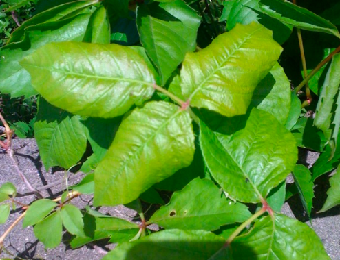
poisonivyRecently we’ve had a parade of itchy children troop through our office.  The culprit: poison ivy.


Myth buster: Fortunately, poison ivy is NOT contagious. You can catch poison ivy ONLY from the plant, not from another person.

Also, contrary to popular belief, you can not spread poison ivy on yourself through scratching.  However, where  the poison (oil) has touched  your skin, your skin can show a delayed reaction- sometimes up to two weeks later.  Different  areas of skin can react at different times, thus giving the illusion of a spreading rash.

Some home remedies for the itch :

  • Hopping into the shower and rinsing off within fifteen minutes of exposure can curtail the reaction.  Warning, a bath immediately after exposure may cause the oils to simply swirl around the bathtub and touch new places on your child.
  • Hydrocortisone 1%.  This is a mild topical steroid which decreases inflammation.  We suggest the ointment- more staying power and unlike the cream will not sting on open areas, use up to four times a day
  • Calamine lotion – a.k.a. the pink stuff. This is an active ingredient in many of the combination creams.  Apply as many times as you like.
  • Diphenhydramine (brand name Benadryl)- take orally up to every six hours. If this makes your child too sleepy, once a day Cetirizine (brand name Zyrtec) also has very good anti itch properties.
  • Oatmeal baths – Crush oatmeal, place in old hosiery, tie it off and float in the bathtub- this will prevent oat meal from clogging up your bath tub. Alternatively buy the commercial ones (e.g. Aveeno)
  • Do not use alcohol or bleach– these items will irritate the rash more than help

The biggest worry with poison ivy rashes is not the itch, but the chance of infection.  With each scratch, your child is possibly introducing  infection into an open wound.  Unfortunately, it is sometimes difficult to tell the difference between an allergic reaction to poison ivy and an infection.  Both are red, both can be warm, both can be swollen.  However, infections cause pain – if there is pain associated with a poison ivy rash, think infection.  Allergic reactions cause itchiness– if there is itchiness associated with a rash, think allergic reaction.  Because it usually takes time for an infection to “settle in,” an infection will not occur immediately after an exposure.  Infection usually occurs on the 2nd or 3rd days.  If you have any concerns take your child to her doctor.

Generally, any poison ivy rash which is in the area of the eye or genitals (difficult to apply topical remedies), appears infected, or is just plain making your child miserable needs medical attention.

When all else fails, comfort yourself with this statistic: up to 85% of people are allergic to poison ivy.  If misery loves company, your child certainly has company.

Naline Lai, MD and Julie Kardos, MD

©2015 Two Peds in a Pod®, updated from 2012


Share

Deception in Packaging: Navigating the Nutrition Information Highway

how to read nutrition labels

Today, we welcome Health Coach Mary McDonald’s insight on how to read food labels for nutritional content…

Have you ever stood in the cereal aisle staring at the rows and rows of choices and feeling like a deer in headlights? You know that you want to select a cereal that is healthy for your family, but you are not sure which one to choose. So, you start reading the nutrition claims on the front of the box. “Multi-grain. Low fat. Good source of vitamins and minerals. No high fructose corn syrup.” You select a cereal that you think is a good option, only to find out later that the first two ingredients are sugar and grains that are void of nutrition. Navigating the nutrition information highway can be extremely complex, even for an educated person.

One of the reasons for the confusion is the mass influx of marketing from major food manufacturers. According to the Federal Trade Commission, the 44 major food and beverage marketers spent $2.1 billion marketing food to youth in 2006. A second report in 2012 compared data from 2006 to 2009 and found that total spending on food marketing to youth dropped 19.5% to $1.79 billion. But, spending on new media, such as online and viral marketing, increased 50%. The report found that the overall picture of how marketers reach children did not change significantly.

With the major food manufacturers sending constant messaging about the health benefits of their products, a consumer can get very confused about what is healthy to eat. Couple this with the fact that most formal nutrition education ends when a person graduates from high school. Therefore, the major food manufacturer, whose purpose is to sell food, has become the nutrition education for our society. This creates a perfect storm and makes it really difficult to know what is healthy to purchase and consume. So, how we fix this problem? Here are a few quick tips that can help you navigate the nutrition hype:

  1. Don’t look at the front of the packaging to determine if a product is nutritionally sound. Remember, the claims on the packaging are designed to sell more products. In our fast-paced society, it’s easy to fall into this trap, but ignore the marketing because there is more reliable information in the ingredient list. Which brings me to my next point.
  2. Read the ingredient list. You may be surprised if you open your pantry and start to read the labels on the food sitting on your shelves. Many products contain ingredients that are difficult to pronounce, let alone know what they are. What is more concerning is the fact that some ingredients are deceptive in the way that they are represented. For example, enriched wheat flour sounds like a nutritious ingredient, but in reality it is a refined grain that is very similar to white flour. Enriched wheat flour is milled to strip the bran and germ and then some vitamins and minerals are added back in. When reading your labels, don’t be fooled into thinking that you are eating something packed with nutrition when you see enriched wheat flour. If you are looking for a nutritious grain, then look for labels that say whole-wheat flour, and make sure that it is one of the first ingredients on the label.
  3. Five is the magic number. Michael Pollan, the author of Omnivore’s Dilemma, suggests that you should not eat anything with more than five ingredients, or with ingredients you don’t recognize or can’t pronounce. In my opinion, this is singularly one of the best pieces of advice. When you use this rule of thumb, it will naturally lead you towards healthier foods with less additives and preservatives. For example, compare labels on snack bars. According to Eat This Not That, the “coating” on Special K Double Chocolate Protein Meal Bar is made with trans fats, soy, and sugar with a little cocoa processed with alkali, artificial flavor, polysorbate 60 and other artificial ingredients. And that’s just the outside! Then there are the “Chocolatey Chips,” which is market slang for “not real chocolate.” Instead they are just more sugar, soy, trans fats, and artificial flavors mixed with a little cocoa that’s been “alkalized,” a type of processing that destroys up to 75 percent of the healthy nutrients in the chocolate. Compare that snack bar to Clif Kit’s Organic Peanut Butter bar that has only four (yes, 4) ingredients: Organic Dates, Organic Peanuts, Organic Almonds, Sea Salt. I recognize all of those ingredients!
  4. Positive nutrition messaging. One of the best ways to achieve success in any goal is to surround yourself with positive messaging. I have connected with a variety of websites that provide great nutrition education. Eatright.org, a division of the Academy of Nutrition and Dietetics, and Nutritionaction.com, a division of Center for Science in the Public Interest, are two credible sources. Search for a site that fits your needs and sign up for free newsletters. The information will come to you and you can choose when and what to read. It’s that simple.
  5. Cook more at home. Yes, cooking at home can be one of the most effective ways to navigate the nutrition information highway. I realize that this is not always easy considering work, school, and sports schedules. But, it is important to make time for the things that matter most. What can be more important than the health of you and your family?Just like a major roadway, navigating the nutrition highway is complex. Fortunately, we live in a time when there are a variety of ways to receive information.

Mary McDonald, MA

©2015 Two Peds in a Pod®

Mary McDonald has a Masters of Education from Arcadia University and completed her health coach certification from Institute of Integrative Nutrition. She is a high school teacher, a mom of four daughters, and an advocate for healthy food choices. For more information on her health coaching services, please contact her at nutrition101withmary@gmail.com or visit her website at nutrition101withmary.com.

If you live in Bucks County, PA, the Doylestown Food Co-op will be hosting a screening of the documentary, Fed Up, hosted by Katie Couric. This is an eye-opening account of how we view the food that we consume. The screening takes place Thursday 3/26/15 at 7 pm at the County Theatre in Doylestown, PA.

Share

Coming out: How do I respond if my teen comes out as Lesbian, Gay, Bisexual or Transgender?

rainbow flagToday our guest blogger, pediatrician Ilana Sherer, MD, Director of Primary Care for the Child and Adolescent Gender Center at University of California San Francisco, addresses how to respond supportively to your child if he or she comes out.

Drs. Kardos and Lai

When Jaime recently came out as gay, his mother initially felt fear: “When he told us that he was gay, we were afraid for him. We were afraid of what his life would be and we were afraid that he would not accomplish our dreams for him,” she said.

Contrast this response to Laura’s experience. Laura came out to her parents as lesbian when she was depressed and suicidal. Quickly recognizing the crisis, her parents responded by assuring Laura that they loved her no matter what, and got her into counseling with a local and Lesbian/Gay/Bisexual/Transgender (LGBT) conscious mental health professional. Her parents eventually joined the Board of Directors of their local Parents and Friends of Lesbians and Gays support group (PFLAG) and now Laura and her mom speak to other groups about their experiences.

How can parents support their child? Many parents react in loving ways from the moment their child comes out. However, if you’re reading this article, you may have already responded in a way that you regret. That’s okay, and it’s okay to feel sad, hopeless, depressed, blamed, embarrassed, ashamed, or guilty—most parents feel all of these things at one point or another in the process of acceptance. In fact, even parents who feel they are open and accepting to LGBT issues or parents who are LGBT parents may react negatively. However, it’s never too late to show your child that you support and love him or her unconditionally. Based on work done by the the Family Acceptance Project, here are some behaviors to engage in and to avoid with your children.

Ways to Support your Child:

1. Talk with your child about his LGBT identity, express affection, and support him even if you feel uncomfortable. Support his or her gender expression, clothing choices, and physical expression.

2. Connect your child with community resources geared toward adolescents. If you live near an urban area, there may be an LGBT community center nearby with youth programming. If not, there may be a school or community group available. Check the internet and newspaper listings. If you know any LGBT adults who are part of your community, consider asking them for resources.

3. Connect your family with resources, such as PFLAG (see below). Siblings may also need support.

4. Check in with your child about bullying in school. If he is being bullied, demand that the school address the perpetrators and create a safe educational environment for your child. Advocating for your child is a powerful sign of acceptance.

5. Require that all family members respect your LGBT child.

6. Welcome your child’s friends and partners into your home.

7. It is important for your child (and family) to identify healthy adult LGBT role models. If none are available in your community, point out LGBT people in the media who are leading successful lives. Thankfully, there are no shortage of visible “out” LGBT people in television, music, and movies, but if you need help identifying them, Wikipedia has an exhaustive list.

8. If your church or religion contains messages demeaning the worth of LGBT individuals or suggests that homosexuality can be reversed, consider finding a new worship community.

9. Monitor internet usage. Your child has likely already been on the internet. Hopefully, she found some great resources or has made friends with LGBT teenagers in other parts of the country. However, there is also a lot of misinformation. There are also pornography and social networking sites which can take advantage of your child. As always, keep track of the sites she visits and who she networks with online.

10. Let your child know that you believe he will have a happy future as an LGBT adult.

Unsupportive Behaviors to Avoid:

1. Hitting, slapping, or physically hurting your child.

2. Verbally harassing or name-calling.

3. Excluding your child from family activities.

4. Blocking access to LGBT friends, events, and resources.

5. Blaming your child when she is discriminated against because of her LGBT identity.

6. Tolerating bullying and harassment.

7. Pressuring your child to be more or less masculine or feminine in clothing choices and external appearance.

8. Telling your child that God will punish him because he is gay.

9. Telling your child (or acting as if) you are ashamed of him or that he will shame the family.

10. Making your child keep her LGBT identity a secret or blocking her from telling close family members and friends, or conversely, “outing her” (telling others about her identity) against her will or without permission.

Resources:

Parents and Friends of Lesbians and Gays (PFLAG) www.pflag.org

Gender Spectrum Education and Training www.genderspectrum.org

Gay, Lesbian, and Straight Education Network www.glsen.org

Trevor Project (crisis intervention and suicide hotline for LGBT youth) www.thetrevorproject.org. 1-866-4-U-TREVOR

Center Link (for a listing of LGBT Community Centers) www.lgbtcenters.org

The National Youth Advocacy Coalition www.nyacyouth.org

Listing of rural youth resources at www.nyacyouth.org/docs/ruralyouth/resources/index.php

Advocates for Youth www.advocatesforyouth.org

Gay and Lesbian Medical Association Provider’s Directory (for finding an LGBT-competent medical provider) www.glma.org

Ilana Sherer, MD

Dr. Ilana Sherer is the Director of General Pediatrics of the Child and Adolescent Gender Center at UCSF. She is a recipient of the Chancellors Award for LGBT leadership at UCSF and also of the American Academy of Pediatrics Dyson Child Advocacy Award.

©2015 Two Peds in a Pod®

Updated from the original 2011 post

Share

Measles outbreak: Would you recognize measles in your child?

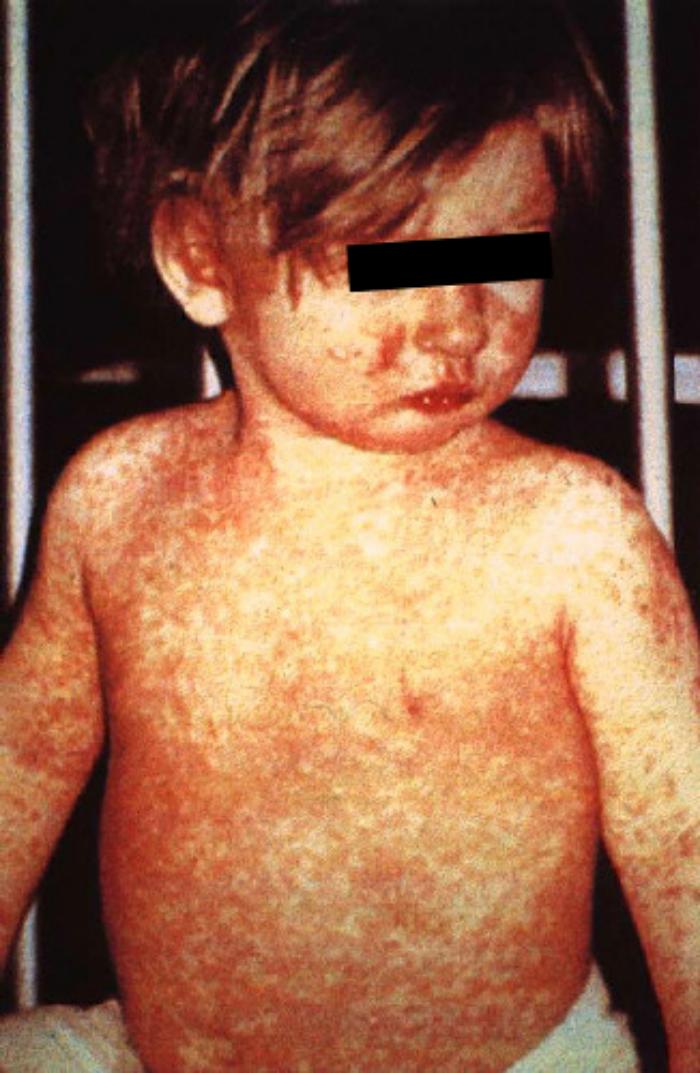
A typical measles rash, courtesy of the public health library, Centers for Disease Control and Prevention

Who knew when we first published this post in June 2014 that another measles outbreak would occur in the US. In light of the numerous measles cases that emerged out of the California Disneyland exposure, we re-publish signs of measles in children. Parents who have children who are not completely immunized against measles should be especially vigilant.

Measles typically starts out looking like almost every other respiratory virus— kids develop cough, runny nose, runny bloodshot eyes, fever, fatigue, and muscle aches.

Around the fourth day of illness, the fever spikes to 104 F or more and a red rash starts at the hairline and face and works its way down the body and out to arms and legs, as shown here at the Immunization Coalition site. Many kids also develop Koplik spots on the inside of the mouth: small, slightly raised, bluish-white spots on a red base 1-2 days before rash. Call your child’s doctor if you suspect that your child has measles. Parents should be most suspicious if their children have not received MMR vaccine or if their immunized child was exposed to a definite case of measles or visited an area with known measles.

In the US, one in 10 kids with measles will develop an ear infection and one in 20 will develop pneumonia. Roughly one in 1000 kids develop permanent brain damage, and up to two in 1000 who get measles die from measles complications. Kids under age 5 years are the most vulnerable to complications. These statistics are found here. For global stats on measles, please see this World Health Organization page.

There is no cure for measles and there no way to predict if your child will have a mild or severe case. Fortunately, one dose of the MMR (Measles, Mumps, Rubella) vaccine is 92-95% effective at preventing measles, and two doses are 97-99% effective at preventing measles. That’s the best we can do, and this protection rate works great when everyone is vaccinated. The American Academy of Pediatrics recommends giving the first dose of MMR vaccine at 12-15 months and the second dose at school entry, between 4-6 years of age.

If parents refuse the MMR vaccination for their children, then more people are left susceptible to measles. This leads to more people who can spread  the disease when it hits a community. Measles is one of the most contagious diseases known: 9 out of 10 unvaccinated people exposed to measles will become sick, and infected people are contagious even before symptoms appear. One of the reasons behind the increase in measles cases is the increase in unvaccinated children. One patient of Dr. Kardos’s was a four-year-old boy who was behind on his vaccines and hospitalized for measles pneumonia. Before he was diagnosed he exposed an entire Emergency Department to measles.

In our global world, another reason for the spike in measles cases is the increase in travel between countries. In fact,  young children traveling internationally should now get the MMR vaccine outside of the routine schedule. If you plan on traveling,  check here to see if you need to give your child the MMR vaccine on an early schedule.

With increased vigilance and vaccination, hopefully measles will once again become a disease few doctors have ever encountered. After all, vaccines did eradicate small pox. The last case of smallpox in the United States was in 1949, and the last case in the world was in 1977. In the meantime, you’ll know how to “spot” a case of measles too.

Julie Kardos, MD and Naline Lai, MD
©2014 Two Peds in a Pod®, updated February 2015

Share

Dry, chapped hands: home remedies

dried chapped hands
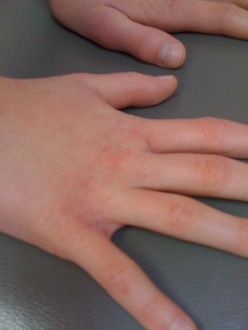
Raw hands- recognize your kid?

I wash my hands about sixty times a day, maybe more. This frequent washing, in combination with cold Pennsylvania air, leads to chapped hands. Here are the hands of a patient. Do your children’s hands look like these?

To prevent dry hands:

• Don’t stop washing your hands, but do use a moisturizer afterwards.

• Whenever possible, use water and soap rather than hand sanitizers. Hand sanitizers are at minimum 60% alcohol- very drying. Be sure to fully dry hands after washing.

• Wear gloves or mittens as much as possible outside even if the temperature is above freezing. Remember chemistry class- cold air holds less moisture than warm air and therefore is unkind to skin. Gloves will prevent some moisture loss.

• Before exposure to any possible irritants such as the chlorine in a swimming pool, protect the hands by layering heavy lotion (Eucerin cream) or petroleum based product (i.e. Vaseline or Aquaphor) over the skin.

To rescue dry hands:

• Prior to bedtime, smother hands in 1% hydrocortisone ointment. Avoid the cream formulation. Creams tend to sting if there are any open cracks. Take old socks, cut out thumb holes and have your child sleep at night with the sock on his hands. Repeat nightly for up to a week. Alternatively, for mildly chapped hands, use a petroleum oil based product such as Vaseline or Aquaphor in place of the hydrocortisone.

• If your child has underlying eczema, prevent your child from scratching his hands. An antihistamine such as diphenhydramine (Benadryl) or cetirizine (Zyrtec) will take the edge off the itch. Keep his nails trimmed to avoid further damage from scratching.

• For extremely raw hands, your child’s doctor may prescribe a stronger cream and if there are signs of a bacterial skin infection, your child’s doctor may prescribe an antibiotic.

Happy moisturizing. Remember how much fun it was to smear glue on your hands and then peel off the dried glue? It’s not so fun when your skin really is peeling.

Naline Lai, MD and Julie Kardos, MD
© 2009, 2015 Two Peds in a Pod®


Share

How to tell the difference between the Flu and the Common Cold

flu symptoms
“Now what kind of soup did the doctor recommend? Was that tomato soup? Mushroom barley?”

Now that we are in the middle of the 2015 flu season, we have parents asking us every day how they can tell if their child has the flu or just a common cold. Here’s how:

Colds, even really yucky ones, start out gradually. Think back to your last cold: first your throat felt scratchy or sore, then the next day your nose got stuffy or then started running profusely, then you developed a cough. Sometimes during a cold you get a fever for a few days. Sometimes you get hoarse and lose your voice. Kids are the same way. In addition, they often feel tired because of interrupted sleep from coughing or nasal congestion. This tiredness leads to some extra crankiness.

Usually kids still feel well enough to play and attend school with colds, as long as their temperatures stay below 101°F and they are well hydrated and breathing without any difficulty. The average length of a cold is 7-10 days although sometimes it takes two weeks or more for all coughing and nasal congestion to resolve.

Important news flash about mucus: the mucus from a cold can be thick, thin, clear, yellow, green, or white, and can change from one to the other, all in the same cold. The color of mucus does NOT tell you if your child needs an antibiotic and will not help you differentiate between a cold and the flu.

The flu, caused by influenza virus, comes on suddenly and makes you feel as if you’ve been hit by a truck. Flu always causes fever of 101°F or higher and some respiratory symptoms such as runny nose, cough, or sore throat (many times, all three). Children, more often than adults, sometimes will vomit and have diarrhea along with their respiratory symptoms. Usually the flu causes body aches, headaches, and often the sensation of your eyes burning. The fever usually lasts 5-7 days. All symptoms come on at once; there is nothing gradual about coming down with the flu.

So, if your child has a runny nose and cough, but is drinking well, playing well, sleeping well and does not have a fever and the symptoms have been around for a few days, the illness is unlikely to “turn into the flu.”

Remember: colds = gradual and annoying. Flu = sudden and miserable.

Fortunately, a vaccine against the flu can prevent the misery of the flu. In addition, vaccines against influenza save lives by preventing flu-related complications that can be fatal such as pneumonia, encephalitis (brain infection), and severe dehydration.  Even in a year, like this one, when the flu vaccine is not well matched to the currently circulating strains, its still worth getting the vaccine. 

Be sure to read our guest article on ways to prevent colds and flu and our thoughts on over the counter cold medicines.  Now excuse us while we go out to buy yummy-smelling hand soap to entice our kids to wash germs off their hands. After that you’ll find us cooking up a pot of good old-fashioned chicken soup, just in case…

Julie Kardos, MD and Naline Lai, MD
revised from our Sept 2009 post

©2015 Two Peds in a Pod®

Share

Hail to Kale

picky eater vegetables
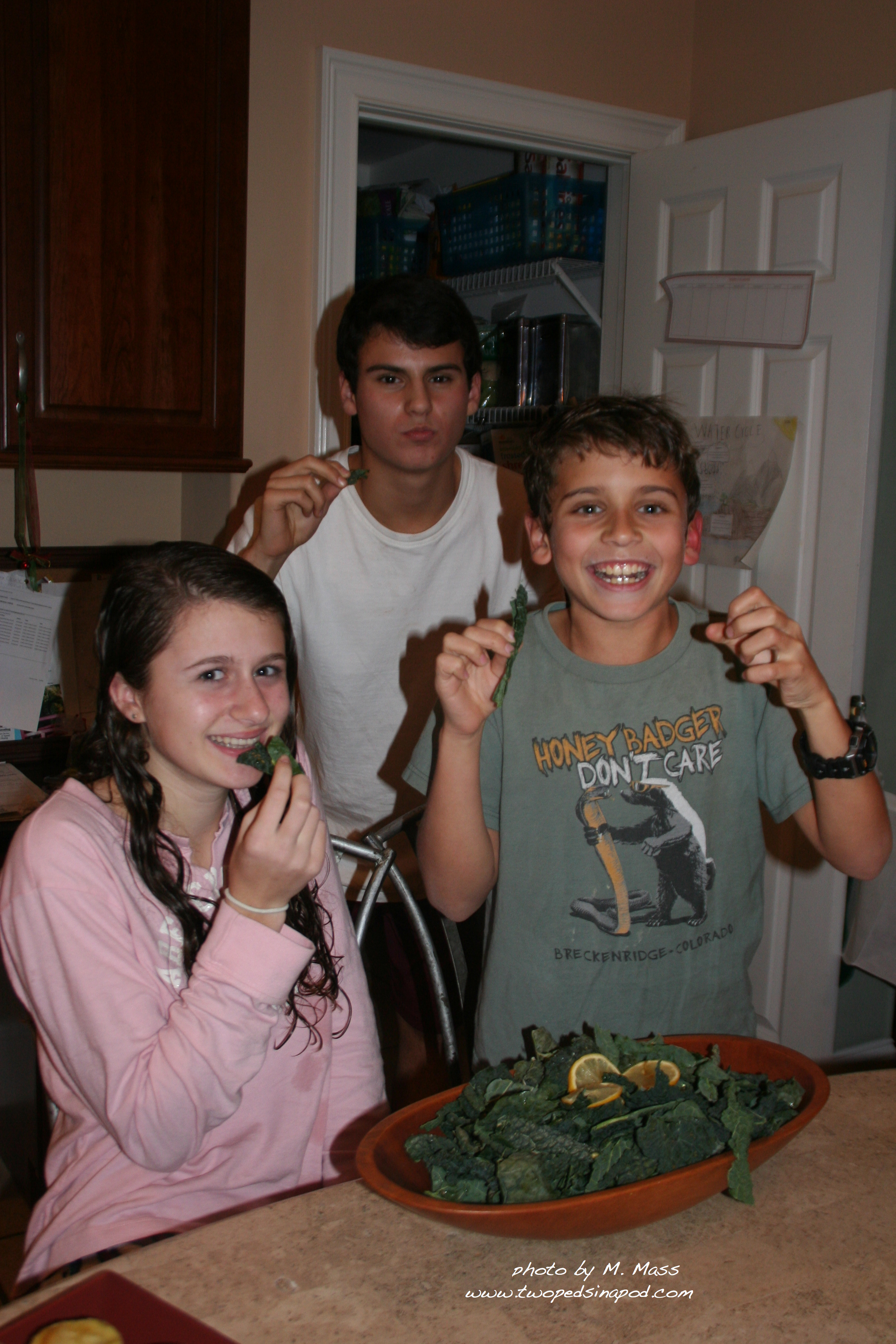
Crunching on kale

Resolved to eat more vegetables this year? Our pediatrician gardener Dr. Marion Mass shares with us the benefits of kale and how to prepare it so your kids will eat it.

Open one of those ubiquitous “Ten Superfoods” articles and kale is sure to be somewhere on the list. Are there really nutritional benefits to stuffing this leafy green into our pie holes? And can I easily grow kale myself? The answers are ‘yes’ and ‘yes,’ both emphatic!

Just one cup of cooked kale provides 100% of the US RDA of vitamin K, 70% of vitamin C, 10% of Vitamin B6, fiber, and calcium, and 7% of iron. Not much iron, you say? Au contraire, dear parent. The absorption of iron is enhanced by vitamin C, so that 7% is much more available to your child’s body. This information is especially pertinent for female teens, whose iron and calcium intake are likely to be deficient.

In addition, kale houses 45 different flavonoids, which are molecules with antioxidant and anti-inflammatory properties. One of these, a carotenoid, is selectively absorbed into the retina of the eye and protects against age-related macular problems. If that’s not enough, kale (especially when steamed) has been proven to reduce the risk of five cancers: breast, colon, ovarian, prostate and bladder.

While beloved broccoli boasts many of the same nutritional benefits, kale wins the flavonoid content by a mile. Do not misunderstand… there is virtue in all veggies. I do not advocate eating kale nightly, just making it a regular part of you and your child’s diet.

Now what if I told you that even in my home state, frosty Pennsylvania, we are still picking kale from our garden and will be for another month? Kale, especially The Red Russian variety, and the Tuscan, (also called lacinto or dinosaur kale) is one of the most winter-hardy vegetables in existence. We plant a fall crop in mid August located where we have just dug up our potatoes. (Come to think of it, I should plant a spring crop in early April as well.) We start picking the outer leaves in October. The plant keeps producing new leaves from the center. Frost comes and sweetens the flavor. Snow comes, and Kale still grows! Throw a row cover over the top, and you get an additional 4-6 weeks of harvest after the really cold weather sets in.

While easy to plant, Kale has its enemies. Aphids love it, and cabbage worms take a bite. Both can be combated by the release of beneficial insects: ladybugs, lacewings and praying mantises. Thanks to my friends at Gardeners Supply Company for carrying all three insects.

How to get your kid to eat Kale? Ah, there’s the rub. Start with that dinosaur variety. Age 3-6 is what I call ‘the modern age of dinosaurs.’ Use your child’s love of the extinct beasts to your advantage! Dinosaur kale not only looks like a plant that would live in ancient times, but the deep ribbing looks like the skin of an ankylosaurous. Tell the little darlings they will be as tough as T-Rex if they eat it. Does little Emily like salad? Why not make it with kale added in, or even as the main ingredient? Remember the anti-inflammatory proprieties of the flavonoids mentioned above? Sick that fact on your aching adolescent athlete. After suffering two different inflammation-related problems this past cross-country season, my son practically inhales the stuff.

Look at the recipes below. You might want to work up to the kale salad with beets, pepitas and golden raisins. Or just take it to a grown up potluck. Judging from the reactions from the two places I’ve taken it, it may be the best thing I’ve created in my kitchen.

For all recipes, de-stem the kale by holding the stem at its base, use your thumb and index finger to peel the dark green part away from the stem. Always thoroughly wash and salad spin dry kale before use in the following recipes.

Kale Caesar or Kale Vinagrette

1 bunch kale stemmed and torn into salad sized pieces
1 bottle Caesar dressing
juice of ½ orange or 1 lemon
croutons
parmesan

Prep as you would a regular salad. The citrus juice cuts the bitter taste of the kale. Don’t like Caesar? Dress your kale with a sweetly flavored balsamic (fig, orange or cherry is nice), lemon juice salt and olive oil.

Kale Chips, the easy kind

1 bunch of kale de-stemmed and ripped into pieces
2 tbsp olive oil
salt

Preheat oven to 300F. Massage the olive oil into the kale on a large rimmed baking sheet, sprinkle with salt. Option: add cumin, cayenne, curry, or any favorite spice! Bake for 10 minutes, stir, bake for an additional 10 until edges are turning golden.

Kale chips that have more protein, but take more effort

1 bunch of kale stemmed and torn into pieces
¾ cup garbanzo bean flour*
pinch of salt
juice of ½ lemon
¾ cup water
2 tbsp olive oil
optional add ins: pinch of cayenne, pinch of turmeric, pinch of cumin

Preheat oven to 300F. Brush a parchment lined cookie sheet with olive oil. Mix flour with salt, add spices, stir in lemon juice and water. Should be like thin pancake batter. Dip kale pieces in batter and place on cookie sheet. Bake 15 minutes, turn over with tongs, bake an additional 10-15 minutes. Kale will crisp as it cools.

Kale, bean, and sausage soup

1 cup dried beans, soaked overnight cooked until tender (cranberry or roman are my fave)
2 tbsp olive oil
2 medium onions, diced
1 tbsp minced garlic
1 lb sausage(we like Bolton’s local turkey sausage) cut into small pieces
2 bunches kale de-stemmed and chopped
1 ½ tsp dried thyme
8 cups your favorite stock

Sauté onions in olive oil until pale gold, add garlic and sauté for 1 minute, add sausage and cook until it’s edges are brown. Add kale and thyme, pour in broth and cook for 30 minutes, add beans during last 10 minutes. Salt to taste.

Kale and Quinoa Salad with Beets and Pepitas

2 bunches kale, de-stemmed and cut into ribbon thin pieces
¾ cup quinoa, cooked as per package directions (red looks best and has best taste)
5 medium beets, cooked until fork tender and cut into ½ inch cubes
juice of 1 lemon
2 cloves minced garlic
½ cup crumbled cheese (your choice, blue, goat or queso fresco)
¾ cup pumpkin seeds (pepitas), toast them in pan, they taste better
salt
¼ cup olive oil

Mix first 5 ingredients, toss in rest just before serving. I make this from leftover quinoa and beets that I have cooked the night before. Less work!


Marion Mass MD, FAAP

©2015 Two Peds in a Pod®

In practice for 17 years, Marion Mass MD, FAAP graduated from Penn State and Duke University Medical School. She completed her pediatric residency at Northwestern University’s Children’s Memorial Hospital in Chicago. Currently Dr. Mass works at Jellinek Pediatrics in Doylestown, PA and serves on the Wellness Council of the Central Bucks School District, PA. Produce from her kids’ garden garnishes the plates of many local families as well as the plates of the restaurant Puck. All garden profits benefit Relay for Life.  When she is not in her home garden, you can find her also tending to her son’s middle school garden.

Share
image_pdfimage_print