It’s no laughing matter: another tween game in town

find your true laugh is a dangerous game
A snippet from a quick search on youtube for “true laugh”

There’s another game in town called “Find your true laugh,” but it is no laughing matter. One kid lies down and another kid either sits on the recumbent kid’s chest or pushes hard on the recumbent kid’s chest with his hands (think CPR chest compressions). As the recumbent kid starts to laugh, his laugh purportedly changes. In this case, in addition to compromising a kid’s airway, the force of another person pushing hard on the chest can lead to rib fractures and, as one of our patients discovered painfully, even a fractured sternum. Rib fractures are acceptable as a side effect of CPR but are not an acceptable side effect of a game.

Tweens in particular seem vulnerable to trying the “Hey, this looks fun, let’s try it, ” airway blocking games. Explain to your tween that anything that can possibly interfere with breathing can hurt him.

Dr. Kardos tells tween patients:

Your nose is for breathing air. NOT for breathing fumes from glue or markers in order to get high. Called “huffing,” this can lead to sudden fatal heart arrhythmias.

Your mouth is also for breathing. Tweens can all recite the dangers of smoking cigarettes, but they can find it amusing to breathe in crushed candy, which can irritate lungs, or to try to swallow a spoonful of cinnamon while taking the “cinnamon challenge.”The coughing and vomiting that result from this challenge are evidence of its potential danger.

Air moves through your neck to reach your lungs. Tweens play the “choking game” by strangling themselves in order to get a brief high before passing out. Tell your kids to never tie or loop anything around their necks, for obvious reasons. Kids have died playing this game.

Your lungs are in your chest. To get back to the find your true laugh game: this game involves smushing the chest. Point out that lungs can’t expand to hold air if someone is crushing your chest.

Earlier in this summer, Dr Lai  turned  around at a party to find a pile of tween girls on the rug giggling and trying to push in each other’s rib cages. After explaining to the girls why one should never block her airway, one of the girls  ferevently nodded and said , “I see, like the bologna game?”

“What bologna game?” asked Dr. Lai

” The one where you take a piece of bologna, cover your mouth and inhale it in.”

“Yes, like the bologna game, ” said Lai with a sigh.

What will they think of next?


Julie Kardos, MD with Naline Lai, MD
©2015 Two Peds in a Pod®

Share

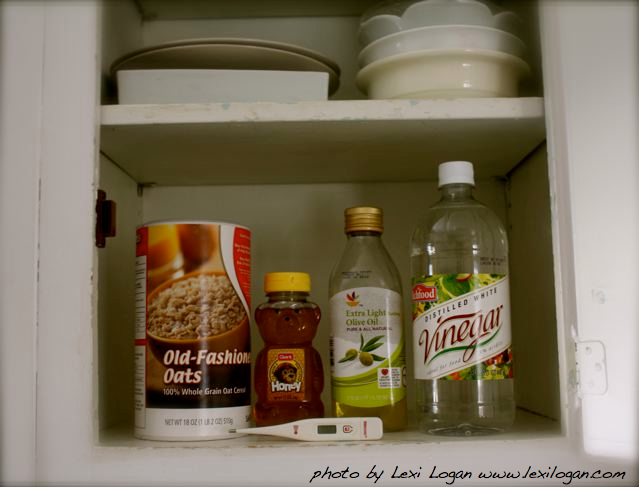
The natural medicine cabinet in your kitchen

home remedies

You may not think of your kitchen as a convenient pharmacy, but parents used common kitchen items successfully to treat various maladies long before CVS and Walgreens were invented. 

Crisco– May not be healthy to eat, but smeared on skin, it’s an old fashioned but effective treatment for eczema or dry skin.

Oatmeal– Crush and put into the end of a hosiery sock. Float the sock in the bathtub for a natural way to moisturize skin.

Olive Oil

  • Put a couple drops into the ear three times a day to loosen ear wax (don’t put in if your child has a hole in their ear drum eg. myringotomy tubes).
  • For cradle cap, rub into your baby’s scalp and use your fingernail or a soft brush to loosen the greasy flakes.
  • Also use to kill lice.  Work the oil through the scalp, tuck hair into a shower cap and wash off in the morning. Although studies are unclear on how well this method works on lice, it certainly is worth a try.

White vinegar-If swimmer’s ear is suspected, mix rubbing alcohol one to one with vinegar and drop a couple drops in the ear to stop the swimmer’s ear from progressing (don’t put in if your child has a hole in their ear drum eg. myringotomy tubes).

Ginger– Boil ginger to make a tea to take the edge off nausea

Honey– Shown to soothe coughs-give a teaspoon of dark (buckwheat, for example) honey three times a day. However, NEVER give honey to a child who is younger than one year of age because it may cause infant botulism

Lemon– An old singer’s trick—combine lemon juice with honey in tea to alleviate hoarseness

Salt– Mixed into lukewarm water, gargling with salt water will help ease sore throat pain

Baking soda:

  • Mix with water to make a paste to help soothe itchy skin, from maladies such as poison ivy .
  • Can also be mixed with water to make toothpaste if you run out of your usual minty whitener.
  • Another use of baking soda: one part baking soda with 4 parts corn starch makes a natural underarm deodorant.

Sugar: Mix sugar into weak tea (or your ginger tea from above) and give small amounts frequently to soothe your older child’s nausea and help rehydrate after vomiting.

Ice: Ice not only decreases swelling when applied to injuries, it can also be used to combat the itch of bug bites and poison ivy.

Kitchen sink: This is an excellent place to wash any cut, scrape, or bleeding wound under running water with soap. Immediately after a burn, rinse the burned skin under cold water for several minutes to limit the extent of the heat injury. Contrary to popular lore, DO NOT put butter on a burn. You may, however, put butter on your toast. In small amounts.


Naline Lai, MD and Julie Kardos, MD

©2015 Two Peds in a Pod®, revised from 2011

Share

Happy Birthday! Two Peds in a Pod turns Six Years Old!

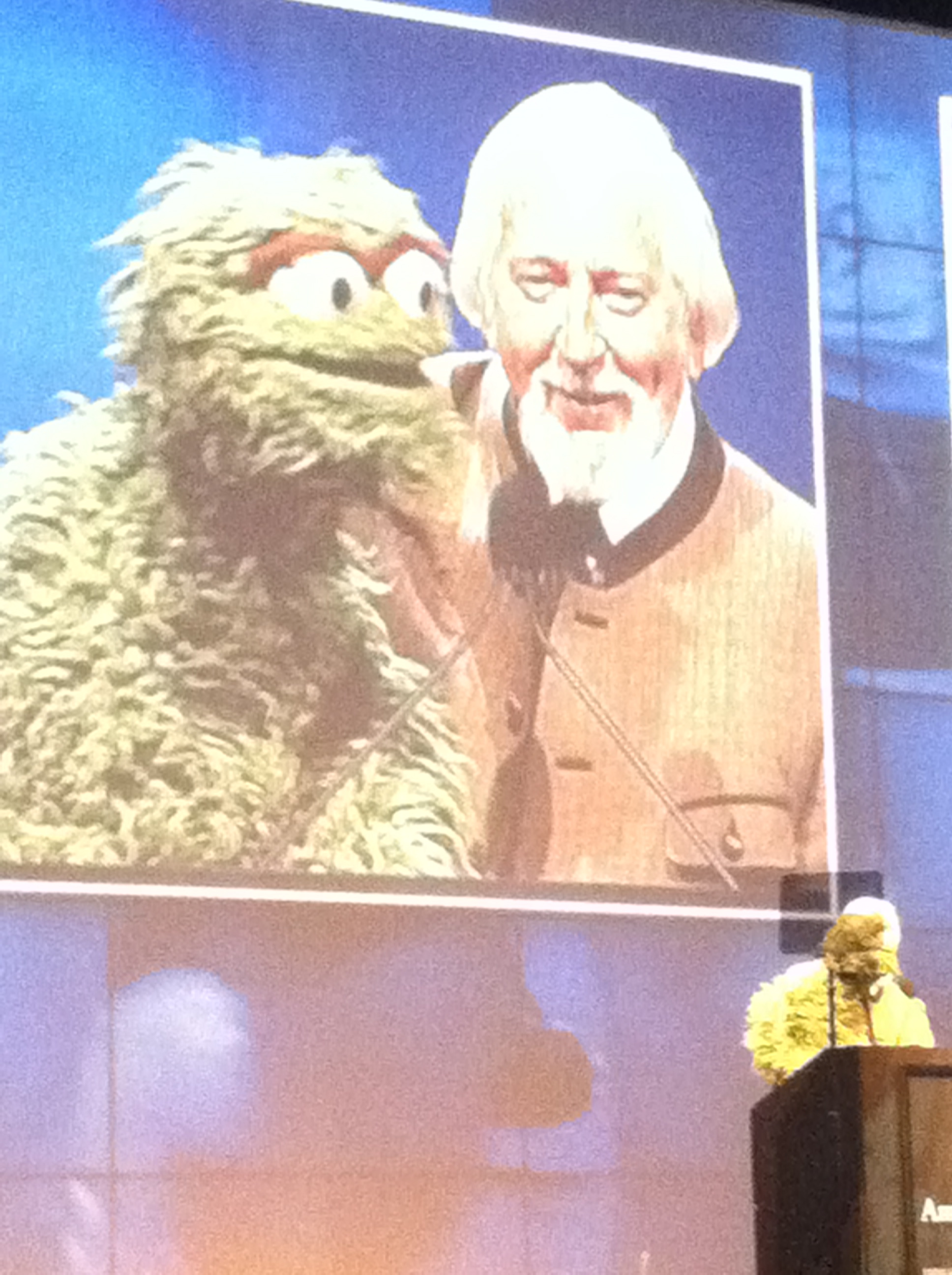
Caroll Spinney, a.k.a. Bird Bird and Oscar the Grouch, addresses the American Academy of Pediatrics National Conference in 2011 (Dr. Lai’s iPhone 3 or 4 captured this “high” quality photo)

Today, as Two Peds in a Pod turns six years old, we think about our favorite six-year-old, Big Bird.

A friend sent me this link to an interview with Caroll Spinney on NPR. Now 81 years old, Caroll Spinney has played Big Bird on Sesame Street since the show first aired in 1969. According to the puppeteer, Big Bird has always been six years old.

Spinney wanted Big Bird to forever bubble over with the curiosity and enthusiasm for  learning which characterize a six year old’s development. In kindergarten or first grade, a six-year-old rapidly gains new skills. They learn how to read at this age if not earlier.

They like to belong to a group and feel included.

Sit in the back of a first grade classroom and listen to the class have a conversation. The teacher may ask the kids, “Who has ever been to the ocean?” and watch all the hands go up. As she calls on each child to tell his story about going to the beach, some kids tell about their beach vacations, some talk about which relative or friend they visited at the beach, and at least one six-year-old will say “I never saw the ocean, but I have a dog!” because they want so desperately to belong to the conversation.

As part of their interest in others, they will join sports teams, scouts, begin religious school or specialized language schools.

Although they may seem interested in everything, be careful not to over schedule. This might be the first year of “all day” school, and even a child who attended an all day childcare or kindergarten can tire out after a full day of learning. Also, as part of their interest in group participation, children may start to form “clubs” as they play. To ward off future bullying, teach your child,” You can’t be friends with everyone. You just have to be nice.”

Six-year-olds still have a great sense of wonder and imagination.

They believe in Santa Claus and the Tooth Fairy. They also are interested in science and nature, planets and dinosaurs, and how things work. They can simultaneously believe in the very real and concrete and believe in magic.

Six-year-olds ask “Why?”

And they are not shy about it: Why do I have to go to bed? Why does that man have only one leg? Why do helium balloons float? Why do people die? Sometimes the “Why’s” can lead into  whining, but luckily, six-year-olds can be easily distracted out of their perceived injustices.

Kids at this age tend to concern themselves with body integrity

They may cry over a relatively minor injury such as a paper cut or skinned knee. If you want attention from a room full of six-year-olds, put a Band-Aid on your arm and they will all ask, ” Why do you have a Band-Aid?”

We are excited that Two Peds in a Pod® turns six today. Like Big Bird, we hope to forever ask “Why,” as well as “How?” and “When?”  May your children continue to inspire a sense of wonder and curiosity in your lives, whether they are six months, six years, sixteen, or sixty!

Julie Kardos, MD and Naline Lai, MD
©2015 Two Peds in a Pod®

Click here to read our very first post from six years ago.

Share

The surprising first signs of dehydration

dehydrationIt’s 100 degrees Fahrenheit outside. We’re hiking around the Southern Utah desert and one of my kids vomits once. Nope, it’s not the stomach bug; that was last vacation. This time one of my kids vomited because of dehydration. Strangely, humans don’t always complain of thirst once they start becoming parched, and my kid was no exception.

Right now many kids are at camp running about in high temperatures and soon enough, kids will be called back to school for sport practices. Before they go off, let them know that the first signs of dehydration are usually a vague headache and nausea. Warn them not to depend solely on their sense of thirst to signal them to hydrate. If they “just don’t feel right,” take a break. Other signs of heat exhaustion and stroke are outlined here http://www.cdc.gov/extremeheat/warning.html

For kids who play only for an hour or so, water is a good choice for hydration. For the more competitive players who churn up a sweat or participate in vigorous activity, electrolyte replenishers such as Gatorade® and Powerade® become important, because after 20-30 minutes of sweating, a body can lose salt and sugar as well as water. In fact, my sister, an Emergency Medicine doctor, tells the story of a young woman who played ultimate frisbee all day, and lost a large amount of salt through sweating. Because she also drank large amounts of water, she “diluted” the salt that was still in her blood and had a seizure.

If your child plays an early morning sport, start the hydration process the night before so that they don’t wake up already behind on fluids. If your child goes more than six to eight hours without urinating, she needs to drink more.

Avoid caffeine which is found in some sodas, iced tea and many of the energy drinks. Caffeine dehydrates. The American Academy of Pediatrics recommends that children and teens never drink “energy drinks” because of the adverse effects of the stimulants they all contain. Some of the newer highly touted rehydration fluids of the adult world such as coconut water or chocolate milk are fine.

Keep in mind it’s not only sports that can dehydrate kids. Years ago I knew of a tuba player who went to the emergency room after marching band practice on a hot August day.

Next vacation we’ll definitely buy some water bottles to make sure we don’t get dehydrated. Not having enough water can be so dangerous! We’ll also take along paper towels and cleaning fluid too.

Naline Lai, MD and Julie Kardos, MD

©2015 Two Peds in a Pod®

Share

When your child’s friend moves away

movingsignThis sign now sits on my friend’s lawn. I still remember four years ago when I pulled my big blue minivan up in front of their house after the moving van left. A mommy sat on the stoop with her children. “How old are they? I hollered out. The ages of the children matched my children’s and I was delighted. Indeed they became good friends. And now, there’s the “For Sale” sign.

It’s  the end of the school year, and “For Sale” signs dot lawns all over the United States. Chances are, one of them belongs to your child’s friend. Just as the child who moves will have to adjust to a new environment, your child will have to adjust to a world without a friend who was part of his daily routine.

Much has been written about how to transition the child who moves into a new environment, but how can you help your child when his close friend moves away?

Your child may experience a sense of loss and feel that he was “left behind.” Some children perseverate over the new hole in their world. Others take the change in stride.

In the late 1960’s, psychiatrist Elisabeth Kubler-Ross described “the five stages of grief.” The stages were initially applied to people suffering from terminal illness, but later they were applied to any type of deep loss such as your child’s friend moving. The first stage is denial: “I don’t believe he moved.” Anger follows in the second stage: “Why me? That’s not fair!” Your child may then transition into the third stage and bargain: “If I’m good maybe he will hate it there and come back.” The fourth stage is sadness: “ I really miss my friend,” or, “Why make friends when they end up moving away?” The final stage is acceptance: “Everything is going to be okay. We will remain friends even if he doesn’t live here.”

Some pass through all stages quickly and some skip stages altogether. The process is personal and chastising your child to “just get over it” will not expedite the process. However, there are ways to smooth the journey:

· Reassure your child that feeling sad or angry is common. Parents need to know that sad children may not show obvious signs of sadness such as crying. Instead, rocky sleep patterns, alterations in eating, disinterest in activities or a drop in the quality of school work can be signs that a child feels sad. If feelings of depression in your child last more than a month or if your child shows a desire to hurt himself, consult your child’s health care provider.

· When you discuss the move with your child, keep in mind your child’s developmental stage. For instance, preschool children are concrete and tend to be okay with things being “out of sight, out of mind.” Talking endlessly about the move only conveys to the child that something is wrong. Children around third or fourth grade can take the move hard. They are old enough to feel loss, yet not old enough to understand that friendships can transcend distance. For teens, who are heavily influenced by their peers, a friend’s moving away can cause a great deal of disruption. Acknowledge the negative emotions and reassure your child that each day will get better. Reassure him that despite the distance, he is still friends with the child who moved.

· Prior to the move, don’t be surprised if arguments break out between the friends. Anger can be a self defense mechanism employed subconsciously to substitute for sadness.

· Set a reunion time. Plan a vacation with the family who moved or plan a trip to their new home.

· After the move, send a care package and write/ help write a letter with your child.

· Answer a question with a question when you are not sure what a child wants to know. For example if he asks,” Will we always be friends?” Counter with “What do you think will happen?”

· Share stories about how you coped with a best friend moving when you were a child.

Social media and texting can be ways for older kids to stay in touch with a friend who moves away. Be sure to monitor your child, however, because too much time texting, skyping, and posting takes away from time your child needs to spend acclimating to a new routine.

As for my children, when I told one of my kids that I will sign her up for soccer, she squealed with delight, “Oh, that’s the league Kelly belongs to.”

My heart sank. I said as gently as I could, “She’s moving- she won’t be here for soccer season.”

And so we begin the process…

Naline Lai, MD with Julie Kardos, MD
© 2010, rev 2015 Two Peds in a Pod®

Share

Soothe the itch of poison ivy

poisonivyRecently we’ve had a parade of itchy children troop through our office.  The culprit: poison ivy.


Myth buster: Fortunately, poison ivy is NOT contagious. You can catch poison ivy ONLY from the plant, not from another person.

Also, contrary to popular belief, you can not spread poison ivy on yourself through scratching.  However, where  the poison (oil) has touched  your skin, your skin can show a delayed reaction- sometimes up to two weeks later.  Different  areas of skin can react at different times, thus giving the illusion of a spreading rash.

Some home remedies for the itch :

  • Hopping into the shower and rinsing off within fifteen minutes of exposure can curtail the reaction.  Warning, a bath immediately after exposure may cause the oils to simply swirl around the bathtub and touch new places on your child.
  • Hydrocortisone 1%.  This is a mild topical steroid which decreases inflammation.  We suggest the ointment- more staying power and unlike the cream will not sting on open areas, use up to four times a day
  • Calamine lotion – a.k.a. the pink stuff. This is an active ingredient in many of the combination creams.  Apply as many times as you like.
  • Diphenhydramine (brand name Benadryl)- take orally up to every six hours. If this makes your child too sleepy, once a day Cetirizine (brand name Zyrtec) also has very good anti itch properties.
  • Oatmeal baths – Crush oatmeal, place in old hosiery, tie it off and float in the bathtub- this will prevent oat meal from clogging up your bath tub. Alternatively buy the commercial ones (e.g. Aveeno)
  • Do not use alcohol or bleach– these items will irritate the rash more than help

The biggest worry with poison ivy rashes is not the itch, but the chance of infection.  With each scratch, your child is possibly introducing  infection into an open wound.  Unfortunately, it is sometimes difficult to tell the difference between an allergic reaction to poison ivy and an infection.  Both are red, both can be warm, both can be swollen.  However, infections cause pain – if there is pain associated with a poison ivy rash, think infection.  Allergic reactions cause itchiness– if there is itchiness associated with a rash, think allergic reaction.  Because it usually takes time for an infection to “settle in,” an infection will not occur immediately after an exposure.  Infection usually occurs on the 2nd or 3rd days.  If you have any concerns take your child to her doctor.

Generally, any poison ivy rash which is in the area of the eye or genitals (difficult to apply topical remedies), appears infected, or is just plain making your child miserable needs medical attention.

When all else fails, comfort yourself with this statistic: up to 85% of people are allergic to poison ivy.  If misery loves company, your child certainly has company.

Naline Lai, MD and Julie Kardos, MD

©2015 Two Peds in a Pod®, updated from 2012


Share

Would you recognize if your child was overweight?

recognizing obesity
In these posters put out by the Pennsylvania medical society, the children on the right are considered obese.


Nearly all parents of overweight preschoolers and most parents of obese kids are unaware their children are classified as such , say researchers at New York University and two other medical centers. Click here for  Happy Healthy Kids‘ interview with Dr. Kardos on the subject.

Julie Kardos, MD with Naline Lai, MD
©2015 Two Peds in a Pod®

Share

Blame it on Mom

blame it on momIn honor of Mother’s Day, teach your children the time-honored way to get themselves out of a bad situation: Blame everything on mom.

If your child realizes that she’d rather not attend a particular party or other social event, have her say:“I can’t go- my mom won’t let me.”

If your teen is at a friend’s house or party, is uncomfortable and  wants to leave, but does not want the other kids to know his discomfort (such as in the presence of alcohol or drugs) have him text or call you and say a predetermined code, such as: “Oh, my mom wanted me to check in with her  at (fill in the current time, whatever it is)”. Then, have him say: “I can’t believe it! She says she has to come get me now!” Remember, Moms, do not ask questions if you hear or read: “I’m checking in like you said I had to.” Just go rescue your child!

Does your child need a reason not to try smoking? Tell him to say: “Are you kidding? My mom can sniff out when I forget to brush my teeth. She would kill me if I came home smelling like smoke. Or at the very least she would ground me for life!”

Do your kids already blame a bad hair day on Mom? A forgotten lunch on Mom? Oversleeping an alarm clock on Mom? That’s all okay as long as they know to blame Mom when it really counts.

Happy Mother’s Day

Naline Lai, MD and Julie Kardos, MD
©2015 Two Peds in a Pod®

Share

The best allergy medicines for kids

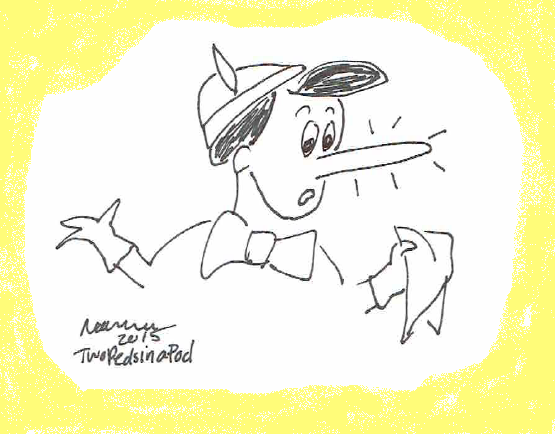
Gepetto always said his son had allergies, but the villagers knew better

Recently, Dr. Lai was so excited to see Flonase in the local pharmacy that she texted all of the providers in our practice with the news. Flonase (fluticasone),  a nose spray allergy treatment, is the  latest allergy medication to go over-the-counter. Now, nearly every allergy medication that we wrote prescriptions for a decade ago is now available to kids over-the-counter.

As you and your child peer around the pharmacy through itchy blurry eyes, the  displays for allergy medications can be overwhelming. Should you chose the medication whose ads feature a bubbly seven-year-old girl kicking a soccer ball in a field of grass, or the medication whose ads feature a bubbly ten-year-old boy roller blading? Its it better to buy a “fast” acting medication or medication that promises your child “relief?”

A guide to sorting out your medication choices:

Oral antihistamines: Oral antihistamines differ mostly by how long they last, how well they help itchiness, and their side effect profile. During an allergic reaction, antihistamines block one of the agents responsible for producing swelling and secretions in your child’s body, called histamine. Prescription antihistamines are not necessarily “stronger.” In fact, at this point there are very few prescription antihistamines. The “best” choice is the one that alleviates your child’s symptoms the best. As a good first choice, if another family member has had success with one antihistamine, then genetics suggest that your child may respond as well to the same medicine. Be sure to check the label for age range and proper dosing.

  • First generation antihistamines work well at drying up nasal secretions and stopping itchiness but don’t tend to last as long and often make kids very sleepy:
    Diphenhydramine (brand name Benadryl) is the best known medicine in this category. It lasts only about six hours and can make people so tired that it is the main ingredient for many over-the-counter adult sleep aids. Occasionally, kids become “hyper” and are unable to sleep after taking this medicine. Opinion from Dr. Lai: dye-free formulations of diphenhydramine are poor tasting. Other first generation antihistamines include Brompheniramine (eg. brand names Bromfed and Dimetapp) and Clemastine (eg. brand name Tavist).
  • The newer second and third generation antihistamines cause less sedation and are conveniently dosed only once a day:
    Cetirizine (eg. brand Zyrtec) causes less sleepiness and it helps itching fairly well. Give the dose to your child at bedtime to further decrease the chance of sleepiness during the day. Loratadine (brand name Alavert, Claritin) causes less sleepiness than cetirizine. Fexofenadine (brand name Allegra) causes the least amount of sedation. The liquid formulations in this category tend to be rather sticky, the chewables and dissolvables are favorites among kids. For older children, the pills are a reasonable size for easy swallowing.

Allergy eye drops: Your choices for over-the-counter antihistamine drops include ketotifen fumarate (eg. Zatidor and Alaway). For eyes, drops tend to work better than oral medication. Avoid products that contain vasoconstrictors (look on the label or ask the pharmacist) because these can cause rebound redness after 2-3 days and do not treat the actual cause of the allergy symptoms. Contact lenses can be worn with some allergy eye drops- check the package insert, and avoid wearing contacts when the eyes look red.

Allergy nose sprays: Simple nasal saline helps flush out allergens and relieves nasal congestion from allergies. As we mentioned above, Flonase, which used to be available by prescription only, is a steroid allergy nose spray that is quite effective at eliminating symptoms. It takes about a week until your child will notice the benefits of this medicine. Even though this medicine is over-the-counter, check with your child’s pediatrician if you find that your child needs to continue with this spray for more than one allergy season of the year. Day in and day out use can lead to thinning of the nasal septum. Avoid the use of nasal decongestants (e.g., Afrin, Neo-Synephrine) for more than 2-3 days because a rebound runny nose called rhinitis medicamentosa may occur.

Oral Decongestants such as phenylephrine or pseudoephedrine can help decrease nasal stuffiness. This is the “D” in “Claritin D” or “Allegra D.” However, their use is not recommended in children under age 6 years because of potential side effects such as rapid heart rate, increased blood pressure, and sleep disturbances.

Some of the above mentioned medicines can be taken together and some cannot. Read labels carefully for the active ingredient. Do not give more than one oral antihistamine at a time. In contrast, most antihistamine eye drops and nose sprays can be given together along with an oral antihistamine.

If you are still lost, call your child’s pediatrician to  tailor an allergy plan specific to her needs.

The best medication? Get the irritating pollen off your child. Have your allergic child wash her hands and face as soon as she comes in from playing outside so she does not rub pollen into her eyes and nose. Rinse  outdoor particles off your child’s body with nightly showers. Filter the air when driving in the car and at home by running the air conditioner and closing the windows to prevent the “great” outdoors from entering your child’s nose.

Naline Lai MD and Julie Kardos, MD
© 2015 Two Peds in a Pod®

Share

Prepare your child for a younger sibling


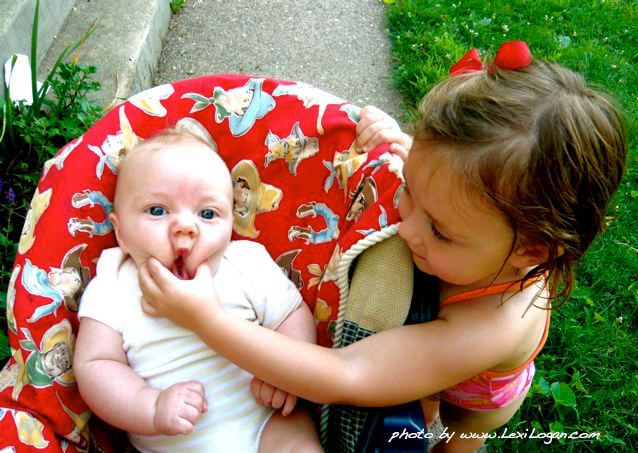
prepare your child for a youger sibling

A thrilling moment in the office is when a mom of a patient shares with me that she is pregnant again. I say, “Wonderful!” What better gift to give your firstborn than a sibling! And I love being a part of good news! As an older sister myself, as a mother of three children, and as a pediatrician, I know the net result of adding another child to the family is positively fabulous.

Although the news is good, sometimes parents are anxious. Here are some suggestions of how to prepare your child for a younger sibling:

For most kids under the age of three to four years, time literally has no meaning.

At best, everything in the past occurred yesterday, and everything in the future will occur tomorrow. So in general, there is no magic moment to announce a forthcoming new baby. A few weeks ahead of time, simply start talking about “when a baby comes to live with us.” Don’t expect your child to really believe you until you walk into the house with the baby. And don’t be surprised if your firstborn asks, “When is it leaving?” Kids this age do not understand the idea of “forever” or “permanent.”

Believe it or not, your second newborn might not be all that demanding.

Parents often feel guilty about bringing a second baby into the home. They worry they will not have as much time for their firstborn. Well, here’s one secret. Newborns aren’t all that demanding. Unlike with your first born, you will never have the time or urge to stare endlessly at your second born while she sleeps.

By the second time around, you will realize that feeding, changing, and washing a newborn take up relatively little time. Your firstborn will likely continue to be the center of attention. She is, after all, much more interesting now that she can pretend and play simple games. Believe me when I tell you that you CAN play Candyland® and breastfeed an infant at the same time. You CAN burp an infant while reading aloud to a toddler. You CAN change a diaper while pretending you and your toddler are wild jungle animals. You CAN make a formula bottle while telling a terrifically exciting story to your toddler.

A word about visitors and gifts:

The best part of a gift, to a toddler, is opening it, NOT what’s in it. So don’t worry about trying to make sure your older child gets a gift for every gift the new baby gets. Just allow your toddler to open all the baby’s gifts (if she wants to) because “babies don’t know how to open presents, but big kids do!” Also, newborns don’t care who holds them so visitors are a perfect chance to hand off the baby and get on the floor and play with your toddler. To a toddler, parents are the most important and interesting people in the world. Even if ten people walk in to visit the baby, your toddler will not be jealous if YOU are the one playing with her.

By three years old, kids understand taking turns.

In addition to the above tips, if your eldest asks why you need to hold/feed/care for the baby “so much,” just explain that it’s the baby’s turn. Then reinforce how glad you are that your eldest is able to talk, feed herself, play with toys, and maybe use the potty. Remind her that her ability to be independent make her more similar to Mommy and Daddy than to a baby.

You have plenty of love to go around.

Finally, realize whether your firstborn embraces her younger sibling with open arms or pretends that the new baby does not exist, you will have plenty of love to go around. Your heart is big enough for everyone. Dr. Lai tucks each of her three children in at night with the words, “I love you more than anyone in the universe.”

Truth be told, no one will make your younger child laugh as loud and long as her older sibling. Also, older babies are much more interesting than newborns. Even “luke warm” older siblings will warm up as time progresses and the baby becomes more interactive. You will appreciate this the most when your younger child becomes a toddler. He will find his older brother or sister so entertaining that he will generally stay near his older sibling. Your younger child will not be as apt to wander out of a room if his sibling is around. While you will not have a baby sitter for a while, you will have a tattle-teller.

In the meantime, tell lots of “when you were a baby” stories to your older child. Toddlers are egocentric (they all think the world revolves around them) and they will LOVE being the main character in your stories. Bring out baby pictures and videos of your firstborn to share. Be sure to point out how far she has come and all the great things she can do now as a big kid.

Don’t feel pressure to “get everything done” before the new baby arrives. Potty training for the oldest can wait (it’s not that glamorous anyway). You don’t have take your oldest child out of the crib (the baby is in a bassinet for a couple months) and your oldest’s teeth won’t pop out because you haven’t weaned the pacifier.

I end with a personal story:

When I was pregnant with my twins, many of our friends commented to us about our firstborn son, “Boy, you are really going to rock his world.”

HIS world, I would think to myself. How about OUR world?

In order to prepare him for his transition from “only child”to “big brother” we emphasized to our son (who was three at the time) that most older brothers get only ONE baby. Our son would be getting TWO babies! He was excited about having two instead of one. For years afterwards, whenever he heard about a pregnant aunt, friend, or neighbor, his first question was always, “Oh, how many babies is she having?”

Out of the mouths of babes….

Julie Kardos, MD and Naline Lai, MD

©2015 Two Peds in a Pod®

Share
image_pdfimage_print