Now that you just read how to drop your kid off at school on the first day, you may be backpack shopping, pondering what to send your child for lunch, and knowing that your child will have difficulty waking up early for school. Never fear! Your Two Peds can help you and your kids get ready for school.
First, make sure your child’s backpack fits correctly and is not too heavy. Our guest blogger, a pediatric physical therapist, provides tips to help lighten the load.
Help your child get back on a school-friendly sleep schedule. If your child is still in summer vacation sleep mode, we provide ways to help get your child’s sleep back on track.
Need suggestions on how to motivate your child to want to learn? Two former school principals share their wisdom in this post.
Finally, you should know when to keep your child home for illness. This post also contains some surprising truths about when you can send your child back to school during as well as after certain maladies.
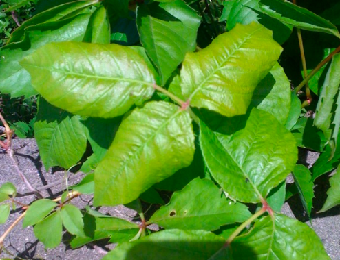
Teach your child to recognize poison ivy: “leaves of three, let’em be!”
Recently we’ve had a parade of itchy children troop through our office. The culprit: poison ivy.
Myth buster: Fortunately, the rash of poison ivy is NOT contagious. You can “catch” a poison ivy rash ONLY from the plant, not from another person.
Another myth buster: You can not spread the rash of poison ivy on yourself through scratching. However, where the poison (oil) has touched your skin, Continue reading “Poison ivy: stop the itch”
In the wake of chef Anthony Bourdain and designer Kate Spade’s deaths from suicide, you may be wondering how to address the topic of suicide with your child. We bring back psychotherapist Dina Ricciardo’s post for guidance:
“Hi, it’s me, Hannah. Hannah Baker.” So begins the first episode of 13 Reasons Why, a thirteen installment Netflix series that focuses on the aftermath of the suicide of a 17-year-old high school student. Based on the novel by Jay Asher, the series has sparked quite a bit of debate and concern among parents and mental health professionals. At its best, the series has served as a conversation starter; at its worst, it has glamorized suicide and the fantasy of revenge. At the end of the day, however, an important question remains: How do we talk with our kids about suicide? While many difficult topics have become increasingly safer to discuss, suicide is one that is still shrouded in secrecy and shame. In fact, it is so difficult to talk about that I had a hard time writing this post. Continue reading “Discussing suicide: how much should I tell my kids?”
Gepetto always said his son had allergies, but the villagers knew better
It’s not your imagination. This is a particularly bad spring allergy season. We didn’t need media outlets to tell us that there are more itchy, sneezy, swollen eyed kids out there this year.
Nope, warthogs don’t actually have warts. But kids often do!
Emma’s dad and I both peered at the filamentous growth dangling from his nine year old’s right nostril. “Yes,” I said, “it’s definitely a wart.”
Emma’s dad offered, “When I was a kid, I heard the way to get rid of a wart was to cut a potato in half, rub it on the wart, and bury the potato in the backyard. Legend had it, by the time the potato disintegrates, the wart will be gone.”
“I wish it were so easy,” I replied.
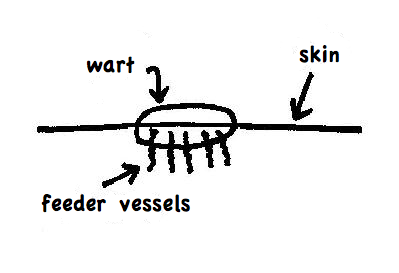
Warts are caused by skin-dwelling viruses. On the feet, warts can sometimes be mistaken for calluses. One distinguishing feature is that warts sit in the skin like this:
Fine “feeder” blood vessels extend from the wart into the skin. Therefore, if you scrape off the top layer of a wart, a dotted pattern usually appears from above. The dots will not appear in a callus. View from above:
There are simply no glamorous ways to get rid of warts. Most treatment modalities destroy warts by pulverizing the home they live in, a.k.a. your skin. Your doctor may be armed with various agents such as liquid nitrogen or dimethyl ether propane, which produces a chemical “freeze” and dries up the wart. Another agent called cantharidin (otherwise known as “beetle juice”) is a caustic liquid derived from the blister beetle. Application of beetle juice causes the warts to blister.
Some doctors will even manually take a scalpel and cut out the warts.
Like I said, there are no glamorous treatments. However, more gentle creams which stimulate the immune system, such as Imiquimod (Aldara) show some promise in children. Other compounds such as 5-fluorouracil can be topically applied or injected and treatments such as pulsed dye laser therapy have mixed reviews.
Over-the-counter remedies exist in a milder form. Commonly used wart removers such as Compound W, Dr Scholl’s Clear Away Wart, and Duofilm all contain salicylic acid. The acid slowly dries up the warts. When applying salicylic acid, after a few applications make sure you peel the dead crusty top layer off the wart. Without peeling, future medicine will not reach the wart. These methods can take weeks to months to work, but they do work.
And don’t forget the duct tape. Duct tape, the great all-purpose household item, has also been shown to speed up the resolution of warts. Scientists hypothesize the constant presence of the adhesive somehow stimulates a natural immune response. If you try duct tape, have your child wear the duct tape over the wart for several days in a row and then give a day off. If the wart is on a hand or foot, the tape tends to fall off during the day: just re-apply some tape at bedtime. Effects should be seen within a couple of months if not sooner. Now, the original study that showed duct tape was helpful, was followed by a study which showed duct tape was not helpful. Some hypothesize that the results differ because silver sticky duct tape was used in the initial study, while the later study used less sticky duct tape. So be sure to use the old-fashioned silver duct tape.
The prevention of warts is tricky. Some people just seem genetically predisposed. However, your best bet for keeping warts away is to keep your child’s skin as healthy as possible. Warts tend to gravitate towards areas of skin broken down by friction such as feet or fingers. Liberally apply moisturizing creams daily to prone areas. After a summer of wearing flip-flops and walking on the rough cement by the side of a swimming pool in bare feet, many children end up with warts on the bottom of their feet. I know a teen whose warts on the tips of her fingers stemmed from months of guitar strumming.
Turns out that even without treatment, 60% percent or more of all warts will disappear spontaneously within two years.
Coincidentally, I think that’s also the time it takes for a potato half to disintegrate.
We welcome Bereavement Counselor Amy Keiper-Shaw who shares with us how to discuss the death of a pet with your child. –Drs. Lai and Kardos
When I first graduated from college I worked as a nanny. One day the mom shared with me that their family goldfish recently died. As this was her daughter’s first experience with death, we schemed for nearly 20 minutes to find the best way to talk to her child. The mom and I thought it could be an excellent teaching moment.
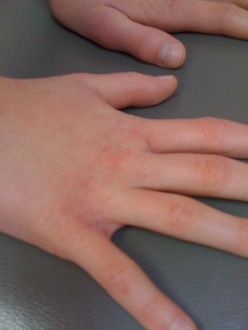
Even when it isn’t flu season, we pediatricians wash our hands about sixty times a day, maybe more. This frequent washing, in combination with cold winter air, leads to dry, chapped hands. Here are the hands of a patient. Do your children’s hands look like these?
To prevent dry, chapped hands:
• Don’t stop washing your hands, but do use a moisturizer afterwards. Also use warm but not hot water. Hot water removes protective oils from skin.
• According to the American Academy of Dermatology, hand sanitizer can prevent the drying that accompanies frequent hand washing. However, we can tell you from experience that once your hands are already chapped and cracked, the alcohol content in the sanitizers stings sensitive skin. So if your child’s hands are already chapped, stick with water and soap.
• Wear gloves or mittens as much as possible outside even if the temperature is above freezing. Remember chemistry class—cold air holds less moisture than warm air and therefore is unkind to skin. Gloves will prevent some moisture loss. Having difficulty convincing your child to wear gloves? Point out that refrigerators are kept around 40 degrees Fahrenheit or below. Tell your kids that if they wouldn’t sit inside a refrigerator without layers, then it would be wise to wear gloves.
• Before exposure to any possible irritants such as the chlorine in a swimming pool, protect the hands by layering heavy lotion (e.g. Eucerin cream) or petroleum based product (e.g. Vaseline or Aquaphor) over the skin.
To rescue dry, chapped hands:
• Prior to bedtime, smother hands in 1% hydrocortisone ointment. Avoid the cream formulation. Creams tend to sting if there are any open cracks. Take old socks, cut out thumb holes and have your child sleep at night with the sock on his hands. Repeat nightly for up to a week. Alternatively, for mildly chapped hands, use a petroleum oil based product such as Vaseline or Aquaphor in place of the hydrocortisone.
• If your child has underlying eczema, prevent your child from scratching his hands. An antihistamine taken orally such as diphenhydramine (Benadryl) or cetirizine (Zyrtec) will take the edge off the itch. Keep his nails trimmed to avoid further damage from scratching.
• For extremely raw hands, your child’s doctor may prescribe a stronger cream and if there are signs of a bacterial skin infection, your child’s doctor may prescribe an antibiotic.
Happy moisturizing. Remember smearing glue on your hands and then peeling off the dried glue? It’s not so fun when your skin really is peeling.
“Now what kind of soup did the doctor recommend? Was that tomato soup? Mushroom Barley?”
Headlines remind us daily that the US is officially in the midst of flu season. We are also in the midst of a really yucky cold season. We have seen numerous kids in our offices with bad colds and others with flu.
Parents ask us every day how they can tell if their child has a cold or the flu. While no method is fool proof, here are some typical differences:
The flu, caused by influenza virus, comes on suddenly and makes you feel as if you’ve been hit by a truck.
Flu almost always causes fever of 101°F or higher and some respiratory symptoms such as runny nose, cough, or sore throat (many times, all three). Children, more often than adults, sometimes will vomit and have diarrhea along with their respiratory symptoms, but contrary to popular belief, there is no such thing as “stomach flu.” In addition to the usual respiratory symptoms, the flu causes body aches, headaches, and often the sensation of your eyes burning. The fever usually lasts 5-7 days. All symptoms come on at once; there is nothing gradual about coming down with the flu.
Colds, even really yucky ones, start out gradually.
Think back to your last cold: first your throat felt scratchy or sore, then the next day your nose got stuffy or then started running profusely, then you developed a cough. Sometimes during a cold you get a fever for a few days. Sometimes you get hoarse and lose your voice. The same gradual progression of symptoms occurs in kids. In addition, kids often feel tired because of interrupted sleep from cough or nasal congestion. This tiredness leads to extra crankiness.
Usually kids still feel well enough to play and attend school with colds.
The average length of a cold is 7-10 days although sometimes it takes two weeks or more for all coughing and nasal congestion to resolve.
Important news flash about mucus:
The mucus from a cold can be thick, thin, clear, yellow, green, or white, and can change from one to the other, all in the same cold. The color of mucus does NOT tell you if your child needs an antibiotic and will not help you differentiate between a cold and the flu. Here’s a post on sinus infections vs. a cold.
Remember: colds = gradual and annoying. Flu = sudden and miserable.
If your child has a runny nose and cough, but is drinking well, playing well, sleeping well and does not have a fever and the symptoms have been around for a few days, the illness is unlikely to “turn into the flu.”
Fortunately, a vaccine against the flu is available for all kids over 6 months old
This flu vaccine can prevent the misery of the flu. In addition, vaccines against influenza save lives by preventing flu-related complications such as pneumonia, encephalitis (brain infection), and severe dehydration. Even though we are starting to see a lot of flu, it is not too late to get the flu vaccine for your child. Please schedule a flu vaccine ASAP if your child has not yet received one for this season. Parents and caregivers should also immunize themselves. We all know how well a household functions when Mom or Dad have the flu… not very well! Sadly there have been 20 children so far this flu season who died from the flu. In past years many flu deaths were in kids who did not receive the flu vaccine, so please vaccinate your children against the flu if you have not already. Unfortunately, the vaccine isn’t effective in babies younger than 6 months, so it is important to vaccinate everyone who lives or cares for a baby this young.
Be sure to read our article on ways to prevent colds and flu. As pediatricians, we remind you to WASH HANDS, make sure your child eats healthy, gets enough sleep, and avoid crowds, when possible. As moms, we add that you might want to cook up a pot of good old-fashioned chicken soup to have on hand in case illness strikes your family.


 Now that you just read how to