Stealthy Salmonella! Not just in your eggs

salmonella

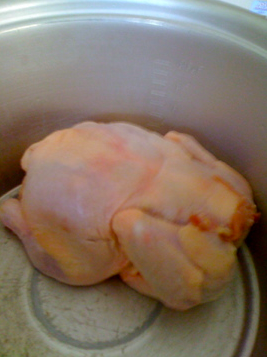
Raw chicken left out overnight—Dr. Lai’s recipe for Salmonella

These days it seems that the bacteria Salmonella is lurking everywhere. Last month’s egg recall for possible Salmonella contamination affected over 200 million eggs, but Salmonella is not just in eggs. In the last few months, dried coconuts and even guinea pigs (as pets, not as food!) have caused people gastroentestinal misery.

Nontyphoidal Salmonella usually causes fever and crampy diarrhea. Sometimes the stools contain blood. This stomach bug mainly lurks in Continue Reading

image_pdfimage_print
Share

Mom, thanks for every “I told you so”

Happy Mother's Day

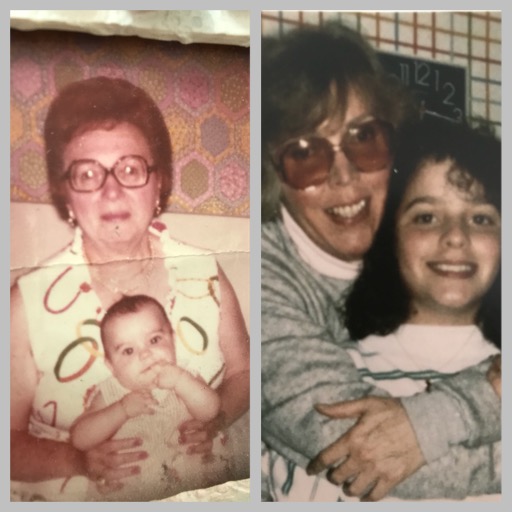
Melanie with grandma and mom

Now that you are a mom, maybe, just maybe, you realize that your grandmother or mom was right after all. We asked our readers for some examples and our friend, writing coach Melanie Cutler, told us about two generations of advice she wishes she had heeded:

Grandma Helen ALWAYS had unsolicited advice for whoever would listen. She clipped out magazine articles and mailed them to her children and grandchildren. She was very well-read, and she knew a thing or two about most things nutrition and health-related. Continue Reading

image_pdfimage_print
Share

I have autism

I have autismTo complete our autism awareness month posts, the following is a speech that a friend of Dr. Kardos’s with autism gave to his classmates a few years ago when he was fifteen.
Good morning everybody. Today, I wanted to talk to you about Autism. I have Autism Continue Reading

image_pdfimage_print
Share

How to tell if your toddler has autism

how to tell if baby has autismAccording to a 2012 National Center for Health Statistics data brief, about half of all children in the United States with an autistic spectrum disorder are diagnosed at age five or older  However, many parents are suspicious much sooner. As part of autism awareness month, we bring you clues in toddler development that can alert you to a potential issue. This post follows up on our earlier post “How can I tell if my baby has autism?

Pediatricians often use a questionnaire called the M-CHAT (Modified Checklist for Autism in Toddlers) as a screening tool. This test can be downloaded for free. In our office we administer the M-CHAT at the 18-month well Continue Reading

image_pdfimage_print
Share

How can I tell if my baby has autism?


how to tell if baby has autism

April is National Autism Awareness month in the United States. Early recognition improves outcome. This April we will post a series on the recognition of autism in a baby and in a toddler, as well as a personal story. — Drs. Kardos and Lai

Home videos of children diagnosed with autism reveal that even before their first birthdays, many autistic children demonstrate abnormal social development that went unrecognized.

Autism is a communication disorder where children have difficulty relating to other people. Continue Reading

image_pdfimage_print
Share

Does my child have strep throat?

strep throat cartoon

The school nurse calls to say, “I have your child here with me and she has a sore throat. I think you should take her to the doctor to see if it’s strep throat.”

What IS strep throat?

Strep throat is a throat infection caused by Group A streptococcus (Strep pyogenes) bacteria. Symptoms can include sore throat, Continue Reading

image_pdfimage_print
Share

Getting meds in: How to teach your child to swallow pills, give eye drops and other tips

cartoon swallowing pillsDoes your kid spit out medicine? Clamp her jaws shut at the sight of the antibiotic bottle? Refuse to take pain medicine when she clearly has a bad headache or sore throat?

Sometimes medicine is optional but sometimes it’s not. Here are some ways to help the medicine go down:

Don’t make a fuss. We mean PARENTS: don’t make a fuss. Stay calm. Explain that you are giving your child medicine “for your sore throat,” for example. Calmly give her the pill to swallow or the medicine cup or syringe filled and have her suck it down, then offer water to drink. If you make a BIG DEAL or warn about the taste or try to hurry your child along, she may become suspicious, stubborn, or flustered herself. Calmness begets calm.

What if she hates the taste?

  • Most medication can be given with a little chocolate syrup or applesauce (yes, Mary Poppins had the right idea). Check with your child’s pharmacist if your child’s particular prescription can be given this way.
  • Often, your pharmacist can add flavor to your child’s prescription.
  • Check if your child’s medicine comes in pill form so she doesn’t have to taste it at all.
  • Try “chasing” the medicine down with chocolate milk instead of water to wash away a bad taste quicker.
  • Use a syringe (no needle of course) to slowly put tiny bits of liquid medicine in the pocket between her outer teeth and her cheek. Sooner or later she will swallow. After all, she swallows her own saliva. ( A factoid: an adult swallows up to 1.5 liters of saliva a day.)

DO NOT mix the medication into a full bottle or a full cup and expect that your child will finish it all. There is a good chance that the child will not finish the bottle and therefore not finish the medication. If mixing into a liquid, better to suck up the medicine into a measuring syringe and then, if needed, suck up an addition little bit of juice or Gatorade to attempt to hide the flavor and get the full dose in at once.

WHAT IF SHE THROWS UP THE MEDICATION? Call your child’s doctor. If the medication was not in the stomach for more than 15 minutes, we will often not count it as a dose and may instruct you give another dose.

WHAT IF SHE CAN’T SWALLOW PILLS? If your child can swallow food, she can swallow a pill. Dense liquids such as milk or orange juice carry pills down the food pipe more smoothly than water. Start with swallowing a grain of rice, a cake sprinkle, or a tic-tac. For many kids, it is hard to shake the sequence of biting then swallowing. Face it. You spent a lot of time when she was toddler hovering over her as she stuffed Cheerios in her mouth, muttering “bite-chew-chew-swallow.” Now that you want her to swallow in one gulp, she is balking. Luckily, most medication in pills, although bitter tasting, will still work if you tell your child to take one quick bite and then swallow. The exception is a capsule. The gnashing of little teeth will deactivate the microbeads in a capsule release system. If you are not sure, ask your pharmacist.

WHAT IF ALL ATTEMPTS AT ORAL MEDICINE FAIL? Talk to your child’s doctor. Some liquid antibiotics come in shot form and your pediatrician can inject the medicine (such as penicillin), and some come in suppository form; Tylenol (generic name acetaminophen) is an example. You can buy rectal Tylenol if sore throat pain or mouth sores prevent swallowing or if your child simply is stubborn. Sometimes you just have to have one adult hold the child and another to pry open her mouth, insert medicine, then close her mouth again.

HAVE AN EAR DROP HATER? First walk around with the bottle in your pocket to warm the drops up. Cold drops in an ear are very annoying. (In fact, if cold liquid is poured into the ear a reflex occurs that causes the eyes beat rapidly back and forth). Use distraction. Turn on a movie or age-appropriate TV show, have your child lie down on the couch on her side with the affected ear facing up. Pull the outside of her ear up and outward to make the ear opening more accessible, then insert the drops and let her stay lying down watching her show for about 10 minutes. If you need to treat both ears, have her flip to the other side of the couch and repeat. Another option: treat your child while she sleeps.

AFRAID OF EYE DROPS? If your child is like Dr. Kardos who is STILL eye-drop phobic as a grown-up, try one of two ways to instill eye drops. Have your child lie down, have one person distract and cause your child to look to one side, insert the drop into the side of the eye that your child is looking AWAY from. She will blink and distribute the medicine throughout the eye. Alternatively, have your child close her eyes and turn her head slightly TOWARD the eye you need to treat. Instill 2 drops, rather than one, into the corner of her eye nearest her nose. Then have her open her eyes and turn her head slowly back to midline: the drops should drop right into her eye. Repeat for the second eye if needed.

HATE CREAM? Some kids need medicated cream applied to various skin conditions. And some kids hate the feeling of goop on their skin. These are often the same kids who hate sunscreen. Again, distraction can help. Take a hairbrush and “brush” the opposite arm or some other area of the body far away from the area that needs the cream. Alternatively, apply the cream during sleep. Another option- let your child apply his own cream- this gives back a feeling of control which can lead to better compliance with medicine. It also will help him to feel better faster. IF your child is complaining about stinging, try an ointment instead. Ointments tend to sting less than creams.

Of course, as last resort, you can always explain to your child in a logical, systematic fashion the mechanism of action of the medication and the future implications on your child’s health outcome.

If you choose this last method, you should probably have some Hershey’s syrup nearby. Just in case.

Julie Kardos, MD and Naline Lai, MD
©2014, 2018 Two Peds in a Pod®

image_pdfimage_print
Share

Kids are vaping: e-cigarettes

It’s time for another Two Peds in a Pod photo quiz.

The question: What’s depicted in this photo?

If you answered: a pen, a thumb nail drive, or an asthma inhaler, you would be wrong.

Kids use these devices, which purposely look like common innocuous objects, to inhale electronic cigarettes (e-cigarettes). Vaping, also called “Juuling” and an even more concentrated form of vaping, called “dripping,” is unfortunately popular among teens. It’s unhealthy: the stuff that the kids are inhaling contains nicotine and other chemicals.

Ask your middle schooler or high schooler. They most likely have seen these devices if they have not actually used one.

Parents need to know kids are vaping in school as well as outside of school. Unlike conventional cigarettes, it’s easy for the kids to hide: no smoky smell, no cigarette cartons. The vaping liquid or “e-juice” comes in all kinds of “kid friendly” flavors such as gummy bear, fruit, or chocolate, and the devices needed to inhale them look like items in every kid’s pencil case or backpack.

It’s easy for kids to get the e-juice on the internet because online stores don’t always ask for proof of age (legal age to buy is 18 years in the US). Most e-juices contain nicotine, which is addictive. Emerging data show that kids who vape are more likely to go on to use regular cigarettes than kids who do not vape.

Bottom line: Vaping, or using electronic cigarettes, is unhealthy and addictive, and startlingly easy for kids to hide.

Julie Kardos, MD and Naline Lai, MD
©2018 Two Peds in a Pod®

image_pdfimage_print
Share