
Getting back to basics: How do vaccines work?

vaccine

Recent comments by politicians have brought vaccines back into the public eye. In this post, we get down to basics.

Did you ever wonder how a vaccine works?

To understand how vaccines work, I will give you a brief lesson on the immune system. Trust me, it is interesting. Let me give you an example of me. When I was eight, I had chicken pox. It was a miserable week. I started out with fever and headache, then suffered days of intense body itching from blister-like spots, and ultimately, because I scratched off some scabs, ended up with scars. During this time, my immune system cells worked to battle off the chicken pox virus. Immune cells called memory cells also formed. These cells have the unique job of remembering (hence the name “memory cells”) what the chicken pox virus looks like. Then, if ever in my life I was to contact chicken pox again, my memory cells could multiply and fight off the virus WITHOUT MY HAVING TO GET SICK AGAIN WITH CHICKEN POX. So after I recovered, I was able to play with my neighbor even while he suffered with chicken pox.  I returned to school where other children in my class had chicken pox, but I did not catch chicken pox again. Even now, as a pediatrician, I don’t fear for my own safety when I diagnose a child with chicken pox, because I know I am immune to the disease.

This is an amazing feat, when you think about it.

So enter vaccines. A vaccine contains some material that really closely resembles the actual disease you will protect yourself against. Today’s chicken pox vaccine contains an altered form of chicken pox that is close to but not actually the real thing. However, it is so similar to the real thing that your body’s immune system believes it is, in fact, real chicken pox. Just as in the real disease, your body mounts an immune response, and makes  memory cells that will remember what the disease looks like.  So, if you are exposed to another person with chicken pox, your body will kill off the virus but YOU DON’T GET SICK WITH THE CHICKEN POX. What a beautiful system! Rather than thinking about a vaccine as a foreign substance, think of it as a substance that is able to strengthen your body’s natural immune system.

Before chicken pox vaccine, about 100 children per year in the US died from complications of chicken pox disease. Many thousands were hospitalized with pneumonia, skin infections, and even brain damage (encephalitis) from chicken pox disease. Now a small injection into the arm can prevent a disease by creating the same kind of immunity that you would have generated from having the disease, only now you have one second of pain from the injection instead of a week of misery and possible permanent disability or death. I call that a Great Deal!

I used the example of chicken pox because the vaccine was invented during my own lifetime. However, I could have used the example of polio, which, prior to its vaccine development in 1955, paralyzed 10,000 children per year in the United States, or measles, which infected 4 million children per year and killed 3000 per year in the United States before doctors began to give children a vaccine against measles in 1963.

All vaccines operate by this principle: create a safe environment for your immune system to make memory cells against a potentially deadly disease. Then when you are exposed to someone who actually has the disease, you will not “catch” it. Your body will fight the germs, but you do not become sick. If everyone in the world were vaccinated, then the disease itself would eventually be completely eradicated. Even if MOST people were vaccinated, this disease eradication can occur, because the majority of immunized people protect the few who are too young or too ill to receive vaccines themselves. This happened with small pox, a disease that killed 50 percent of infected people. There is no longer small pox because nearly everyone on earth received the small pox vaccine. Now we do not need to give small pox vaccine because the disease no longer exists. This is a huge vaccine success story.

Friedrich Nietzsche said “What doesn’t kill us makes us stronger.” We pediatricians feel this is unacceptable risk for children. We would rather see your child vaccinated against a disease in order to become immune rather than risking the actual disease in order to become immune. The vaccines that we give children protect against diseases that can cause serious, lifelong disability or death.

Hopefully this blog post answers your questions about how vaccines work. For more details or more in-depth explanations, I refer you to the AAP (American Academy of Pediatrics) website www.aap.org, the Immunization Action Coalition, Children’s Hospital of Philadelphia’s Vaccine Education Center,  and the book Vaccines: What You Should Know, by pediatricians Dr. Paul Offit and Dr. Louis Bell.

Julie Kardos, MD and Naline Lai, MD

© 2009, 2015 Two Peds In a Pod®, updated 9/2015

For more information about vaccines, please see our prior posts: Should I vaccinate my child?, Closure: there is no link between the MMR vaccine and autism, Fact or Fiction: a flu vaccine quiz for all teachers, babysitters, parents, and anyone else who breathes on children, Do vaccines cause autism?, Measles outbreak: would you recognize measles in your child?, A vaccine parable , and Are my teen’s vaccines up to date?


Share

In need of school snack ideas?

healthysnacks

It’s only a few weeks into the school year and we are running out of snack ideas for our kids. We looked back and found a couple of our favorite posts for snacks by guest bloggers Dr. Roxanne Sukol and  Health Coach  Mary McDonald .  Click here if you are in the same boat:

Packing your child’s school lunch: Beware of junk food disguised as healthy food

Overhauling the Sports Snack Stand


Julie Kardos, MD and Naline Lai, MD

2015 Two Peds in a Pod®

Share

Ouch! Bee and wasp stings

    Ouch! (photo courtesy of WPCLipart.com)(photo courtesy of WPCLipart.com)

Ouch! Stung on the scalp.

Ouch! Stung on the hand.

Ouch! Stung on the leg.

Ouch! Ouch! Stung TWICE on the lips.

Those nasty, nasty wasps. During the hot days of August, they become more and more territorial and attack anything near their nests. Today, in my yard, wasps mercilessly chased and attacked a fourth grader named Dan.

As everyone knows, you’d rather have something happen to yourself than have something negative happen to a child who is under your watch. As I had rolled out the Slip and Slide, I was relieved not to see any wasps hovering above nests buried in the lawn. I was also falsely reassured by the fact that our lawn had been recently mowed. I reasoned that anything lurking would have already attacked a lawn mower. Unfortunately, I failed to see the basketball sized grey wasp nest dangling insidiously above our heads in a tree. So, when a wayward ball shook the tree, the wasps found Dan.

What will you do in the same situation?

Assess the airway– signs of impending airway compromise include hoarseness, wheezing (whistle like sounds on inhalation or expiration), difficulty swallowing, and inability to talk. Ask if the child feels swelling, itchiness or burning (like hot peppers) in his or her mouth/throat. Watch for labored breathing. If you see the child’s ribs jut out with each breath, the child is struggling to pull air into his/her body. If you have Epinephrine (Epi-Pen or Auvi-Q) inject immediately- if you have to, you can inject through clothing. Call 911 immediately.

Calm the panic– being chased by a wasp is frightening and the child is more agitated over the disruption to his/her sense of security than over the pain of the sting. Use pain control /self calming techniques such as having the child breath slowly in through the nose and out through the mouth. Distract the child by having them “squeeze out” the pain out by squeezing your hand.

If the child was stung by a honey bee, if seen, scrape the stinger out with your fingernail or a credit card. Removal of the stinger prevents any venom left in the stinger from entering the site. Some feel scraping, rather than squeezing or pulling a stinger with tweezers lessen the amount of poison excreted. However, one study suggests otherwise. Wasps do not leave their stingers behind. Hence the reason they can sting multiple times. (Confused about the difference between wasps, hornets and yellow jackets? Wasps are members of the family Vespidae, which includes yellow jackets, hornets and paper wasps.) Relieve pain by administering Ibuprofen (trade names Motrin or Advil) or Acetaminophen (trade name Tylenol).

As you would with any break in the skin, to prevent infection, wash the affected areas with mild soap and water.

Decrease the swelling and itch. Histamine produces redness, swelling and itch. Counter any histamine release with an oral antihistamine such as Diphenhydramine (trade name Benadryl). Any antihistamine will be helpful, but generally the older ones like Diphenhydramine tend to work the best in these instances. Just be aware that sleepiness is a common side effect.

To decrease overall swelling elevate the affected area.

Soothe the area by spreading on calamine lotion or by applying a topical steroid like hydrocortisone 1%.

And don’t forget, ice, ice and more ice. Fifteen minutes of indirect ice (wrap in a towel, for example) on and fifteen minutes off helps relieve both pain and itching.

Even if the child’s airway is okay, if the child is particularly swollen, or has numerous bites, a pediatrician may elect to add oral steroids to a child’s treatment

It is almost midnight as I write this blog post. Now that I know all of my kids are safely tucked in their beds, and I know that Dan is fine, I turn my mind to one final matter: Wasps beware – I know that at night you return to your nest. My husband is going outside now with a can of insecticide. Never, never mess with the mother bear…at least on my watch.

Naline Lai, MD with Julie Kardos, MD

2015, updated from 2009, Two Peds in a Pod®

Share

Tender red dots- spotted in the summer

red spots on toes or fingers


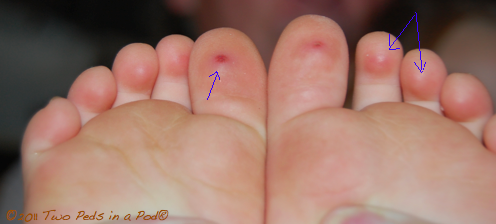
What is it? Pictured below are the toes of one of my best friend’s toddler. She is happy, has no fever, and plays nearly everyday in the neighborhood pool. The round shiny pink bumps and dots on her toes appeared yesterday morning and haven’t changed much in a day. They don’t seem to bother her very much… answer below.

It’s Swimming pool pulpitis- a fancy word for a reaction of the pulp (the meaty tip) of fingers or toes. Mostly seen on the finger tips, the pulpitis is usually caused by irritation of the fingers by the rough side of the swimming pool as kids pull themselves in and out. Kids are sometimes annoyed by the dots, but they go away on their own as soon as the kids decide to use the ladder. In this case, this little swimmer irritated her toes, not her fingers, while “monkey walking” along the side of the swimming pool in the water.

Naline Lai, MD with Julie Kardos, MD

©2011,2013, 2015 Two Peds in a Pod®

Share

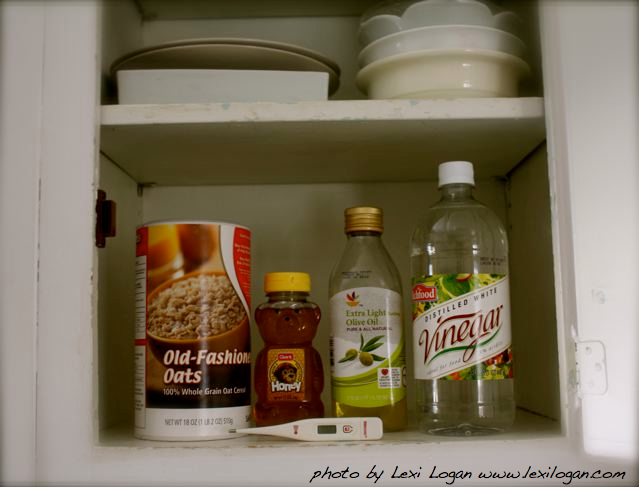
The natural medicine cabinet in your kitchen

home remedies

You may not think of your kitchen as a convenient pharmacy, but parents used common kitchen items successfully to treat various maladies long before CVS and Walgreens were invented. 

Crisco– May not be healthy to eat, but smeared on skin, it’s an old fashioned but effective treatment for eczema or dry skin.

Oatmeal– Crush and put into the end of a hosiery sock. Float the sock in the bathtub for a natural way to moisturize skin.

Olive Oil

  • Put a couple drops into the ear three times a day to loosen ear wax (don’t put in if your child has a hole in their ear drum eg. myringotomy tubes).
  • For cradle cap, rub into your baby’s scalp and use your fingernail or a soft brush to loosen the greasy flakes.
  • Also use to kill lice.  Work the oil through the scalp, tuck hair into a shower cap and wash off in the morning. Although studies are unclear on how well this method works on lice, it certainly is worth a try.

White vinegar-If swimmer’s ear is suspected, mix rubbing alcohol one to one with vinegar and drop a couple drops in the ear to stop the swimmer’s ear from progressing (don’t put in if your child has a hole in their ear drum eg. myringotomy tubes).

Ginger– Boil ginger to make a tea to take the edge off nausea

Honey– Shown to soothe coughs-give a teaspoon of dark (buckwheat, for example) honey three times a day. However, NEVER give honey to a child who is younger than one year of age because it may cause infant botulism

Lemon– An old singer’s trick—combine lemon juice with honey in tea to alleviate hoarseness

Salt– Mixed into lukewarm water, gargling with salt water will help ease sore throat pain

Baking soda:

  • Mix with water to make a paste to help soothe itchy skin, from maladies such as poison ivy .
  • Can also be mixed with water to make toothpaste if you run out of your usual minty whitener.
  • Another use of baking soda: one part baking soda with 4 parts corn starch makes a natural underarm deodorant.

Sugar: Mix sugar into weak tea (or your ginger tea from above) and give small amounts frequently to soothe your older child’s nausea and help rehydrate after vomiting.

Ice: Ice not only decreases swelling when applied to injuries, it can also be used to combat the itch of bug bites and poison ivy.

Kitchen sink: This is an excellent place to wash any cut, scrape, or bleeding wound under running water with soap. Immediately after a burn, rinse the burned skin under cold water for several minutes to limit the extent of the heat injury. Contrary to popular lore, DO NOT put butter on a burn. You may, however, put butter on your toast. In small amounts.


Naline Lai, MD and Julie Kardos, MD

©2015 Two Peds in a Pod®, revised from 2011

Share

The surprising first signs of dehydration

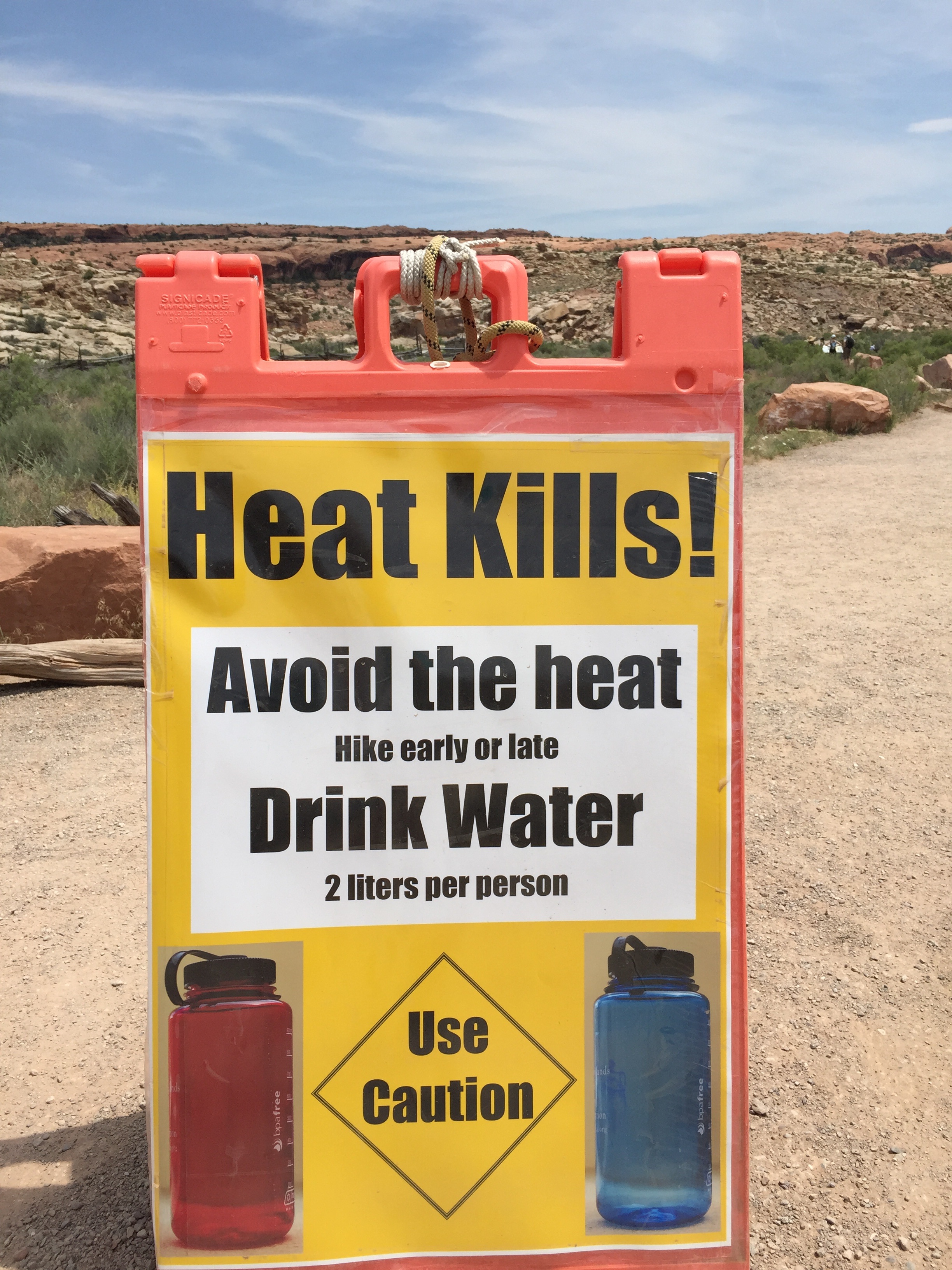
dehydrationIt’s 100 degrees Fahrenheit outside. We’re hiking around the Southern Utah desert and one of my kids vomits once. Nope, it’s not the stomach bug; that was last vacation. This time one of my kids vomited because of dehydration. Strangely, humans don’t always complain of thirst once they start becoming parched, and my kid was no exception.

Right now many kids are at camp running about in high temperatures and soon enough, kids will be called back to school for sport practices. Before they go off, let them know that the first signs of dehydration are usually a vague headache and nausea. Warn them not to depend solely on their sense of thirst to signal them to hydrate. If they “just don’t feel right,” take a break. Other signs of heat exhaustion and stroke are outlined here http://www.cdc.gov/extremeheat/warning.html

For kids who play only for an hour or so, water is a good choice for hydration. For the more competitive players who churn up a sweat or participate in vigorous activity, electrolyte replenishers such as Gatorade® and Powerade® become important, because after 20-30 minutes of sweating, a body can lose salt and sugar as well as water. In fact, my sister, an Emergency Medicine doctor, tells the story of a young woman who played ultimate frisbee all day, and lost a large amount of salt through sweating. Because she also drank large amounts of water, she “diluted” the salt that was still in her blood and had a seizure.

If your child plays an early morning sport, start the hydration process the night before so that they don’t wake up already behind on fluids. If your child goes more than six to eight hours without urinating, she needs to drink more.

Avoid caffeine which is found in some sodas, iced tea and many of the energy drinks. Caffeine dehydrates. The American Academy of Pediatrics recommends that children and teens never drink “energy drinks” because of the adverse effects of the stimulants they all contain. Some of the newer highly touted rehydration fluids of the adult world such as coconut water or chocolate milk are fine.

Keep in mind it’s not only sports that can dehydrate kids. Years ago I knew of a tuba player who went to the emergency room after marching band practice on a hot August day.

Next vacation we’ll definitely buy some water bottles to make sure we don’t get dehydrated. Not having enough water can be so dangerous! We’ll also take along paper towels and cleaning fluid too.

Naline Lai, MD and Julie Kardos, MD

©2015 Two Peds in a Pod®

Share

When your child’s friend moves away

movingsignThis sign now sits on my friend’s lawn. I still remember four years ago when I pulled my big blue minivan up in front of their house after the moving van left. A mommy sat on the stoop with her children. “How old are they? I hollered out. The ages of the children matched my children’s and I was delighted. Indeed they became good friends. And now, there’s the “For Sale” sign.

It’s  the end of the school year, and “For Sale” signs dot lawns all over the United States. Chances are, one of them belongs to your child’s friend. Just as the child who moves will have to adjust to a new environment, your child will have to adjust to a world without a friend who was part of his daily routine.

Much has been written about how to transition the child who moves into a new environment, but how can you help your child when his close friend moves away?

Your child may experience a sense of loss and feel that he was “left behind.” Some children perseverate over the new hole in their world. Others take the change in stride.

In the late 1960’s, psychiatrist Elisabeth Kubler-Ross described “the five stages of grief.” The stages were initially applied to people suffering from terminal illness, but later they were applied to any type of deep loss such as your child’s friend moving. The first stage is denial: “I don’t believe he moved.” Anger follows in the second stage: “Why me? That’s not fair!” Your child may then transition into the third stage and bargain: “If I’m good maybe he will hate it there and come back.” The fourth stage is sadness: “ I really miss my friend,” or, “Why make friends when they end up moving away?” The final stage is acceptance: “Everything is going to be okay. We will remain friends even if he doesn’t live here.”

Some pass through all stages quickly and some skip stages altogether. The process is personal and chastising your child to “just get over it” will not expedite the process. However, there are ways to smooth the journey:

· Reassure your child that feeling sad or angry is common. Parents need to know that sad children may not show obvious signs of sadness such as crying. Instead, rocky sleep patterns, alterations in eating, disinterest in activities or a drop in the quality of school work can be signs that a child feels sad. If feelings of depression in your child last more than a month or if your child shows a desire to hurt himself, consult your child’s health care provider.

· When you discuss the move with your child, keep in mind your child’s developmental stage. For instance, preschool children are concrete and tend to be okay with things being “out of sight, out of mind.” Talking endlessly about the move only conveys to the child that something is wrong. Children around third or fourth grade can take the move hard. They are old enough to feel loss, yet not old enough to understand that friendships can transcend distance. For teens, who are heavily influenced by their peers, a friend’s moving away can cause a great deal of disruption. Acknowledge the negative emotions and reassure your child that each day will get better. Reassure him that despite the distance, he is still friends with the child who moved.

· Prior to the move, don’t be surprised if arguments break out between the friends. Anger can be a self defense mechanism employed subconsciously to substitute for sadness.

· Set a reunion time. Plan a vacation with the family who moved or plan a trip to their new home.

· After the move, send a care package and write/ help write a letter with your child.

· Answer a question with a question when you are not sure what a child wants to know. For example if he asks,” Will we always be friends?” Counter with “What do you think will happen?”

· Share stories about how you coped with a best friend moving when you were a child.

Social media and texting can be ways for older kids to stay in touch with a friend who moves away. Be sure to monitor your child, however, because too much time texting, skyping, and posting takes away from time your child needs to spend acclimating to a new routine.

As for my children, when I told one of my kids that I will sign her up for soccer, she squealed with delight, “Oh, that’s the league Kelly belongs to.”

My heart sank. I said as gently as I could, “She’s moving- she won’t be here for soccer season.”

And so we begin the process…

Naline Lai, MD with Julie Kardos, MD
© 2010, rev 2015 Two Peds in a Pod®

Share

Soothe the itch of poison ivy

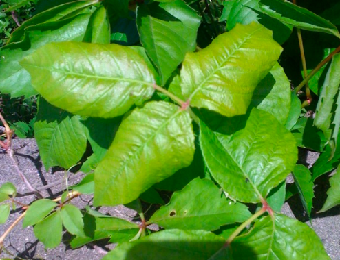
poisonivyRecently we’ve had a parade of itchy children troop through our office.  The culprit: poison ivy.


Myth buster: Fortunately, poison ivy is NOT contagious. You can catch poison ivy ONLY from the plant, not from another person.

Also, contrary to popular belief, you can not spread poison ivy on yourself through scratching.  However, where  the poison (oil) has touched  your skin, your skin can show a delayed reaction- sometimes up to two weeks later.  Different  areas of skin can react at different times, thus giving the illusion of a spreading rash.

Some home remedies for the itch :

  • Hopping into the shower and rinsing off within fifteen minutes of exposure can curtail the reaction.  Warning, a bath immediately after exposure may cause the oils to simply swirl around the bathtub and touch new places on your child.
  • Hydrocortisone 1%.  This is a mild topical steroid which decreases inflammation.  We suggest the ointment- more staying power and unlike the cream will not sting on open areas, use up to four times a day
  • Calamine lotion – a.k.a. the pink stuff. This is an active ingredient in many of the combination creams.  Apply as many times as you like.
  • Diphenhydramine (brand name Benadryl)- take orally up to every six hours. If this makes your child too sleepy, once a day Cetirizine (brand name Zyrtec) also has very good anti itch properties.
  • Oatmeal baths – Crush oatmeal, place in old hosiery, tie it off and float in the bathtub- this will prevent oat meal from clogging up your bath tub. Alternatively buy the commercial ones (e.g. Aveeno)
  • Do not use alcohol or bleach– these items will irritate the rash more than help

The biggest worry with poison ivy rashes is not the itch, but the chance of infection.  With each scratch, your child is possibly introducing  infection into an open wound.  Unfortunately, it is sometimes difficult to tell the difference between an allergic reaction to poison ivy and an infection.  Both are red, both can be warm, both can be swollen.  However, infections cause pain – if there is pain associated with a poison ivy rash, think infection.  Allergic reactions cause itchiness– if there is itchiness associated with a rash, think allergic reaction.  Because it usually takes time for an infection to “settle in,” an infection will not occur immediately after an exposure.  Infection usually occurs on the 2nd or 3rd days.  If you have any concerns take your child to her doctor.

Generally, any poison ivy rash which is in the area of the eye or genitals (difficult to apply topical remedies), appears infected, or is just plain making your child miserable needs medical attention.

When all else fails, comfort yourself with this statistic: up to 85% of people are allergic to poison ivy.  If misery loves company, your child certainly has company.

Naline Lai, MD and Julie Kardos, MD

©2015 Two Peds in a Pod®, updated from 2012


Share

Would you recognize if your child was overweight?

recognizing obesity
In these posters put out by the Pennsylvania medical society, the children on the right are considered obese.


Nearly all parents of overweight preschoolers and most parents of obese kids are unaware their children are classified as such , say researchers at New York University and two other medical centers. Click here for  Happy Healthy Kids‘ interview with Dr. Kardos on the subject.

Julie Kardos, MD with Naline Lai, MD
©2015 Two Peds in a Pod®

Share

The best allergy medicines for kids

Gepetto always said his son had allergies, but the villagers knew better

Recently, Dr. Lai was so excited to see Flonase in the local pharmacy that she texted all of the providers in our practice with the news. Flonase (fluticasone),  a nose spray allergy treatment, is the  latest allergy medication to go over-the-counter. Now, nearly every allergy medication that we wrote prescriptions for a decade ago is now available to kids over-the-counter.

As you and your child peer around the pharmacy through itchy blurry eyes, the  displays for allergy medications can be overwhelming. Should you chose the medication whose ads feature a bubbly seven-year-old girl kicking a soccer ball in a field of grass, or the medication whose ads feature a bubbly ten-year-old boy roller blading? Its it better to buy a “fast” acting medication or medication that promises your child “relief?”

A guide to sorting out your medication choices:

Oral antihistamines: Oral antihistamines differ mostly by how long they last, how well they help itchiness, and their side effect profile. During an allergic reaction, antihistamines block one of the agents responsible for producing swelling and secretions in your child’s body, called histamine. Prescription antihistamines are not necessarily “stronger.” In fact, at this point there are very few prescription antihistamines. The “best” choice is the one that alleviates your child’s symptoms the best. As a good first choice, if another family member has had success with one antihistamine, then genetics suggest that your child may respond as well to the same medicine. Be sure to check the label for age range and proper dosing.

  • First generation antihistamines work well at drying up nasal secretions and stopping itchiness but don’t tend to last as long and often make kids very sleepy:
    Diphenhydramine (brand name Benadryl) is the best known medicine in this category. It lasts only about six hours and can make people so tired that it is the main ingredient for many over-the-counter adult sleep aids. Occasionally, kids become “hyper” and are unable to sleep after taking this medicine. Opinion from Dr. Lai: dye-free formulations of diphenhydramine are poor tasting. Other first generation antihistamines include Brompheniramine (eg. brand names Bromfed and Dimetapp) and Clemastine (eg. brand name Tavist).
  • The newer second and third generation antihistamines cause less sedation and are conveniently dosed only once a day:
    Cetirizine (eg. brand Zyrtec) causes less sleepiness and it helps itching fairly well. Give the dose to your child at bedtime to further decrease the chance of sleepiness during the day. Loratadine (brand name Alavert, Claritin) causes less sleepiness than cetirizine. Fexofenadine (brand name Allegra) causes the least amount of sedation. The liquid formulations in this category tend to be rather sticky, the chewables and dissolvables are favorites among kids. For older children, the pills are a reasonable size for easy swallowing.

Allergy eye drops: Your choices for over-the-counter antihistamine drops include ketotifen fumarate (eg. Zatidor and Alaway). For eyes, drops tend to work better than oral medication. Avoid products that contain vasoconstrictors (look on the label or ask the pharmacist) because these can cause rebound redness after 2-3 days and do not treat the actual cause of the allergy symptoms. Contact lenses can be worn with some allergy eye drops- check the package insert, and avoid wearing contacts when the eyes look red.

Allergy nose sprays: Simple nasal saline helps flush out allergens and relieves nasal congestion from allergies. As we mentioned above, Flonase, which used to be available by prescription only, is a steroid allergy nose spray that is quite effective at eliminating symptoms. It takes about a week until your child will notice the benefits of this medicine. Even though this medicine is over-the-counter, check with your child’s pediatrician if you find that your child needs to continue with this spray for more than one allergy season of the year. Day in and day out use can lead to thinning of the nasal septum. Avoid the use of nasal decongestants (e.g., Afrin, Neo-Synephrine) for more than 2-3 days because a rebound runny nose called rhinitis medicamentosa may occur.

Oral Decongestants such as phenylephrine or pseudoephedrine can help decrease nasal stuffiness. This is the “D” in “Claritin D” or “Allegra D.” However, their use is not recommended in children under age 6 years because of potential side effects such as rapid heart rate, increased blood pressure, and sleep disturbances.

Some of the above mentioned medicines can be taken together and some cannot. Read labels carefully for the active ingredient. Do not give more than one oral antihistamine at a time. In contrast, most antihistamine eye drops and nose sprays can be given together along with an oral antihistamine.

If you are still lost, call your child’s pediatrician to  tailor an allergy plan specific to her needs.

The best medication? Get the irritating pollen off your child. Have your allergic child wash her hands and face as soon as she comes in from playing outside so she does not rub pollen into her eyes and nose. Rinse  outdoor particles off your child’s body with nightly showers. Filter the air when driving in the car and at home by running the air conditioner and closing the windows to prevent the “great” outdoors from entering your child’s nose.

Naline Lai MD and Julie Kardos, MD
© 2015 Two Peds in a Pod®

Share
image_pdfimage_print