French without the fry

I love French fries, I mean really, who doesn’t? They’re probably one of the most delicious treats on the planet, but unfortunately they’re also one of the worst treats when it comes to our health. You’ll likely want to opt for baked “fries.”


It’s about overall diet. Ideally we should enjoy a diet that includes lots of fresh fruits and vegetables, fish, grains, and legumes, and one that is devoid of processed foods and sugary sodas. Even diet sodas may be harmful as they are laden with sweeteners made from chemicals.


Also very important, according to doctors, is maintaining a healthy weight. If you’ve had the pleasure of eating baked “fries,” you know what a tasty option they are; if not, please give the baked variety a chance.


You can cut some russet potatoes a bit thick and coat them and coat them with a little extra-virgin olive oil, some rosemary, a little salt and pepper and bake them until golden at 350 degrees, usually between 30-35 minutes. You can do the same with sweet potatoes, but use a little cracked black pepper instead of the rosemary. I normally boil my sweet potatoes first for about 15 minutes. They are a lot easier to peel that way. The recipe is in my book, My Italian Kitchen on amazon.com.


There is no reason to give up the foods you love, just find healthier ways to make them. This way of thinking has become my mantra. It could well become yours too, if it isn’t already.


Buona Salute! To Your Health~


Janet


Returning guest blogger Janet Zappala is a certified nutritional consultant and author of My Italian Kitchen — Home-Style Recipes Made Lighter & Healthier. She is also a six-time emmy award winning television journalist and the host of Wealth of Health at www.janetzappala.tv. Janet is a busy mom as well and is always creating ways to offer up delicious, nutritious foods that are quick and easy to make. 


©2011 Two Peds in a Pod®

Share

Super Summer Snacking Suggestions

Emmy award winning journalist Janet Zappala, author, nutritionist, chef, and  mom, blogs for us today!

_________________________

Summertime is in full swing and the snacking is easy. This is the season to grab all of the fresh fruits and vegetables you can. Berries, for example, are brimming over in your local supermarket. Blackberries, blueberries, raspberries and strawberries: not only are they delicious, they’re also chock full of antioxidants that fend off free radicals to keep our cells healthy, and they’re an excellent source of dietary fiber so they don’t spike your blood sugar and cause a lull in energy. Eating berries will keep your energy up all day, so you can enjoy all of the fun activities that summer has to offer. Keep them refrigerated so they’re nice and cold on a hot summer day. They’ll also last a bit longer than if you leave them out. The same goes for vegetables: what’s more refreshing than chilled cucumber, carrot, celery and bell pepper slices? Want to dip? Check out my spinach dip and/or my hummus recipe at www.janetzappala.com.

Snacking is a great way to avoid overeating as well. By keeping nutritious snacks handy you can snack throughout the day and stay satisfied and energized. The key is knowing which snacks provide the most nutrients, and one of your best bets is whole grains. Whole grain crackers and chips are just sitting on your supermarket shelves, “ripe” for the picking. Vegetable chips are another tasty option. A personal favorite is Terra’s Sweets and Beets, chips made from sweet potatoes and beets. What could be more satisfying? You’re still getting a crunchy treat, but one that’s made from ingredients that will do your body good. Worry-free eating, that’s what it’s all about. One of life’s greatest pleasures is eating, why should we give up the things we love? We don’t, we just have to find healthier options, a much easier task these days as manufacturers are tuning into the consumer’s demand for healthier options.

If you and your kids are sandwich lovers, go for whole grain bread, a couple slices of fresh roasted turkey (not processed), lettuce and tomato, and top if off with a slice or two of Jarlsberg Lite cheese. It’s my favorite for its great taste, and it’s relatively low in fat and calories. Drizzle a little extra virgin olive oil, a splash of red wine vinegar, and a sprinkle of salt and pepper on top, and you have a mouthwatering and nutritious lunchtime treat that will pack the punch you and your family need to keep you going throughout your day.

Finally, a little more food for thought, seeds! Don’t forget to have plenty on hand, everything from sunflower seeds, to sesame seeds, to pumpkin seeds, to flaxseeds. All will provide you with countless nutrients and energy, not to mention a good amount of fiber in every delectable bite. Grab a handful during the day and you’ll be providing your body with everything from protein and iron, to potassium, and magnesium. Flaxseed alone provides heart-healthy omega 3 fatty acids. Go nuts for nuts too! Heart-healthy almonds and omega 3 rich walnuts are especially good for you.

All this said, opt for the raw, unsalted variety if you can. If that’s too big a step at first then try to stay away from salted nuts. As you go along your palate will change gradually and you’ll be able to enjoy raw unsalted seeds and nuts the way mother nature intended.

Enjoy the summer and all of the great foods and fun it has to offer!

– Janet

Janet Zappala is a certified nutritional consultant and author of My Italian Kitchen — Home-Style Recipes Made Lighter & Healthier. She is also a six-time emmy award winning television journalist and the host of Wealth of Health at www.janetzappala.tv. Janet is a busy mom as well and is always creating ways to offer up delicious, nutritious foods that are quick and easy to make. 


©2011 Two Peds in a Pod®


Share

Swimmer’s Ear

Dozens of kids are pouring into our offices or calling from the shore because of swimmers ear. Time to bring up from the archives info about swimmer’s ear and ways you can prevent reoccurrence.


No set of blog posts about summer time plagues would be complete without a discussion on swimmer’s ear (Otitis Externa). 

Ear infections are divided into two main types: swimmer’s ear (otitis externa) and middle ear infections (otitis media).

An understanding of the anatomy of the ear is important to understanding the differences between the two types of infection.  Imagine you are walking into someone’s ear. When you first enter, you will be in a long tunnel. Keep walking and you will be faced with a closed door. The tunnel is called the external ear canal and the door is called the ear drum.

Swimmer’s ear occurs in the ear canal. Dampness from water, and it can be water from any source- not just the pool, sits in the ear canal and promotes bacterial infection.  

Next, open the door. You will find yourself in a room with a set of three bones. Another closed door lies at the far end.  Look down.  In the floor of the room there is an opening to a drainage pipe. This room is called the middle ear. This is where middle ear infections occur.

During a middle ear infection, fluid, such as during a cold, can collect in the room and promote bacterial infection.  Think of the sensation of clogged ears when you have a cold. Usually the drainage pipe called the eustachian tube,  drains the fluid.  But, if the drain is not working well, or is overwhelmed, fluid gets stuck in the middle ear and become infected. 

Because a swimmer’s ear infection occurs in the external canal, the hallmark symptom of swimmer’s ear is pain produced by pulling the outside of the ear.  Since middle ear infections occur farther down in the ear, pain is not reproduced by pulling on the outer ear.

Swimmer’s ear is treated topically by your doctor with antibiotic drops.  To avoid dizziness and discomfort when putting drops in, first bring the ear drop medicine up to body temp by holding the bottle in your hand.


Home remedies to prevent swimmer’s ear:

·     After immersion in the water, tilt your child’s head to the side and towel dry what leaks out. 

·         Mix rubbing alcohol and vinegar in equal parts.  After swimming, place a couple drops in the ear.  Do not put these drops in if there is a hole in your child’s eardrum. 

·     Prior to swimming put a drop of mineral oil or olive oil in each ear. This serves as a barrier protection against the water.  Do not put in if there is a hole in your child’s eardrum


Although it’s tough to remind children to dry their ears well, take heart.  I once spent two hours trying to get a cockroach out of a child’s ear canal.   I  suspect those parents would have been happier if instead, water had gotten into their child’s ear.

Naline Lai, MD and Julie Kardos, MD 
originally posted August 9, 2009
©2011 Two Peds in a Pod®


Share

Hand-foot-mouth disease

WE HAVE UPDATED THIS POST and added photos- please read it here. 

We’re seeing a lot of this stuff around the office. It’s hand-foot-mouth disease, a common, self-limited illness caused by the Coxsackie virus most often in the spring and summer. Named for rashes which can affect the hands, feet or mouth, this illness can cause fever for the first few days as well as some loose stools.

If you look carefully at the photos above, you will see faint red bumps on this child’s feet. The rash may also look like tiny blisters and will always blanch (if you press on it and lift up your finger, the redness will briefly disappear- just as if you pressed on a sunburn). The same rash may appear on the hands and is not itchy. The child’s throat above is red in the back and has several ulcers, or canker sores. The hands, feet and mouth are not always simultaneously affected, and although we don’t call the illness Hand-foot-mouth-tush disease,  sometimes kids also get a red bumpy rash on their buttocks.

The throat ulcers can be quite painful and the rash on the feet may be slightly tender.  Usually the rash on the hands is not felt by the child. You can alleviate your child’s throat pain with acetaminophen (brand name Tylenol) or ibuprofen (brand names Advil or Motrin). For toddlers and older, Magic mouthwash, a mix of 1/4 tsp diphenhydramine (plain liquid Benadryl) and 1/4 tsp Maalox (the regular adult stuff) squirted over mouth ulcers prior to eating a meal (three times a day)  is an age old way to sooth sores.

Because this virus is contagious through saliva, prevent kids from sharing cups, eating utensils, and tooth brushes and clean up toddler drool. This vigilance can prevent the virus from spreading to family members and friends. Children with this virus can still attend daycare as long as they are not feeling ill. Typically after the first few days of illness, fever and pain subside. Most commonly the rash and mouth ulcers last about a week or two.

Unfortunately there is no treatment for hand-foot-mouth disease, but fortunately your child’s body is fully capable of fighting off the virus. Your role is to help soothe pain. Otherwise, kids may refuse to drink and end up dehydrated. When my son had this illness at age two, he liked sucking on a washcloth soaked in very cold water. I also gave him lots of sherbet, ice cream, milk shakes, and noodles.  These foods were easier for him to swallow while his throat was sore.

Kids can get this virus more than once, and many strains of this virus circulate. Even parents are not always immune. So now add Coxsackie virus, or hand-foot-mouth disease, to your Dr. Mom and Dr. Dad list of manageable diseases. Knowledge is power. However, if your child’s fever lasts more than three days, he does not drink enough to urinate his baseline amount, he is unconsolable or seems disoriented or if your parent gut-instinct tells you something more might be wrong, do get your child to medical attention.

Julie Kardos, MD and Naline Lai, MD
©2011 Two Peds in a Pod®

Share

Two Peds goes undercover at your local pharmacy

Picture the Mission Impossible theme song in your head… da da da DUM DUM da da da DUM DUM dadada…dadada…dadada…DA DA! Keep this background music playing as you read.

Recently, Two Peds in a Pod went undercover as two unsuspecting moms surveying the scene on the shelves of a local chain pharmacy, seeking to uncover what medicines, ointments, and therapies avail themselves to the unsuspecting consumer. Today we break open the case.

All medication labels have an “active ingredient” list. This list contains the actual medicine that acts on your child’s body to hide symptoms or cure a condition.  Read this list carefully so that you know what you are actually giving your child. For example, Flu-Be-Gone claims it “cures the aches and cough of flu and helps your child sleep better.” In order to know just what is actually in Flu-Be-Gone, you need to read the active ingredients. Included might be acetaminophen (brand name Tylenol), a fever reducer and pain reliever, and diphenhydramine (brand name Benadryl), allergy medicine that has the common side effect of causing drowsiness and has some mild anti-cough properties. Notice neither active ingredient actually kills the flu germ. Additionally, you may already have these two medications in your medicine cabinet, or you might have already given your child diphenhydramine recently and giving Flu-Be-Gone would overdose your child. 


Also note, diphenhydramine is everywhere. If you see the word “sleep” or “PM” in the name of a product, you will usually find diphenhydramine in the active ingredient list. 


Now, let’s hone in on your choices for the anti-itch therapy, hydrocortisone. When your child’s health care provider advises treating an itchy bug bite, poison ivy, or allergic rash with hydrocortisone, make sure that the ACTIVE INGREDIENT in the product is “hydrocortisone 1%.” Hydrocortisone comes as a cream, ointment, spray, or stick (looks like a glue stick) and can have aloe, menthol, or other ingredients thrown in as well. Don’t bother with anything less than maximum strength. Regular strength is 0.5% and is generally ineffective.  Also, keep in mind that while ointment is absorbed a bit better, it is more greasy/messy than cream.

Don’t be fooled into thinking products with the same brand name contain similar active ingredients. 
Also, do not depend on your doctor to necessarily know the difference between the all the formulations.We noticed that the same brand name pain reliever, such as Midol, can have different active ingredients depending on which one you choose. Midol Teen contains acetaminophen, Midol liquid gels contains ibuprofen,  and Midol PM contains acetaminophen and diphenhydramine.


Let’s talk bellyache. Did you know that kids should not take adult pepto bismol because it has a form of aspirin in it? Aspirin may cause Reye’s syndrome, a fatal liver disorder. However, we did see a product called Children’s Pepto Bismol and guess what the active ingredient is? It is calcium carbonate, which is the SAME active ingredient as in Tums, and is safe to give kids. However, watch your wallet: the children’s pepto bismol that we found cost $6.00 for a box of 24 tablets. The TUMS that we found cost $4.50 for a bottle of 150 tablets of the same stuff, just in slightly higher dose. Check with your child’s doctor but in most cases, the kids can take the adult dose.


Also, be aware that cold and cough medicine have not been shown to treat colds successfully or even to actually relieve symptoms in most kids. In fact these medicines have potential for harmful side effects, accidental overdose, or accidental ingestion and are just not worth giving your children. However, we found tons of cold and cough medicines marketed for children. Here are the three most commonly used active ingredients:


  • If you see “suppressant” you will likely find “dextromethoraphan” in the active ingredient list.
  • If you see “expectorant” you will likely find “guaifenesin” in the active ingredient list.
  • If you see “decongestant” you will likely find “phenylephrine” in the active ingredient list.

Many products combine two or all three of the above. We ask, even if these ingredients did work well in kids and were not potentially dangerous, what is the POINT of combining a cough suppressant with an expectorant? Can you really have it both ways?


( Remember, that Mission Impossible theme is still playing in the background.)

A few other tidbits. “Dramamine,” used for motion sickness, gets broken down in the body to diphenhydramine, that allergy medicine that we already talked about. So look at cost differences when choosing a motion sickness medicine. Both have the same side effect: sleepiness.


Many cough drops contain corn syrup and sugar. This is the same stuff lollipops are made of, so just call a candy a candy and keep your child’s throat wet with the cheaper choice, if you choose to do so.

Finally, we found one “natural children’s cough medicine” which claimed that it is superior because of its “all natural ingredients.” The first active ingredient listed? Belladonna. Sure it’s natural because it comes from a plant. So does marijuana. Just because it’s “natural” doesn’t mean it’s safe. Belladonna can cause delirium, hallucinations, and death and in fact has been used in high doses as a poison! Leave the cough medicine on the store shelf, and read our post about other ways to soothe a cough.

Bottom line:  remember always to check the “active ingredient” list when buying any over-the-counter medication for your children.

As we were wrapping up our mission, one of the pharmacy employees came over to us, raised an eyebrow at our clipboard, and asked, “Can I help you ladies with anything?” We were tempted to answer “YES, can you help us take notes?”  but we just smiled and said “No, we’re fine, thanks. Just checking out what’s available.”

So now, we will don our stethoscopes and come out of hiding, go back into our offices and onto our website. Thanks for tuning in to this episode of Two Peds in a Pod…. Da da da, DUM DUM da da da, DUM DUM dadada…dadada…dadada…DA DA!!!


Julie Kardos, MD with Naline Lai, MD
©2011 Two Peds in a Pod®
Share

Don’t be rash: tidbits about Lyme disease, poison ivy, and sunburn protection

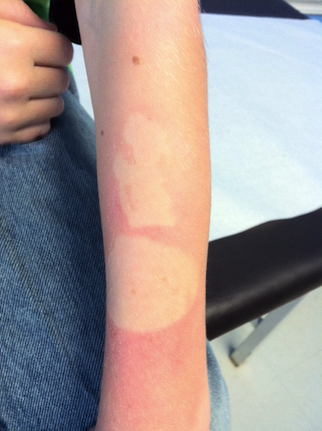
In today’s podcast we discuss how to spot the rash of lyme disease, what to do about poison ivy, and  how to avoid sunburns. Pictured below is a creative way one child found to block the sun effectively. Notice there’s  no burn underneath the areas of skin which were once covered by temporary tattoos.

tatoosunscreen

Naline Lai, MD and Julie Kardos, MD

©Two Peds in a Pod®

Share

Avoiding allergy eyes

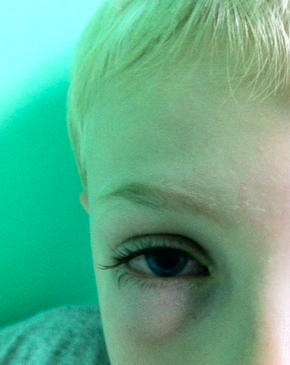
allergyeyes“I see green stuff all over my car and I park  in the garage,” a mom said to me today.

The pollen count is high on the east coast and with it comes green cars and  itchy eyes. Eighty  percent of the older kids I saw today, including those seen for routine check-ups, had red irritated eyes.

So what to do?  Pollen directly irritates eyes, so start with washing the pollen off. One parent told me he applied cool compresses to his child’s eyes. This is not enough- get the pollen off. Plain tap water works as well as a saline rinse. Filter the pollen out of your house by running the air conditioning. Some people will leave shoes outside the house and wipe the paws of their dogs in order to keep the green stuff from tracking into the house.

Oral medications do not help the eyes as much as topical eye drops. Over-the-counter antihistamine drops include ketotifen fumarate (eg. Zatidor and Alaway). Prescription drops such as Pataday or Optivar add a second ingredient called a  mast cell stabilizer. Avoid use of a product which contains a vasoconstictor (look on the label or ask the pharmacist) for more than two to three  days to avoid rebound redness. Contacts can be worn with some eye drops– first check the package insert. Place drops in a few minutes before putting in contacts and avoid wearing contacts when the eyes are red.

Hopefully allergy season  will blow through soon. After all, as a couple teens pointed out-prom is around the corner and allergies can make even the young look haggard. One teen male told his mom that he shaved today  because having a beard and blood shot eyes made him look THIRTY years old.

Miserable allergies!

Naline Lai, MD with Julie Kardos, MD

©2011 Two Peds in a Pod® , rev 5/8/2013, rev 2015

Share

Myth: butter’s better on a burn

One of Dr. Lai’s patients burned his arm on a hot cookie sheet. The child stopped further injury by immediately running the area under cool water. However, his well-meaning great-aunt decided to then apply butter to the burn. Please, do NOT put butter immediately on a burn. It’s like putting butter on a hot skillet.

We’re not sure where the myth of putting butter on a burn comes from. A better idea for pain control, after applying cool water for a few minutes, is to offer the child a pain reliever such as acetaminophen (Tylenol) or ibuprofen (Advil, Motrin).

Burns caused by fire or burns covering large body areas are best treated at a hospital, but your first response, as you call 911, should be to get that burn in cool water. Run the water for several minutes. To avoid shock or extreme cold injury, do not use ice water. Don’t remove clothing stuck to skin but go ahead and put the burn and the stuck clothing in cool water. 

Most burns sustained at home are mild or may cause blisters. Burns are easily infected because when you burn away skin, you burn away an excellent barrier to germs. Washing the affected area with soap and water and applying a topical antibiotic such as Bacitracin twice daily can prevent infection. Avoid popping blisters- you will take away a protective layer of skin.

Please remember that unlike for cookie batter, butter is not better for burns. Please pass this post on to anyone you know who cares for your children…it’s “hot off the press.”

Julie Kardos, MD and Naline Lai, MD
©2011 Two Peds in a Pod®

Revised 5/17/2015

Share

Allergy Meds- the quest for the best antihistamine

The antihistamine quandry


Junior’s nose is starting to twitch


His nose and his eyes are starting to itch.


As those boogies flow
You ask oh why, oh why can’t he learn to blow?


It’s nice to finally see the sun


But the influx of pollen is no fun.


Up at night, he’s had no rest,


But which antihistamine is the best?


It’s a riddle with a straight forward answer. The best antihistamine, or “allergy medicine” is the one which works best for your child with the fewest side effects. Overall, I don’t find much of a difference between how well one antihistamine works versus another for my patients. However, I do find a big difference in side effects.


Oral antihistamines differ mostly by how long they last, how well they help the itchiness and their side effect profile.  During an allergic reaction, antihistamines block one of the agents responsible for producing swelling and secretions in your child’s body, called histamine.  


Prescription antihistamines are not necessarily “stronger.” In fact, at this point there are very few prescription antihistamines. Most of what you see over-the-counter was by prescription only just a few years ago. And unlike some medications, the recommended dosage over-the-counter is the same as what we used to give when we wrote prescriptions for them.


The oldest category, the first generation antihistamines work well at drying up nasal secretions and stopping itchiness but don’t tend to last as long and often make kids very sleepy.  Diphendydramine (brand name Benadryl) is the best known medicine in this category.  It lasts only about six hours and can make people so tired that it is the main ingredient for many over-the-counter adult sleep aids.  Occasionally, kids become “hyper” and are unable to sleep after taking this medicine. Other first generation antihistamines include Brompheniramine (eg. brand names Bromfed and  Dimetapp) and Clemastine (eg.brand name Tavist).


The newer second generation antihistamines cause less sedation and are conveniently dosed only once a day. Loratadine (eg. brand name Alavert, Claritin) is biochemically more removed from diphenhydramine from than Cetirizine (eg. brand Zyrtec) and runs a slightly less risk of sleepiness. However, Cetirizine tends to be a better at stopping itchiness.


Now over-the-counter, fexofenadine (eg brand name Allegra) is a third generation antihistamine.  Theoretically, because a third generation antihistamine is chemically the farthest removed from a first generation antihistamine, it causes the least amount of sedation. The jury is still out.


If you find your child’s allergies are breaking through oral antihistamines, discuss adding a different category of oral allergy medication, eye drops or nasal sprays with your pediatrician.


Because of decongestant side effects in children, avoid using an antihistamine and decongestant mix.


Back to our antihistamine poem:


Too many choices, some make kids tired,


While some, paradoxically, make them wired.


Maybe while watering flowers with a hose,


Just turn the nozzle onto his runny nose.


Naline Lai, MD with Julie Kardos, MD


©2011 Two Peds in a Pod®

Share

Stay aware of spring break activities

Spring break has arrived for many college students. While students certainly deserve a vacation from the stress of school, parents should stay aware of their children’s spring break plans. Unfortunately, students who spend spring break with friends, rather than family, are much more likely to engage in binge drinking and suffer associated consequences such as injury, unprotected sex, and assault. 

Before the spring breaks end, we encourage parents to review earlier posts about binge drinking and how to broach the subject of alcohol and drugs.

Julie Kardos, MD and Naline Lai, MD
©2011 Two Peds in a Pod®

Share
image_pdfimage_print